But "contains castor oil" can mean three very different things. Swishing plain castor oil is not the same as oil pulling with sesame or coconut oil, and neither is the same as using a formulated mouthwash where a castor derivative plays a small, specific role. Each exposure carries its own evidence, or lack of it.
This article walks through what castor oil mouthwash products actually are, what the research supports, how to read a label critically, and how to use these products safely.
Key Takeaways
- Castor oil may support a formula's function, but it isn't a proven fix for cavities, gum disease, infection, or "toxins"
- Judge a finished mouthwash by its full ingredient list and evidence, not by one ingredient's presence
- PEG-40 hydrogenated castor oil and hydrogenated castor oil are distinct ingredients with different jobs
- Castor oil mouthwash supports, but never replaces, brushing, flossing, and dental checkups
What Are Castor Oil Mouthwash Products?
A castor oil mouthwash is a liquid oral-care product built around castor oil or a castor-derived ingredient, usually blended with water, humectants, flavoring, preservatives, and sometimes active antimicrobial ingredients. It's rarely just oil in a bottle.


That distinction matters in practice. Plain castor oil is thick, hard to measure consistently, and has no preservative system to keep it stable once opened. A finished mouthwash solves those problems:
- Standardized dosing: a capful or measured swish, every time
- Flavor and texture control: no raw, bitter oil taste
- Preservation: formulated to resist microbial growth in the bottle
- Consistent use: easier to fit into a twice-daily routine than measuring raw oil
Three Categories You'll Encounter
Shoppers researching this topic typically run into:
- Castor-oil-based daily rinses: formulated products where castor oil contributes a functional role alongside other ingredients
- Oil-pulling products: oils (traditionally sesame, coconut, or sunflower) swished for extended periods, sometimes marketed with castor oil included
- Conventional mouthwashes using castor derivatives as solubilizers: ingredients like PEG-40 hydrogenated castor oil exist purely to keep oil-soluble components dispersed in a water-based rinse, not to deliver a therapeutic effect themselves
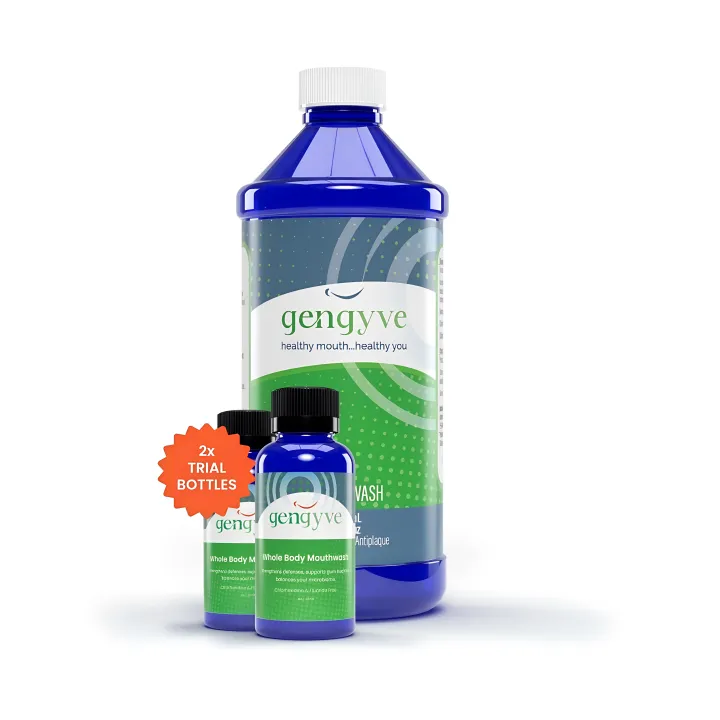
Gengyve's daily mouthwash, developed with dental surgeons, falls into the first category. Its formula pairs castor oil with cetylpyridinium chloride (CPC), hyaluronic acid, pullulan, and polyvinylpyrrolidone (PVP) in a 15 fl. oz. (444 mL) bottle. Each ingredient serves a distinct, labeled purpose rather than riding on castor oil's reputation alone.

How Might Castor Oil Work in Oral Care—and What Does the Evidence Say?
Castor oil's primary compound, ricinoleic acid, is often cited for possible antimicrobial, anti-inflammatory, and tissue-comfort effects. Those are proposed mechanisms, though, not settled facts, and the research behind them is thinner than marketing copy suggests.
What the Actual Studies Show
A small 2013 trial enrolled 30 institutionalized older adults with denture stomatitis, testing a castor-oil polymer mouthwash (not plain oil) against antifungal comparisons over 30 days. Clinical signs improved, but Candida counts didn't drop significantly. That's a narrow, condition-specific result, not a green light for general castor-oil mouthwash use.
Oil pulling has a bigger research footprint, mostly with sesame, coconut, or sunflower oil. A 2024 systematic review pooled 25 trials and 1,184 participants and found a possible gingival-health benefit, but rated the certainty of evidence as very low.
Short trial durations (7 to 45 days) and inconsistent comparators limit what can be concluded, and none of those trials isolate castor oil specifically.
ADA guidance does not recommend oil pulling, citing insufficient reliable evidence for cavity reduction, whitening, or broader oral-health improvement.
What Castor Oil Mouthwash Cannot Do
Be clear-eyed about the limits here. No evidence supports that castor oil mouthwash:
- Fills cavities or removes hardened calculus
- Cures periodontal disease
- Replaces fluoride toothpaste
- Treats an oral infection without a dentist's diagnosis
- Removes "toxins" (no clinical basis in the available research)
A laboratory study from 2024 did find that a polyoxyethylene-hydrogenated castor oil combined with an antimicrobial agent inhibited bacterial biofilm in a petri-dish model. That's a formulation-specific, in-vitro finding, useful for researchers, but it says nothing about how a commercial mouthwash performs in someone's actual mouth.

How to Evaluate Castor Oil Mouthwash Products Before Buying
Reading past the word "castor" on a label takes a bit of label literacy. Here's what actually matters.
Label-Reading Checklist
| Check | Why it matters |
|---|---|
| Intended use statement | Tells you if it's cosmetic (freshens breath) or a drug claim (treats gingivitis) |
| Complete ingredient list | Reveals the whole formula, not just the marketed ingredient |
| Active ingredients | Identifies what's doing the clinical work, if anything |
| Alcohol content | Affects dryness, burning, and suitability for sensitive mouths |
| Preservatives and emulsifiers | Keep the product stable and safe over its shelf life |
| Directions and warnings | Specify age limits, swishing time, and swallowing cautions |
| Manufacturer contact info | A legitimate brand will make this easy to find |
Castor Oil, Hydrogenated Castor Oil, and PEG-40 Hydrogenated Castor Oil Aren't the Same
This trips up a lot of shoppers. All three share "castor" in the name, but they function differently:
- Castor oil: the raw vegetable oil, mostly ricinoleic acid triglyceride
- Hydrogenated castor oil: chemically hardened into a waxy solid, used as a thickener or surfactant
- PEG-40 hydrogenated castor oil: an ethoxylated, water-dispersible derivative used specifically to solubilize oil-based ingredients in a water-based rinse
None of these ingredient names alone signals safety or danger. The CIR's PEG assessment concluded PEG-40 hydrogenated castor oil is safe as used in cosmetics, provided the finished formulation is nonirritating (a conditional finding, not a blanket pass for every product that contains it).
Watch the Marketing Language
Words like "clinical," "professional-grade," "detox," or "prescription-strength" should be backed by product-specific testing, not just implied by an ingredient's presence. If a brand can't point to what was tested and how, treat the claim skeptically.
Raw Oil vs. Oil Pulling vs. Formulated Mouthwash
| Factor | Raw castor oil | Oil-pulling products | Formulated mouthwash |
|---|---|---|---|
| Convenience | Low: hard to measure | Moderate: long swish time | High: measured dose, quick use |
| Ingredient control | None: single ingredient | Varies by brand | Full ingredient list disclosed |
| Evidence base | Essentially none | Limited, low certainty | Depends on specific formula |
| Swallowing risk | Higher: thick, easy to ingest accidentally | Moderate | Lower with labeled directions |
| Fits normal routine | Awkward | Time-intensive (10-20 min) | Designed for daily use |
How to Use Castor Oil Mouthwash Safely
The label is the authority here, not general assumptions. Follow the specific product's directions for swish time, frequency, and whether to rinse with water afterward.
Don't swallow it. Castor oil ingestion can cause gastrointestinal effects, including cramping and diarrhea. MedlinePlus notes that overdose symptoms can escalate to dehydration and electrolyte disturbance. Contact Poison Help (1-800-222-1222) if a significant amount is swallowed, especially by a child.
Watch for These Reactions
Stop use and seek medical guidance if you notice:
- Burning, irritation, or unusual dryness
- Altered taste that doesn't resolve
- Nausea after use
- Swelling, breathing difficulty, or other allergic symptoms (seek urgent care immediately)
Who Should Check With a Professional First
- Children: the ADA advises against mouthrinse use under age 6 unless a dentist directs otherwise, due to swallowing risk
- People with known allergies or significant oral sensitivity
- Patients undergoing cancer treatment or head-and-neck radiation
- Anyone recovering from oral surgery or managing complex periodontal conditions
None of this replaces the basics. Brushing with fluoride toothpaste, cleaning between teeth, staying hydrated, and keeping regular dental visits remain the foundation. See a dentist promptly for bleeding, ulcers, swelling, loose teeth, or bad breath that won't go away.

Where Gengyve Fits Among Castor Oil Mouthwash Products
Gengyve USA's formula was developed by practicing dental surgeons and educators who couldn't find a mouthwash they'd confidently recommend to their own patients. That gap led to a blend built around CPC and hyaluronic acid, with castor oil, pullulan, and PVP completing the formula.
Relevant to this discussion:
- The product is alcohol-free and chlorhexidine-free, positioned for gentle everyday use rather than short-term prescription-style treatment
- It's marketed as a cosmetic oral rinse, meaning it supports hydration, freshness, and comfort rather than standing in for treatment of diagnosed gum disease
- Gengyve is FDA-registered as an OTC product (NDC 82161-141), and independent labs have tested its antimicrobial activity against bacteria and viruses
That said, "castor oil" on the ingredient list doesn't replace reading the full label. Before deciding if any product, including Gengyve's, suits your needs, check its full ingredient list and directions and review the clinical-support materials provided.
Loop in your dentist if you're managing bleeding gums, recent procedures, or ongoing sensitivity. Gengyve's trial offer gives new users a low-commitment way to see how the formula fits their routine before subscribing.
Frequently Asked Questions
Is it safe to use castor oil as a mouthwash?
Oral-specific products should be used exactly as labeled and never intentionally swallowed. If you have allergies, oral sensitivity, or are recovering from dental work, check with a dentist or physician first.
Does castor oil mouthwash (oil pulling) improve oral health or remove toxins?
Limited short-term studies suggest a possible gum benefit from oil pulling, but evidence remains weak. Toxin removal is not an established clinical claim, and oil pulling does not replace brushing or dental care.
Why is castor oil used in mouthwash?
It can add lubrication and mouthfeel within a broader formula, but its exact function depends on the product and concentration. Not every castor-containing rinse uses it the same way.
Is PEG-40 hydrogenated castor oil safe to use in mouthwash?
It is a common solubilizer considered safe in oral-care formulas when the finished product is nonirritating. Suitability still depends on concentration, formula quality, and individual sensitivity.
What is PEG-40 hydrogenated castor oil and how does it differ from hydrogenated castor oil?
PEG-40 hydrogenated castor oil is a water-dispersible derivative used to blend oils into water-based rinses. Hydrogenated castor oil is a chemically hardened version used as a thickener, with a different structure and role.
What is polysorbate 20 (Tween 20) and is it safe to use in mouthwash?
Polysorbate 20 is a surfactant that disperses ingredients evenly in a rinse. Safety depends on the finished formula, so stop use and consult a professional if irritation develops.