Introduction
Short answer: no, not right away. Most dentists ask patients to skip commercial mouthwash for at least the first day after an extraction.
Here's why. A fresh socket needs time to form a blood clot that protects the bone and nerve endings underneath. Rinsing too soon, swishing hard, or spitting with force can dislodge that clot before it's done its job.
This guide walks through when rinsing becomes safe, which products make sense at each stage, proper technique, and the warning signs that mean it's time to call your dentist instead of reaching for a bottle.
Key Takeaways
- Skip commercial mouthwash immediately after extraction; follow your dentist's specific instructions first
- Use gentle warm saltwater rinses after the clot forms; never swish forcefully
- Alcohol-based rinses can irritate healing tissue; use prescription rinses only as directed
- Call your dentist for worsening pain, fresh bleeding, bad taste or odor, fever, or growing swelling
Why Timing Matters for Mouthwash After Tooth Extraction
When a tooth comes out, your body immediately starts forming a blood clot in the empty socket. That clot isn't just a scab. It shields exposed bone and nerve tissue while new gum and bone cells move in to rebuild the area.


Anything that disturbs this clot early on can set healing back significantly. That includes:
- Vigorous swishing or rinsing
- Forceful spitting
- Drinking through a straw (the suction can pull the clot loose)
- Using alcohol-based or harsh mouthwash on raw tissue
What Happens When the Clot Fails
If the clot breaks down too early or never forms properly, the result is a condition called dry socket, or alveolar osteitis. The bone and nerves are left exposed, which tends to cause sharp, radiating pain and noticeably slower healing.
According to Mayo Clinic's guide, dry socket shows up in roughly 1% to 5% of routine extractions. That number climbs considerably for surgically removed wisdom teeth.

Skipping mouthwash for a day or two does not mean ignoring oral hygiene. Bacteria control still matters during healing. It just needs to happen differently, for example through gentle brushing of unaffected teeth and dentist-approved rinsing once your provider gives the go-ahead.
Best Time to Use Mouthwash Based on the Extraction and Healing Stage
There's no single rinse-start date that applies to everyone. A simple extraction heals differently than a surgical wisdom tooth removal, a case with stitches, or one involving bone grafting. Your dentist's written instructions always take priority over general guidance like this.
| Healing Stage | What's Typically Advised |
|---|---|
| First 24 hours | No rinsing, no spitting, no straws |
| After 24 hours | Gentle warm saltwater rinses, several times daily |
| Days 3–7+ | Alcohol-free mouthwash if your dentist confirms the socket is stable |
| Ongoing, if prescribed | Chlorhexidine or another medicated rinse, used exactly as directed |
First 24 Hours
This is the window where the clot is most fragile. Most dentists ask patients to avoid commercial mouthwash entirely and to steer clear of any vigorous rinsing or spitting.
- Avoid forceful spitting, even with plain water
- Skip suction-based activities like straws or vigorous swishing
- Contact your provider if bleeding hasn't settled by the end of day one
After the Initial Clot-Forming Period
Once the first 24 hours have passed, many dentists approve gentle warm saltwater rinses. This isn't the same as reaching for a commercial mouthwash bottle. The idea is to let warm saline passively bathe the area rather than swishing it around with force.
Saltwater rinsing isn't mandatory for every patient, either. If you have stitches, a bone graft, or a different aftercare plan from your provider, follow that instead.
When Commercial Mouthwash May Be Reconsidered
As healing progresses and the socket stops being easily irritated, a dentist may clear you for a gentle, alcohol-free mouthwash. There's no universal "day 5" or "day 7" rule here. It depends entirely on how your specific site is healing.
Prescribed chlorhexidine rinses are a separate matter. These are prescription-only and should be started, paused, or stopped only on your dentist's directions. Skip the idea of substituting an over-the-counter product for a prescribed one.
Signs, Risks, and When to Avoid Mouthwash
If your extraction site is still actively bleeding, highly tender, or getting more painful rather than less, hold off on any rinse and call your dental office.
Watch for these signs of dry socket or infection:
- Severe pain that worsens after the first day or two, rather than improving
- Pain radiating toward the ear, jaw, or temple
- Foul taste or odor coming from the socket
- Fever
- Visible pus or increasing swelling past the third day
The AAOMS healing guidance notes that swelling commonly peaks around 48 to 72 hours, with most pain improving from there. If symptoms worsen on day four or later, call your dentist.

Urgent Red Flags
Some symptoms need immediate medical attention, not a wait-and-see approach:
- Bleeding that won't stop despite steady pressure
- Rapidly expanding swelling in the face or neck
- Difficulty swallowing
- Difficulty breathing
Any of these warrant an emergency room visit or a call to 911, not a dental office voicemail.
If you've reintroduced a rinse and it causes burning, stinging, or fresh bleeding, stop using it and check in with your dentist before trying again.
Best Practices for Timing Mouthwash Correctly
A quick recovery checklist before you touch any bottle:
- Follow your written postoperative instructions exactly, even if they differ from general advice online
- Confirm timing directly with your dentist or oral surgeon before restarting mouthwash
- Mention any medications, blood thinners, or conditions that might affect healing
How to Rinse Without Disturbing the Socket
Once you're cleared to rinse, technique matters as much as the product itself.
- Use a small amount of lukewarm liquid, not a full capful
- Tilt your head gently to move the liquid rather than swishing hard
- Let the liquid fall out of your mouth passively instead of spitting forcefully
- Stick to the frequency on the label or whatever your dentist recommended, not an assumed schedule
Choosing an Appropriate Product
Alcohol-free formulas tend to feel more comfortable against healing tissue than alcohol-based ones, which can sting raw gum tissue. "Natural" labeling doesn't automatically mean a product is safe for an open socket, so check with your dentist first.
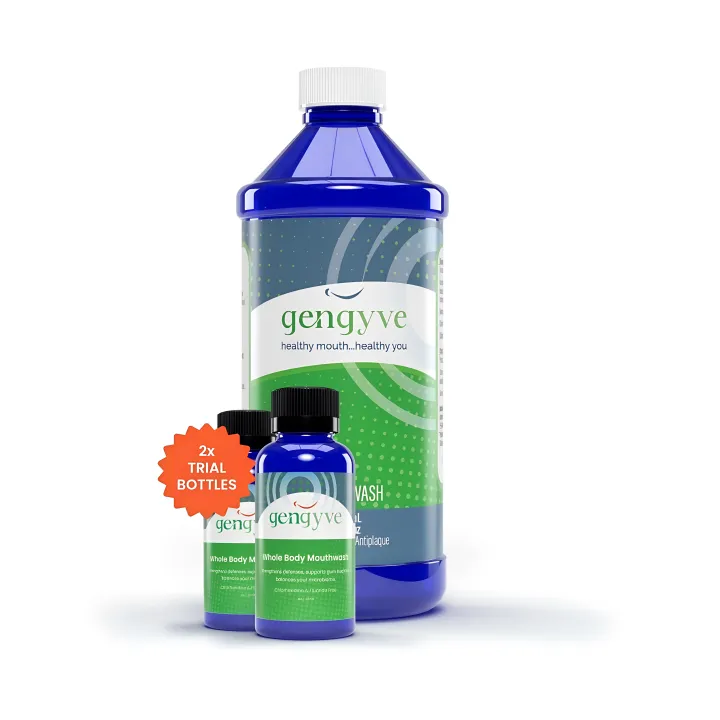
Once your dentist confirms a commercial rinse fits your healing stage, you can ask about options like Gengyve. It is an alcohol-free and chlorhexidine-free mouthwash developed by a practicing oral and maxillofacial surgeon, made for gentle everyday use rather than as a substitute for prescribed care.
Always check current labeling and get your provider's sign-off before using any new rinse post-surgery.

Maintaining the Rest of the Mouth
You can usually keep brushing and flossing teeth away from the extraction site right away. Just avoid direct contact with the socket itself, and follow your provider's instructions on when it's safe to clean near the surgical area.
Other habits worth sticking to during recovery:
- Avoid tobacco products
- Skip alcohol while healing, especially if you're on pain medication
- Use straws sparingly or not at all, since suction can disturb the clot
- Stick to soft, lukewarm foods and avoid anything hard, crunchy, or very hot
Conclusion
So, can you use mouthwash after a tooth extraction? Yes, for most people, eventually. Just not immediately, and not without factoring in your specific extraction and how your healing is going.
Gentle technique, the right type of rinse, and your dentist's specific instructions matter far more than rushing back to your normal routine on some fixed schedule.
If you're dealing with worsening pain, bleeding, swelling, fever, or trouble breathing, or you're simply unsure where you stand in recovery, contact your dentist or oral surgeon rather than guessing.
Frequently Asked Questions
How soon can you use mouthwash after tooth extraction?
Commercial mouthwash is usually avoided for at least the first 24 hours. Beyond that, your dentist determines when it's safe, which may differ from any saltwater or prescribed rinse they've already approved.
Can mouthwash cause dry socket?
Vigorous rinsing or forceful spitting can dislodge the protective clot, raising dry socket risk, especially in the first few days. Gentle technique and professional guidance reduce this risk considerably.
What mouthwash should I use after having a tooth pulled?
It depends on your procedure and how healing is progressing. Your dentist might recommend saltwater, an alcohol-free rinse, or a prescribed medicated option. Don't start chlorhexidine on your own.
What if I don't do saltwater rinses after tooth extraction?
Saltwater rinsing is commonly recommended but isn't a universal requirement. If it's not part of your plan, ask your dental provider what alternative aftercare steps you should follow instead.
How should you rinse after a tooth extraction?
Use only a rinse your dentist has approved, avoid vigorous swishing or forceful spitting, and let the liquid drain out of your mouth gently rather than forcing it.
What are the warning signs of infection or dry socket after an extraction?
Watch for worsening pain, foul taste or odor, fever, pus, growing swelling, or bleeding that won't stop. Difficulty breathing or swallowing needs urgent care. Contact your dentist if any of these appear.