But "natural" and "clinically proven" aren't the same thing. Many people assume a clove rinse works the same way regardless of how it's made, which isn't accurate.
This article breaks down what the evidence actually supports, where it falls short, and how to use clove mouthwash safely. We'll also cover how it fits alongside brushing, flossing, and professional dental care, not instead of them.
Key Takeaways
- Eugenol in clove shows antimicrobial activity against some oral bacteria in lab studies; human mouthwash evidence is limited.
- Clove rinses may support comfort and freshness, but they cannot remove cavities, cure abscesses, or replace periodontal care.
- Homemade clove water and concentrated clove oil vary widely in strength and aren't interchangeable with formulated products.
- Spit, don't swallow, and check with a dentist before use after surgery, during pregnancy, or with blood thinners.
What Is Clove Mouthwash?
Clove mouthwash isn't one standardized product. It's a category that can include a commercially manufactured rinse, a diluted clove preparation, or water steeped with clove buds at home.


Those three versions can behave very differently:
- Concentration of eugenol varies by preparation method
- Preservatives and pH affect shelf stability and irritation risk
- Commercial products undergo testing; homemade versions typically don't
Research on ground versus unground clove buds found a meaningful swing in eugenol from processing alone. Whole buds yielded essential oil that was 87.4% eugenol, compared with 68.7% from ground buds, according to a 2021 GC-MS study. That kind of variability is exactly why homemade clove water can't be treated as a fixed-strength product.

Where Eugenol Fits Into Oral Care
Eugenol has been studied for antimicrobial, anti-inflammatory, and analgesic effects. Laboratory work shows it can disrupt bacterial membranes and interfere with biofilm formation. That does not mean every clove rinse treats gum disease or kills all harmful bacteria. The compound has biological activity worth studying further.
A properly used mouthwash, clove-based or otherwise, works best as a supporting layer on top of brushing twice daily with fluoride toothpaste, cleaning between teeth, and regular dental exams. The National Institute of Dental and Craniofacial Research frames mouthwash this way: useful addition, not a foundation.
Key Advantages of Clove Mouthwash for Oral Health
The benefits below relate to supportive oral-care outcomes. None of them amount to disease prevention or treatment claims, and the strength of evidence varies by benefit.
Potential Support for Controlling Oral Bacteria
A 2017 laboratory study found that eugenol extracted from clove leaf oil damaged the cell membranes of Porphyromonas gingivalis, a bacterium tied to gum disease and biofilm formation. That's a meaningful finding, but it happened in a petri dish, not in someone's mouth.
The closest human evidence comes from a trial testing a blended rinse containing clove, tea tree oil, and basil (each at 0.2–0.3%) against a commercial essential-oil mouthwash.
Of 50 adults randomized, 40 completed the 21-day trial, according to Kothiwale's 2014 study. Both groups improved on plaque and gingival indices, but the difference between groups wasn't statistically significant.

That matters for two reasons:
- The formulation mixed three ingredients, so benefits can't be credited to clove alone
- Results don't transfer to homemade clove water, which wasn't tested at all
Support for Gum Comfort and Inflammation Management
Reducing oral irritation and keeping bacterial load lower may offer some comfort for mild, occasional gum tenderness. The evidence here is mixed, though.
One 2017 cell-culture study found clove essential oil suppressed inflammatory markers in human skin cells.
A separate 2013 study using actual gingival fibroblasts found eugenol did not inhibit the same inflammatory response, and in some cases stimulated it. Different cell types, different results.
If you're dealing with ongoing bleeding, swelling, gum recession, or loose teeth, that's not a situation for self-treatment with any mouthwash. It calls for a dental evaluation, full stop.
Temporary Freshness and Comfort
Clove's strong, spicy aroma can make a mouth feel fresher almost instantly. Combined with some activity against odor-associated bacteria in lab settings, it's easy to see the appeal.
But masking odor and resolving its cause are two different things. Persistent bad breath is often linked to gum disease, dry mouth, tongue coating, or an underlying infection. A clove rinse might smell better going in, but it won't fix any of those root causes on its own.
What Happens When Clove Mouthwash Is Misused or Overrelied On
Clove is potent, and that potency cuts both ways. Concentrated clove oil, or a homemade rinse steeped too strong, can irritate or even burn the gums, tongue, cheeks, or throat.
Ingestion can cause serious harm. MedlinePlus lists mouth and throat burns, breathing difficulties, and liver complications among the effects of clove oil overdose. Keep concentrated clove products away from children, and never swallow a rinse meant for spitting.
Who Should Check With a Professional First
A handful of groups should talk to a dentist or doctor before using clove mouthwash regularly:
- People with known allergies to clove or eugenol
- Anyone taking blood thinners like warfarin, since clove may increase bleeding tendency
- Pregnant or breastfeeding individuals, since safety data is limited
- Patients scheduled for oral surgery or recovering from recent procedures
- Anyone with unusually sensitive oral tissue
Don't Let a Rinse Mask a Bigger Problem
The biggest concern is using clove mouthwash to numb tooth pain, which can delay treatment for a cavity, cracked tooth, or abscess. Pain relief is not the same as fixing the cause. An abscess that stops hurting hasn't gone away, and it can still cause serious complications without treatment, according to the Mayo Clinic.
Seek emergency care immediately if you notice:
- Facial swelling
- Fever alongside tooth pain
- Pus or a bad taste that won't go away
- Difficulty swallowing or breathing
Used with care, clove rinses can still fit into oral care. Comfort and treatment are not interchangeable, and pain that needs a dentist should get one.
How to Get the Most Value from Clove Mouthwash
A clove rinse pulls its weight best as one piece of a complete routine, not a standalone fix.
- Follow the label exactly: use the stated amount, rinse for the stated time, spit it out, and don't swallow.
- Never fortify a formulated product by adding extra clove oil. You'll throw off the balance the formulation was built around.
- Treat homemade clove water with caution. Concentration, shelf life, and contamination risk all vary batch to batch, with no standardized recipe to fall back on. Ask a dental professional before making it a daily habit.
- Keep your core routine intact: brushing twice daily with fluoride toothpaste, cleaning between teeth, and sticking to regular dental visits.
What a Properly Formulated Rinse Looks Like
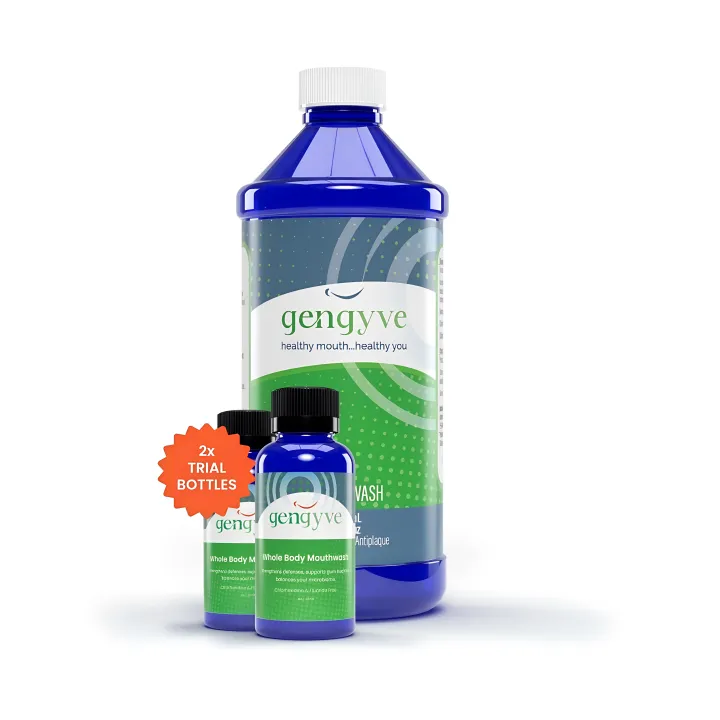
Comparing a homemade clove preparation to a lab-tested mouthwash is a useful exercise, even when the formulated product doesn't contain clove at all. Gengyve USA, developed by an oral and maxillofacial surgeon, offers a chlorhexidine-free, alcohol-free daily rinse built around hyaluronic acid, castor oil, CPC, pullulan, and PVP rather than clove or eugenol.
Gengyve does not replace clove in this comparison. A dental-surgeon-developed, consistently manufactured rinse shows what "formulated" means in practice: fixed ingredient ratios, repeatable batches, and a known safety profile that kitchen-steeped clove water cannot guarantee.

When to Stop and Ask for Help
Discontinue any clove rinse and contact your dentist if you notice burning, a rash, worsening soreness, swelling, or bleeding that doesn't improve. Patients recovering from surgery, living with implants, undergoing cancer treatment, or managing complex medical conditions should get individualized guidance from their treating clinician before adding any new rinse to their routine.
Conclusion
Clove mouthwash carries genuine potential, mostly thanks to eugenol's antimicrobial and mild numbing properties observed in lab and limited human studies. It may support fresher breath, a cleaner-feeling mouth, and occasional gum comfort.
It cannot replace proper dental care. The evidence depends heavily on formulation and concentration, and homemade clove water or straight clove oil shouldn't be treated as equivalent to a tested product.
The most reliable approach pairs sensible mouthwash use with the everyday basics:
- Fluoride brushing
- Interdental cleaning
- Routine checkups
- Prompt attention to pain, swelling, or bleeding that doesn't resolve on its own
Frequently Asked Questions
What will happen if I rinse my mouth with clove water?
You'll likely notice a strong, spicy taste and a brief freshness boost. Homemade clove water has no standard concentration and can irritate tissue, so spit it out and ask a dentist before making it routine.
Is clove mouthwash good for your gums?
It may offer mild comfort and limited antibacterial action, but it can't treat established gum disease. Persistent bleeding, swelling, or recession needs a dental exam, not a rinse.
Can clove mouthwash replace regular mouthwash?
No. Even a well-formulated clove rinse should complement brushing, flossing, and professional care rather than stand in for them, as the ADA notes for mouthrinses in general.
Is it safe to use clove mouthwash every day?
It depends entirely on the formulation, concentration, and your own health history. Follow label directions, and stop immediately if you notice burning or irritation.
Can clove mouthwash cure a toothache or cavity?
No. It might dull discomfort or freshen your mouth temporarily, but it can't repair decay or resolve an infection. Persistent or severe pain needs prompt dental attention.
Is clove oil safe to add to homemade mouthwash?
Not without guidance. Concentrated clove oil can burn or irritate oral tissue, and adding it yourself creates an unpredictable strength. A properly formulated product is the safer choice.