
Here's the catch: "gluten-free" claims aren't permanent. A product labeled natural, vegan, biodegradable, or PFAS-free isn't automatically gluten-free just because it sounds clean. These are separate claims, verified in separate ways.
This guide walks through how to check labels, what to ask manufacturers directly, how to compare floss-pick materials, and how to use picks without hurting your gums in the process.
Key Takeaways
- Confirm gluten status through a current package statement or direct manufacturer response, not an outdated online list
- Review the whole product, including floss, wax coatings, flavorings, handle material, and cross-contact controls
- Choose a pick size that fits comfortably between your teeth and switch to a fresh pick when the floss frays
- Talk to a dentist about persistent oral symptoms, especially if celiac disease or another allergy is suspected
What Makes a Dental Floss Pick Gluten-Free?
A floss pick has more parts than people assume. The strand might be nylon, polyester, silk, or a plant-based fiber. Separately, that strand is often coated in wax, flavoring oils, sweeteners, or antimicrobial additives. Then there's the handle, usually plastic or a plant-based alternative, which is a distinct component worth checking on its own.
Gluten-free claims don't all mean the same thing
Not every gluten claim carries the same weight:
- Gluten-free: a claim the manufacturer must be able to support, though there's no floss-specific government standard behind it
- Wheat-free: addresses wheat only, not rye, barley, or malt, which also contain gluten
- Made without intentionally added gluten: describes formulation intent, not necessarily finished-product testing
The FDA's gluten-free labeling rule sets a limit of less than 20 parts per million for qualifying foods under 21 CFR 101.91. Dental floss isn't a food, so that specific threshold doesn't automatically apply to floss picks.
The FDA classifies dental floss as a Class I medical device, not a cosmetic. Gluten-free statements on floss packaging therefore rest on the manufacturer's own basis rather than a food-labeling standard.
"Natural," "organic," "vegan," "biodegradable," and "PFAS-free" are all separate claims. None of them, alone or together, establishes that a product is gluten-free.

Why Gluten-Free Verification Matters
Not every floss pick contains gluten, and there's no evidence suggesting widespread contamination across the category. Still, people managing celiac disease or gluten sensitivity often prefer to remove uncertainty from products used in and around the mouth. That instinct is reasonable.
Where does the uncertainty actually come from? A few recurring sources:
- Flavored coatings with ingredients that aren't fully disclosed on packaging
- Formula changes a brand makes without updating marketing copy
- Incomplete ingredient lists on smaller or private-label products
- Supplier swaps that introduce new raw materials
- Shared manufacturing equipment used across multiple product lines
Beyond Celiac, a recognized celiac disease organization, specifically flags dental floss in its oral hygiene guidance and notes that flavored floss in particular can be a source of concern. Their recommendation is straightforward: check with the manufacturer for current product information rather than relying on assumptions.
That said, there's a difference between verifying a specific product and treating every floss pick as suspect. If you're experiencing symptoms you suspect are tied to gluten exposure, don't try to self-diagnose from a single product. A clinician can help you figure out what's actually going on, whether it's related to diet, technique, or something else entirely.
How to Choose Gluten-Free Dental Floss Picks
Start with what's printed on the box. A trustworthy package typically includes a current gluten-free statement, ingredient details where available, manufacturer contact information, and a lot or product identifier you can reference if you need to follow up.
Look at the floss and coating separately
The strand and its coating are chemically different things:
- Wax and oils: used to make flossing smoother, these can carry additional ingredients
- Flavorings and sweeteners: mint, cinnamon, and other flavors often come from complex ingredient blends
- Antimicrobial coatings: added for breath or bacteria control, these introduce yet another ingredient layer
- Colorants: rarely disclosed in detail but still part of the finished product
Unflavored or flavor-free picks can reduce some of this uncertainty, simply because there are fewer additives involved. But "unflavored" doesn't equal "confirmed gluten-free." You still need to check.
Ask the manufacturer directly
When package information isn't enough, a short set of questions to the company can clear things up:
- Do the finished floss picks contain wheat, barley, rye, malt, or other gluten-containing ingredients?
- Has the product been tested or reviewed for gluten, and does that review cover the current formulation and every component?
- How does the company handle supplier changes, shared equipment, or formulation updates?
Save the response. Packaging and formulas change, and a 2021 brand list circulating online doesn't reflect what's in a box today. A retailer's product page or an old blog post isn't a substitute for current manufacturer confirmation either.

What Else to Compare Before Buying Floss Picks
Gluten status is one piece of the puzzle. Fit, comfort, and sustainability claims are separate considerations worth weighing too.
Fit, comfort, and performance
Floss thickness, flexibility, and handle shape all affect how well a pick works in tight contacts, wider gaps, or around bridges and implants. A pick that shreds, snaps, or gets stuck is forcing you to use more pressure than you should, which can irritate or cut your gums.
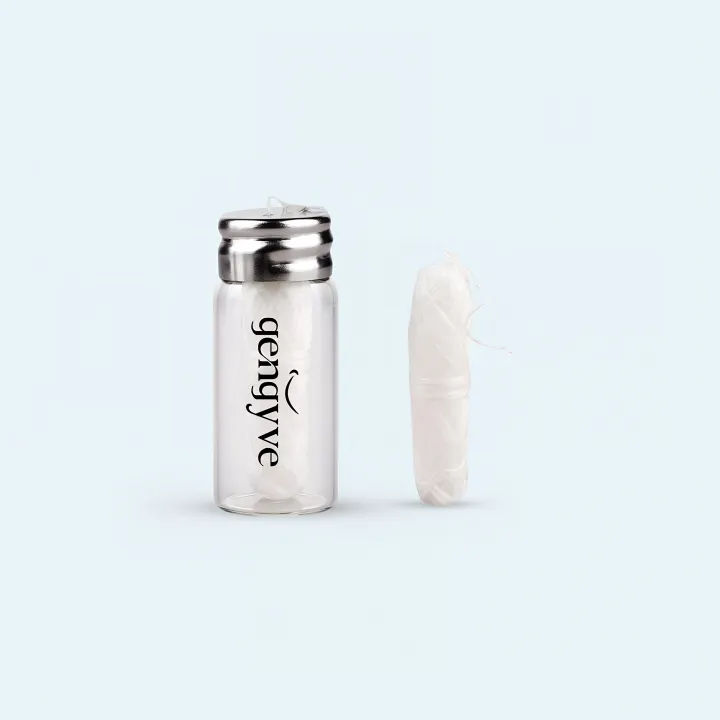
String floss remains an option here too. Gengyve's silk floss, for example, comes on a refillable spool rather than a pre-formed pick, with roughly 18 inches cut per use and wrapped around the fingers for control.
A product being silk-based or compostable doesn't say anything about gluten status one way or the other. That still needs its own confirmation from the manufacturer.
If you're unsure which tool fits your mouth, a dentist or hygienist can point you toward the right one based on your spacing and any restorations you have.
PFAS and sustainability are separate questions from gluten
These claims shouldn't be lumped together:
- PFAS-free claims should be backed by current testing or documentation, not just an "eco-friendly" label
- Biodegradable or compostable claims depend on specific disposal conditions; a handle marketed this way may not break down in an ordinary landfill or household compost bin
- Vegan or cruelty-free labeling describes animal-derived materials, which is a different question from gluten content entirely
Each of these is a distinct claim requiring distinct proof. None of them stands in for a gluten-free confirmation.
How to Use Floss Picks Safely and Effectively
Good technique matters as much as material choice. Here's the basic process:
- Guide the floss in gently: ease it between your teeth rather than snapping it against the gums
- Curve it around each tooth: form a C-shape against the tooth surface, not a straight line
- Go below the gumline carefully: only as far as feels comfortable, never forcing it
- Use a clean section each time: if the pick can't offer a fresh contact point or starts fraying, swap it out
A few hygiene basics round this out:
- Wash your hands before flossing
- Never share picks with anyone else
- Store them somewhere clean and dry
- Dispose of single-use picks responsibly after use
When a different tool makes more sense
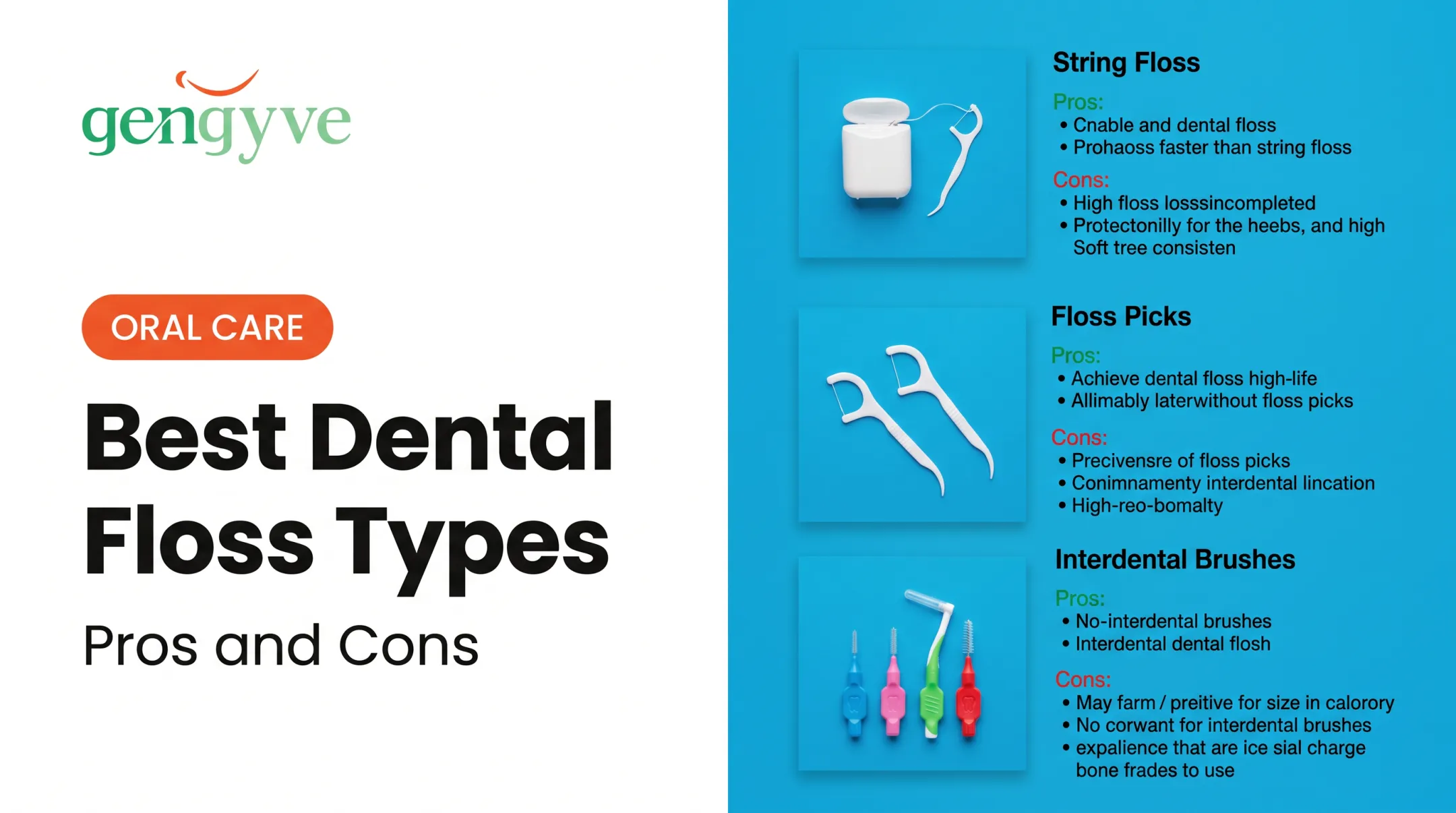
Floss picks aren't right for every mouth. Very tight contacts, braces, bridges, implants, or wider interdental spaces sometimes call for interdental brushes or string floss instead. A dentist can help match the tool to your specific situation.
Persistent bleeding, swelling, pain, sores, or a suspected allergic reaction are signs to get evaluated, not push through. Bleeding gums in particular can signal gingivitis, so mention it to your dentist at your next visit.

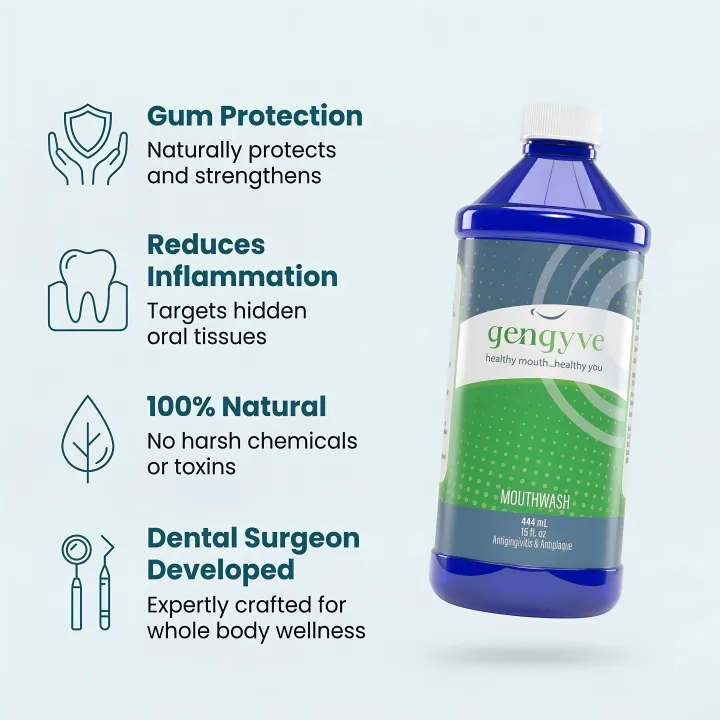
After brushing and interdental cleaning, some people like to finish with a gentle daily mouthwash. Gengyve's dental-surgeon-developed oral-care formula is one option to consider here. As with floss, check the current label and gluten-status information before adding anything new to your routine.
Frequently Asked Questions
Which dental floss is gluten-free?
Choose a current product the manufacturer explicitly identifies as gluten-free, and verify the entire pick, not just the strand. That means checking coatings, flavorings, the handle, and any cross-contact information the company provides.
Can dental floss picks contain gluten?
Gluten is more likely to show up in coatings, flavorings, or additives than in the base strand material itself. Judge the finished product as a whole rather than assuming the floss material alone tells the full story.
How can I tell if a floss pick is gluten-free?
Check the current package, available ingredient information, and any allergen statement. If that's not enough, contact the manufacturer directly, and recheck after any reformulation or packaging redesign.
Is PFAS-free dental floss also gluten-free?
No. PFAS-free and gluten-free describe two completely different product characteristics. One claim doesn't confirm or imply the other.
Are biodegradable or vegan floss picks gluten-free?
Not automatically. Sustainability claims and animal-derived-material claims address different properties than gluten content. Only the manufacturer can confirm ingredients and production controls for gluten.
Can I use floss picks if my gums bleed?
Use gentle technique and avoid forcing the pick between teeth. If bleeding is recurring, or you notice pain or swelling, get it evaluated by a dentist rather than continuing to push through it.