Introduction
Walk down any drugstore oral-care aisle and you'll find dozens of mouthwashes promising to fight gum disease.
The right one for you depends on what you're actually dealing with: occasional bleeding after flossing, a periodontist's diagnosis of periodontitis, gums so sensitive that minty rinses burn, or simply a desire for gentle daily maintenance.
Gum disease is common. About 42% of US adults aged 30 and older have some degree of periodontitis, according to CDC data based on a national health survey.
A mouthwash can help control bacteria, plaque buildup, and inflammation as part of a broader oral-care routine. It cannot dissolve hardened tartar, and it's no substitute for brushing, flossing, professional cleanings, or periodontal treatment.
This guide ranks mouthwashes by active ingredients, evidence quality, intended duration of use, alcohol and chlorhexidine content, irritation risk, and fit for specific needs, not by marketing claims.
Key Takeaways
- Chlorhexidine suits short-term, dentist-directed use, not routine daily care.
- Judge rinses by active ingredients like CPC, essential oils, fluoride, or hyaluronic acid, not by "strength."
- Alcohol-free formulas work better for sensitive, dry, or irritated gums.
- Gengyve offers a natural, alcohol-free, chlorhexidine-free option for daily gum care, not a periodontitis treatment.
- Persistent bleeding, swelling, pus, or loose teeth call for a dental visit.


Overview of Mouthwash for Gum Disease in the US
Gingivitis vs. Periodontitis: Why the Difference Matters
Gingivitis is inflammation confined to the gum tissue, usually showing up as redness, swelling, or bleeding caused by plaque. It's typically reversible with better brushing, flossing, and a professional cleaning.
Periodontitis is different. It involves loss of the attachment fibers and bone that hold teeth in place, and that damage doesn't reverse on its own.
| Condition | What's affected | Reversible? |
|---|---|---|
| Gingivitis | Gum tissue only | Usually, with improved hygiene |
| Periodontitis | Attachment fibers and bone | No, requires professional management |
Someone whose periodontitis has been successfully treated can still develop gingivitis later. They'll need lifelong supportive care regardless.
What Mouthwash Can (and Can't) Do
A mouth rinse is an adjunct, not a standalone treatment. The ADA's mouthrinse guidance describes it as a tool that can help control plaque and gingivitis when brushing and interdental cleaning aren't enough, not a replacement for either.
- Rinsing can reduce surface bacteria, plaque accumulation, and gum inflammation
- It cannot dissolve calculus already stuck to your teeth
- It cannot reverse bone loss from periodontitis
- It works best alongside, not instead of, brushing and flossing
Prescription Rinses vs. Over-the-Counter Options
Not every mouthwash belongs in the same category. Prescription rinses like chlorhexidine gluconate require a dentist's direction for dose, duration, and follow-up. OTC rinses, including CPC, essential-oil, fluoride-based, and natural formulas, are sold without a prescription but vary widely in evidence and intended use.

The sections below rank options by use case, not by which one burns the most.
Top Mouthwashes for Gum Disease in the US
Each option is evaluated on active ingredients and evidence, realistic use case, tolerability, and whether it's meant for short-term treatment or everyday maintenance. None of these claims to cure periodontitis — that requires a dentist or periodontist.
Gengyve Mouthwash — Best for Gentle, Alcohol-Free Daily Care
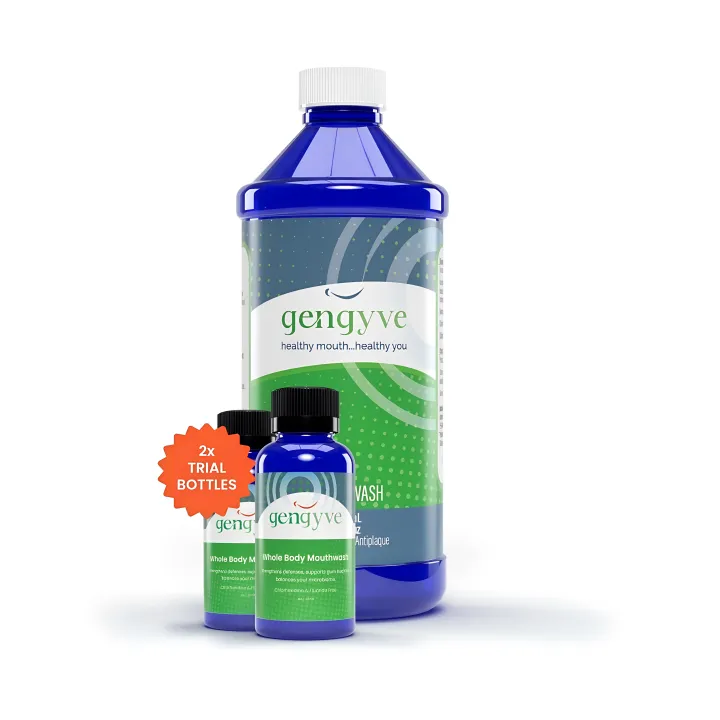
Gengyve CPC Mouthwash with Hyaluronic Acid was developed by practicing oral and maxillofacial surgeons who wanted a rinse they'd actually recommend to their own patients.
It's made in the USA, sold as an FDA-registered OTC antigingivitis and antiplaque rinse, and contains cetylpyridinium chloride (CPC) at 0.05% alongside hyaluronic acid, pullulan, PVP, and castor oil.
What sets it apart:
- Alcohol-free and chlorhexidine-free: no burning sensation, no chlorhexidine-linked staining
- Hyaluronic acid for gum hydration and comfort, uncommon in mainstream drugstore rinses
- Formulated for long-term daily use, unlike chlorhexidine's short-term restrictions
- Fluoride-free, so it won't interfere with separate fluoride treatments
A 2020 randomized, double-blind trial published in the International Journal of Dental Hygiene compared a CPC-hyaluronic acid rinse, chlorhexidine, and a placebo over 21 days in 75 dental students. Plaque accumulation was higher in the placebo group, while gingivitis differences between groups weren't statistically significant.
Staining increased in both the chlorhexidine and placebo groups, but not in the CPC-hyaluronic acid group. That study examined the formulation generally; current product labels and claims should be reviewed directly.

Gengyve works as a daily-maintenance option for people who want to skip the alcohol burn and chlorhexidine staining risk. That includes sensitive or dry gums, recovery after a dental procedure, and gum health between periodontal recall visits.
It is not a substitute for scaling and root planing, a periodontal diagnosis, or a dentist-prescribed rinse when one is indicated.
| Factor | Details |
|---|---|
| Best suited for | People who want a gentle, alcohol-free, chlorhexidine-free daily rinse, including sensitive-gum or post-procedure use |
| Active ingredients & evidence | CPC 0.05% plus hyaluronic acid; supported by a 21-day randomized trial versus chlorhexidine and placebo |
| Key limitation | Works best with consistent daily use; not a standalone treatment for diagnosed periodontitis |
Chlorhexidine Gluconate Mouthwash — Best for Short-Term, Dentist-Directed Use
Chlorhexidine gluconate 0.12% is the prescription-strength standard for gingivitis control, but it's meant to be used exactly as a dentist directs, not indefinitely.
A Cochrane review covering 51 studies and more than 5,000 participants found strong evidence that chlorhexidine reduces plaque when added to regular brushing. Its effect on mild gingivitis wasn't considered clinically significant on its own.
Common drawbacks include:
- Tooth and restoration staining, especially with use beyond four weeks
- Altered or temporary loss of taste
- Dry mouth and mucosal irritation
- Increased calculus buildup with prolonged use
Because of these side effects, chlorhexidine generally isn't recommended as a daily rinse for months or years at a time. Brands positioning themselves as gentler alternatives often point to a two-week usage ceiling tied to exactly these risks.
| Factor | Details |
|---|---|
| Best suited for | A dentist-directed short-term plan, or selected post-procedure situations |
| Active ingredient & evidence | Chlorhexidine gluconate 0.12%; strong adjunctive plaque-reduction evidence |
| Key limitation | Not intended for indefinite daily use; staining, taste change, and dryness are common |
Cetylpyridinium Chloride (CPC) Mouthwash — Best OTC Maintenance Option
CPC is the active ingredient behind many over-the-counter plaque and gingivitis rinses, including Gengyve's formula. It works by disrupting bacterial cell membranes, and research shows it can meaningfully reduce interproximal plaque and gingivitis scores over six or more weeks of use.
Compared with chlorhexidine, brushing-study data shows no statistically significant difference in plaque or gingival bleeding outcomes, though chlorhexidine still edges out CPC in non-brushing plaque-regrowth models.
- Alcohol-free CPC formulas tend to be gentler on sensitive tissue
- Alcohol-containing versions may offer more bite but risk dryness and irritation
- CPC can cause brown staining on teeth or the tongue in some users
- Reducing surface bacteria isn't the same as treating deep periodontal pockets
| Factor | Details |
|---|---|
| Best suited for | Daily plaque and gingivitis maintenance, especially an alcohol-free OTC option |
| Active ingredient & evidence | CPC (concentration varies by product); supports plaque and gingivitis reduction with regular use |
| Key limitation | May not be enough alone for diagnosed periodontitis or persistent bleeding |
Essential-Oil Mouthwash — Best for Adjunctive Plaque Control
Essential-oil rinses typically combine eucalyptol, menthol, thymol, and methyl salicylate. These formulas have decades of use for plaque and gingivitis control alongside brushing and flossing.
A 2024 systematic review comparing alcohol-containing and alcohol-free essential-oil rinses found alcohol-free versions provided somewhat less plaque control overall, but no meaningful difference in gingivitis or bleeding. Burning intensity was significantly higher with alcohol-containing formulas.
- Alcohol-containing versions can cause burning, especially on irritated tissue
- Taste tends to be milder in alcohol-free formulations
- A rinse that's hard to tolerate won't get used consistently, and consistency matters more than concentration
| Factor | Details |
|---|---|
| Best suited for | Adults who tolerate a strong-tasting OTC rinse as a daily adjunct |
| Active ingredients & evidence | Eucalyptol, menthol, thymol, methyl salicylate; supported plaque/gingivitis evidence, especially alcohol-containing versions |
| Key limitation | Not ideal for dry mouth, sensitive tissue, or anyone who can't tolerate the burn |
Alcohol-Free Fluoride or Stannous-Fluoride Mouthwash — Best for Sensitivity and Cavity Protection
Fluoride rinses are primarily about cavity prevention. They help remineralize enamel and aren't marketed as gum-disease treatments on their own. Stannous-fluoride formulas go further, with labels listing antigingivitis and antihypersensitivity uses alongside anticavity protection.
That distinction matters: a conventional fluoride rinse's cavity-prevention claim doesn't automatically mean it treats gum inflammation. Only products specifically labeled for gingivitis or sensitivity have evidence behind that use.
- Check whether the label claims gingivitis or sensitivity benefits, not just cavity protection
- Stannous-fluoride formulas can cause surface staining with extended use
- Alcohol-free versions are gentler for exposed roots or sensitive gums
| Factor | Details |
|---|---|
| Best suited for | People needing cavity prevention, root sensitivity relief, or a gentle daily adjunct |
| Active ingredients & evidence | Fluoride or stannous fluoride; caries-prevention evidence, with sensitivity/gingivitis claims specific to labeled products |
| Key limitation | Doesn't replace professional treatment once periodontitis is established |
How We Chose the Best Mouthwashes
We evaluated each product by intended use and evidence, not marketing language, star ratings, or how much a rinse burns.
Ingredient and Evidence Quality
We checked active ingredients, concentrations, label claims, and independent clinical evidence for each category. Lab results that kill bacteria in a petri dish do not always improve real-world plaque, gingivitis, or sensitivity. We prioritized clinical outcomes over ad copy.
Intended Use and Safety
Some rinses are prescription-only and short-term; others are OTC and built for years of daily use. We noted:
- Whether staining, taste changes, or dryness are documented side effects
- Allergy and swallowing warnings
- Considerations for pregnancy, children, or existing medical conditions
Follow the product label, and ask a dentist or pharmacist about interactions with medications or other oral-care products.
Tolerability and Adherence
A mouthwash only works if you actually use it. We compared alcohol content, burn, flavor, and dryness, because the best rinse on paper is useless sitting unused in a medicine cabinet.

Labels like "natural," "alcohol-free," and "chlorhexidine-free" describe a formulation, not proof that a product treats gum disease better than alternatives. Each still needs to be judged on its own evidence.
Common Selection Mistakes to Avoid
- Using mouthwash as a substitute for brushing and flossing
- Assuming bleeding gums are harmless and ignoring them
- Using chlorhexidine indefinitely without dentist follow-up
- Picking a rinse just because it claims to kill nearly all germs
See a dentist promptly for persistent bleeding, swelling, pus, loose teeth, gum recession, significant pain, or fever alongside dental symptoms. These can signal periodontitis or infection that a rinse alone won't fix.
Conclusion
There's no single best mouthwash for gum disease. The right pick depends on your diagnosis, treatment stage, sensitivity, and how long you plan to use it.
Chlorhexidine has a role, but only under a dentist's direction and for a limited time. OTC options, including CPC, essential oil, fluoride, stannous fluoride, and natural alcohol-free formulas, serve different daily-care needs, from plaque control to sensitivity relief.
If you want a gentle, alcohol-free, chlorhexidine-free option for everyday gum care, check Gengyve's current ingredient list and usage directions on the product label. It can fit recovery after a dental procedure or ongoing periodontal maintenance. It's a daily-care formula, not a replacement for diagnosing or treating periodontitis.
If you're dealing with bleeding, swelling, pus, loose teeth, or persistent pain, see a dentist or periodontist before relying on any rinse. For questions about Gengyve's formulation, reach the team at info@gengyveusa.com.
Frequently Asked Questions
Does mouthwash help treat gum disease?
Mouthwash can help control plaque and bacteria that contribute to gum inflammation, but it doesn't remove hardened tartar. It works best alongside brushing, flossing, and professional cleanings, not instead of them.
What is the best mouthwash for gum disease?
It depends on your situation. Gingivitis, diagnosed periodontitis, sensitive gums, dry mouth, and long-term maintenance all call for different formulas, and prescription-strength options should come from your dentist, not a drugstore shelf.
Can I get a prescription mouthwash for periodontal disease?
Yes, dentists can prescribe chlorhexidine or another targeted rinse for specific situations. The exact product, dose, and duration should be determined by your treating dentist, not a generic schedule.
What mouthwashes do not contain chlorhexidine?
CPC-based rinses, essential-oil formulas, fluoride or stannous-fluoride rinses, and natural alcohol-free options like Gengyve are all chlorhexidine-free. Always check the current label to confirm ingredients before buying.
Can chlorhexidine mouthwash irritate gums?
Yes. Chlorhexidine can cause staining, altered taste, dry mouth, and mucosal irritation, especially with extended use. Stop using it and contact your dentist if symptoms are significant or persistent.
What kills plaque and gingivitis?
Daily brushing and interdental cleaning remove most plaque mechanically. Mouthwash ingredients like CPC, essential oils, or chlorhexidine offer additional bacterial control, but established tartar still requires a professional cleaning to remove.