
Introduction: What Are Mouthwash Active Ingredients?
The "active ingredient" on a mouthwash label is the component meant to do something therapeutic: reduce plaque, fight cavities, calm bad breath, or support gum health. Everything else on the label just helps deliver it.
Many shoppers struggle with a simple problem: separating a rinse that only promises a minty blast from one formulated for an actual dental concern. A product can smell identical to a therapeutic rinse while doing nothing for your gums.
This guide walks through the major active ingredients, how to match one to your specific goal, what to check on the label, and when a dentist's input matters more than anything on the shelf. Mouthwash supports your routine. It doesn't replace brushing or cleaning between your teeth.
Key Takeaways
- No single ingredient works best for everyone: fluoride targets cavities, antimicrobials target plaque and breath
- Chlorhexidine helps in specific clinical situations but can stain teeth and alter taste
- Match the active ingredient to your actual oral-health goal, not the marketing claim
- Follow label directions exactly, and see a dentist for bleeding, swelling, or persistent pain
The Main Active Ingredients in Mouthwash
Therapeutic mouthwash contains an ingredient intended to address a dental-health concern. Cosmetic mouthwash just freshens breath temporarily, with no claim to treat anything. The front label often blurs this distinction, so the active ingredient panel is where the real information lives.
Fluoride
Fluoride ions support enamel remineralization and are the ingredient most associated with cavity prevention. According to FDA's rinse monograph, over-the-counter anticaries rinses typically use:
- Sodium fluoride at 0.02% or 0.05%
- Acidulated phosphate fluoride, formulated for 0.01% to 0.02% effective fluoride ion
- Stannous fluoride, diluted to a 0.1% aqueous solution
A common benchmark is 0.05% sodium fluoride, roughly 230 ppm fluoride ion. These numbers aren't interchangeable across compounds, so check which one you're actually comparing.
Fluoride rinse isn't automatic for everyone. It's generally recommended based on cavity risk, age, dry mouth, or a dentist's specific advice, not as a blanket daily habit for low-risk adults.
Antimicrobial Ingredients: CPC, Chlorhexidine, and Essential Oils
Cetylpyridinium chloride (CPC) is a common over-the-counter antimicrobial. Research on CPC rinses at 0.05%-0.10% concentrations shows a small but statistically significant reduction in plaque and gingival inflammation when added to regular brushing. It's an adjunct, not a replacement for mechanical cleaning, and it can cause brown staining on teeth or restorations with regular use.
Chlorhexidine sits in a different category entirely. It's prescription-only in the US and delivers much stronger plaque control.
- Produces a large, well-documented reduction in plaque over 4-6 weeks or longer
- Improves mild gingivitis, though the clinical significance is debated when baseline inflammation is already low
- Causes staining, temporary taste disturbance, and tissue irritation, with staining becoming more noticeable at four weeks or beyond, according to Cochrane's chlorhexidine review
Essential oils such as eucalyptol, menthol, thymol, and methyl salicylate show benefit in specific studied formulations, not automatically in any rinse that lists mint or eucalyptus as a flavor. A 2016 meta-analysis of 16 studies found meaningfully larger plaque and gingivitis reductions versus placebo, but rated the underlying evidence as moderate to low quality. The takeaway: check what was actually tested, not just the ingredient list.

Other Actives: Peroxide, Zinc, Xylitol, and Oxidizing Agents
- Hydrogen peroxide supports surface-stain whitening. A 2025 trial using a 2.5% peroxide rinse found visible color change appearing around 60 days, not instantly. Misuse can cause sensitivity or tissue irritation, so follow the label rather than mixing your own concentration at home.
- Zinc salts bind volatile sulfur compounds and suppress odor-producing bacteria. That's a breath-control mechanism, not proof the product treats gum disease.
- Xylitol and chlorine dioxide/sodium chlorite formulations have some supporting evidence, mostly short-term and formulation-specific. Don't assume these replace fluoride for cavity prevention or carry universal antimicrobial claims.
Active ingredients differ from inactive ones. Water, alcohol or other solvents, humectants, sweeteners, preservatives, colorants, and flavoring agents round out the formula but aren't responsible for any therapeutic claim on the label.
How to Choose an Active Ingredient for Your Oral-Health Goal
Before comparing products, identify your actual priority: cavities, gingivitis, bad breath, sensitivity, dry mouth, whitening, or post-procedure recovery. The right ingredient changes depending on the answer.
Cavity Prevention and Enamel Support
Fluoride rinses are worth researching if you need extra cavity protection beyond brushing with fluoride toothpaste, which remains the foundation either way. Ask a dentist first if you have:
- High cavity risk or a history of frequent decay
- Reduced saliva flow or dry mouth
- A medical condition affecting oral health
Gingivitis, Plaque, and Bleeding Gums
CPC, essential-oil, and chlorhexidine rinses each have a role, but none is universally "best." Compare them by intended use, evidence strength, availability, and side-effect profile.
See a dentist if you notice:
- Persistent bleeding or swelling
- Gum recession or loose teeth
- A lingering bad taste
Mouthwash can't remove hardened calculus or resolve every cause of periodontal disease on its own.
Bad Breath
Zinc and antimicrobial ingredients can help with odor compounds. Mouthwash can also mask a deeper issue, such as tongue coating, gum disease, cavities, dry mouth, or an underlying medical condition.
A flavor burst that fades in twenty minutes is different from genuine odor control. If bad breath persists despite good hygiene, get it checked rather than switching flavors again.
Sensitive Gums, Dry Mouth, Implants, and Oral Procedures
Alcohol-free or milder formulations tend to feel more comfortable for dry mouth or irritated tissue, though alcohol itself isn't automatically harmful for every user. Implant patients, orthodontic patients, and anyone recovering from oral surgery should follow their dental team's instructions rather than choosing a rinse from marketing copy alone.
Gengyve Formulation Example
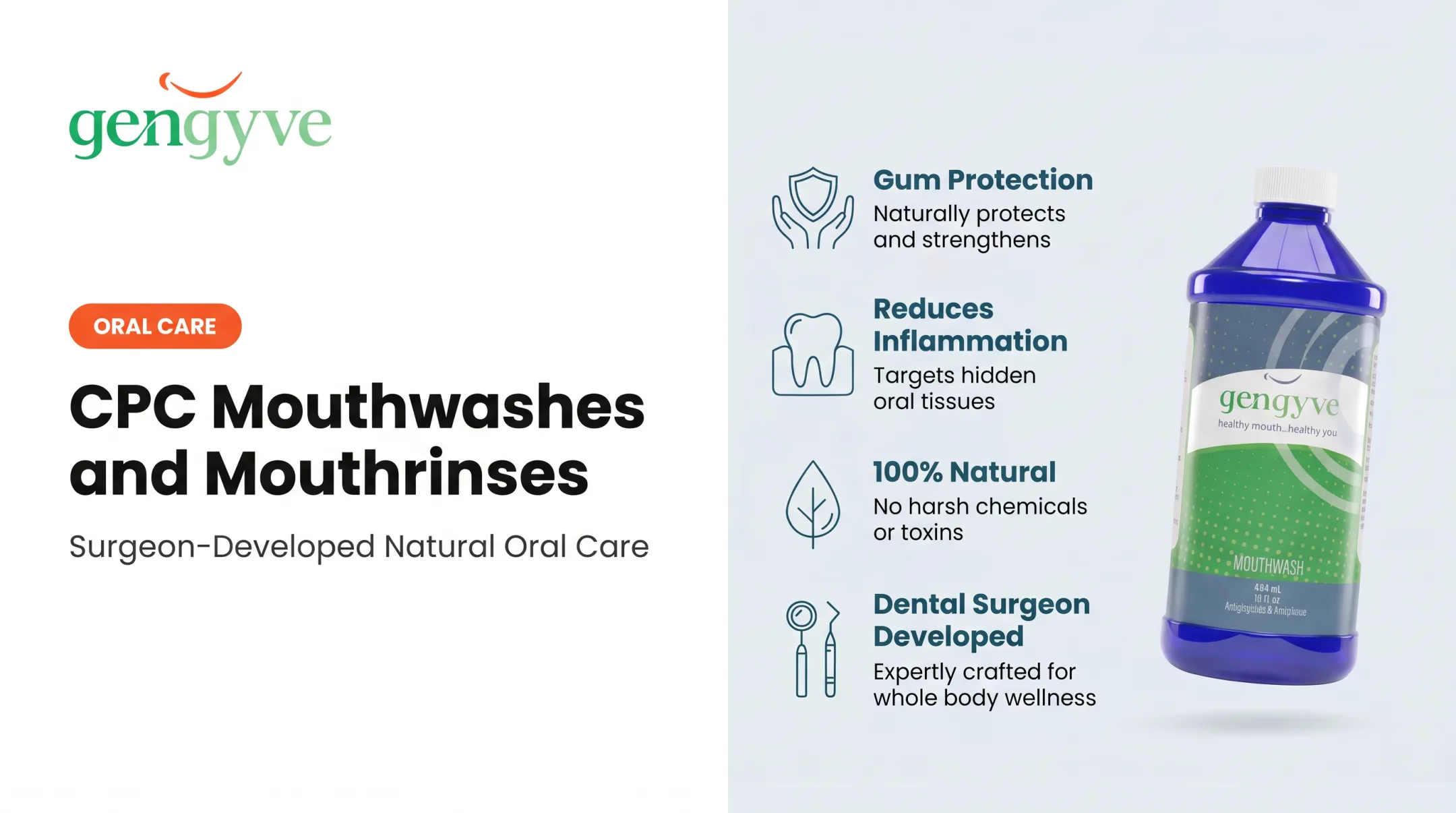
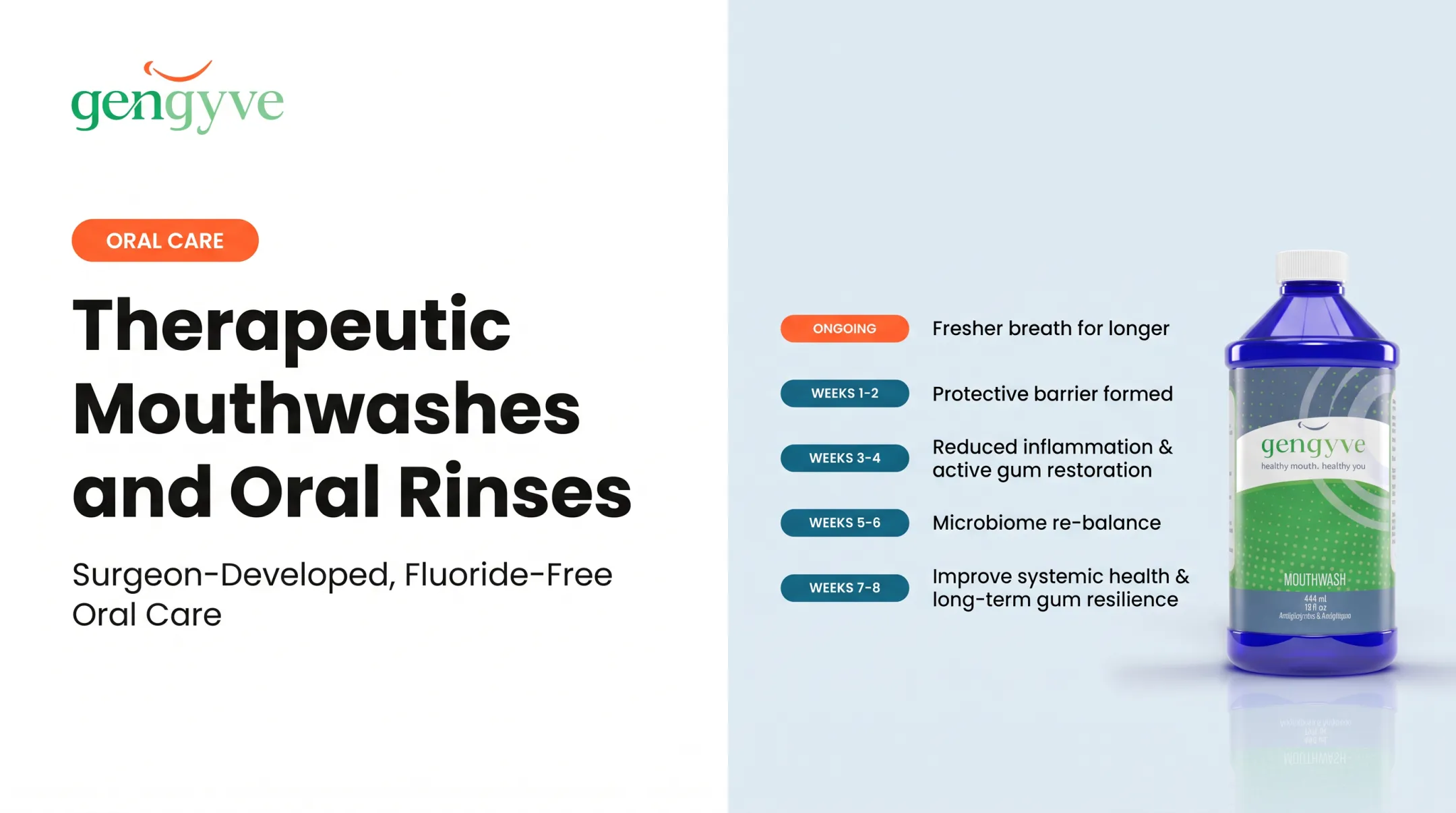
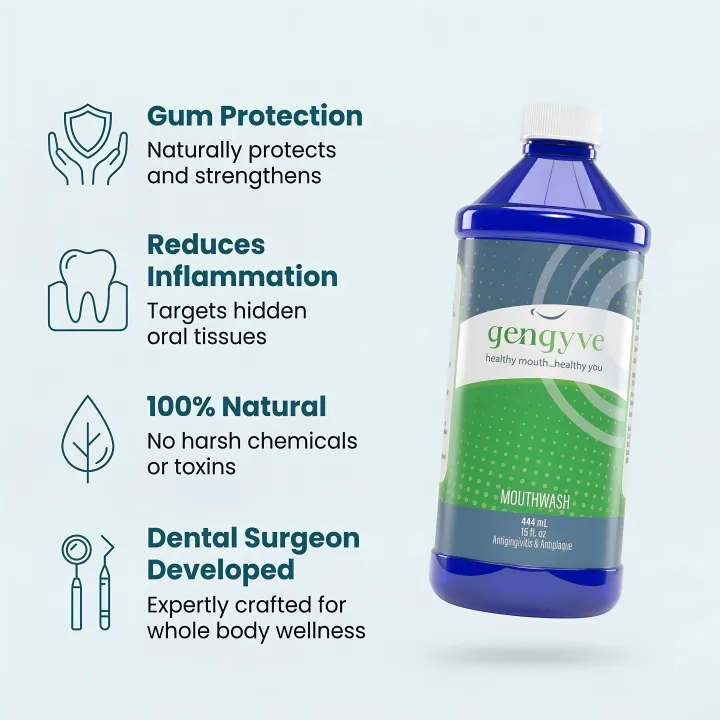
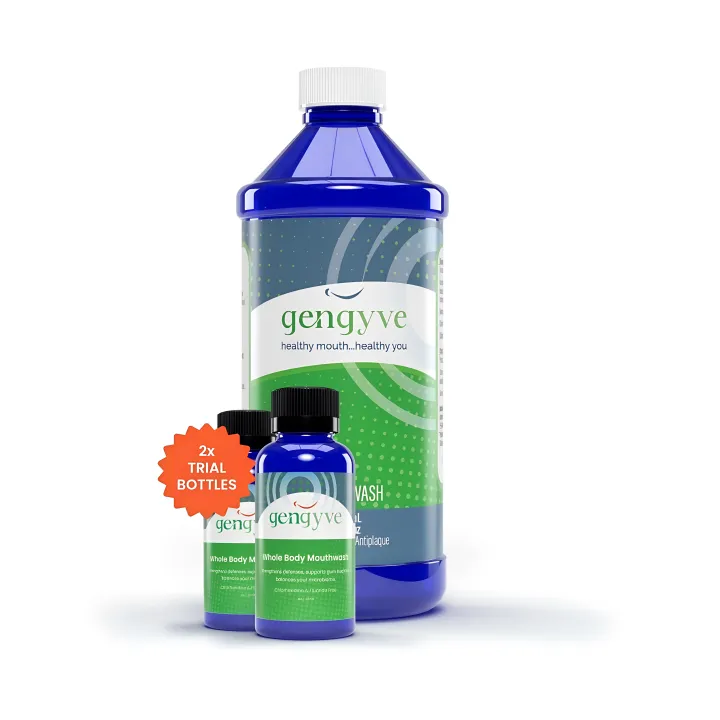
Gengyve, developed by a practicing oral and maxillofacial surgeon, is an alcohol-free, chlorhexidine-free, fluoride-free rinse built around CPC and hyaluronic acid. CPC provides antimicrobial support; hyaluronic acid supports oral-tissue hydration and comfort.
A 21-day trial in 75 dental students compared CPC-hyaluronic acid, chlorhexidine, and placebo rinses. Placebo users showed greater plaque accumulation, though gingivitis differences were not statistically significant in that short window.

The study did not prove long-term superiority or treat existing periodontitis. Short trials support a formulation's direction, not a cure-all claim. Gengyve is designed for long-term daily use, unlike chlorhexidine's typical short-term, prescription-limited role.
How to Read a Mouthwash Label Before Buying
Every OTC drug label should show the active ingredient, its concentration, purpose, directions, warnings, and age guidance. Start there instead of the front-of-bottle claims.
A quick checklist before you buy:
- Identify your goal first: cavities, plaque, breath, or comfort
- Check alcohol status if you have dry mouth or sensitive tissue
- Confirm fluoride exposure from toothpaste or water before adding more
- Scan for allergens or irritants specific to your history
- Note the suggested duration: some actives aren't meant for indefinite use
The same ingredient name can mean different things depending on concentration and formulation. Sodium fluoride percentages, for instance, describe the compound itself, while acidulated phosphate fluoride percentages describe the fluoride ion: they're not directly comparable. Be skeptical of terms like "natural," "professional strength," or "deep clean" unless they're backed by a specific, verifiable claim on the label itself.
Safety, Side Effects, and Correct Mouthwash Use
Swish and spit exactly as directed. Don't swallow, dilute, combine with other rinses, or use more often than the label allows.
Who Should Seek Professional Guidance
Talk to a dentist or physician before using prescription-strength rinses, chlorhexidine, or specialty products during pregnancy, cancer treatment, or complex medical care.
According to ADA's mouthrinse guidance, children younger than six shouldn't use mouthrinse unless a dentist directs it, largely due to the risk of swallowing.
Common Side Effects and Warning Signs
- Staining (chlorhexidine, CPC) and altered taste
- Burning, dryness, or soft-tissue irritation
- Allergic reactions, including facial swelling or breathing difficulty
Stop using any rinse and seek care immediately if you notice severe irritation, worsening pain, persistent bleeding, or symptoms that don't improve within a few days.
Alcohol, Chlorhexidine, Peroxide, and "Natural" Claims
Alcohol-free doesn't automatically mean more effective, and alcohol-containing rinses aren't automatically dangerous for everyone. Chlorhexidine and peroxide both have legitimate, evidence-backed uses but require strict adherence to directions.

"Natural" ingredients can still irritate tissue or lack evidence for a specific claim, so read past the label's front panel.
Daily Routine and Professional Care
Brushing twice daily with fluoride toothpaste, cleaning between teeth, and keeping up with dental visits remain the backbone of oral care. Mouthwash supports that routine; it doesn't replace it.
The simplest decision rule: pick an active ingredient for a defined goal, use it as directed, and get evaluated if symptoms persist instead of cycling through five different bottles hoping one sticks.
Frequently Asked Questions
What is the best active ingredient in mouthwash?
It depends on your goal. Fluoride targets cavity prevention, antimicrobial ingredients like CPC or essential oils support plaque and gingivitis control, and zinc helps with bad breath. For your specific needs, ask a dentist which option fits best.
What mouthwash is good for gingivitis?
CPC, essential-oil rinses, and prescription chlorhexidine all show evidence for gingivitis support. None replaces brushing, interdental cleaning, or periodontal treatment when gum disease is already established.
Do dentists recommend antibacterial mouthwash?
Dentists may recommend one based on your specific plaque, gingivitis, or breath concerns. Persistent gum symptoms, such as bleeding or swelling, need an in-person exam rather than a stronger rinse.
What are the benefits of using chlorhexidine mouthwash?
Chlorhexidine offers strong plaque and gingivitis control in specific, often prescription-based situations. It comes with trade-offs: staining, taste changes, and dryness are common with extended use.
What is an active ingredient in mouthwash?
It's the component intended to produce a therapeutic effect, such as fluoride for cavities, CPC or chlorhexidine for plaque, essential oils for gingivitis, or zinc for odor control.
What ingredient should I avoid in mouthwash?
There's no ingredient everyone must avoid. Be cautious with anything that worsens your personal sensitivity, dryness, allergies, or staining, and follow dental guidance for any prescription-strength product.