Introduction
The best mouthwash matches what you're actually trying to fix, and you can use it exactly as directed without irritation. Burn intensity and price are poor guides.
Pick the wrong formula and you might end up with dry mouth, stinging gums, stained teeth, or a false sense that you've solved a problem that actually needs a dentist's attention. Pick the right one, and it becomes a useful add-on to brushing and flossing, not a replacement for either.
This guide walks through how to choose: figure out your goal first, then check the active ingredients, weigh the evidence, read the label directions, and know when it's time to see a dentist instead of trying another rinse.
Key Takeaways
- Mouthwash supplements brushing and interdental cleaning; it doesn't replace them or professional dental care
- Match the formula to your goal: fluoride for cavities, CPC or essential oils for gums, gentle rinses for dry mouth or recovery
- Alcohol-free, gentle formulas suit dryness, burning, or sensitivity better than harsher rinses
- A strong burn doesn't mean a mouthwash works better
- Bleeding gums, pain, swelling, or loose teeth need a dentist, not more rinsing
What Is Mouthwash?
Mouthwash is a liquid you swish and spit, intended to deliver a cosmetic, preventive, or therapeutic benefit. That's a wide net, and it's exactly why "best mouthwash" questions don't have a single answer.


The American Dental Association splits products into two broad camps: cosmetic rinses that temporarily mask odor, and therapeutic rinses built to control plaque, gingivitis, decay, or other specific conditions, according to the ADA's mouthrinse guidance. The FDA goes further. It treats any product that claims to prevent or treat disease as a drug, regardless of how it's marketed.
Types of Mouthwash
Here's the shorthand version of what's on the shelf:
- Fluoride rinses – aimed at cavity prevention, typically for ages six and up
- Antiseptic/antibacterial rinses (CPC, essential oils) – target plaque and gum inflammation
- Alcohol-free formulas – a formulation choice, not a therapeutic category; still check the active ingredient
- Natural or botanical rinses – marketing language that needs its own evidence check
- Whitening rinses – usually peroxide-based, tested in specific formulations
- Prescription rinses – chlorhexidine and similar, used under a dentist's direction
What's Actually in the Bottle
Judge the whole label, not the loudest word on the front.
| Ingredient | What it's for | The catch |
|---|---|---|
| Fluoride (sodium fluoride) | Supports remineralization, cavity prevention | Concentration and age directions matter |
| Cetylpyridinium chloride (CPC) | Modest plaque/gingivitis reduction, breath odor | Doesn't establish clinical cavity prevention on its own |
| Essential oils | Plaque and gingivitis control | Evidence applies to tested formulas, not DIY mixes |
| Hydrogen peroxide | Whitening in specific formulations | Results don't transfer to every peroxide product |
| Potassium nitrate | Sensitivity relief | Match the claim to the actual tested product |
| Chlorhexidine | Prescription plaque control | Staining, taste change, calculus buildup with extended use |
Beyond the active ingredient, humectants, flavorings, sweeteners, and pH-adjusters shape how a rinse feels and whether you'll tolerate it long-term.
Check the directions too: concentration, contact time, age warnings, and swallowing precautions all vary by product. An over-the-counter daily fluoride rinse, for example, calls for 10 mL swished for one minute, while a prescription chlorhexidine product specifies 15 mL for 30 seconds. Different products, different rules.
What Mouthwash Can (and Can't) Do
A 2016 Cochrane review covering 37 trials and nearly 16,000 children found that supervised fluoride rinsing cut tooth decay increment by 27% compared with no rinsing, according to the Cochrane fluoride review. That's a meaningful number, but it's a pediatric, supervised-use result, not an automatic guarantee for every adult user.

What mouthwash cannot do:
- Remove hardened tartar (only professional cleaning does that)
- Repair advanced gum disease or reverse bone loss
- Replace brushing or flossing
- Diagnose the cause of chronic bad breath or bleeding gums
What to Consider When Choosing the Best Mouthwash
Start With Your Goal, Not the Marketing
Start by naming one primary goal. Cavity risk, gum inflammation, bad breath, dry mouth, sensitivity, whitening, or post-procedure recovery each point toward a different active ingredient.
If you have bleeding gums, persistent odor, pain, swelling, ulcers, or loose teeth, that's a signal for a dental visit, not an indefinite trial-and-error rinse hunt.
Check the Active Ingredient, Not the Claim
"Deep clean," "maximum strength," and "kills germs" aren't ingredients. Look for a named active with a documented purpose. Separate established clinical evidence from early-stage microbiome, probiotic, or remineralization research.
A 2023 review comparing probiotic rinses to chlorhexidine found only very-low-certainty evidence for plaque and gingivitis outcomes. In that category, marketing still runs ahead of the science.
Alcohol, Burning, and Everyday Comfort
A burning sensation isn't proof of effectiveness. The ADA notes that alcohol can be drying and suggests alcohol-free options for people prone to xerostomia. A 2024 systematic review found alcohol-containing essential-oil rinses produced more burning without a meaningful edge in gum health over alcohol-free versions.
Consider alcohol-free if you experience:
- Dry mouth or burning after rinsing
- Tissue irritation or taste changes
- Difficulty reliably spitting (common in young children)
If sores, swelling, or irritation persist after switching products, stop and check with a dentist.
Fluoride and "Remineralizing" Claims
Fluoride helps form more acid-resistant enamel and can help reverse very early decay, but that's different from rebuilding lost tooth structure.
A standard OTC daily rinse runs about 0.05% sodium fluoride (roughly 230 ppm), while weekly prescription strength rinses use about 0.2%. "Remineralizing" claims built on lab or animal studies aren't the same as proven cavity protection in people.

Microbiome Balance, Quality, and Special Cases
Antimicrobial strength isn't automatically better. Research on chlorhexidine's effect on the oral microbiome has shown mixed findings, including one small study linking it to short-term blood pressure changes, while a larger meta-analysis found no significant effect.
Don't assume maximum bacterial kill-off equals maximum benefit.
Before buying, check:
- The complete ingredient list and any allergens
- Age warnings and storage/expiration details
- ADA Seal of Acceptance or FDA monograph compliance, where applicable
- Whether "natural" or "sustainable" claims come with actual safety or efficacy data
Post-surgical, periodontal, implant, oncology, or severe dry-mouth situations often call for a clinician-selected rinse rather than a random drugstore pick.
Whatever you choose, measure the directed amount, swish for the stated time, and don't swallow. Keep brushing and flossing on schedule.
How Gengyve USA Can Help
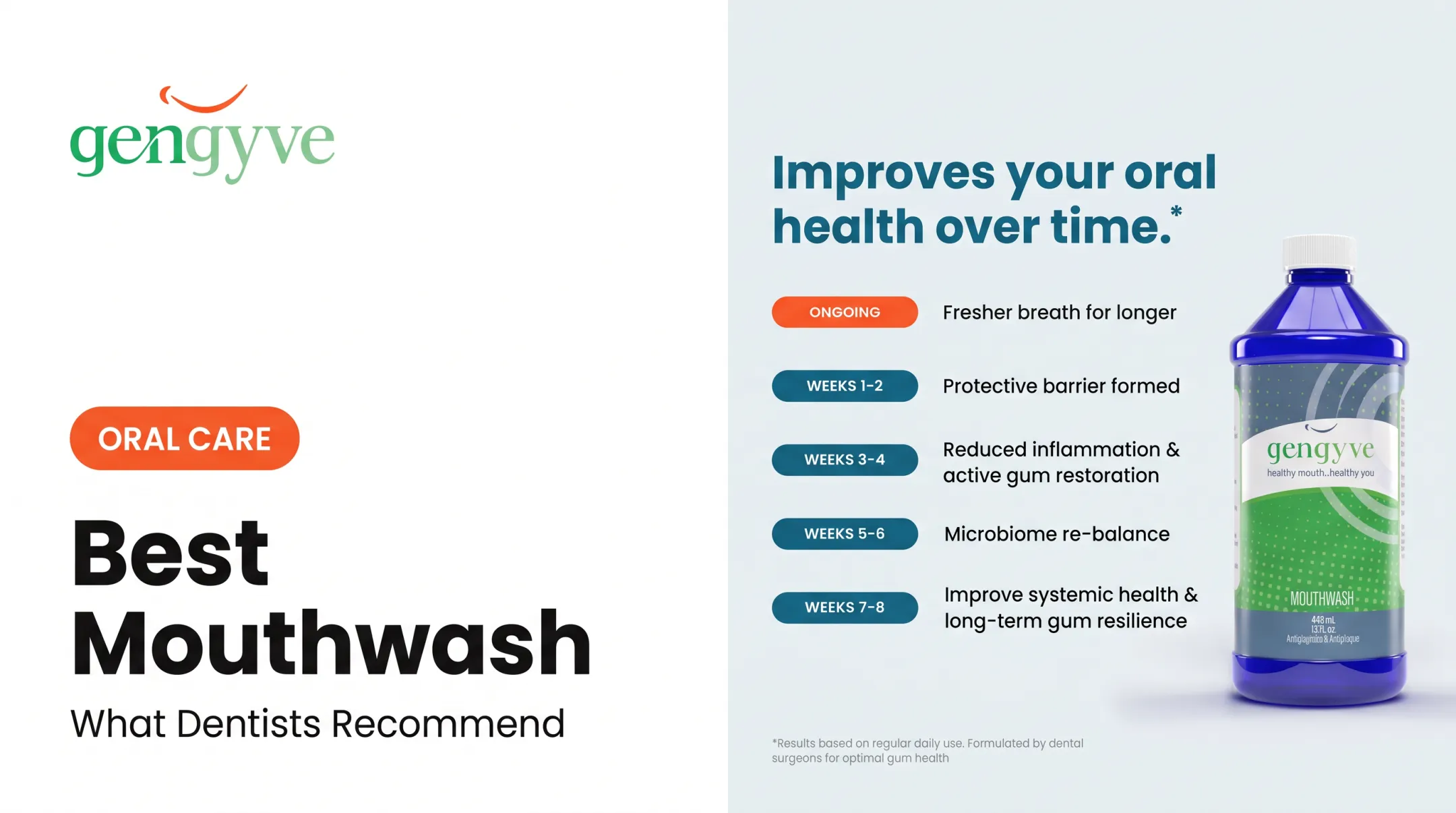
Gengyve USA grew out of a question two practicing dental surgeons asked themselves: what mouthwash would they actually recommend to their own patients? Not finding one they trusted enough, they built one.
The company's CPC and hyaluronic acid daily mouthwash was developed with Dr. S. Thaddeus Connelly, an oral and maxillofacial surgeon, Full Clinical Professor at UCSF, and staff surgeon at the San Francisco VA. He's published more than 60 peer-reviewed papers and leads the company's research arm, OVN Nexus.
Those credentials speak to the formulation process. They aren't a promise of results for every individual.
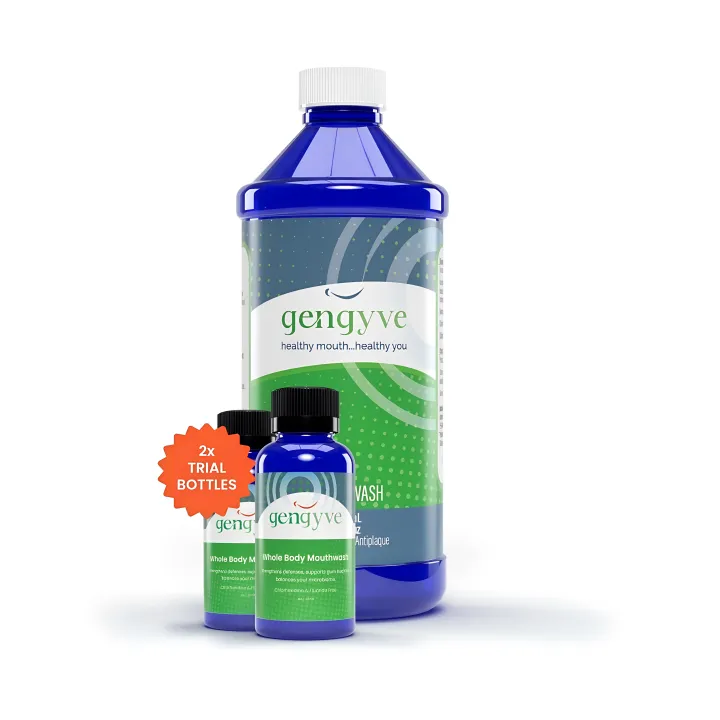
What's in the bottle:
- CPC – the antimicrobial active, included for plaque support
- Hyaluronic acid – for hydration and gum comfort
- Castor oil – positioned to nourish oral tissue
- Pullulan and PVP – form a film intended to help other ingredients stay on oral tissue longer
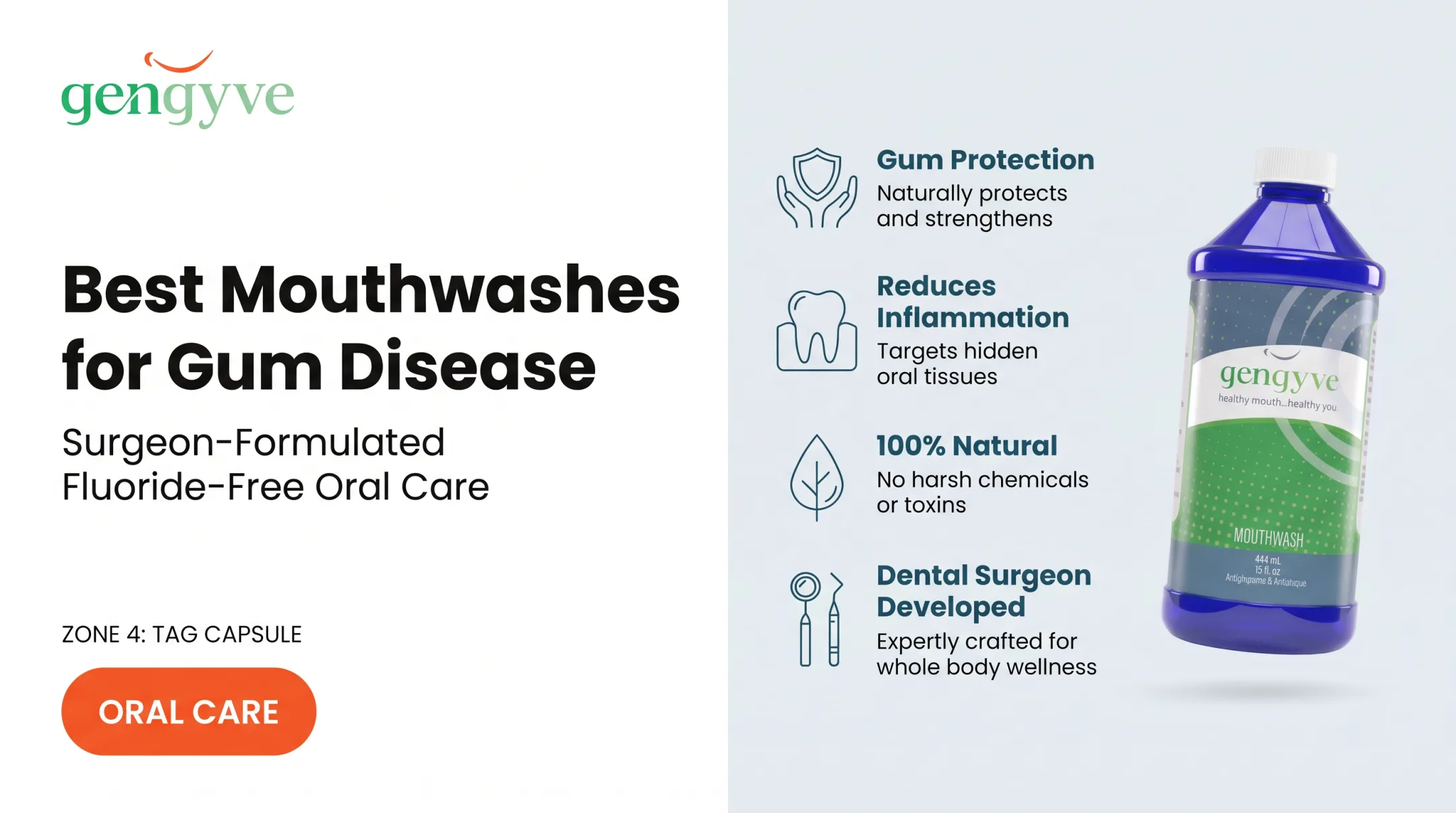
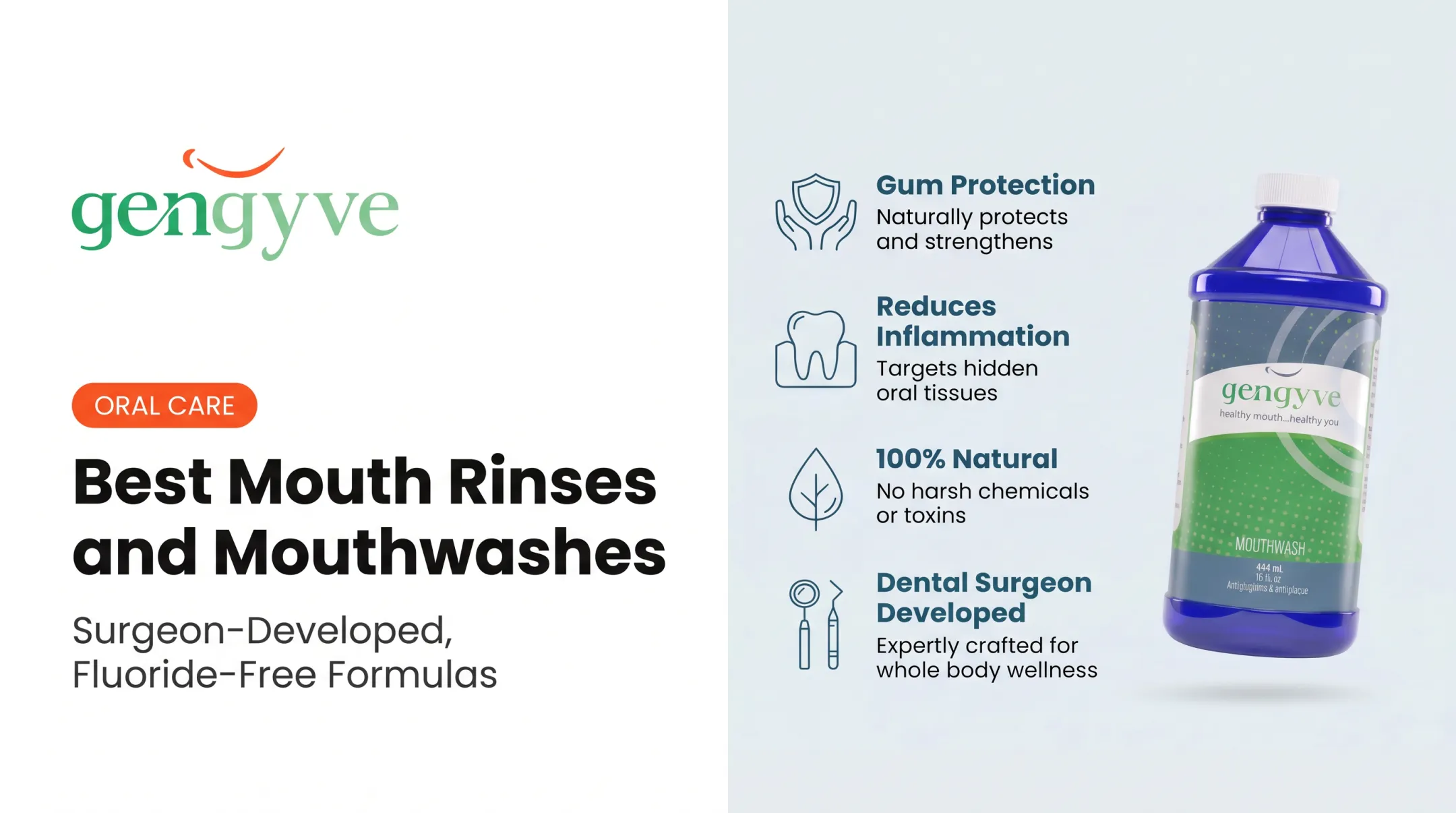
The formula is alcohol-free, fluoride-free, and chlorhexidine-free. That matters if you've dealt with the sting of traditional rinses or the staining and taste changes linked to chlorhexidine.
Gengyve's product page links to a clinical research overview of the published studies behind these ingredients. Read it alongside the current bottle label for exact directions and warnings.
Typical directions call for a 30- to 60-second swish, twice daily, without rinsing afterward. Some use cases, such as pre- and post-surgical care, call for starting the day before a procedure.

A note on suitability: check with your dentist or physician before adding any new rinse, including this one, if you have:
- Active gum disease or recent oral surgery
- Implants, oral lesions, or known allergies
- Cancer-treatment-related oral symptoms
- Oral problems that will not resolve on their own
Conclusion
The best mouthwash is the one built around a real need, backed by evidence that actually applies to it, and tolerable enough that you'll use it correctly every day. Nothing on the shelf replaces brushing, interdental cleaning, regular dental visits, or treatment for an underlying condition.
A simple rule to apply at the store:
- Name your goal before you choose
- Read past the front label
- Don't assume "stronger" means better
- Watch how your mouth responds
If symptoms stick around or your situation changes, bring the bottle to your next dental appointment and ask.
Frequently Asked Questions
How do I know which mouthwash to use?
Start by naming your main goal, such as cavity prevention, gum care, fresher breath, sensitivity, or post-procedure recovery, then match the active ingredient to that goal. If symptoms persist, ask your dentist before continuing to self-treat.
Which is the healthiest mouthwash?
There's no single "healthiest" option for everyone. The right choice is evidence-supported, appropriately formulated for your goal, and well-tolerated without unnecessary burning or irritation.
What is the best mouthwash for removing plaque and tartar?
Mouthwash can help supplement plaque control, but it cannot remove hardened tartar once it forms. Brushing, interdental cleaning, and professional cleanings handle that, with a dentist assessing buildup.
Does remineralizing mouthwash actually work?
Fluoride has solid evidence for supporting remineralization and cavity prevention. Many "remineralizing" claims beyond fluoride rely on lab studies rather than proven human decay-prevention results, so check what's actually backing the claim.
Does mouthwash help with tonsil stones?
Rinsing may temporarily reduce odor or loosen some debris, but it doesn't reliably treat recurring tonsil stones. See a doctor or dentist if they're painful or keep coming back.
What does "antiseptic mouthwash" mean?
It's a rinse containing ingredients meant to reduce or inhibit oral microorganisms. That doesn't automatically mean it prevents cavities, and stronger antiseptic products can carry limitations like staining or short-term-use directions.