That's where mouthwash fits in — but "best" doesn't mean strongest-tasting or most expensive. The right rinse depends on what you're actually dealing with: cavity risk, sensitive gums, dry mouth, or a temporary crown that needs extra-gentle handling.
This guide breaks down specific products by what they're formulated to do, walks through the ingredients worth checking on any label, and flags when a temporary crown changes the rules entirely. One note up front: your dentist's individualized instructions always take priority over general product advice.
Key Takeaways
- Alcohol-free rinses often suit dry mouth or sensitive gums better than alcohol-based formulas
- Fluoride protects natural tooth structure near the crown; antimicrobials target plaque and gum bacteria
- Mouthwash supports brushing, interdental cleaning, and professional cleanings, but never replaces them
- Temporary crowns need gentle rinsing; use prescription rinses like chlorhexidine only as directed
Overview of Dental Crowns and Mouthwash
A dental crown is a tooth-shaped cap that fits over a damaged or treated tooth, restoring its shape and function. But the crown is only one piece of a bigger picture. The gumline around it, the remaining natural tooth beneath it, and every adjacent tooth are all still exposed to the same bacteria and acid that cause decay anywhere else in the mouth.


A well-matched mouthwash can reach spots your toothbrush skips, deliver fluoride to natural enamel, calm an irritated gumline, or simply freshen breath. What it cannot do is repair a cracked, loose, or poorly sealed crown. That's a job for your dentist, not a bottle of rinse.

Everyday Care vs. Short-Term Recovery
Routine crown maintenance is different from the days following a procedure. Keep these distinctions in mind:
- Everyday use: A gentle, consistent rinse that complements brushing and flossing
- After crown placement: Follow your dentist's specific instructions. There's no universal restart timeline
- After root canal treatment or gum surgery: Healing tissue may need a gentler approach, sometimes including a prescribed rinse for a limited period
With that distinction in mind, the products below are organized by the problem they solve (cavity prevention, gum comfort, dry mouth, or temporary-crown gentleness) rather than ranked as one universal winner. Always check the current label for ingredients, directions, and warnings before buying, since formulas do get updated.
Best Mouthwash for Dental Crowns
These six rinses cover the most common crown-care needs: gentle daily maintenance, fluoride-based cavity protection, and targeted gum support. Match the formula to your specific concern rather than picking by flavor or marketing claims.
Gengyve Mouthwash
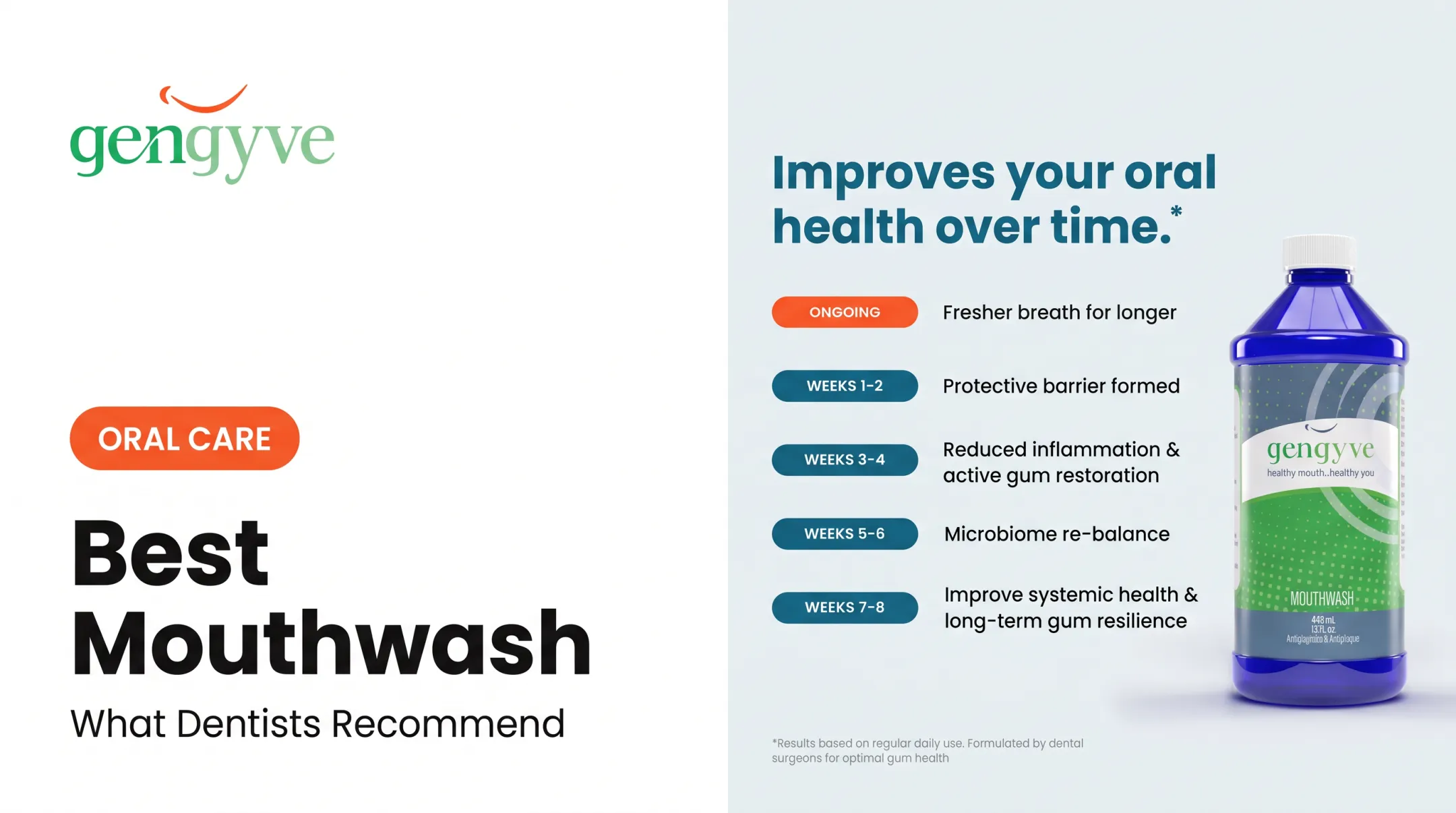
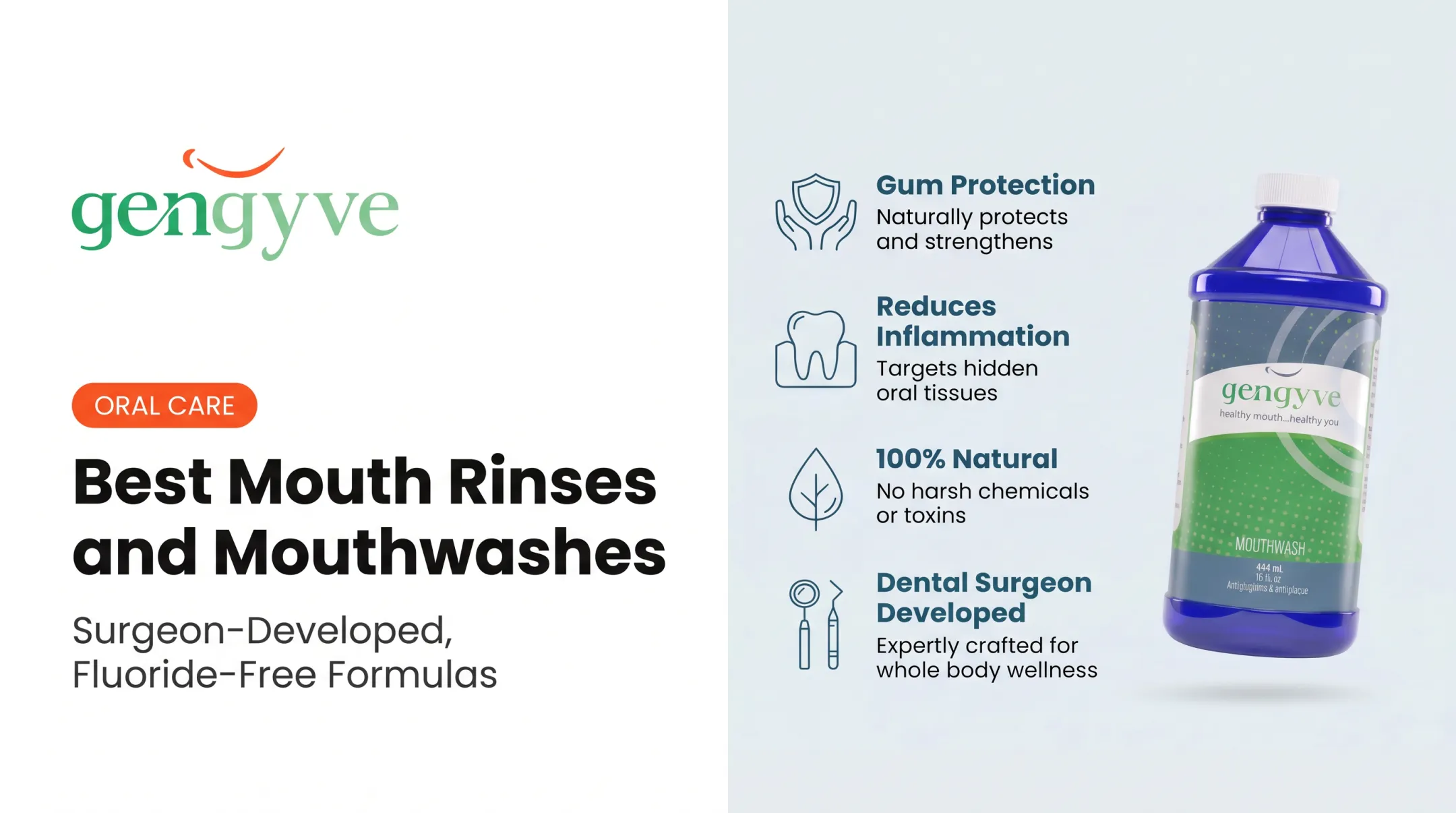
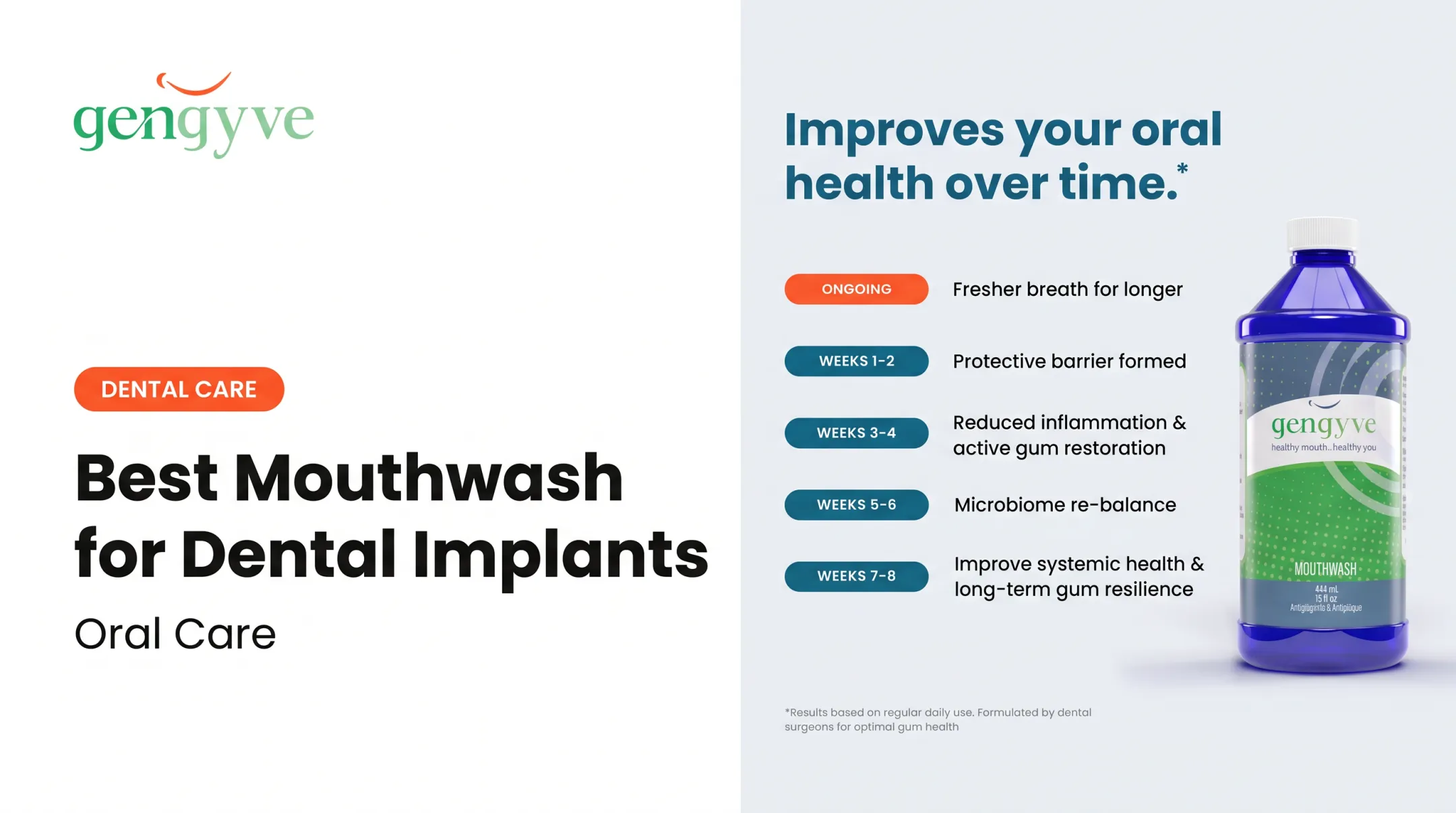
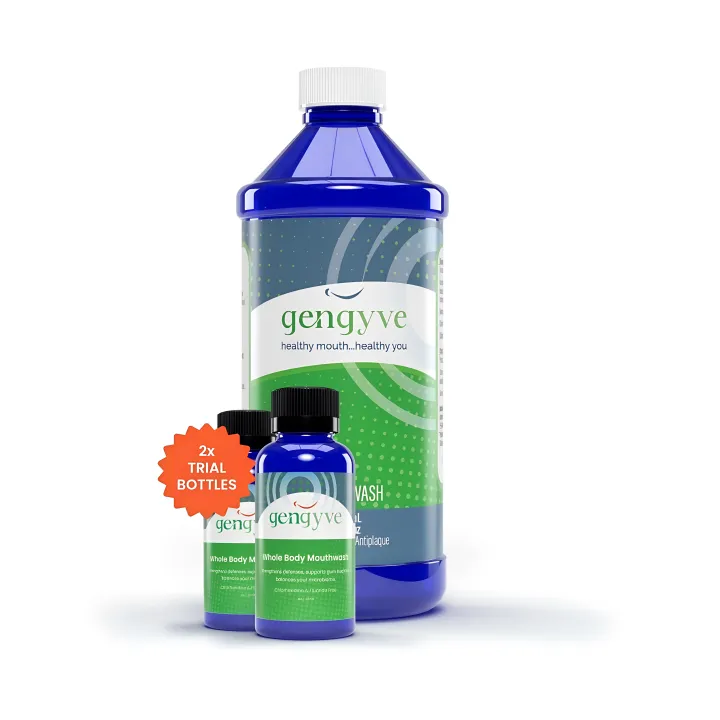
Gengyve is a dental-surgeon-developed rinse from Gengyve USA, built around a natural, alcohol-free, and chlorhexidine-free formula. It leans on hyaluronic acid for gum hydration alongside cetylpyridinium chloride (CPC) for plaque control, making it a professional-grade option gentle enough for daily home use.
It suits people who want a non-burning daily rinse without chlorhexidine's staining risk, or who manage sensitive gums around a crown margin. As with any product, verify the current ingredient panel and directions on the bottle before use, since Gengyve does not contain fluoride.
Snapshot:
- Formula type: natural, hyaluronic acid + CPC
- Alcohol: none | Chlorhexidine: none
- Fluoride: not included
- Best for: daily comfort, sensitive gums, pre/post-procedure use with dentist guidance
- Limitation: not a substitute for a fluoride rinse if cavity risk is the primary concern
Colgate Total Advanced Pro-Shield Mouthwash
This formula's active ingredient is cetylpyridinium chloride at 0.075%, aimed at reducing plaque and gingivitis rather than preventing cavities (the current label lists no fluoride). It's alcohol-free and directed at ages 12 and up.
It works as an everyday antibacterial rinse around crown margins, though tolerance and any existing dry mouth still matter when choosing a daily product.
Snapshot:
- Active ingredient: CPC 0.075%
- Alcohol: none
- Directions: 20 mL swished for 30 seconds, twice daily, after brushing
- Caution: stop and see a dentist if gum bleeding or swelling persists beyond two weeks
ACT Anticavity Fluoride Mouthwash
ACT's Mint formula contains sodium fluoride at 0.05% (0.02% fluoride ion), making its main job cavity prevention rather than gum treatment. It's alcohol-free and labeled for ages six and up.
Its relevance to crowns is indirect: it strengthens the natural tooth surfaces and enamel near the crown margin, not the crown material itself.
Snapshot:
- Active ingredient: sodium fluoride 0.05%
- Alcohol: none
- Directions: 10 mL once daily for one minute, after brushing, no eating or drinking for 30 minutes after
- Best for: cavity-prone natural teeth surrounding a crown
Listerine Total Care Zero Alcohol Mouthwash
Not to be confused with alcohol-containing Listerine Antiseptic, this zero-alcohol version contains sodium fluoride at 0.02% and is marketed for cavity prevention. It's labeled for ages six and up, used twice daily.
A zero-alcohol formula can be more comfortable for people with sensitive gums or dry mouth , though that doesn't mean every alcohol-containing rinse is harmful for crowns.

Snapshot:
- Active ingredient: sodium fluoride 0.02%
- Alcohol: none
- Directions: 10 mL twice daily for one minute, after brushing, avoid food/drink for 30 minutes
- Best for: anyone wanting fluoride protection without alcohol's drying sensation
Crest Pro-Health Alcohol-Free Mouthwash
The classic Multi-Protection Clean Mint formula uses CPC at 0.07% for antigingivitis and antiplaque benefits, with no fluoride listed. It's alcohol-free and approved for ages six and up.
This multi-benefit, alcohol-free rinse fits routine gumline hygiene around a crown, though persistent bleeding or swelling still needs a dental evaluation rather than more rinsing.
Snapshot:
- Active ingredient: CPC 0.07%
- Alcohol: none
- Directions: 20 mL for 30 seconds, twice daily
- Caution: distinct from Crest's Advanced fluoride formulas ; check the exact product name before buying
TheraBreath Healthy Gums Oral Rinse
This CPC-based rinse (0.05%) is formulated specifically for gum support and gingivitis rather than breath freshening alone, and contains no fluoride. It's alcohol-free, for ages 12 and up.
People with gum sensitivity or ongoing gingivitis concerns can compare this against a fluoride rinse or a dentist-prescribed option. "Formulated for gums" does not automatically make it right for every situation.
Snapshot:
- Active ingredient: CPC 0.05%
- Alcohol: none
- Directions: 20 mL for 30 seconds, twice daily
- Best for: targeted gum support; consult a dentist if symptoms persist
How We Chose the Best Mouthwash
Each product above was evaluated against its current label, active ingredients, alcohol status, and manufacturer directions, cross-checked against dental guidance where available. Four factors mattered most.
Fluoride. It strengthens natural enamel and lowers decay risk on tooth surfaces near a crown margin, according to the CDC's oral health page. Not every rinse on this list contains it: ACT and Listerine Zero Alcohol do; Gengyve, Colgate Pro-Shield, Crest, and TheraBreath don't.
Antimicrobial ingredients. Over-the-counter CPC and prescription chlorhexidine are not interchangeable. A Cochrane review found chlorhexidine reduces plaque substantially, but it also carries real downsides: staining, taste changes, and irritation with extended use.
Alcohol and dryness. People prone to dry mouth or gum irritation often do better with alcohol-free formulas, per the ADA's mouthrinse guidance. That said, there's no solid clinical evidence that routine alcohol-based rinsing dissolves crown cement. That claim comes from lab studies on isolated material samples, not real-world use.
Tolerability. Burning, taste, and ease of daily use matter as much as active ingredients. A rinse you avoid using isn't helping anyone.

Choosing by Need
- Everyday maintenance: Pick a tolerable formula you'll actually use twice daily without discomfort
- Cavity risk: Choose a fluoride rinse and follow the label's timing exactly
- Gum inflammation or recent treatment: Ask your dentist whether a targeted or prescription rinse fits your situation
- Temporary crown: Rinse gently, skip vigorous swishing, and defer to your dentist's post-placement instructions
Common Mistakes to Avoid
- Choosing a rinse based on burning sensation rather than actual formula
- Using chlorhexidine long-term without dental supervision
- Treating mouthwash as a flossing substitute
- Swishing aggressively around a fresh temporary crown
- Ignoring pain, swelling, bleeding, looseness, or a chipped restoration
Product formulas change. Always check the current label and ask your dentist for guidance specific to your mouth.
Conclusion
The best mouthwash for dental crowns depends on your situation. A gentle daily rinse, a fluoride-focused product, and a dentist-directed antimicrobial rinse each serve different purposes. That distinction matters even more if you're wearing a temporary crown or recovering from a recent procedure.
If you want a gentle, natural, alcohol-free option for daily use, Gengyve's dental-surgeon-developed formula is built for everyday comfort. Any crown pain, swelling, mobility, or persistent sensitivity still deserves a call to your dentist, not another round of rinsing.
Frequently Asked Questions
Can you use mouthwash on crowns?
Yes, mouthwash is generally compatible with permanent crowns when used according to the label. Choose a formula suited to your needs, avoid vigorous rinsing around a temporary crown, and follow your dentist's specific instructions.
What is the best way to clean dental crowns?
Brush twice daily with a soft-bristled brush and fluoride toothpaste, cleaning carefully around the crown margin. Add interdental cleaning, a suitable mouthwash, and regular professional cleanings. See your dentist if you notice pain or looseness.
What is the best mouthwash to use with temporary crowns?
Confirm your product choice with your dentist first. Rinse gently rather than swishing vigorously, since aggressive rinsing can dislodge a temporary crown before the permanent one is placed.
Is alcohol-free mouthwash better for dental crowns?
Alcohol-free formulas may be more comfortable for dry mouth or sensitive gums, but alcohol status alone doesn't determine suitability. The full ingredient list and your individual oral-health needs matter more than that one factor.
Can you use chlorhexidine mouthwash with dental crowns?
Chlorhexidine may be prescribed short-term after a procedure or for targeted gum treatment, but it should only be used as directed. It can cause staining, taste changes, and other side effects, so it's not an everyday default rinse.