The appeal makes sense. Many people want a gentler rinse that doesn't burn, stain, or feel overly medicinal. Green tea mouthwash may support plaque control, fresher breath, and gum comfort — but how much it helps depends on how it's prepared, how often you use it, and what the actual research shows.
This article separates genuine potential from marketing claims. We'll look at what the science says, where a green tea rinse realistically fits into your daily routine, and how to use one safely alongside the basics that actually prevent dental disease.
Key Takeaways
- Green tea compounds may reduce certain oral bacteria and volatile sulfur compounds linked to bad breath
- Homemade brewed tea and standardized green tea extracts behave differently: don't assume equal results
- A green tea rinse supports, but never replaces, brushing, flossing, fluoride, and dental checkups
- Unsweetened preparation, short contact time, and attention to staining and interactions matter for safety
What Is Green Tea Mouthwash (Brief Context)
Green tea mouthwash is a rinse made from cooled brewed green tea, or a product formulated with green tea compounds like catechins and EGCG (epigallocatechin-3-gallate). You swish it around your teeth, gums, and tongue, then spit it out.


People typically use it one of two ways:
- Occasionally, as a freshening rinse after meals
- Daily, as a supplementary step alongside brushing and flossing
A homemade preparation and a commercial formulation aren't interchangeable. Brewed tea at home has no standardized concentration, no preservatives, and no quality testing. A manufactured product does.

How It's Thought to Work
EGCG is the most studied catechin in green tea. Lab research shows it can disrupt bacterial cell membranes and interfere with biofilm formation at higher concentrations. At lower concentrations, it may block acid production and bacterial adhesion, according to a review of EGCG research.
That's promising in a petri dish. Whether a cup of home-brewed tea delivers enough activity to matter clinically is another question. Much of this research involves single bacterial species, not the complex ecosystem living in your mouth.
Key Advantages of Green Tea Mouthwash
The benefits below have real research behind them, at varying strengths. None of them mean green tea mouthwash can prevent or cure dental disease on its own.
May Help Control Plaque-Associated Bacteria
Catechins may interfere with bacteria involved in plaque formation and acid production.
A randomized trial of 47 children with high caries risk found that rinsing with green tea reduced salivary S. mutans counts by 68.3% immediately after use, compared to 79.9% for an EGCG solution and 50.6% for plain water, according to Vilela et al.'s trial.

Notice something there: water alone produced a substantial reduction too. That's a mechanical rinsing effect, not necessarily a green-tea-specific one. And these are immediate salivary counts, not evidence that cavities decreased over time.
A rinse can temporarily reach bacteria in areas your toothbrush misses. It cannot mechanically remove mature plaque or hardened tartar. That still requires brushing, interdental cleaning, and professional care.
May Support Gum Comfort and Help Moderate Inflammation
Reducing bacterial load and inflammatory signaling sounds like it should help with redness, tenderness, or occasional bleeding gums. The evidence here is genuinely mixed.
In a double-blind, placebo-controlled trial of 60 people with gingivitis, participants rinsed twice daily for four weeks with a catechin-rich green tea extract formulation. Plaque and bleeding indices improved in both the treatment and placebo groups, with no statistically significant difference between them, per a gingivitis trial.
That doesn't mean green tea did nothing — it means this particular trial couldn't confirm it worked better than placebo, possibly due to sample size.
Talk to a dentist if you notice:
- Persistent or worsening bleeding
- Swelling, pus, or bad taste
- Gum recession or loose teeth
- Ongoing pain
May Improve Breath Freshness
Certain oral bacteria produce volatile sulfur compounds (VSCs), which contribute to bad breath. The same 60-person gingivitis trial measured VSC levels directly. At 30 minutes and 3 hours, there was no significant difference versus placebo. By day 28 of twice-daily use, the green tea group showed a statistically significant VSC reduction (P = 0.023).
That's a real signal, but it took a month of consistent use, and it reflects one formulated product, not a guarantee for homemade tea. It also doesn't identify or fix the underlying cause of bad breath. If halitosis persists, consider:
- Tongue cleaning
- Better hydration
- Evaluation for gum disease, dry mouth, or reflux
May Provide a Gentle, Alcohol-Free Rinse Option
Some people find alcohol-based rinses drying or irritating. The American Dental Association notes that an ADA mouthrinse guidance page favors alcohol-free options for people with dry mouth, though that's individual, not universal.
A 2015 trial in healthy adults with normal saliva flow found comparable dryness between alcohol-containing and alcohol-free rinses, so the effect isn't automatic for everyone.
| Rinse type | Typical use | Alcohol content | Evidence base |
|---|---|---|---|
| Homemade green tea | Freshness, occasional supplement | None | Limited, formulation-dependent |
| Cosmetic mouthwash | Daily freshening | Varies | Marketing-driven |
| Antiseptic/chlorhexidine | Short-term prescribed care | Often alcohol-based | Strong, but not for long-term daily use |
| Formulated alcohol-free rinse | Daily long-term use | None | Varies by product |
Beyond alcohol content, formulation still matters for antibacterial claims. A 2024 report on matcha extract tested against oral bacteria in vitro, and in a clinical study of 45 people with chronic periodontitis, found lower salivary P. gingivalis after twice-daily rinsing, according to an ASM microbiology report.
That's encouraging, but it doesn't prove selective elimination of only harmful bacteria while sparing beneficial ones. The whole-mouth microbiome is more complicated than a single-species count.
May Contribute to a Broader Oral-Health Routine
Swapping sweetened drinks for unsweetened green tea, or using an unsweetened rinse, avoids feeding your teeth extra sugar. Sugar remains one of the biggest drivers of cavity development, so that's a sensible habit.
What it isn't: proof that green tea remineralizes enamel. A small study of 40 schoolchildren found a green tea mouthrinse raised salivary pH from 6.15 to 7.65 after one month (a less acidic environment is generally favorable for teeth). But raising saliva pH is not the same as reversing existing decay, filling cavities, or replacing fluoride.
What Happens When Green Tea Mouthwash Is Missing or Misused
Leaning entirely on a natural rinse while skipping brushing, flossing, fluoride, or dental visits lets plaque, gingivitis, and cavities progress quietly, often without symptoms until damage is advanced.
Common misuse patterns worth avoiding:
- Adding sugar or flavorings: defeats the purpose and feeds decay-causing bacteria
- Swallowing large amounts: caffeine and tannin exposure add up
- Rinsing with hot tea: risks soft-tissue irritation
- Sipping continuously instead of a brief rinse-and-spit: prolongs acid and sugar contact
- Storing homemade tea too long: brewed tea left at room temperature beyond roughly 8 hours, or refrigerated beyond three days, invites bacterial growth
Other downsides to watch for:
- Staining: tea's tannins can darken enamel over time
- Caffeine sensitivity: relevant for people avoiding stimulants
- Frequent acid exposure: very regular use can wear enamel over time
- Medication interactions: anyone on prescription medications or managing a health condition should check with a dentist or physician before adopting a daily tea rinse habit
How to Get the Most Value from Green Tea Mouthwash
If you want to try a homemade rinse safely:
- Brew unsweetened green tea and let it cool completely before use
- Use a clean container, capped and sanitized
- Swish briefly (about one minute), then spit it out; don't swallow large amounts
- Avoid sharing your rinse container
- Refrigerate leftovers and use within three days; don't leave brewed tea at room temperature for extended periods
Timing tips:
- Rinse with plain water after a tea rinse if staining is a concern
- Wait about an hour after acidic food or drink before brushing; acid softens enamel temporarily, and brushing too soon can wear it down
Where a homemade rinse falls short is consistency. Concentration varies cup to cup, and there's no standardized dosing behind it. That's where a formulated alternative can help.

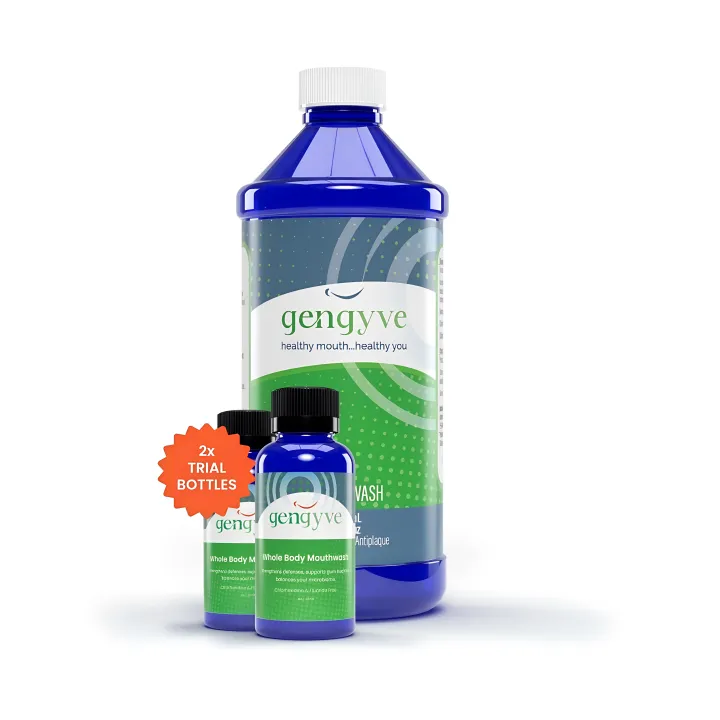
Gengyve USA, developed by a practicing oral and maxillofacial surgeon, offers an alcohol-free, chlorhexidine-free mouthwash built around cetylpyridinium chloride and hyaluronic acid rather than green tea extract.
The formula targets the same goal many people seek from a green tea rinse: gentler daily care without the burn of alcohol-based products, designed for long-term use rather than short-term prescription strength. Follow the product label and your dentist's guidance.
Conclusion
Green tea mouthwash may offer modest support for bacteria linked to plaque, fresher breath, and gum comfort. The evidence is real but uneven: some trials show benefit, others show no significant difference from placebo. Natural doesn't mean risk-free, and it certainly doesn't mean disease-curing.
The best approach treats a green tea rinse as one piece of a larger routine: brushing with fluoride toothpaste, cleaning between teeth daily, eating a balanced unsweetened diet, and seeing your dentist for regular checkups. If you notice bleeding, swelling, or persistent discomfort, that's a signal to get evaluated, not a problem a rinse alone will solve.
Frequently Asked Questions
What is the healthiest mouthwash for you?
It depends on your oral-health needs and how you tolerate ingredients. Alcohol-free options suit dry mouth; dentist-prescribed antiseptics may help with gum disease. No single rinse is best for everyone.
Can green tea remove plaque from teeth?
Green tea compounds may reduce some plaque-associated bacteria and slow biofilm activity, but rinsing can't mechanically remove established plaque or hardened tartar. Brushing, flossing, and professional cleanings remain essential for that.