Introduction
The best mouthwash is the one whose active ingredients match what your mouth actually needs. Burn intensity and ad budgets are poor guides.
Shoppers reach for a rinse for very different reasons: gum inflammation, cavity risk, bad breath, dry mouth, tooth sensitivity, post-procedure comfort, or simply a preference for something alcohol-free.
According to the CDC's periodontitis report, 42.2% of dentate US adults aged 30 and older have some form of periodontitis. That's a lot of people being sold the same bottle for very different problems.
This guide compares leading rinses by active ingredient, intended purpose, available evidence, tolerability, and daily-use suitability in the US market, so you can match a product to your actual goal instead of the loudest claim on the label.
Key Takeaways
- Mouthwash supplements brushing and interdental cleaning; it never replaces either one
- Therapeutic rinses target different problems: fluoride for cavities, CPC or essential oils for plaque and gingivitis
- Alcohol-free formulas tend to suit dry mouths, sensitive tissue, and post-surgical comfort better
- Prescription-strength rinses like chlorhexidine are meant for short, clinician-directed use, not indefinite daily rotation
- Match ingredients and purpose first; let marketing language come second
Overview of Mouth Rinses and Mouthwashes in the US Market
A mouthwash or mouth rinse is a liquid oral-care product used after brushing (or on its own) to cleanse, freshen, or treat the mouth. Not all rinses do the same job.



Cosmetic rinses temporarily freshen breath and leave a pleasant taste, without any lasting chemical or biological effect. Therapeutic rinses contain active ingredients formulated to reduce plaque, gingivitis, cavities, or bad breath at its source, according to the ADA's mouthrinse guidance.

What Each Formula Category Actually Does
- Fluoride rinses support enamel remineralization and cavity prevention
- CPC, essential oils, or other antimicrobials target plaque, gingivitis, and odor-causing bacteria
- Moisturizing formulas offer temporary dry-mouth symptom relief
- Chlorhexidine is a prescription antimicrobial reserved for short-term, clinician-directed use
Here's the part most labels gloss over: "natural," "alcohol-free," "antibacterial," and "antimicrobial" aren't interchangeable claims. A product can be alcohol-free and still irritate sensitive tissue.
"Antimicrobial" is a broader category than "antibacterial" and doesn't guarantee efficacy against every organism. Always check the full ingredient list, the concentration, and the directions, not just the front-of-bottle buzzword.
Mouthwash supplements brushing with fluoride toothpaste and interdental cleaning. It doesn't replace either one. If you're dealing with ongoing bleeding, pain, swelling, ulcers, or a loose restoration, see a dentist rather than treating it with rinse alone.
The product list below is organized by use case, not ranked as a single "best overall" winner, because no single formula serves every goal equally well.
Best Mouth Rinses and Mouthwashes
We compared each product on intended use, active ingredients, alcohol status, tolerability, available evidence, ADA Seal status where applicable, and label directions.
Gengyve Mouthwash
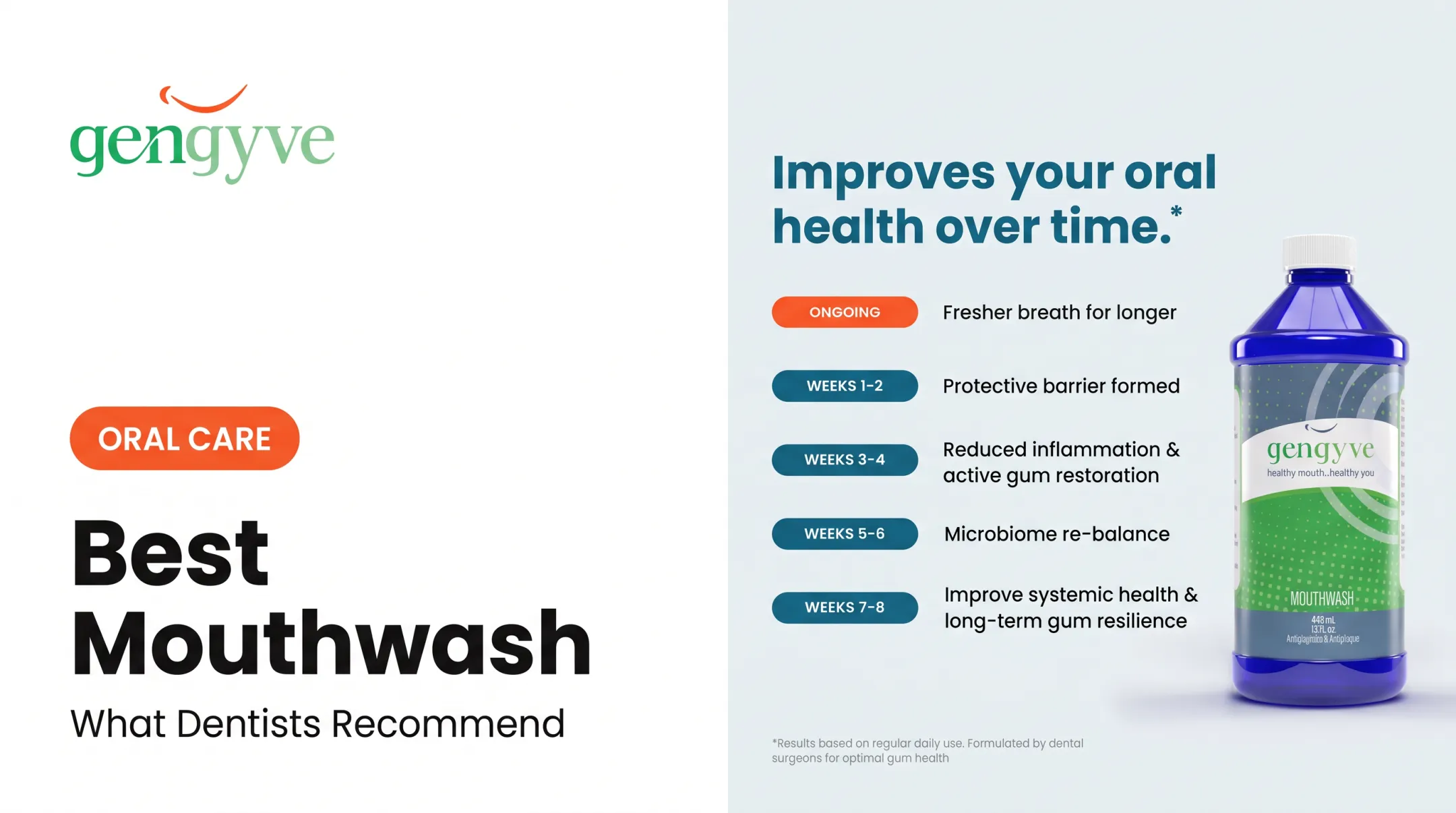
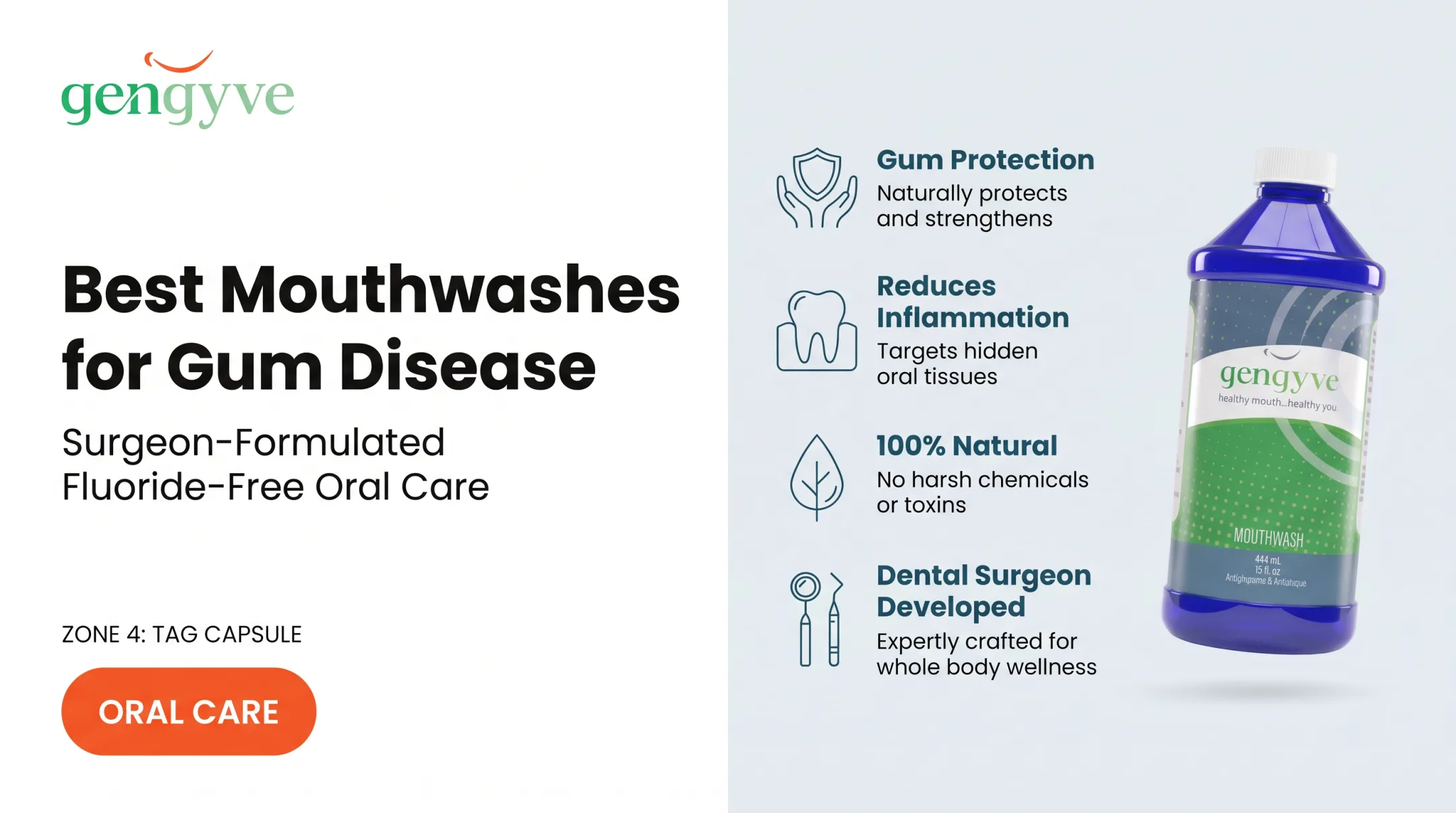
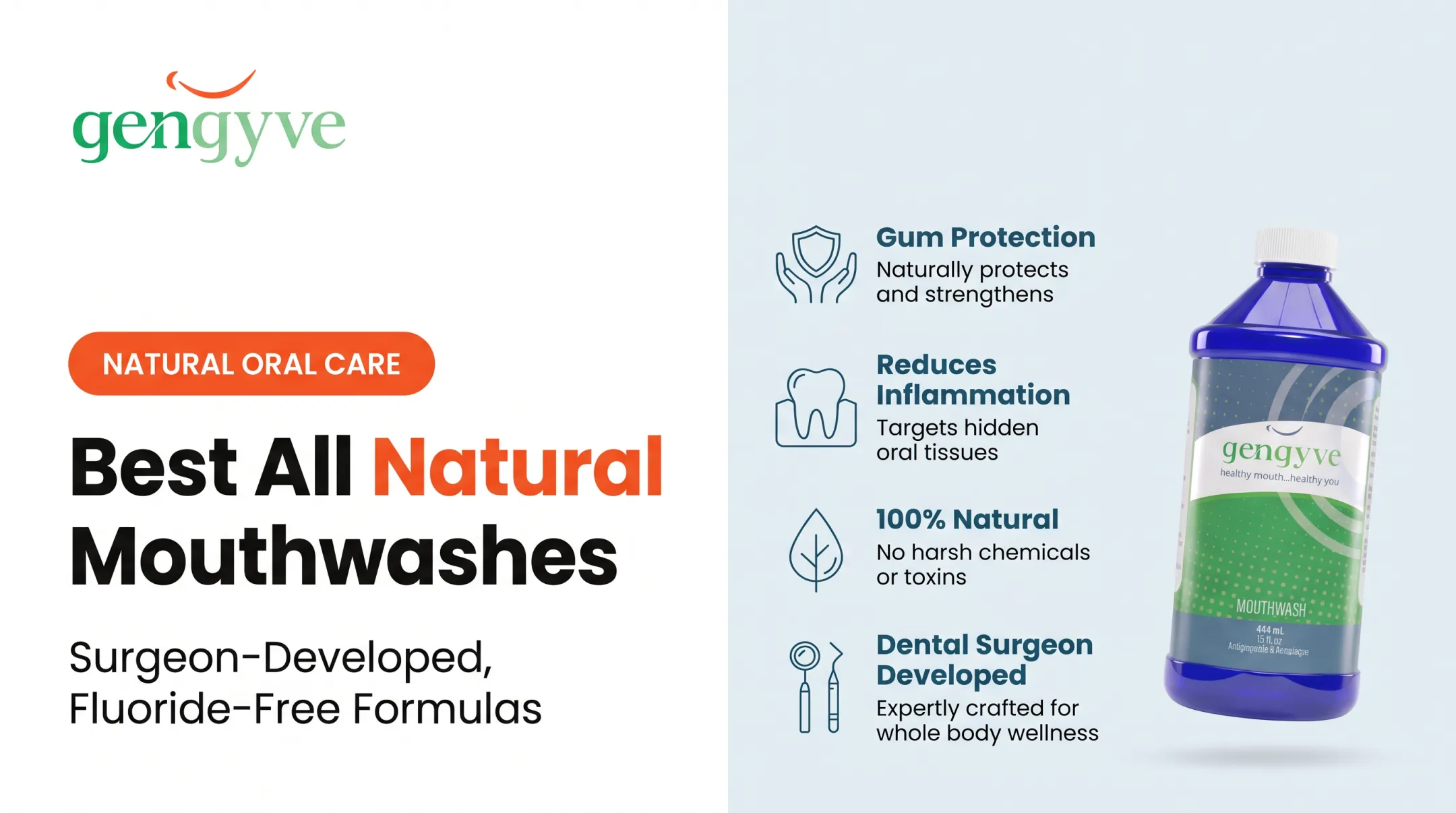
Gengyve is a dental-surgeon-developed rinse built around cetylpyridinium chloride (CPC) and hyaluronic acid, plus pullulan, polyvinylpyrrolidone, and castor oil.
It's a cosmetic rinse made to cleanse, freshen, and keep the mouth comfortable, including after dental procedures. It is not a drug product claiming to treat disease.
A small 2020 randomized, double-blind trial of 75 dental students over 21 days compared a CPC-hyaluronic acid rinse against chlorhexidine and a placebo. Plaque accumulation was higher in the placebo group.

The gingivitis difference between groups wasn't statistically significant. That's a useful data point, not proof the current Gengyve formula treats gum disease.
- Best for: Daily users wanting a fluoride-free, chlorhexidine-free, alcohol-free rinse without a harsh burn
- Active ingredients: CPC and hyaluronic acid
- Alcohol/chlorhexidine status: Free of both
- Evidence: Small published trial on the CPC-hyaluronic acid combination; no ADA Seal documented
- Directions: Swish 30 seconds, twice daily after brushing
- Limitations: Not a substitute for periodontal treatment; see a dentist if gums bleed
Listerine Total Care Zero Alcohol Anticavity Mouthwash
This is a fluoride anticavity rinse, not an essential-oil antigingivitis product, despite essential oils appearing in the inactive-ingredient list. Its Drug Facts label lists sodium fluoride 0.02% (0.01% fluoride ion).
- Best for: People who want a widely available, alcohol-free cavity-prevention rinse
- Active ingredient: Sodium fluoride 0.02%
- Alcohol status: Alcohol-free
- Evidence: ADA lists the Listerine Total Care fluoride mouthwash family for decay prevention; confirm the exact Zero Alcohol SKU on the current label
- Directions: 10 mL for one minute, twice daily; don't eat or drink for 30 minutes; ages 6+
- Limitations: A fluoride anticavity claim doesn't establish gingivitis treatment
ACT Anticavity Fluoride Rinse
ACT is a straightforward fluoride rinse aimed squarely at enamel protection, with sodium fluoride 0.05% (0.02% fluoride ion).
- Best for: People prioritizing cavity prevention above all else
- Active ingredient: Sodium fluoride 0.05%
- Alcohol status: Alcohol-free
- Evidence: Drug Facts support cavity prevention; check the label for current ADA Seal status and flavors
- Directions: 10 mL for one minute, once daily; no eating or drinking for 30 minutes; ages 6+
- Limitations: Not formulated for gingivitis, bad breath, dry mouth, or post-surgical care; follow dental guidance if cavity risk is elevated
TheraBreath Fresh Breath Oral Rinse
TheraBreath Fresh Breath lists sodium chlorite as its key ingredient and carries an ADA Accepted badge for breath control on its official page.
This is a different formula from TheraBreath Healthy Gums, which lists 0.05% CPC for gingivitis claims. Don't assume the two do the same job.
- Best for: People who want temporary odor control without a strong burn
- Active ingredients: Sodium chlorite; no fluoride listed
- Alcohol status: Alcohol-free, non-burning
- Evidence: ADA Accepted for breath control specifically
- Directions: Swish/gargle 10 mL for 90 seconds, twice daily; wait 5 minutes before eating; adults 18+
- Limitations: Masks odor temporarily; persistent bad breath tied to gum disease, decay, or dry mouth needs a dental exam
CloSYS Sensitive or Healthy Gums Mouthwash
CloSYS sells two distinct formulas under similar branding. Sensitive Fresh Breath uses stabilized chlorine dioxide (Cloralstan) and is marketed as pH-balanced and non-burning. Healthy Gums lists CPC 0.075% for antigingivitis and antiplaque claims. Neither contains fluoride.
- Best for: Sensitive tissue, dry mouth, or low flavor tolerance (Sensitive); plaque and gum focus (Healthy Gums)
- Active ingredients: Stabilized chlorine dioxide (Sensitive) or CPC 0.075% (Healthy Gums)
- Alcohol status: Both alcohol-free
- Evidence: Manufacturer claims reduced germs associated with plaque, gingivitis, and bad breath for Healthy Gums; ADA Seal status not confirmed for either
- Directions: Full dosing directions vary by variant; check the current label
- Limitations: Gentleness doesn't equal proven superior antibacterial performance
How We Chose the Best Mouthwashes
We started with the goal, not the brand. Each product was matched to a defined use case, then checked against its current label and credible clinical evidence, not customer star ratings alone.
Matching Active Ingredients to Outcomes
- Fluoride for cavity prevention
- CPC, essential oils, or other antimicrobials for plaque and gingivitis
- Moisturizing ingredients for dry-mouth symptom relief
- Chlorhexidine for short-term, clinician-directed therapeutic use only
Chlorhexidine deserves a closer look because it's often treated as a universal fix. A Cochrane review covering 51 studies and 5,345 participants found it produces a substantial plaque reduction. But extrinsic staining increases with use of 4 weeks or longer, and taste alteration showed up across 11 of the included studies. That's exactly why dentists limit it to defined periods rather than daily indefinite use.

When to Prioritize Alcohol-Free, Gentle Formulas
Alcohol-free rinses tend to suit dry mouth, sensitive tissue, and post-surgical recovery better than high-alcohol formulas. "Alcohol-free" alone doesn't guarantee comfort for every person. Some alcohol-free formulas still contain strong flavoring agents or essential oils that irritate sensitive mouths.
Before buying, check:
- ADA Seal of Acceptance status for the specific claim you care about
- Age restrictions and swallowing warnings
- Allergy or flavor-sensitivity information
- Whether fluoride instructions apply to your household
- Daily-use versus limited-duration labeling
Common mistakes to avoid:
- Choosing a rinse because it burns, assuming burn equals effectiveness
- Using mouthwash as a substitute for brushing or flossing
- Combining multiple active rinses without professional guidance
- Using chlorhexidine indefinitely without a dentist's direction
- Masking persistent bad breath instead of getting it evaluated
Conclusion
There's no single best mouth rinse for everyone. The right one is whichever product's active ingredients and tolerability actually match your goal, whether that's cavity prevention, gum support, breath control, sensitivity relief, dry mouth, or simple daily maintenance.
If you're dealing with ongoing bleeding, pain, swelling, ulcers, severe dryness, implant concerns, or bad breath that won't quit, talk to a dentist. Switching rinses repeatedly or rinsing more often won't fix an underlying problem that needs diagnosis.
If you're looking for a dental-surgeon-developed, alcohol-free option for everyday gum care, Gengyve is worth a look. Review its current formulation, directions, and supporting research before deciding whether it fits your routine.
Frequently Asked Questions
Does mouthwash help with gum disease?
Some therapeutic rinses reduce plaque, bacteria, or gingival inflammation as part of a broader care plan. Mouthwash doesn't replace professional diagnosis, brushing, interdental cleaning, or periodontal treatment on its own.
What is the best mouthwash?
There's no single best product for everyone. Match the active ingredient to your goal: fluoride for cavity risk, an appropriate antimicrobial for gum concerns, or a gentle moisturizing rinse for dry mouth.
What is the most effective mouthwash for killing bacteria?
No single ingredient wins across the board. Effectiveness depends on the organism, formulation, concentration, and how consistently it's used alongside brushing.
What is the difference between antimicrobial and antibacterial mouthwash?
Antibacterial refers specifically to activity against bacteria. Antimicrobial is broader and may cover bacteria and other microorganisms. Check the product's tested claims and active ingredient rather than relying on the label term alone.
What do dentists use to rinse your mouth?
Dentists may use water, saline, antiseptic, fluoride, or prescription rinses depending on the procedure and your condition. Post-treatment rinsing should follow your dental professional's specific instructions, not a generic routine.