Introduction
If you own a water flosser, you've probably wondered whether swapping plain water for mouthwash would get you cleaner teeth. It seems logical: more active ingredients, more benefit, right?
Not necessarily. The right answer depends on your specific device, the mouthwash formula you're considering, and what you're actually trying to treat: fresh breath, sensitive gums, gingivitis, or recovery after a dental procedure.
Some water flosser manufacturers allow diluted mouthwash in the reservoir. Others explicitly prohibit certain ingredients, including baking soda, saline, and concentrated essential oils.
This guide walks through what the research actually says, ranks the mouthwash types worth considering, and explains when using plain water in your flosser (followed by a separate mouthwash rinse) is simply the safer, lower-maintenance choice.
Key Takeaways
- Plain water is the default; mouthwash is optional and does not replace brushing or professional care
- Choose alcohol-free, water-soluble, non-abrasive formulas and check your device manual first
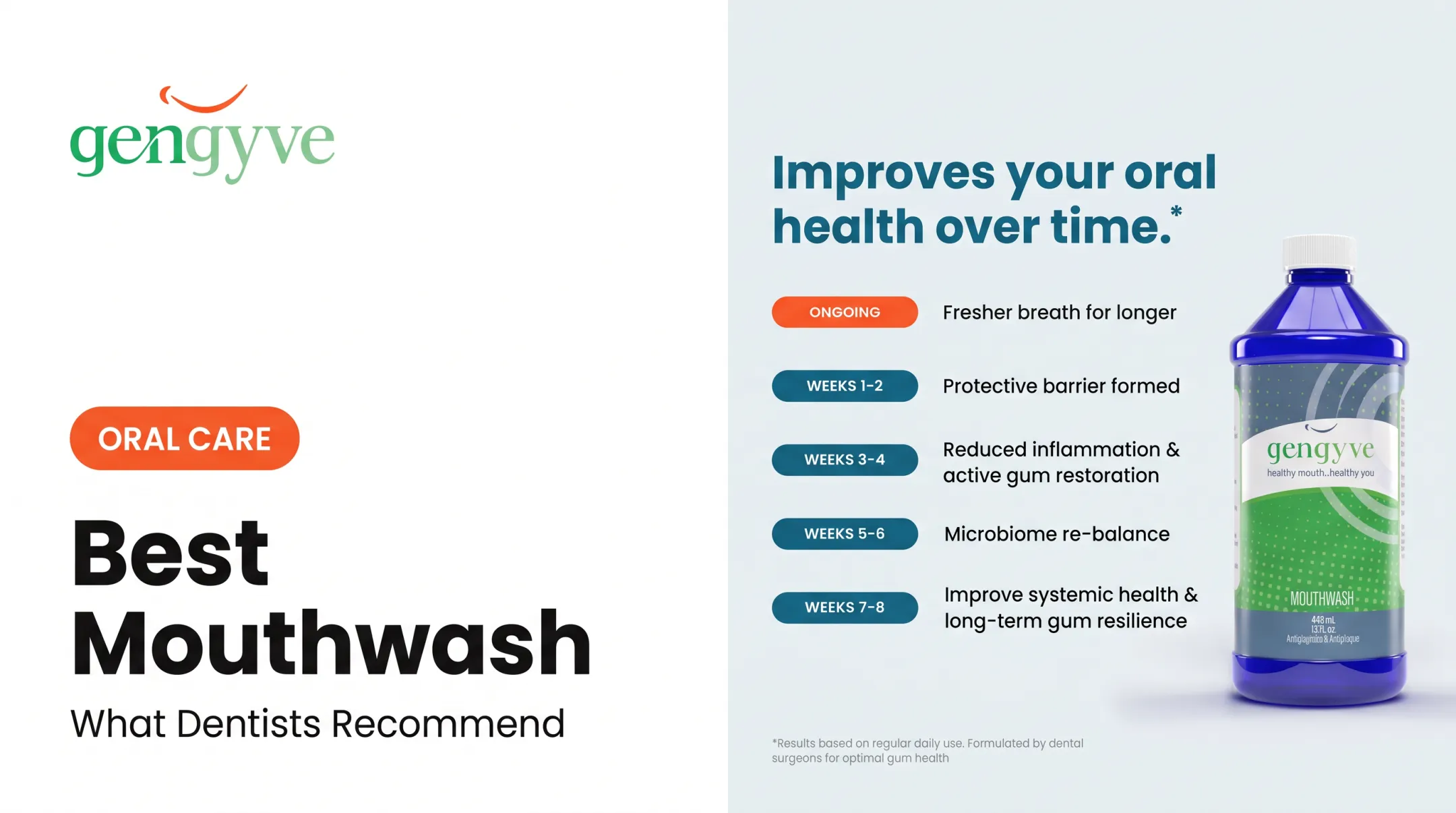
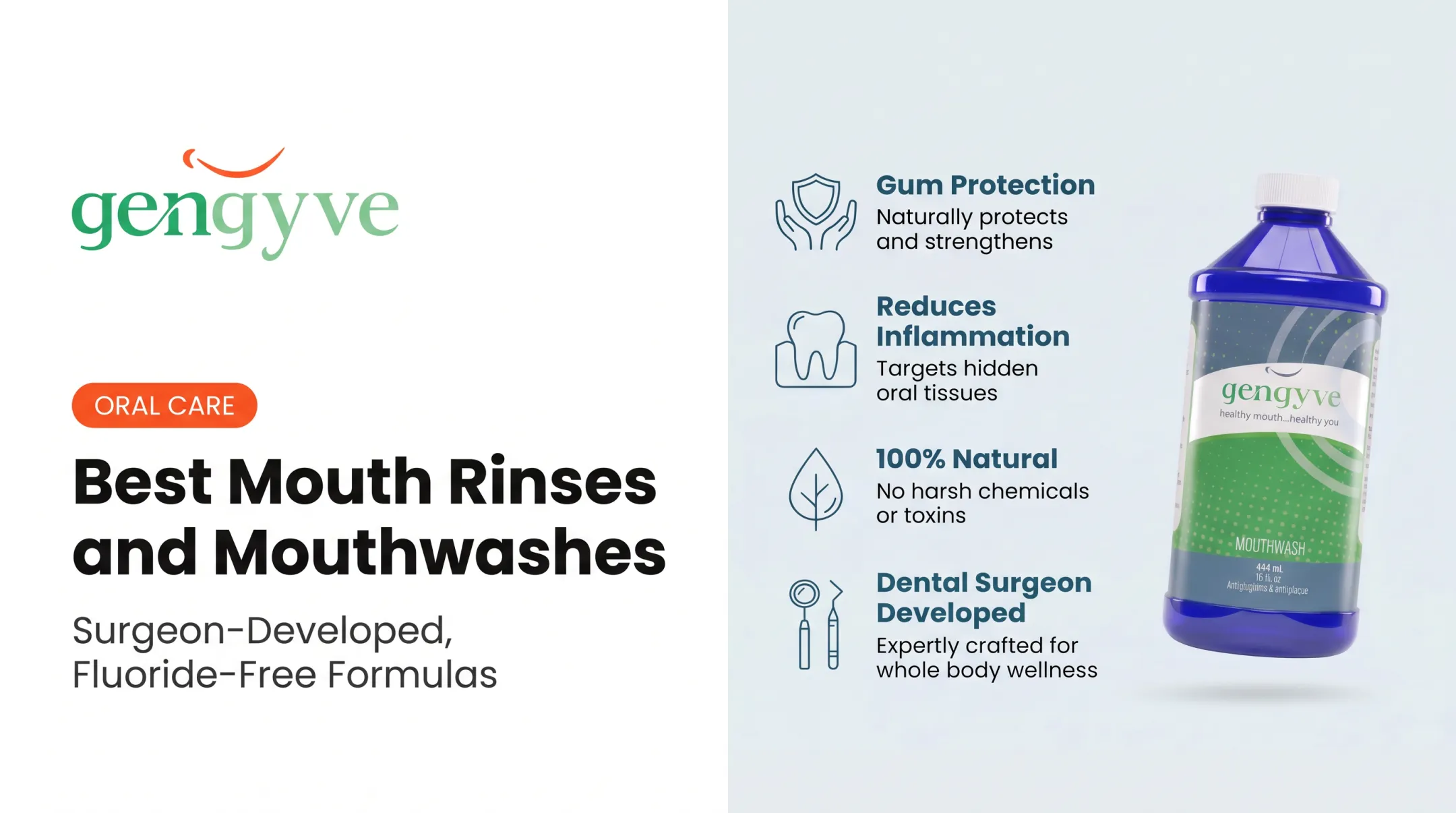
- Gengyve is a dental-surgeon-developed, alcohol-free, chlorhexidine-free rinse for gentle daily use
- Never add essential oils, baking soda, iodine, or gritty mixtures; use prescription rinses only under a dentist's direction
Overview of Mouthwash Use With Water Flossers
A water flosser (also called an oral irrigator) pushes a pulsating stream of liquid between teeth and along the gumline. It's particularly useful around orthodontic brackets, bridges, and implants where string floss struggles to reach.


Mouthwash can add freshness and, depending on the formula, antimicrobial or fluoride benefits. What it cannot do is dissolve hardened tartar or replace mechanical cleaning from brushing and flossing. That distinction matters because it shapes realistic expectations for anyone adding rinse to their routine.
Three Routines, One Simplest Option
There are three practical approaches:
- Plain water only: the baseline most manufacturers recommend
- Diluted mouthwash in the reservoir: permitted by some devices, within specific ratios
- Water flossing first, then a separate mouthwash rinse: often the simplest and lowest-maintenance option

For many users, option three avoids the guesswork around dilution ratios and clogging entirely.
Why Compatibility Actually Matters
Using the wrong liquid in a reservoir can cause residue buildup, clogged tips, gum irritation, altered taste, or premature wear on internal components. According to Waterpik's mouthwash guidance, standard mouthwash can be added at up to a 1:1 ratio with warm water, but that's a maximum, not a requirement, and the device should be flushed with plain water afterward.
Waterpik also specifically prohibits water-insoluble concentrated essential oils, iodine, and baking soda. Philips similarly advises against essential oils or isopropyl myristate in its AirFloss and Power Flosser lines. The takeaway: check your specific manual before assuming any rinse is safe for your reservoir.
Best Mouthwashes for Water Flossers
Ranking criteria include formula suitability, gum comfort, ingredient transparency, manufacturer compatibility, and whether a product is meant for daily or limited use. A rinse that's great for swishing in your mouth isn't automatically approved for your device's tank.
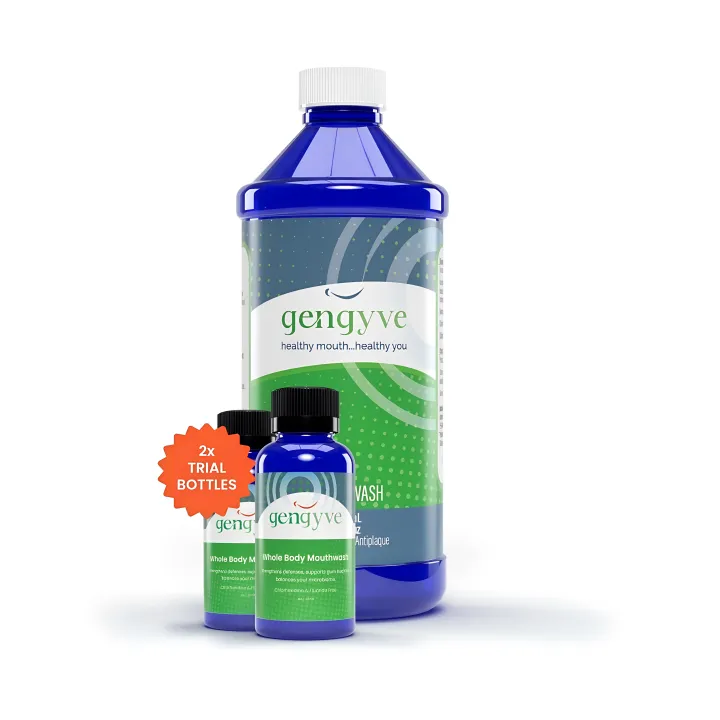
Gengyve Mouthwash
Gengyve is a USA-developed, dental-surgeon-formulated mouthwash containing cetylpyridinium chloride (CPC) and hyaluronic acid, along with pullulan, polyvinylpyrrolidone, and castor oil. It was created by practicing dental surgeons and educators who wanted a rinse they could confidently recommend to their own patients.
What sets it apart:
- Alcohol-free and chlorhexidine-free, with no harsh burn
- Designed for long-term daily use, unlike prescription rinses limited to short courses
- Gentle enough for sensitive gums while targeting plaque-causing bacteria
- Built with sustainable ingredient sourcing in mind
A small randomized, double-blind trial testing a CPC-hyaluronic-acid rinse over 21 days found less plaque accumulation compared to placebo. Gingivitis differences weren't statistically significant. That is a modest, specific finding, not proof of long-term superiority or periodontitis treatment.
Comparison snapshot:
| Factor | Detail |
|---|---|
| Formula category | CPC + hyaluronic acid, alcohol-free |
| Best for | Daily comfort, sensitive gums, post-procedure recovery |
| Reservoir use | Not documented by the brand; use as a separate rinse |
| Price | $19.99 for a 15 fl. oz. bottle |
Because Gengyve hasn't published specific water-flosser reservoir instructions, the safer routine is flossing with plain water first, then rinsing with Gengyve separately after brushing.
CloSYS Healthy Gums Mouthwash
CloSYS Healthy Gums uses 0.075% cetylpyridinium chloride as its active ingredient, formulated without alcohol or dyes. For users with bleeding, irritated, or sensitive gums who want to avoid a strong burning sensation, that alcohol-free profile is a practical fit.
That said, no reservoir-specific dilution instructions appear on the official product page or FAQ. The ADA Seal listings found cover different CloSYS products (Healthy Teeth and Fresh Breath formulas), not this specific one.
Comparison snapshot:
- Intended benefit: gum-health support without alcohol irritation
- Water-flosser guidance: none published for this formula
- Safer approach: use separately after flossing, rather than diluting in the tank
Alcohol-Free CPC Mouthwash
Crest Pro-Health Clinical is a widely available alcohol-free CPC rinse, containing 0.1% cetylpyridinium chloride. Its label directs ages 12 and up to rinse with 20 mL for 30 seconds, twice daily — a measured swish-and-spit dose, not an irrigation protocol.
CPC rinses are generally chosen for breath and plaque or gingivitis support. But containing CPC doesn't by itself confirm reservoir suitability.
Comparison snapshot:
- Active ingredient: CPC 0.1%, alcohol-free, no dyes listed
- Labeled use: measured oral rinse, not device irrigation
- Caution: avoid in children under 12; follow label swallowing warnings
Fluoride Mouthwash
ACT Anticavity Fluoride Rinse uses sodium fluoride 0.05% and is alcohol-free, making it a reasonable pick when cavity prevention matters more than antibacterial action. The label calls for 10 mL swished for one minute, once daily after brushing, with no eating or drinking for 30 minutes afterward.
The label provides no dilution or reservoir directions. It's built around a measured mouthrinse regimen, not diluted irrigation.
Comparison snapshot:
- Best use case: cavity prevention, enamel support
- Age restriction: 6 and older; consult a dentist below that age
- Reservoir fit: not established by the label — use as a separate rinse to preserve the intended dose
Prescription Chlorhexidine or Other Therapeutic Rinse
Chlorhexidine rinses like Peridex (0.12% chlorhexidine gluconate, 11.6% alcohol) are indicated for gingivitis within a professional treatment program, not as an everyday consumer choice. According to Peridex's prescribing information, the standard dose is 15 mL undiluted, rinsed for 30 seconds twice daily after brushing.
Common side effects include staining, increased calculus formation, and altered taste. Waterpik notes that chlorhexidine has been clinically tested with its devices at varying dilutions. That decision belongs to your dentist, not a product label.
Comparison snapshot:
- Who needs it: patients under dentist-directed periodontal or post-surgical protocols
- Who prescribes it: a licensed dental professional, with specific dilution instructions
- After use: flush the device with plain water and clean the tip per the manual

How We Chose the Best Mouthwashes for Water Flossers
Selection starts with your goal rather than the strongest-sounding ingredient list. Are you managing sensitive gums, gingivitis, cavity risk, or post-surgical healing? That answer narrows the field fast.
Formula and Safety Checks
We looked at:
- Alcohol content, essential oils, abrasives, dyes, and sweeteners
- Water solubility and residue risk in tubing or tips
- Fit for sensitive gums, oral lesions, implants, braces, or periodontal pockets
- Confirmation from both the device manufacturer and the mouthwash label: "safe to swish" does not mean "safe for the reservoir"
Common Mistakes Worth Avoiding
A few errors show up repeatedly:
- Using a concentrated rinse instead of the diluted ratio a manufacturer specifies
- Leaving liquid sitting in the tank between uses, which invites residue and clogging
- Skipping the plain-water flush after any non-water liquid
- Using a prescription rinse without dental supervision
- Assuming a water flosser removes hardened tartar (it doesn't)
A 2024 systematic review on water flossers found solid evidence for interdental plaque reduction, but nothing supporting calculus removal. Tartar is mineralized plaque; only professional scaling removes it.

Conclusion
The best mouthwash for a water flosser is the formula that matches your oral-health goal and your device's compatibility instructions—not whichever bottle claims the strongest formula on the shelf.
When in doubt, the lower-risk routine wins: use plain water in the flosser, clean and air-dry the device after each use, and rinse with mouthwash separately unless both the product label and your manual clearly permit combining them.
If you're dealing with bleeding gums, periodontal disease, implants, recent oral surgery, or persistent pain, talk to a dental professional before reaching for a therapeutic rinse. For a gentle everyday option built by practicing dental surgeons, Gengyve's alcohol-free, chlorhexidine-free formula is worth a look.
Frequently Asked Questions
How do I disinfect my water flosser?
Empty the reservoir, then run plain warm water through the device until it's clear. Remove and clean detachable parts per your manual, then let everything air-dry fully before reassembling. Skip harsh disinfectants unless your manufacturer specifically approves them.
Do I brush my teeth before or after using a water flosser?
Either order can work, but consistency matters more than sequence. Many dentists suggest flossing first to loosen debris, then brushing, then finishing with a separate mouthwash rinse.
Does a water flosser get tartar off your teeth?
No. Water flossers reduce soft plaque and food debris, but hardened tartar requires professional scaling. If you notice chalky buildup near the gumline, that's a job for your dental hygienist.
What can I add to a water flosser for periodontal disease?
Plain water remains the standard baseline. Chlorhexidine or another therapeutic solution should only go in the reservoir when your dentist specifically directs it and confirms it's approved for your device model.
What is the best mouthwash to use with a water flosser?
Choose a gentle, alcohol-free, water-soluble formula and confirm your device's manual permits it before adding it to the reservoir. Gengyve is a solid everyday option, though a separate rinse after flossing is often the simplest, safest approach.