
Many people with bleeding or swollen gums aren't sure whether they need a prescription rinse, an over-the-counter formula, or something gentler for daily use. The stakes are real. An estimated 42% of U.S. adults aged 30 and older have periodontitis, and roughly 8% have severe disease, according to NHANES periodontitis data.
A good antibacterial rinse can reduce bacteria, plaque, and gum inflammation as a supplement to professional care. It can't remove tartar, rebuild lost bone, or cure periodontitis by itself. This guide compares prescription chlorhexidine, OTC CPC and essential-oil rinses, peroxide-based options, and alcohol-free natural formulas like Gengyve, so you can match the ingredient to your actual needs.
Key Takeaways
- The "best" rinse depends on your goal: post-op recovery, gingivitis support, daily comfort, dry mouth, or breath control
- Chlorhexidine is usually a short, clinician-directed course; CPC and some essential-oil rinses work for ongoing daily use
- Compare active ingredients, alcohol content, directions, evidence, and staining risk before you commit to a bottle
- Brushing, interdental cleaning, periodontal maintenance, and professional treatment remain the foundation of gum care
Overview of Antibacterial Mouthwash for Periodontal Disease in the U.S. Market
A therapeutic mouthwash contains an active ingredient meant to affect oral bacteria, plaque, gum inflammation, or odor. A cosmetic rinse just freshens breath temporarily and doesn't claim to treat anything. The ADA's mouthrinse guidance draws this exact line, and it matters because the two product types aren't interchangeable.
Periodontal disease starts with a persistent plaque biofilm that triggers a chronic inflammatory response. Left unmanaged, it progresses from reversible gingivitis to periodontitis, which involves bone and attachment loss that a rinse cannot regrow.
A mouthwash can reach some spots a toothbrush misses, but it's not a substitute for:
- Daily brushing and interdental cleaning
- Professional scaling and root planing
- Periodontal probing and monitoring
- Clinician-directed treatment plans
You'll encounter six main active-ingredient categories while shopping: chlorhexidine, cetylpyridinium chloride (CPC), essential oils, hydrogen peroxide, fluoride, and natural or soothing additives like hyaluronic acid. None of them is universally "best." The right pick depends on your stage of treatment and what you're trying to accomplish.

Best Antibacterial Mouthwashes for Periodontal Disease
The comparison below weighs active ingredient, evidence for plaque or gingival control, intended duration, tolerability, and labeling. Always check the current bottle label and U.S. availability before buying, since formulations change.
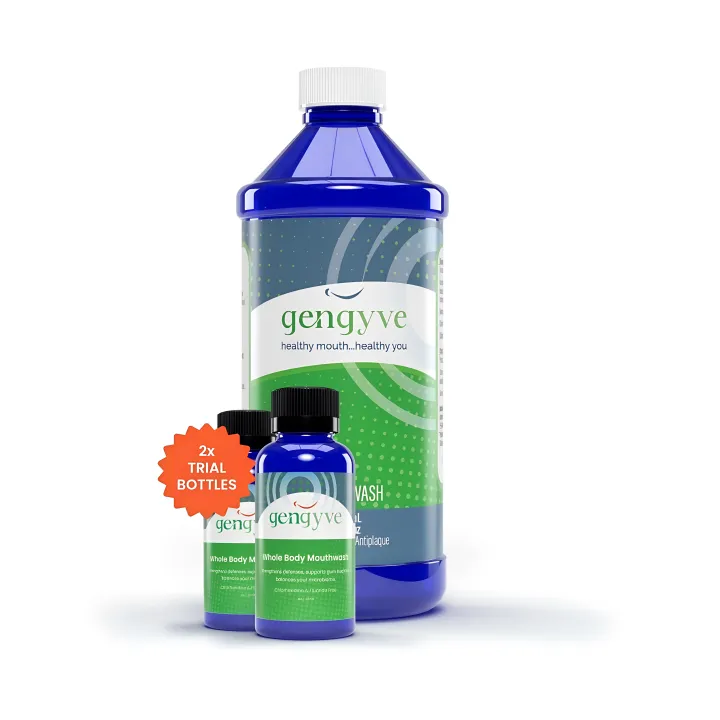
Gengyve Mouthwash
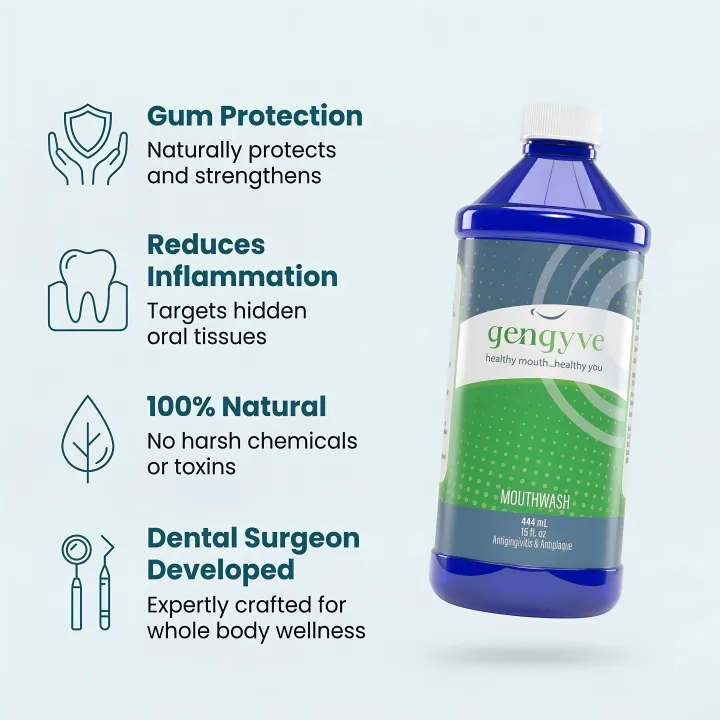
Gengyve is a U.S.-made rinse developed with input from practicing dental surgeons, including founder Dr. S. Thaddeus Connelly, an oral and maxillofacial surgeon and Full Clinical Professor at UCSF. The formula centers on 0.05% cetylpyridinium chloride (CPC) combined with hyaluronic acid, pullulan, PVP, and castor oil.
It's registered as an OTC drug product (NDC 82161-141, OTC243264R), meaning it can be sold without a prescription under the FDA's antigingivitis/antiplaque monograph. The formula is fluoride-free, chlorhexidine-free, and alcohol-free.
A 2020 randomized, double-blind trial published in the International Journal of Dental Hygiene compared this CPC-hyaluronic acid combination against chlorhexidine and a placebo in 75 dental students over 21 days. Placebo users accumulated more plaque, while gingivitis differences between groups weren't statistically significant. Staining increased in the chlorhexidine and placebo groups but not in the CPC-hyaluronic acid group.
Profile:
| Factor | Detail |
|---|---|
| Active ingredients | 0.05% CPC, hyaluronic acid, pullulan, PVP, castor oil |
| Alcohol / chlorhexidine | Free of both |
| Intended use | Daily gum care, pre/post-procedure rinse, periodontal maintenance |
| Evidence to verify | Current bottle label, 2020 CPC-hyaluronic acid trial |
| Ask a dentist first if | You have an active dental infection, are mid-treatment for periodontitis, or have allergies to listed ingredients |
Gengyve markets itself as gentle enough for everyday use without the burn, staining, or taste changes associated with chlorhexidine. That positioning is supported by the trial above, but it's still an adjunctive rinse, not a standalone periodontitis treatment.
Prescription Chlorhexidine Rinses, Such as Peridex
Dentists prescribe chlorhexidine (brand name Peridex, 0.12%) for short-term plaque and gingival control, often after scaling and root planing, implant placement, extractions, or oral surgery when brushing is temporarily difficult. The FDA Orange Book lists it as a prescription-only product.
Labeled adult use is 15 mL undiluted, rinsed for 30 seconds, twice daily. The label is explicit that improvement in gingival inflammation shouldn't be used as evidence that underlying periodontitis is under control.
Known downsides include:
- Tooth and tongue staining: measurable staining in 56% of users versus 35% of controls after 6 months, with heavy staining in 15% versus 1%
- Taste alteration, documented on the label and in a 2017 Cochrane review
- Increased supragingival calculus buildup
- Oral mucosal irritation, typically after 4+ weeks of use
Profile: Prescription-only. Best fit is a short, dentist-directed course around surgery or active treatment. Not meant for indefinite daily use, and extending it on your own isn't something your dentist would recommend.
Cetylpyridinium Chloride Mouthwashes
CPC rinses offer adjunctive plaque and gingivitis support without a prescription, which makes them a more realistic option for routine, long-term use than chlorhexidine. A 2009 randomized trial of a 0.05% CPC rinse found a 27.9% greater reduction in whole-mouth Plaque Index and a 19.8% greater reduction in Gingival Index scores compared with a control rinse over 6 weeks. A separate 6-month study backed up those plaque and gingivitis findings.
CPC isn't risk-free, though. The ADA notes it can cause brown staining of teeth, tongue, or restorations in some users, and taste changes are possible with certain formulations.
Profile: Active ingredient is CPC, often at 0.05-0.07% concentration. Alcohol-free versions exist. Suitable for daily use in most adults. Research supports gingivitis and plaque reduction. It doesn't treat established periodontitis on its own.
Essential-Oil Antiseptic Mouthwashes
Essential-oil rinses typically combine thymol, eucalyptol, menthol, and methyl salicylate. A 2015 meta-analysis published in JADA found that, compared with mechanical cleaning alone, essential-oil rinse users at 6 months had an odds ratio of 5.0 for a healthy gingival site and 7.8 for a plaque-free site. The same analysis reported a 16% reduction in gingivitis and 27.7% reduction in plaque.

Alcohol-containing and alcohol-free versions both reduce gingivitis over 6 months. A more recent comparison found alcohol-containing formulas had a slight edge on plaque scores, while alcohol-free versions tend to suit people with dry mouth or sensitive oral tissue better.
Profile: Active oils vary by brand. Alcohol status should be checked on the label. Best for adjunctive daily use alongside brushing, not as a solo fix for gum disease.
Hydrogen Peroxide or Oxygenating Mouthwashes
A 2020 systematic review found hydrogen peroxide rinses produce a "slightly better effect" on plaque than placebo, though they perform less well than chlorhexidine. The review's authors concluded H2O2 "has the potential to affect plaque, gingivitis, and oral bacteria" compared with placebo alone.
A commercial example, Peroxyl Mouth Sore Mild Mint (1.5% hydrogen peroxide), is labeled as an oral debriding agent for minor wounds and gum inflammation. Its own warning caps unsupervised use at 7 days and instructs users not to swallow it.
Profile: Best for short-term, minor irritation or temporary oral wound cleansing. Not labeled for treating periodontitis. Skip homemade dilutions in favor of a product with clear Drug Facts directions, and check with a dentist before using it past a week.
How We Chose the Best Antibacterial Mouthwashes
We prioritized products with clearly identified active ingredients, transparent labeling, and evidence tied specifically to plaque or gingival inflammation, not vague "antibacterial" marketing claims.
Clinical strength versus everyday support. Chlorhexidine's potency makes sense for a limited, clinician-directed window. It doesn't automatically make it the best daily rinse. CPC and some essential-oil formulations trade some raw strength for tolerability over months or years of use.

We also weighed tolerability factors that affect real-world compliance:
- Alcohol content and burning sensation
- Dry mouth or xerostomia compatibility
- Oral mucosal sensitivity and irritation
- Taste changes and tooth staining
- Allergies, age restrictions, and pregnancy considerations
- Compatibility with implants, orthodontic appliances, or concurrent medical treatment
Regulatory status matters too. The ADA Seal of Acceptance requires a company to submit safety and efficacy evidence for a specific claimed purpose, reviewed by the ADA's Council on Scientific Affairs.
That standard is separate from FDA prescription approval and from general OTC monograph compliance. We checked each status on its own rather than assuming one implies the others.
Common selection mistakes to avoid:
- Choosing by flavor alone instead of active ingredient
- Assuming a stronger burn means stronger antibacterial action
- Using chlorhexidine indefinitely instead of the prescribed duration
- Substituting mouthwash for interdental cleaning
- Expecting a rinse to reverse bone loss from established periodontitis
When to see a dentist. A stronger rinse is not a substitute for professional care. Seek evaluation for:
- Persistent bleeding, swelling, or pus
- Gum recession or loose teeth
- Ongoing pain or bad breath that will not resolve
The NIDCR's gum disease guide also flags red or swollen gums, easy bleeding, gums pulling away from teeth, and pain while chewing as signs to act on quickly.
Conclusion
The best antibacterial mouthwash is the one whose active ingredient, duration, and tolerability actually match your diagnosis, not the one with the strongest burn or the biggest ad budget.
Periodontal disease still requires professional assessment. Depending on severity, that might mean a deep cleaning, scaling and root planing, ongoing periodontal maintenance, or surgery. Mouthwash supports that treatment; it doesn't replace it.
If you're mid-treatment or dealing with persistent symptoms, talk to your dentist about whether a short prescription chlorhexidine course makes sense.
If you want an alcohol-free, chlorhexidine-free rinse for daily comfort and maintenance between visits, review Gengyve's product information with your dentist's recommendations, not in place of them.
Frequently Asked Questions
Which mouthwash kills bacteria in the mouth?
Therapeutic rinses with chlorhexidine, CPC, essential oils, or hydrogen peroxide can reduce selected oral microbes, but effectiveness varies by formulation and use. No rinse sterilizes the mouth completely.
Can mouthwash improve gum health?
An appropriate antibacterial rinse can reduce plaque and gum inflammation as an add-on to brushing and interdental cleaning. It cannot remove hardened tartar or treat periodontitis on its own.
What do dentists recommend for gum disease?
Treatment typically starts with professional diagnosis, mechanical plaque control, and scaling and root planing when indicated. A mouthwash recommendation usually follows, based on disease severity and treatment stage.
Has anyone reversed periodontal disease?
Gingivitis-level inflammation often improves substantially with treatment. Periodontitis-related bone and attachment loss generally cannot be restored by mouthwash alone, so a periodontist evaluation is the right next step.
What are signs of gum disease?
Watch for bleeding or swollen gums, redness, gum recession, persistent bad breath, tenderness, pus, loose teeth, or a changed bite. Get these checked by a dentist rather than self-treating with a stronger rinse.
Does mouthwash remove biofilm?
Antibacterial rinses can disrupt or reduce some biofilm activity, but they don't reliably remove mature plaque or tartar. Brushing, interdental cleaning, and professional debridement are still necessary.