
If you're dealing with bleeding gums, sensitivity, recession, periodontal pockets, an implant, or recovery after a procedure, HA may sound like an easy fix. It isn't. HA is an adjunct. It doesn't replace brushing, interdental cleaning, professional cleaning, or periodontal treatment.
This article covers how HA works, what clinical research shows, how delivery methods differ, what HA can't do, and when to see a professional.
Key Takeaways
- HA is a water-binding molecule that may support hydration and tissue healing.
- Evidence is strongest for HA as an add-on to professional care, not a stand-alone cure.
- Rinses, professional gels, injections, and supplements are different products with different evidence.
- Don't count on it to regrow gums, erase a 5 mm pocket, or remove plaque.
- Persistent bleeding, recession, or troubling post-extraction symptoms need a dentist.
What Is Hyaluronic Acid and How Might It Support Gum Health?
Hyaluronic acid (HA) is a glycosaminoglycan found in connective tissue and the extracellular matrix. It holds water, which supports hydration, lubrication, and tissue structure. A 2022 review notes that gingiva and periodontal ligament contain more HA than cementum and alveolar bone.
Proposed Mechanisms
Researchers are studying several actions:
- Cell adhesion, migration, and proliferation
- Modulation of inflammatory activity
- Support for the wound matrix
- Clot stabilization on root surfaces
Much of this comes from cell-culture and animal work. Human trials mostly measure clinical outcomes, not each mechanism. Treat these as proposed explanations, not guaranteed results.
Four Forms, Four Bodies of Evidence
| Form | Where it acts | Key caution |
|---|---|---|
| Rinse or gel | Gum or mucosal surface | Formulation-specific; combination products can't isolate HA |
| Clinician-applied gel | Pocket, root surface, surgical site | Tested within professional treatment |
| Papilla injection | Interdental soft tissue | Targets appearance and volume, not bone |
| Swallowed supplement | Systemic | Human periodontal outcomes remain unconfirmed |
Evidence for one form can't be carried over to another.
What HA Is Not
- Differs from facial dermal fillers
- Is not an antibiotic
- Does not remove plaque or calculus
- Offers no proof a product can rebuild lost gum or bone
HA may matter after periodontal treatment, extractions, implant work, or other oral wounds because it supports a moist healing environment. It can't treat the underlying cause of periodontal disease.
What Does the Research Say About HA for Gum Health?
Nonsurgical Periodontal Care
A 2025 meta-analysis of local HA added to nonsurgical therapy in adults with periodontitis found extra pocket-depth reduction of 0.46 mm and attachment gain of 0.35 mm. Follow-up was typically three months. Bleeding on probing did not reach statistical significance, and clinical relevance remains unclear.
A small 2020 trial (24 per group) added HA gel, rinse, or both to scaling and root planing. All groups improved, but HA gave no added clinical benefit over saline at four weeks.
An umbrella review of five reviews rated all of them low or critically low quality. A 16-trial review (947 participants) found that gingival index scores favored HA, but plaque index did not differ significantly, and heterogeneity was high.

Surgery, Extraction, Implants, and Ulcers
- Intrabony defects (2021, 40 defects, 12 months): HA gel with flap surgery gave 5.3 vs 4.35 mm pocket reduction and 5.1 vs 4.05 mm attachment gain. Small trial.
- Recession (2024 meta-analysis, 3 trials): no significant pooled benefit in root coverage.
- Extraction (2022, 30 healthy women, 1 week): socket closure was 67% with gel and 66% with spray, versus 43% untreated. Early soft-tissue endpoint only.
- Peri-implantitis (61 patients, 90 days): pocket depth favored HA gel. Short-term, and not about new implants.
- Aphthous ulcers (2022, 7 days): ulcers were smaller with HA gel, 1.0 vs 2.0 mm.
These findings measure different outcomes. They don't add up to "HA regrows gums."
Papilla Injections
Injections for "black triangles" are a specialized clinician procedure, not comparable to daily mouthwash. A 2019 pilot reduced black-triangle area by 45% vs 2% with saline, but only 8 patients finished.
A 2021 split-mouth trial found no HA superiority over saline at 12 months (0.28 vs 0.278 mm height gain).
Swallowed Supplements
A 2025 review found no human trial linking swallowed HA to periodontal outcomes, and no supported dose. Topical findings can't fill that gap, and a supplement doesn't reach gum tissue like a topical product.
Limitations
- Varied molecular weights and concentrations
- Inconsistent protocols and formulations
- Small, short studies
- Different underlying periodontal treatments
Until protocols, concentrations, and endpoints are standardized, treat HA as a possible adjunct rather than a proven standalone fix for gum disease.
What Can HA Help With, and What Can't It Do?
Realistic Benefits
With appropriate dental care, HA may help:
- Soothe irritated tissue
- Maintain moisture
- Support the healing environment
- Possibly improve some inflammation or healing measures
Outcomes still vary by diagnosis, product, route, technique, and how consistently you follow care.
Does HA Rebuild Gums?
No evidence shows over-the-counter HA alone restores lost gum, ligament, cementum, or bone. Temporary soothing is not regeneration.
Regenerative surgery with membranes, grafts, or proteins can recover some support. The American Academy of Periodontology describes grafting for root coverage. Established recession needs a clinician's evaluation.
What About a 5 mm Pocket?
Healthy pockets run 1-3 mm. Pockets can improve after professional therapy, but results depend on:
- Disease severity and bone or attachment loss
- Plaque control and smoking
- Diabetes and other systemic health factors
- Anatomy and follow-up care
A single 5 mm reading can't predict prognosis. HA alone will not reverse a pocket.

After Extraction
HA may help as a healing adjunct, as the small extraction trial suggests. It can't guarantee socket preservation, prevent every complication, or replace your surgeon's instructions.
Seek prompt dental care for persistent bleeding, increasing pain or swelling, pus, fever, a loose tooth, facial swelling, or worsening symptoms. Don't self-treat with an HA product.
How to Use HA Alongside Your Oral-Care Routine
Label-Based Basics
- Follow the manufacturer's directions.
- Don't swallow rinses not intended to be swallowed.
- Don't use professional or injectable formulations without clinical supervision.
HA fits on top of a foundation: twice-daily fluoride brushing, daily interdental cleaning, regular dental or periodontal maintenance, and any plan your dentist prescribes. The ADA's guidance supports that baseline, and HA replaces none of it.
Where Gengyve Fits
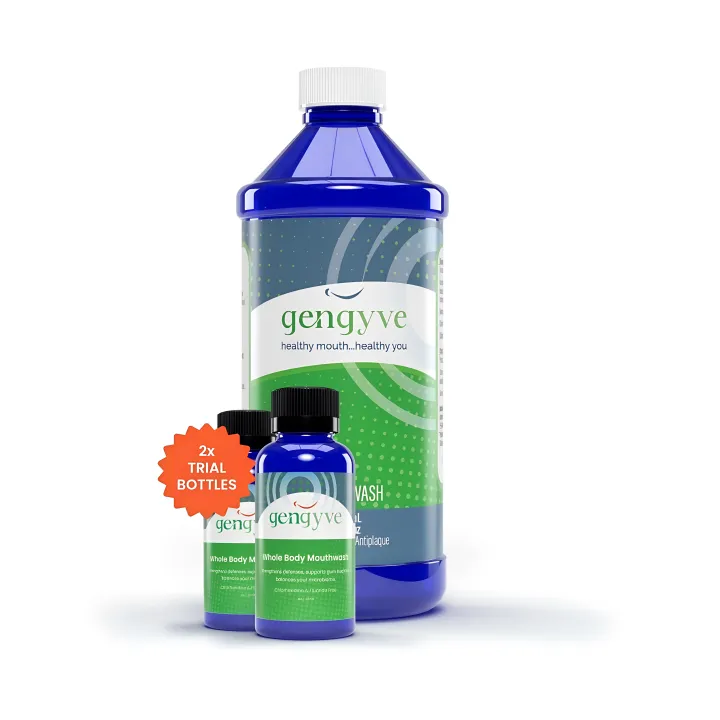
Gengyve USA makes a mouthwash developed by oral and maxillofacial surgeon Dr. S. Thaddeus Connelly, a Full Clinical Professor at UCSF with 60+ peer-reviewed publications. It combines cetylpyridinium chloride (CPC) and hyaluronic acid, and is alcohol-free and chlorhexidine-free. People use it as a 60-second everyday rinse after brushing and flossing.
Keep the evidence in perspective. In the 2020 trial of a CPC-HA rinse, 75 dental students used it for 21 days. It limited plaque similarly to chlorhexidine, but gingivitis didn't differ significantly between groups.
The combination can't isolate HA's contribution, and the trial doesn't show the rinse treats established periodontitis. Check the current bottle label for the formula, directions, and warnings. Gengyve is a daily adjunct, not a replacement for professional treatment, and it doesn't guarantee healing.

Ask Your Care Team First
| Situation | Why ask |
|---|---|
| Active periodontal disease | Rinse shouldn't delay treatment |
| Recent surgery | Early vigorous rinsing can disturb the clot |
| Implants | Need lifelong professional exams and cleaning |
| Cancer treatment | Dentist and oncologist should coordinate |
| Dry mouth | Alcohol-free rinses may be preferable |
| Pregnancy or allergies | Product-specific safety isn't established |
When to See a Dentist or Periodontist
Book an exam rather than relying on HA if you notice:
- Bleeding that persists
- Gum recession
- Bad breath with inflammation
- Pus
- Tooth sensitivity or loose teeth
- Painful chewing or recurring swelling
- A pocket measurement that stays elevated
What a Clinician Checks
Expect assessment of:
- Bleeding and probing depths
- Attachment levels and recession
- Tooth mobility
- Plaque and calculus
- Bite and radiographs
- Implant status
- Medical or medication risk factors
Possible Treatments
Depending on diagnosis, care may include:
- Improved home care and professional cleaning
- Scaling and root planing
- Periodontal maintenance
- Prescribed antimicrobials
- Surgery, grafting, or referral to a periodontist
Less bleeding with a gel doesn't prove resolved pockets or bone loss.
The CDC reports that 42% of U.S. adults 30 and older have periodontitis, per 2009-2014 survey data, so symptoms are common and worth checking.
After an Extraction
Call the treating office promptly if pain worsens instead of improving, heavy bleeding persists, or you develop fever, foul drainage, or facial swelling. Dry socket can cause severe pain within days, visible bone, and a foul taste.
Frequently Asked Questions
How is hyaluronic acid used in dentistry?
As surface rinses and gels, clinician-applied pocket or surgical gels, wound-healing products, and specialized papilla injections. The method and evidence depend on the formulation and procedure.
Does hyaluronic acid rebuild gums?
It may support hydration and healing, but it hasn't been shown to regenerate lost gum, attachment, or bone. See a professional if you have recession.
Is it worth taking oral hyaluronic acid?
Evidence for swallowed HA and gum outcomes is separate from topical use, and benefits for gums from oral HA supplements remain unclear. Discuss supplements with a healthcare professional.
What helps regrow receding gums?
Recession needs diagnosis. Management may include better plaque control, treating contributing factors, or grafting. HA alone isn't shown to regrow gums.
Can 5 mm gum pockets be reversed?
Some improve after periodontal therapy, but outcomes depend on attachment and bone status, risk factors, anatomy, and ongoing maintenance.
What do healing gums look like after extraction?
A protected blood clot forms first, then new soft tissue begins closing the site after about a week. Worsening pain, swelling, fever, foul drainage, or persistent bleeding warrants a call to your dental office.