That doesn't mean CPC stains everyone who uses it. Staining risk depends on plaque buildup, calculus, diet, tobacco use, oral hygiene habits, how the product is formulated, and how long you've been using it.
Figuring out the actual cause matters, because the right next step looks different depending on what's driving the discoloration. This article covers how CPC-related staining compares to chlorhexidine staining, what warning signs to watch for, how to lower your risk, and when it's time to call a dentist.
Key Takeaways
- CPC mouthwash can contribute to extrinsic staining in some users, but it won't stain everyone
- Brown stains often form when mouthwash meets plaque and chromogens from coffee, tea, wine, or tobacco
- Chlorhexidine has a stronger, well-documented staining link; don't confuse it with CPC
- Don't stop a prescribed rinse without your dentist; cleanings often clear surface deposits
- Always check active ingredients and intended duration of use before picking a daily mouthwash



Common Causes of CPC Mouthwash and Teeth Staining
What Is CPC Mouthwash?
Cetylpyridinium chloride is a quaternary ammonium antiseptic added to therapeutic mouthwashes to fight bacteria, not just mask bad breath. Unlike purely cosmetic rinses, CPC-based products are formulated to reduce plaque and gingivitis over time.
Visible staining is rarely caused by one ingredient working alone. It usually reflects several factors interacting at once, so a single culprit is hard to pin down.
How CPC Interacts With Plaque and Tooth Surfaces
CPC binds to oral surfaces and bacterial membranes as part of its antibacterial action. Remaining plaque, bacterial byproducts, or biofilm can create a surface where discoloring compounds collect.
The ADA's mouthrinse guidance lists CPC and chlorhexidine as ingredients that can cause brown staining of teeth, tongue, or restorations. That doesn't mean every user will experience it, but it is a recognized side effect.
Deposits tend to show up in predictable spots:
- Between teeth, where brushing often misses
- Along the gumline
- On rough or textured restoration surfaces
- Near existing plaque or hardened calculus
Dietary and Lifestyle Chromogens
Coffee, tea, red wine, cola, dark berries, curry, and tobacco all carry pigments known as chromogens. These can make any surface deposits from mouthwash more visible, or add their own layer of discoloration on top.
No single food or drink guarantees staining. But frequent exposure to dark beverages or tobacco, combined with a CPC rinse and less-than-ideal brushing, creates more opportunity for pigment to stick around.
Plaque, Calculus and Dry Mouth
Plaque that hardens into calculus, irregular restorations, orthodontic brackets, and reduced saliva flow all give pigments more surfaces to cling to. Saliva naturally washes away food particles and debris; when that flow slows down, deposits linger longer.
People dealing with persistent dry mouth should talk to a dental professional before choosing an antiseptic rinse. An alcohol-containing formula, for instance, may not be the best fit if dryness is already a concern.
CPC vs. Chlorhexidine and Other Ingredients
CPC and chlorhexidine gluconate get lumped together often, but they're different active ingredients with different risk profiles. Chlorhexidine is typically prescribed for specific short-term situations, like after periodontal surgery, and has a well-established reputation for brown staining and taste changes.
A 2025 systematic review comparing the two found a tendency toward more staining with chlorhexidine, though the evidence wasn't conclusive across every study. CPC may stain less in some comparisons, but that doesn't prove it never stains.

Other ingredients sometimes blamed for discoloration include:
- Stannous fluoride, which has its own documented staining mechanism
- Artificial dyes
- Alcohol-related dryness
Before assuming CPC is responsible for staining in your specific case, check the product label. Many rinses combine several active ingredients, and attributing staining to the wrong one means you might switch products without actually solving the problem.
What Happens If CPC Mouthwash Staining Is Ignored
Leaving suspected staining unassessed usually means one of two things happens. Either the deposits build up and become harder to remove, or you end up confused about whether you're dealing with plaque, calculus, decay, a restoration issue, or an actual ingredient reaction.
Surface staining is generally cosmetic. But persistent, painful, rapidly changing, or localized discoloration can signal something else entirely. The NIDCR's guidance on tooth decay notes that early decay is often symptom-free and can produce white, brown, or black discoloration that looks a lot like a surface stain at first glance.
Warning Signs You Shouldn't Ignore
Timing after starting a new rinse can be a useful clue. It doesn't prove the mouthwash caused the staining on its own, but it's worth paying attention to.
Watch for these signals:
- New deposits appear: brown, yellow, or dark marks near the gumline, between teeth, on the tongue, or around restorations soon after starting a rinse
- Staining intensifies: more noticeable with heavy plaque, coffee or tea habits, tobacco use, or dry mouth
- Other symptoms show up: altered taste, irritation, soreness, bleeding, swelling, persistent bad breath, or discoloration that doesn't improve after a cleaning
If other symptoms show up, skip the self-diagnosis and book a dental evaluation. Pain, sensitivity, visible holes, or swelling with fever point toward something that needs a professional look, not a product swap.

How to Prevent CPC Mouthwash Staining
Prevention is a balancing act. You want the mouthwash's benefits, a lower staining risk, and guidance from someone who knows your mouth better than a product label does.
Check the Label Before You Start
Identify whether the product contains CPC, chlorhexidine, fluoride, stannous fluoride, alcohol, or dyes. Then confirm whether it's meant for daily use or a limited course.
Do this before starting a new rinse, after any formula change, and whenever a dentist recommends a therapeutic product.
Build a Strong Mechanical Cleaning Routine
Rinsing doesn't replace brushing. Removing plaque mechanically limits the surfaces where pigments can accumulate in the first place:
- Brush with fluoride toothpaste as directed
- Clean between teeth daily
- Clean the tongue when appropriate
- Keep up with professional cleanings and exams
Ask your dentist to adjust this routine if you have implants, orthodontic appliances, gum disease, dry mouth, or are recovering from oral surgery.
Limit Avoidable Staining Exposures
Practical steps that help:
- Cut back on tobacco and dark beverages
- Rinse with water after coffee or wine
- Avoid aggressive brushing right after acidic foods
None of this guarantees a CPC rinse won't stain, but it reduces the odds and keeps discoloration less visible.
This matters most when staining begins right after starting a new rinse and lines up with frequent coffee, tea, or tobacco exposure.
Choose a Daily-Use Formula With Professional Input
Ask a dentist or hygienist whether a non-chlorhexidine, alcohol-free formula fits your situation, especially if you deal with dry mouth, irritation, or post-surgical recovery.
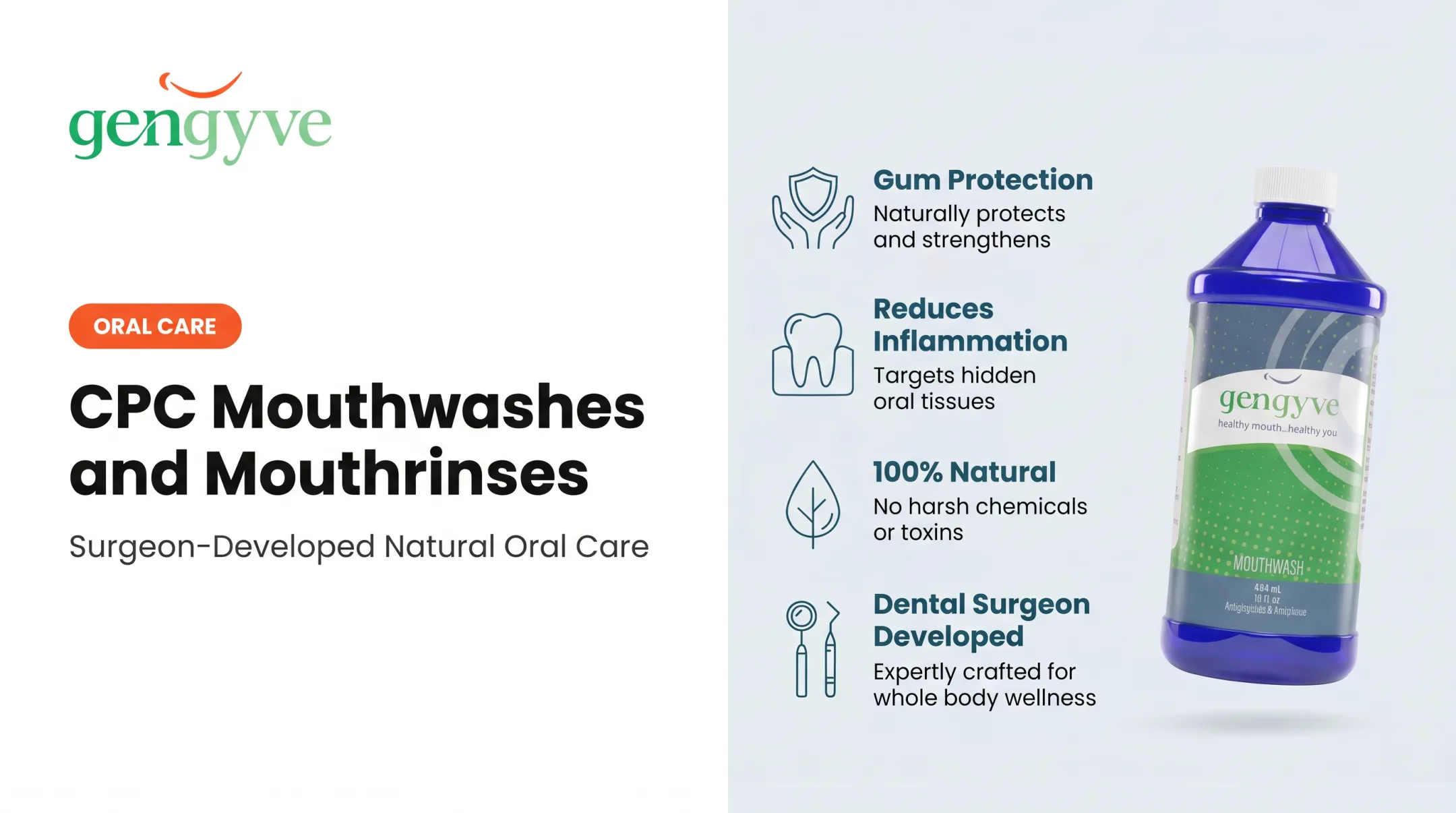
This is where product selection starts to matter. Gengyve USA's CPC and hyaluronic acid mouthwash was developed by a practicing oral and maxillofacial surgeon and is formulated without chlorhexidine, alcohol, or fluoride, at 0.05% CPC.
The brand's own 21-day randomized trial of 75 dental students found no significant increase in staining in the CPC-hyaluronic acid group, while the chlorhexidine group did show increased staining.
That study covered one formulation over a short period, so it doesn't prove zero long-term staining risk. Still, it's a relevant data point when you compare options with your dentist.

Track Changes Over Time
Keep a simple record rather than relying on memory:
- Note when new discoloration appears, its location, and how it's spreading
- Follow label directions on dose, frequency, and duration, especially for prescription or post-op rinses
- Keep a list of active ingredients in your oral-care products, plus any history of staining, irritation, or dry mouth
- Ask a dentist to distinguish surface stains from decay or restoration discoloration before any home whitening or scraping
Conclusion
CPC mouthwash can contribute to surface staining for some people, but the real cause is usually a mix of plaque, diet, tobacco exposure, and formulation, not one ingredient acting alone. Reading labels, keeping up with mechanical cleaning, and getting professional input go a long way toward prevention.
If discoloration shows up, a dental cleaning and exam beats guessing. It can resolve removable stains and rule out anything more serious.
Frequently Asked Questions
Does CPC mouthwash cause staining?
CPC may contribute to extrinsic staining in some users, particularly alongside plaque, calculus, and dietary chromogens like coffee or tea. It doesn't stain everyone, and new or persistent discoloration is worth a dental evaluation.
Does staining from chlorhexidine go away?
Chlorhexidine staining is typically surface-level and often removable with a professional cleaning. Discoloration that's unusual or doesn't improve afterward should still be checked by a dentist.
How to stop chlorhexidine staining?
Use chlorhexidine exactly as directed and don't extend a prescribed course on your own. Keep up strong plaque control, and ask the prescribing dentist about alternatives if staining shows up.
How can you tell whether mouthwash is causing brown stains on your teeth?
Look at timing, review the ingredient label, and note the staining's location alongside your diet, tobacco use, and plaque levels. Timing alone doesn't prove the mouthwash is responsible, so a dental exam gives the clearest answer.
Should you stop using CPC mouthwash if you notice staining?
Don't discontinue a dentist-directed rinse without checking in first. Contact your dental professional, review the label and intended duration, and discuss a cleaning or alternative formulation together.