
Implants themselves can't develop cavities the way natural tooth enamel can. But plaque still builds up along the gumline around an implant, and that buildup can irritate soft tissue and contribute to peri-implant disease. This guide covers brush features worth looking for, safe brushing technique, post-surgical precautions, tools that complement brushing, and signs that mean it's time to call your dentist.
Key Takeaways
- Choose soft bristles, a manageable brush head, light pressure, and technique that reaches the gumline and restoration
- Electric toothbrushes can work well after healing, especially models with a pressure sensor, gentle mode, and timer
- A toothbrush alone won't replace interdental cleaning, professional cleanings, or your surgeon's post-op instructions
- Persistent bleeding, swelling, pain, bad taste, discharge, or looseness needs a dental professional's evaluation
Why Dental Implant Care Requires the Right Toothbrush
An implant-supported tooth has several parts, but your toothbrush mostly interacts with two of them: the crown (or bridge) you can see, and the gum tissue surrounding it. The implant fixture sits below the gum, anchored in bone, while the abutment connects the fixture to the crown. Daily brushing targets the visible restoration and the gumline hugging it.
That gumline matters more than people expect. When plaque and food debris sit there too long, the tissue can become inflamed.
Two distinct conditions can develop:
- Peri-implant mucositis: inflammation of the soft tissue around an implant, often with bleeding on gentle probing, but no bone loss
- Peri-implantitis: a more serious, plaque-associated condition involving mucosal inflammation and progressive bone loss around the implant
These definitions come from the 2018 World Workshop consensus, a joint report from the American Academy of Periodontology and the European Federation of Periodontology.
The report is clear that plaque control can resolve mucositis in many cases. Distinguishing mucositis from peri-implantitis still requires a clinical exam, not a guess based on how your gums look in the mirror. A toothbrush helps manage plaque. It doesn't diagnose what's already happening beneath the surface.
Choosing the Best Toothbrush for Dental Implants
Bristle Type and Head Design
Soft or extra-soft bristles are the safer choice around implants and natural teeth alike. The ADA's toothbrush guidance recommends soft bristles and gentle pressure specifically to limit gum abrasion, not because soft bristles clean better overall.
Beyond bristle softness, look for:
- A compact or small brush head that can maneuver around crowns and bridges
- Rounded bristle tips rather than sharp-cut ends
- A handle you can grip comfortably for a full two minutes
- Easy-to-find replacement heads so you're not tempted to keep using a worn one
Manual vs. Electric: What the Evidence Actually Shows
This is where a lot of marketing overpromises. A 2013 randomized trial comparing sonic and manual brushing in 83 implant patients over 12 months found no significant difference in plaque reduction between the two. Both groups maintained healthy peri-implant tissue.
A more recent 2025 systematic review leans toward powered brushes, particularly oscillating designs, for plaque and bleeding outcomes , but the certainty is rated low to moderate, and the studies are too varied to pool into one solid number.

Neither option is universally superior for implants. Pick based on:
- Manual if you already have solid technique and don't mind the extra attention brushing requires
- Electric if you struggle with dexterity, consistent motion, or sticking to the full brushing time
If you go electric, a pressure sensor, a gentle or sensitive mode, a built-in timer, and controllable intensity matter more than whether it's sonic or oscillating-rotating. Research comparing those two power-brush styles head-to-head has specifically excluded implant patients, so claims of one being "best for implants" aren't backed by implant-specific data.
Avoid these:
- Stiff or medium-hard bristles
- Aggressive scrubbing
- Brush heads with splayed or flattened bristles
- Abrasive whitening pastes unless your dentist confirms they're safe for your restoration
How to Brush Dental Implants Safely and Effectively
Good technique matters more than brush choice. Position bristles at roughly a 45-degree angle against the gumline and use small, gentle strokes rather than hard back-and-forth scrubbing. This holds true whether you're brushing a single implant crown, a bridge, or a full-arch prosthesis.
A practical daily routine:
- Brush all accessible surfaces twice daily, for about two minutes each session
- Work in sections — upper right, upper left, lower right, lower left — so nothing gets skipped
- Clean your tongue to reduce bacterial load
- Replace your toothbrush or brush head every three months, or sooner if bristles look frayed

For Electric Toothbrush Users
Let the brush do the work. Guide the head slowly from tooth to tooth instead of scrubbing manually, and pay attention to the pressure sensor if your model has one — it'll usually flash or change sound when you're pushing too hard.
For Manual Toothbrush Users
A mirror helps enormously for posterior implants you can't see directly. An angled handle can also improve access to back teeth and full-arch restorations where straight-on brushing doesn't reach the undersurface.
Post-Surgery Is a Different Situation Entirely
Don't assume a generic waiting period applies after implant surgery. According to guidance from the American Association of Oral and Maxillofacial Surgeons, brushing must avoid disturbing the surgical site, and the operating surgeon provides specific instructions on how and when brushing can resume near that area. There's no universal "wait two weeks" rule — follow what your surgeon wrote down, not what a forum post says.
Brushing instructions can also differ meaningfully by restoration type. Removable overdentures, fixed bridges, All-on-4 arches, and sites with bone grafting each come with their own care nuances. Your treating clinician is the right source for a restoration-specific plan.
Complementary Cleaning Tools, Toothpaste, and Professional Care
A toothbrush cleans visible surfaces. It doesn't reach between teeth or under connector bars, which is why interdental cleaning matters just as much for implant patients.
Common interdental options include:
- Implant-safe floss or floss threaders for bridgework
- End-tuft brushes for hard-to-reach posterior areas
- Correctly sized interdental brushes (sizing should come from your hygienist, not a guess)
- Water flossers, which may help with peri-implant mucositis as an adjunct, though evidence quality here is still considered low
A 2025 review comparing these tools found trends favoring irrigators and interdental brushes over floss in some studies, but not enough consistency to crown one device the clear winner. Fit your tool to your dexterity and your restoration's design.
Toothpaste and Rinses
Toothpaste choice should weigh fluoride needs for natural teeth, sensitivity, and abrasivity around implant crowns. There's no single "best" formula for everyone. Ask your dentist which one fits your mouth specifically.
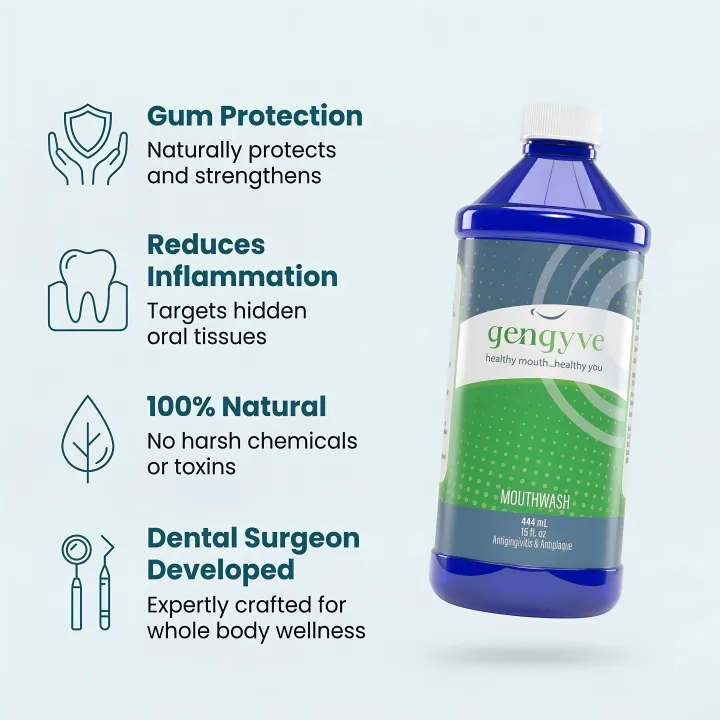
Mouthwash fits in as an adjunct, not a replacement for brushing and interdental cleaning. Gengyve, developed by a practicing oral and maxillofacial surgeon, offers an alcohol-free, chlorhexidine-free daily rinse built around CPC and hyaluronic acid. Ask your dentist or surgeon about it if you want a gentler daily option alongside mechanical cleaning.
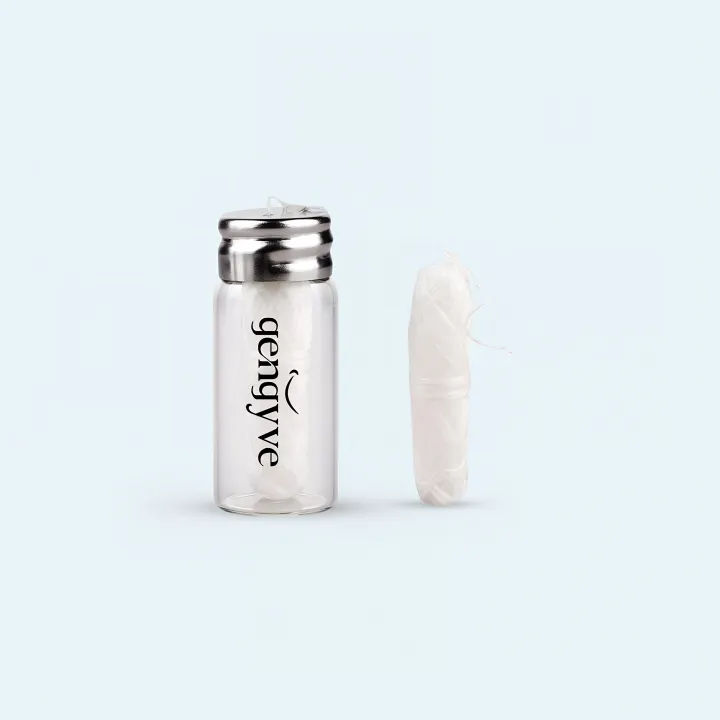
Gengyve's silk floss ($7) and bamboo toothbrush are also available for an eco-conscious routine. Confirm bristle firmness and interdental sizing with your dental team.
Professional Maintenance Isn't One-Size-Fits-All
Forget the blanket "every six months" rule. The ACP's maintenance guideline for full-arch restorations recommends in-office visits every two to six months, scaled to risk factors like smoking, periodontitis history, and limited dexterity. Your own interval should come from your dentist, not a generic calendar reminder.

Contact your dental professional promptly if you notice:
- Increasing bleeding, swelling, or redness
- Pain, pus, or unusual discharge
- Persistent bad taste or odor
- Difficulty chewing
- A crown, bridge, or implant that feels loose
A loose restoration is never a toothbrush problem. It needs an evaluation, full stop.
Conclusion
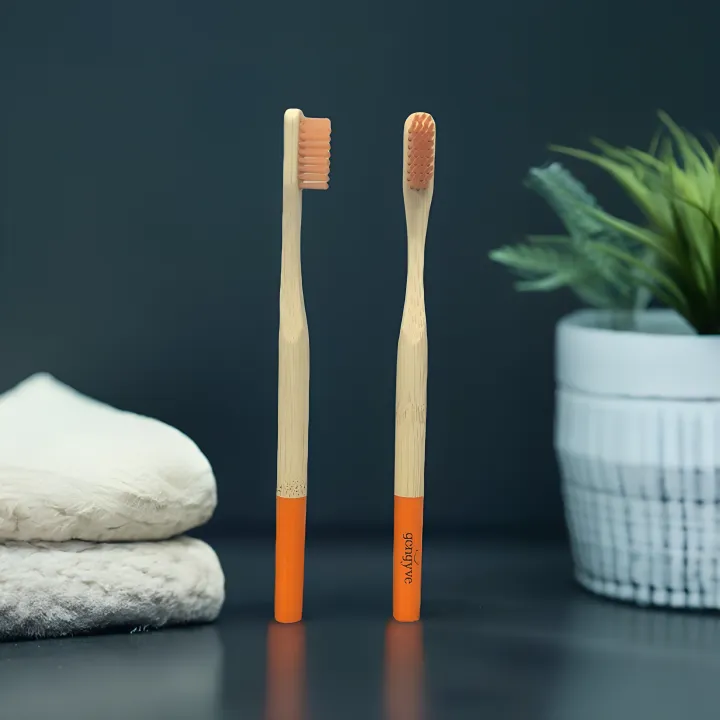
The best dental implant toothbrush is a soft, comfortable brush you'll actually use correctly, twice a day, every day. Gengyve's bamboo toothbrush, for example, uses BPA-free medium-soft bristles and sells for $4.97, a reasonable starting point, though you should still confirm bristle firmness fits your specific restoration with your dentist.
Ask your implant dentist or hygienist to physically demonstrate brushing and interdental cleaning around your restoration, especially right after surgery or if something feels off. That five-minute demo will do more for your implant's long-term health than any brush upgrade.
Frequently Asked Questions
How do you brush your teeth if you have implants?
Use a soft-bristled brush at a gentle angle along the gumline, cleaning all sides of the crown or restoration with small, controlled strokes. Follow your implant dentist's specific instructions, especially regarding technique around bridges or full-arch restorations.
Is it okay to use an electric toothbrush on implants?
Yes, once your clinician has cleared routine brushing, an electric toothbrush with a gentle mode and pressure sensor works well for many implant patients. Post-surgical timing varies, so confirm when it's safe to resume with your surgeon first.
What is the best toothbrush for implants?
A soft-bristled brush with a small, accessible head and a comfortable handle generally works best. Whether manual or electric suits you better depends on your dexterity, restoration type, and your dentist's recommendation.
What is the best electric toothbrush for crowns and implants?
Look for controllable intensity, pressure feedback, a built-in timer, and soft replacement heads that reach the gumline easily. No single brand has implant-specific evidence proving it's superior, so prioritize these features over marketing claims.
What's the best toothpaste to use on dental implants?
It depends on your natural teeth's fluoride needs, gum sensitivity, and the abrasivity level your restoration can tolerate. Ask your dentist for a formulation suited to both your implant crown and surrounding gums.
Do you brush all-on-four dental implants?
Yes, fixed All-on-4 restorations still need daily brushing along the prosthesis and gumline, plus the accessible underside areas. Your dental team will typically recommend supplemental tools, such as a water flosser, to reach spots a brush can't.