Introduction
You swish, you spit, and suddenly your morning coffee tastes like metal. Or that orange juice you've had a thousand times suddenly tastes muted, almost flat. It's unsettling, and it happens to more people than you'd think.
Here's the direct answer: certain mouthwash ingredients, particularly some antimicrobial formulas, can temporarily affect taste or leave a lingering aftertaste in some users. But a sudden, complete loss of taste shouldn't be pinned on your mouthwash without a closer look.
This article breaks down what's actually causing these taste shifts, compares the ingredients most likely to be involved, and walks through practical next steps. We'll also cover when it's time to call a dentist instead of guessing.
Key Takeaways
- A lingering aftertaste differs from true, persistent taste loss, so describe your symptoms precisely
- CPC, chlorhexidine, alcohol, and flavoring agents each affect taste perception differently
- Mouthwash supports brushing and flossing; it doesn't replace them
- Stop using any product and seek care if symptoms are severe, persistent, or paired with swelling or breathing trouble
What Causes Taste Changes After Using Mouthwash?
Not all "taste problems" are the same thing, and the distinction matters when you're explaining symptoms to a dentist.


- Lingering bad taste or aftertaste - a flavor that sticks around after rinsing
- Metallic or bitter taste - often described with chlorhexidine-based products
- Muted or reduced flavor intensity - food tastes "less like itself"
- Tongue numbness - a tingling or dulled sensation, not true taste loss
- Complete taste loss (ageusia) - rare, and rarely caused by mouthwash alone
How Active Ingredients Interact With Your Mouth
Active ingredients don't just sit in your mouth and leave. They interact with saliva, oral tissue, and the receptors responsible for flavor detection. CPC-containing rinses have been linked to taste alteration and burning in a 2019 systematic review covering 20 studies and more than 750 patients, though the review didn't establish how common this actually is across users.
Chlorhexidine works differently. A small 1995 experiment found it selectively dulled perceived saltiness and bitterness, while sweetness and sourness stayed intact. That's a specific, measurable effect, not a blanket description of "losing taste."
Strong Flavors Can Mimic Taste Loss
Menthol and essential-oil formulas create a cooling, tingly aftertaste that some people interpret as taste loss, especially when the mouth already feels dry or irritated. One sensory study found menthol rinses increased cooling and minty aftertaste after eating, which affected how much food people wanted to eat next, not whether they could taste it.

It's Not Always the Mouthwash
Plenty of other things cause taste changes:
- Nasal congestion or a viral illness (blocks odor signals, which food flavor depends on)
- Dry mouth or oral inflammation
- Gum disease or a dental infection
- Certain medications, including some antibiotics and antihistamines
- Smoking or tobacco use
- Recent oral surgery or procedures
Timing offers a clue, not proof. If symptoms start right after switching products and fade once you stop, that points toward the rinse. If they persist regardless of use, something else is likely going on, and that needs a broader look.
Which Mouthwash Ingredients and Formulations Matter?
Not every mouthwash is built the same way, and the formula you choose can change how your taste is affected.
- Cosmetic rinses freshen breath temporarily with no therapeutic claim
- Therapeutic rinses target plaque, gingivitis, or post-procedure healing, and may be OTC or prescription-only
CPC: Common, But Not Risk-Free
Cetylpyridinium chloride is an antimicrobial found in many daily rinses. It's generally well tolerated, but some users report temporary aftertaste or altered food flavor. Always check the product's specific label and directions, since formulations vary.
Chlorhexidine: Prescription-Only, Short-Term by Design
Chlorhexidine is available by prescription for specific situations, like managing gingivitis short-term. Peridex's prescribing label lists altered taste perception and staining among its most common effects, noting the bitterness "becomes less noticeable" with continued use for most people.
It also documents rare postmarketing reports of permanent taste alteration, without providing a frequency.

If you're on a prescribed rinse, talk to your prescribing dentist about taste changes rather than stopping cold turkey.
Alcohol and Flavoring: Discomfort, Not Automatically Taste Loss
Alcohol can dry out the mouth, which may indirectly make flavors feel "off." But a 2015 trial comparing an alcohol-containing rinse to an alcohol-free one found comparable dryness and salivary flow in people with normal saliva production. Alcohol alone isn't a confirmed cause of taste loss; it's one variable among several.
| Formulation Type | Common Trade-Off |
|---|---|
| Alcohol-containing | Possible dryness, burning sensation |
| Alcohol-free | Gentler feel, but formulation still matters |
| Chlorhexidine (Rx) | Effective short-term, documented taste effects |
| CPC-based, alcohol-free | Antimicrobial action with fewer reported burning complaints |
"Natural" or "alcohol-free" labeling doesn't guarantee suitability for every condition or sensitivity.
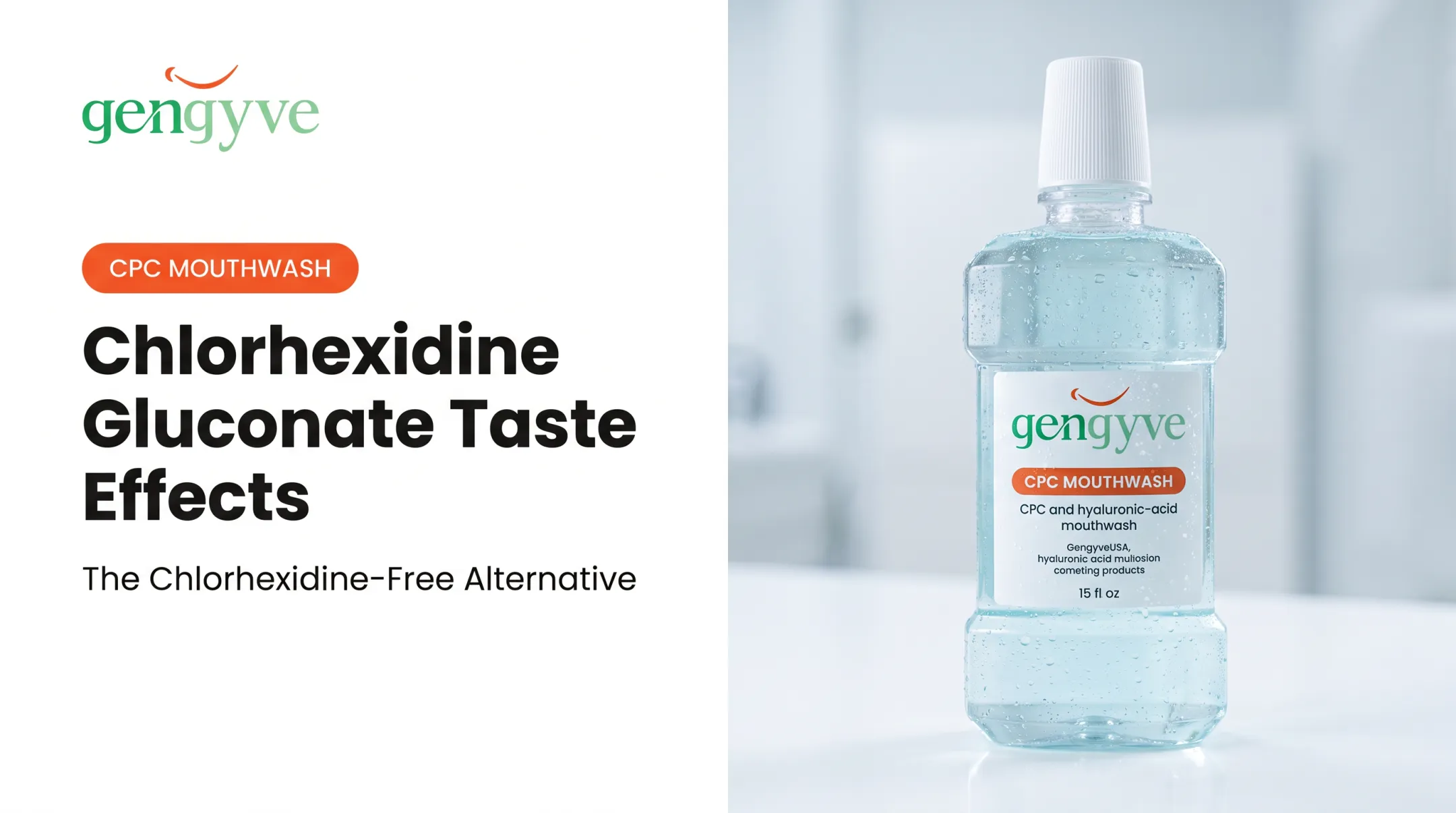
Among alcohol-free, CPC-based options, Gengyve is a U.S.-developed rinse created by a practicing oral and maxillofacial surgeon. It pairs CPC with hyaluronic acid, skips chlorhexidine, and is meant as a gentler daily option rather than a treatment for existing taste changes.
As with any rinse, check the current label and ingredient list before switching.
What Should You Do If Mouthwash Changes Your Taste?
Your first move is documentation, not guesswork.
- Write down the product name and active ingredients - check the label directly
- Note first and last use - when did you start, and when did symptoms begin?
- Record affected foods and sensations - burning, dryness, numbness, a coated feeling, or swelling
- List anything else you changed recently - new toothpaste, medication, or supplement
Pause, Don't Panic
If a rinse causes a significant or new reaction, follow the label and consider pausing it while you seek guidance. One exception: don't stop a prescribed rinse like chlorhexidine without talking to the prescribing professional first, since abrupt discontinuation can affect treatment.
Avoid changing multiple products at once. Switching toothpaste, mouthwash, and a supplement all in the same week makes it nearly impossible to identify what's actually responsible.
Low-Risk Comfort Steps
- Drink water if that feels appropriate for you
- Keep brushing and flossing gently
- Stick to the directed amount, not more
- Never swallow mouthwash
What Improvement Looks Like
A fading aftertaste or gradually returning flavor is a good sign. Worsening symptoms, trouble eating or drinking normally, or taste changes that don't budge after stopping the product all warrant professional evaluation.
If you want to report a suspected reaction, the FDA accepts consumer reports through FDA's MedWatch program. A single report doesn't prove the product caused your symptoms, but it adds to the safety data pool.

When Should You Seek Help and How Can You Choose a Better Rinse?
Some situations call for a dentist visit, not another product swap.
Contact a dental professional if you notice:
- Taste changes that persist after you've stopped the suspected rinse
- Complete or substantial taste loss
- Recurrent symptoms with no clear product trigger
- Oral pain, sores, or bleeding
- Severe dryness or signs of infection
Urgent Warning Signs
Treat any of the following as a medical emergency:
- Facial or oral swelling
- Hives
- Difficulty breathing or swallowing
- A rapidly worsening reaction
Call 911 or seek emergency care right away. Do not switch mouthwashes and wait it out.
A Quick Label-Reading Checklist
Before buying your next rinse, check:
- The active ingredient and its intended purpose
- Alcohol content and flavoring agents
- Age and use instructions
- Whether it's meant to be swallowed (it shouldn't be)
- Whether you should ask a professional first, especially after surgery, with dry mouth, gum disease, or during cancer treatment
The right mouthwash depends on your individual oral-health needs and tolerance. A gentler formula can feel more comfortable day to day, but it is not a substitute for diagnosis or periodontal treatment when you need one.
Frequently Asked Questions
Why does my mouthwash have a bad taste?
Active ingredients, alcohol, flavoring agents, dryness, or oral irritation can all create a bitter, metallic, or lingering aftertaste. Check the label for your specific ingredients, and contact a dental professional if the taste doesn't go away.
Can mouthwash cause temporary taste loss?
Yes, some formulations cause temporary altered or muted taste in certain users. That's different from complete taste loss, which is far less common and usually points to another cause.
How long does taste change from mouthwash last?
Duration varies by product and by person. If symptoms don't improve after you stop the rinse, or they linger longer than expected, seek dental or medical advice.
What should I do if I lose my sense of taste after using mouthwash?
Stop using the product and check its label against any guidance you've received. Record your symptoms, and get evaluated if the loss is persistent, severe, or lasts longer than you expect.
Is alcohol-free mouthwash less likely to affect taste?
Alcohol-free products can feel more comfortable for people dealing with dryness or irritation. That said, taste effects depend on the full formulation, not alcohol content alone.
When should I see a dentist about a bad taste after mouthwash?
See a dentist for persistent or recurrent symptoms, pain, sores, swelling, or signs of infection. Any breathing or swallowing difficulty needs urgent medical care right away, not a dental appointment.