CPC is an antimicrobial typically formulated for everyday plaque and gum support. Hydrogen peroxide is an oxidizing agent, often positioned for short-term wound cleansing or surface-stain reduction. Picking the wrong one for your goal can mean unnecessary irritation, dryness, or a rinse that doesn't actually address your concern.
This article breaks down how each ingredient works, what the research actually shows, common drawbacks, and how to choose a rinse that fits your situation, including when it's time to call a dentist instead of switching bottles.
Key Takeaways
- CPC and hydrogen peroxide work through different mechanisms, so neither is universally "better"
- Mouthwash supports, but never replaces, brushing, interdental cleaning, and dental visits
- Gum inflammation, ulcers, mucositis, or post-op symptoms need professional care, not a rinse swap
- Concentration, formulation, and labeled use matter more than the ingredient name alone
How Cetylpyridinium Chloride Mouthwash Works
CPC is a quaternary ammonium compound with a positive charge. Bacterial cell membranes carry a negative charge, and that attraction is the whole mechanism.



According to a mechanism review, CPC's hydrophobic tail inserts into the bacterial membrane, disrupting its structure until the cell leaks and breaks down. The catch: biofilm matrix can block penetration, which limits how well CPC reaches bacteria buried deep in plaque.
What the Research Shows
CPC rinses are most commonly studied as an adjunct to brushing, not a standalone treatment. In a six-month randomized trial of 139 adults with mild to moderate gingivitis, a 0.07% CPC rinse used twice daily produced measurable results compared to placebo:
- 15.4% less gingival inflammation
- 33.3% less bleeding
- 15.8% less plaque
Mankodi and colleagues' trial also noted that both the rinse and placebo were well tolerated. That's an index reduction, not a cure, and it was measured alongside normal brushing habits, not in place of them.
A separate 2025 trial looked at CPC specifically for orthodontic patients dealing with bad breath. Thirty participants using a 0.05% CPC rinse three times daily for one month saw drops in volatile sulfur compounds, though salivary flow and one specific sulfur compound didn't change.

That's a narrow population, worth noting before assuming the same results apply broadly.
Drawbacks and What Affects Them
A 2019 systematic review of mouthrinse adverse events found staining, altered taste, and occasional burning associated with CPC use, with staining showing up more consistently in longer studies. Risk isn't fixed across every CPC product, though. It shifts based on:
- Concentration (commonly 0.05% to 0.07% in US labels)
- Whether the formula contains alcohol
- Flavoring agents and other inactive ingredients
- How often and how long it's used
CPC mouthwash won't remove calculus that's already hardened, repair a cavity, or reverse established periodontal disease. Those still require a dentist.
How Hydrogen Peroxide Mouthwash Works
Hydrogen peroxide doesn't target bacterial membranes the way CPC does. Instead, it releases reactive oxygen species that break down lipid structures in microorganisms and react with organic debris, producing the foaming you see when it contacts tissue.
The FDA classifies this category as an oral debriding agent. Its job is helping clear foreign material or damaged tissue around a minor wound, not ongoing plaque control.
Where It's Actually Used
Commercial labels reflect that narrower purpose. A ready-to-use peroxide oral rinse on the market contains 1.5% hydrogen peroxide, while whitening rinses typically run 1.5% to 2%. These are formulation-specific numbers, not universal safety thresholds you can apply to any peroxide product.
A 2020 systematic review of peroxide rinsing found possible antibacterial and gingivitis benefits, but plaque results were inconsistent, and most included studies carried an unclear or high risk of bias. The researchers stopped short of recommending routine use based on that evidence.
Why Concentration and Contact Time Matter
This is where hydrogen peroxide differs sharply from CPC: the margin for error is smaller.
- A 1993 study of volunteers using 0.75% or 1.5% peroxide rinses four times daily for two weeks found significant mucosal abnormalities in both groups
- A documented case involved someone self-rinsing with 3% peroxide for over two minutes, resulting in chemical burns and tissue necrosis
- Swallowing, prolonged contact, or using a stronger concentration than labeled all raise the risk of irritation or injury
Stain reduction is a separate claim from debridement. Hydrogen peroxide rinses can temporarily reduce extrinsic stain, which is not the same as treating intrinsic tooth discoloration. A 2025 trial testing a 2.5% peroxide rinse over 90 days found measurable color change without detected gingival irritation, but that result is specific to one product and protocol.

Who should avoid peroxide rinses without professional guidance:
- Anyone with active ulcers or mucositis (though minor canker sores are a labeled use for some products)
- People with severe dry mouth
- Patients recovering from recent extraction or oral surgery
- Children who might swallow the rinse
- Anyone with unexplained, persistent lesions
Hydrogen peroxide mouthwash is not a substitute for professional whitening, periodontal treatment, antibiotics, or brushing.
CPC vs. Hydrogen Peroxide: Which Is Right for You?
No direct head-to-head trial compares CPC and hydrogen peroxide for plaque and gingivitis. What exists is indirect, formulation-specific evidence pointing toward different use cases entirely.
| Factor | CPC Mouthwash | Hydrogen Peroxide Rinse |
|---|---|---|
| Primary action | Disrupts bacterial cell membranes | Oxidizes debris and microorganisms |
| Typical role | Daily plaque/gingivitis support | Short-term cleansing, temporary stain help |
| Daily-use evidence | Studied over six months as an adjunct | Labels often limit self-use to about 7 days |
| Common drawbacks | Staining, taste changes, occasional burning | Irritation, burning, tissue damage if overused |
| Alcohol-free options | Available | Available |
If your goal is everyday antimicrobial support and fresher breath, a CPC-based rinse used alongside brushing fits that purpose. If you're dealing with a minor mouth wound or want short-term surface-stain help, a labeled hydrogen peroxide product may fit, but check the directions for duration limits.
A stronger burning sensation or heavier foam doesn't mean a rinse is working better. It often just means more alcohol or a higher peroxide concentration, which can translate to more irritation, not more benefit.

A Gentler CPC Option
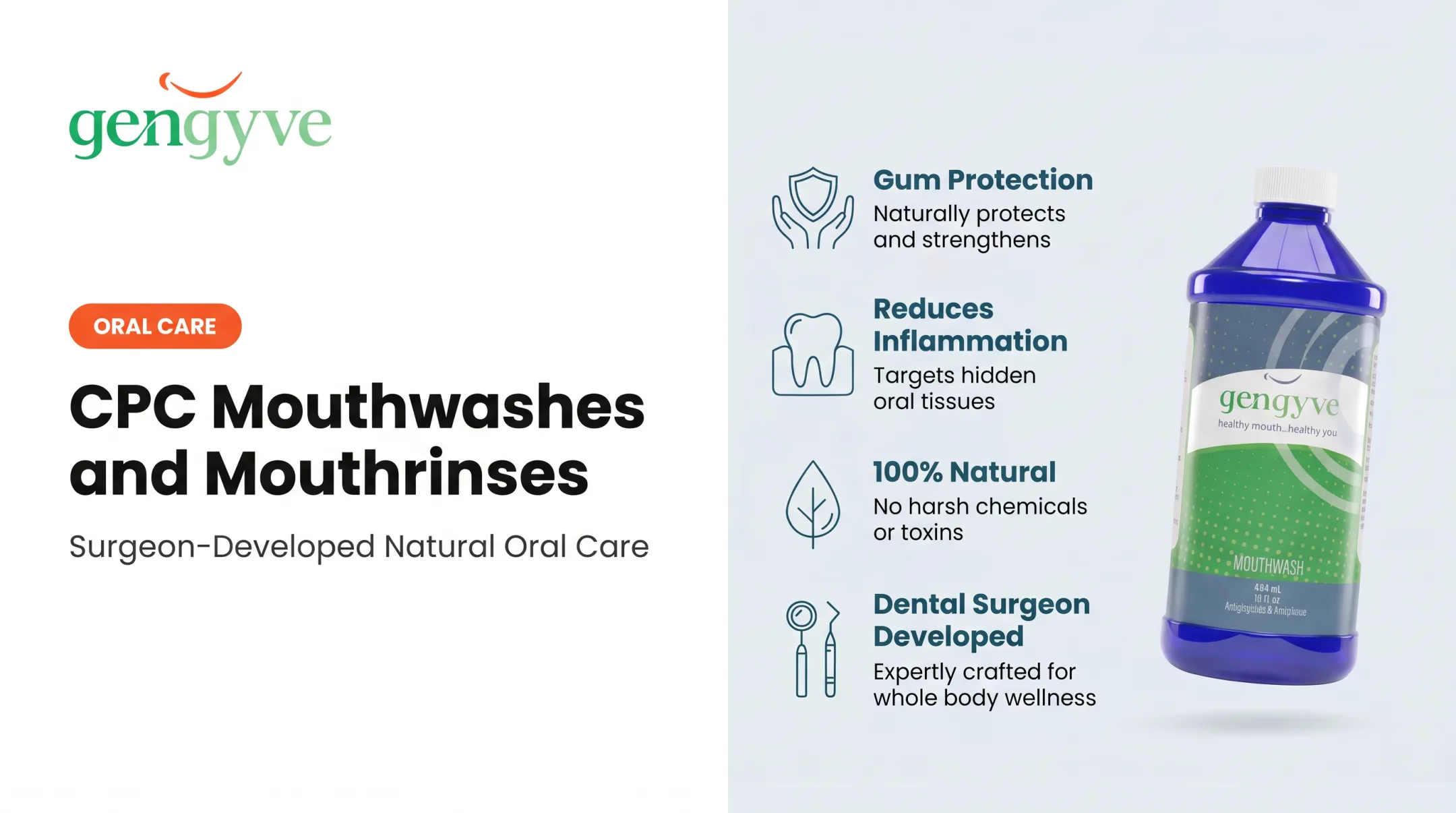
For readers looking at CPC-based rinses, Gengyve USA offers a dental-surgeon-developed, alcohol-free, chlorhexidine-free formula combining CPC with hyaluronic acid, built for daily use rather than short-term treatment.
A 2020 randomized trial of a similar CPC–hyaluronic acid rinse, run over 21 days with 75 dental students, found no significant increase in staining compared to placebo. That's a short study on one formulation, not proof of zero staining risk across every CPC product. It's not a substitute for a peroxide rinse, and it's not positioned for every patient.
Your Decision Path
- Identify your concern - daily plaque/gum support versus short-term wound cleansing or staining
- Check the active ingredient and concentration on the label
- Review contraindications - existing dental work, sensitive tissue, recent procedures
- Ask your dentist if symptoms persist, you're mid-treatment, or you're unsure which fits
How to Use Either Mouthwash Safely
Whichever rinse you choose, the label governs dose, swishing time, frequency, and whether to avoid eating or drinking afterward. Never swallow mouthwash.
Mouthwash supports brushing with fluoride toothpaste and interdental cleaning. It doesn't compensate for skipped brushing or flossing. The ADA's guidance on mouthrinse is direct on this point: rinsing does not replace mechanical plaque removal.
Stop using the product and contact a dental professional if you notice:
- Persistent burning or swelling
- Peeling tissue
- Worsening sores
- Allergic symptoms
- Bleeding that doesn't stop
A different rinse will not treat problems that need hands-on care. See a dentist rather than switching rinses if you have:
- Ongoing gum bleeding
- Recurring painful ulcers
- Pus, fever, or loose teeth
- Implant-related symptoms
- Lesions that won't resolve
A labeled hydrogen peroxide wound cleanser, for example, limits self-use to no more than seven days unless a dentist or physician directs otherwise, per its product label. That's a meaningful difference from a daily CPC rinse meant for ongoing use.
For children, pregnancy, breastfeeding, cancer treatment, radiation-related mucositis, or post-operative care, check current product labeling and talk to your dentist or treating clinician before starting any rinse.
Conclusion
CPC and hydrogen peroxide aren't competing for the same job. One supports daily plaque and gum maintenance; the other handles short-term cleansing or surface staining. The right choice comes down to your specific concern, the product's formulation, how your mouth tolerates it, and what your dentist recommends for your situation.
A few practical rules still apply:
- Read the label before you buy
- Don't overuse either ingredient
- Keep brushing and interdental cleaning as your foundation
- See a dentist when symptoms stick around or you're managing active treatment
If you want an everyday CPC-based rinse developed with dental-surgeon input, review Gengyve USA's product information. For anything clinical, your dentist remains the right resource, not a brand substitute.
Frequently Asked Questions
Is cetylpyridinium chloride better than hydrogen peroxide for mouthwash?
Neither is universally better. CPC supports daily plaque and gum maintenance, while hydrogen peroxide typically serves short-term cleansing or stain purposes. The right pick depends on your goal, the formulation, and your dentist's input.
What does cetylpyridinium chloride do in mouthwash?
CPC disrupts bacterial cell membranes, helping reduce plaque buildup and gum inflammation when used alongside brushing. It doesn't replace interdental cleaning or treat existing periodontal disease.
Is hydrogen peroxide mouthwash safe to use every day?
It depends on the labeled formulation. Many peroxide wound-cleanser products limit self-use to about seven days, and frequent or prolonged use without guidance can irritate oral tissue.
Can hydrogen peroxide or CPC mouthwash help with gingivitis?
Both have some supporting evidence as adjuncts, though CPC's gingivitis data is more consistent. Persistent gingivitis still needs a dental evaluation to address the underlying cause.
Which mouthwash is better for sensitive gums or mouth sores?
Irritated tissue can react poorly to alcohol, peroxide, or certain flavoring agents in either type. Anyone with sores or inflammation should check with a dentist before choosing a rinse.
Can mouthwash replace brushing and flossing?
No. Mouthwash is an adjunct, not a replacement for brushing with fluoride toothpaste, cleaning between teeth, or professional dental care.