Hidden plaque or tartar, technique gaps, dry mouth, medications, hormones, health conditions, and tobacco can all keep gums inflamed. This article walks through each one, shows how to spot the likely culprit, and explains when it's time to see a dentist.
Key Takeaways
- Gingivitis can persist when plaque hides in hard-to-reach spots or when non-hygiene risk factors are present.
- Technique, professional cleanings, and managing dry mouth or medical factors all protect gums.
- Bleeding, pus, recession, or loose teeth are not a normal reaction to flossing.
- Only a dental professional can tell gingivitis from periodontitis.



Common Causes of Gingivitis
What Is Gingivitis?
Gingivitis is inflammation of the gum tissue, usually triggered by bacterial plaque. Per a 2017 consensus report, plaque-induced gingivitis stays confined to the gums, and reducing plaque reverses it.
Periodontitis is different. It involves loss of the attachment and bone that support the teeth. Dentists tell them apart with probing and sometimes X-rays, so symptoms alone can't settle the question.
Plaque, Tartar, and Technique Gaps
Daily brushing can still miss plaque. Common hiding spots include:
- Along the gumline and below it
- Between crowded or misaligned teeth
- Around rough filling edges, crowns, and bridges
- Under braces or poorly fitting dentures
Plaque that stays put hardens into calculus (tartar). No toothbrush removes it; only a professional cleaning does.
Technique can backfire, too. Scrubbing hard or snapping floss into the gums causes bleeding that isn't plaque-related. A gentle approach works better.
Dry Mouth and Medication Effects
Saliva rinses surfaces and helps clear plaque. When the mouth is dry, plaque lingers and gums react more strongly. Dehydration, mouth breathing, and Sjögren's disease can all cause dryness.
Medications matter as well. NIDCR notes that blood-pressure, depression, and bladder-control drugs can reduce saliva. A few others, such as phenytoin, nifedipine, and cyclosporine, can cause gum overgrowth alongside plaque.
Ask your doctor or dentist about side effects. Don't stop a prescribed medication on your own.
Hormonal, Genetic, and Systemic Contributors
Some factors change how your gums respond to plaque, even a small amount:
- Pregnancy: higher hormone levels increase inflammation.
- Menstrual cycle: gums may swell or bleed, then settle after the period.
- Menopause: dry mouth becomes more common.
- Diabetes: poor glucose control is linked to more frequent and severe gum disease.
- Genetics: inflammatory response varies from person to person, though no definitive genetic marker for gingivitis severity exists.
Tobacco, Stress, Diet, and Local Irritants
Smoking can actually mask bleeding while inflammation continues, and gum treatment tends to work less well in smokers. NIH reports that vaping alters mouth microbes in ways that may raise gum-disease risk, though more research is needed.
Other contributors:
- Chronic stress, which weakens infection defenses
- Severe vitamin C deficiency, which weakens capillaries and increases bleeding
- Teeth grinding, which stresses supporting tissue
- Ill-fitting appliances that trap plaque

What Happens If Gingivitis Is Ignored
Not every case of gingivitis progresses to periodontitis. Attachment loss tends to hit only certain inflamed sites, and those sites show persistently greater inflammation. Still, tartar, deep pockets, tobacco use, and systemic conditions raise the odds that gingivitis becomes periodontitis.
A CDC-published NHANES analysis found 42% of dentate US adults 30 and older had periodontitis. That figure measures periodontitis, not gingivitis, but it shows how common the more serious disease is.
Warning Signs Gingivitis May Be Persisting or Worsening
Gingivitis can be painless. Watch for:
- Red, swollen, or tender gums
- Bleeding that continues or happens on its own
- Persistent bad breath
Recession, pus between gums and teeth, gums pulling away, or loose or separating teeth point to periodontal disease rather than simple gingivitis. Those need a prompt exam.
When to Seek Professional Care
Book an exam and cleaning if symptoms don't improve after you adjust your routine, or if they keep returning. Mayo Clinic advises scheduling as soon as symptoms appear.
Seek prompt care for:
- Severe, throbbing pain
- Pus
- Rapidly worsening symptoms
- A loose tooth
Fever with facial swelling warrants an emergency room visit when you can't reach a dentist. So does trouble breathing or swallowing.

How to Prevent Gingivitis
Prevention means precise daily cleaning, professional calculus (tartar) removal, and managing personal risk factors. Brushing harder or more often isn't the answer.
Use a Gentle, Thorough Brushing and Flossing Technique
- Brush twice daily for two minutes with fluoride toothpaste and a soft brush, per the ADA.
- Angle the bristles toward the gumline and use light pressure.
- Cover every surface of every tooth.
- Clean between teeth daily.
If bleeding continues, ask your dentist or hygienist to watch you brush and floss. They'll spot missed areas fast.
Clean Between Teeth and Keep Professional Appointments
Choose an interdental method that fits your mouth:
- Floss works well for many people
- Interdental brushes suit wider gaps
- Water flossers help around braces and bridges
- Coated-wire brushes protect implants from scratches
Home care can't remove hardened calculus. The ADA supports setting cleaning intervals based on your individual risk rather than one universal schedule.
Address Dry Mouth and Other Personal Risk Factors
Bring these up with your dentist or doctor:
- Dry-mouth symptoms and medication side effects
- Hormonal changes
- Blood sugar control
- Tobacco cessation
- Stress, grinding, and diet
A 2019 systematic review found quitting smoking reduced periodontitis onset and progression and improved treatment outcomes. Don't change prescribed treatment without medical guidance.
Add a Suitable Mouth Rinse as an Adjunct
A rinse may support daily care for some people. It can't remove tartar, replace brushing and interdental cleaning, or diagnose why you're bleeding. A 2017 Cochrane review of antiseptic rinses found the average improvement wasn't clinically relevant in mild disease, and staining occurred.
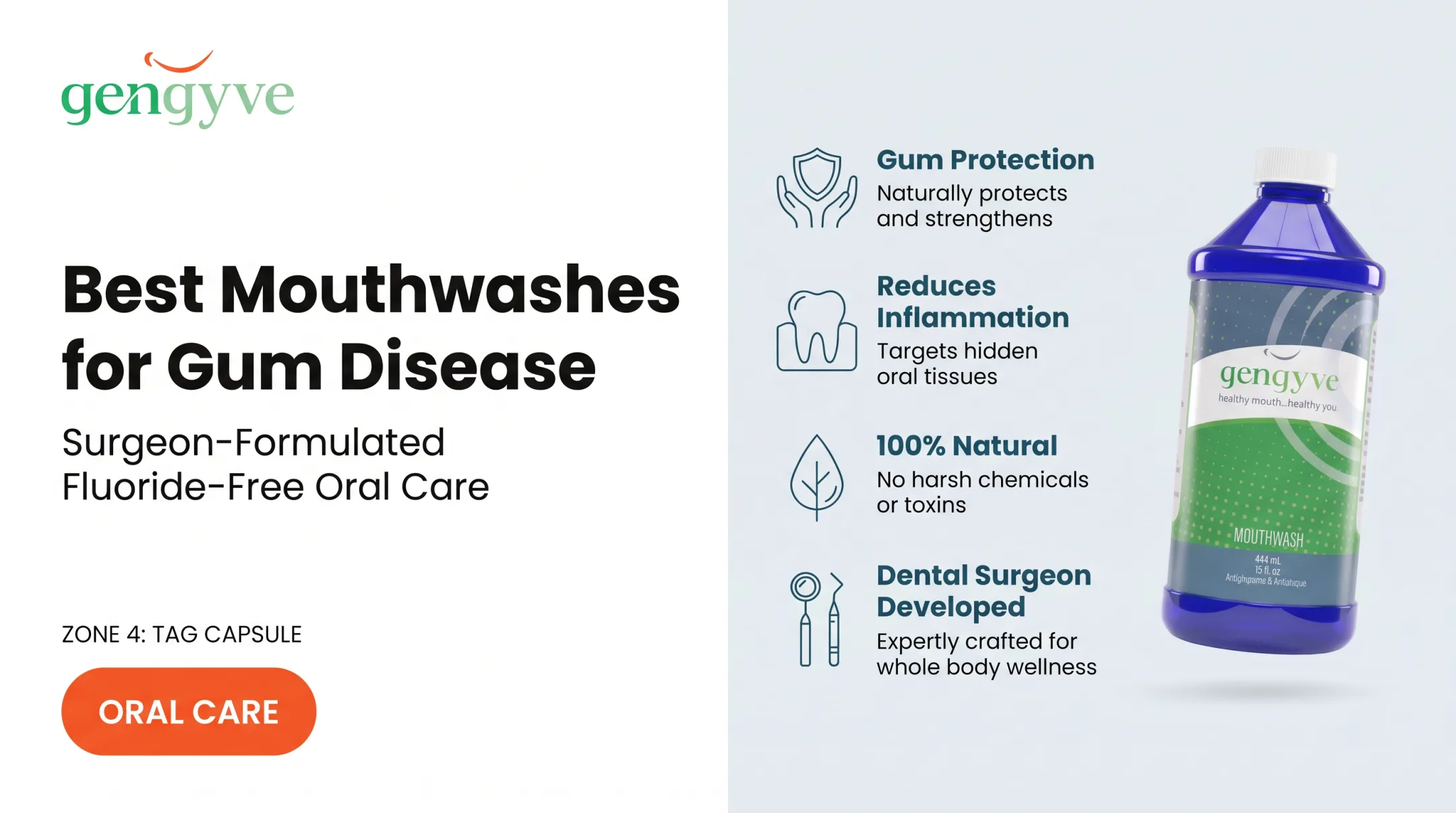
Gengyve is one option. Developed by dental surgeons, it's alcohol-free and chlorhexidine-free, and it's designed for gentle daily use. The directions are to brush and floss as usual, then rinse for 60 seconds morning and night. It doesn't promise to reverse gingivitis, and it works alongside professional care.

Tips for Long-Term Prevention and Control
Long-term gum health comes down to watching patterns and adjusting when your circumstances change.
- Monitor: Track bleeding, swelling, bad breath, sensitivity, recession, and dryness. Note changes around restorations, implants, or braces, and bring the pattern to your visits.
- Personalize: Ask your dental team which areas you miss, which interdental tool fits, how often you should be cleaned, and whether a rinse makes sense.
- Coordinate care: Keep a current list of medications and conditions, including diabetes, autoimmune disease, hormonal changes, and cancer treatment. Share it so your dentist can coordinate care when clotting or bleeding risk changes.
- Support your lifestyle: Quit tobacco, stay hydrated, eat a balanced diet, manage stress, and have teeth grinding evaluated. These complement dental treatment; they don't replace it.
Conclusion
Gingivitis despite good hygiene usually has an identifiable cause: hidden plaque or tartar, technique problems, dry mouth, medications, hormones, genetics, tobacco, or other irritants.
If your gums keep bleeding or swelling, get an individualized dental assessment rather than scrubbing harder. Early evaluation shows whether you're dealing with reversible gingivitis or something more advanced.
Frequently Asked Questions
Why do I have gingivitis even with good hygiene?
Plaque can remain in hard-to-clean areas, and dry mouth, medications, hormones, genetics, tobacco, and diabetes can increase inflammation. See a dentist if symptoms persist.
Is gingivitis 100% reversible?
Plaque-induced gingivitis often reverses when its cause is treated. Bone or attachment loss from periodontitis is different, so get a professional diagnosis rather than assuming.
How long does stage 1 gingivitis last?
It varies with the cause, severity, home care, calculus, and your health. MedlinePlus says bleeding and tenderness should lessen within 1 to 2 weeks after a professional cleaning plus good home care. See a dentist if it keeps returning.
What should I do if my gums keep bleeding despite brushing and flossing?
Review your technique, clean between teeth gently, and check medications and dry mouth. Then get an exam for calculus, pockets, or another cause.
Can mouthwash help gingivitis?
An appropriate rinse can be an adjunct for some people. It can't remove tartar or replace brushing, interdental cleaning, or professional care. Choose one with dental guidance.
When should I see a dentist about gingivitis?
Go for ongoing bleeding, redness, swelling, bad breath, recession, or sensitivity. Seek prompt care for severe pain, pus, fever, facial swelling, or a loose tooth.