Many people struggle with floss that shreds mid-use, won't slide into tight contacts, or irritates already-sensitive gums. Others simply forget to floss because the process feels like a hassle. This guide breaks down the main floss and interdental-cleaner categories available in the US market, then walks through top picks for specific needs.
A quick note before you dive in: these recommendations are general consumer guidance. If you have braces, implants, bridges, veneers, gum disease, or ongoing bleeding, talk to your dentist or hygienist about what tool fits your specific mouth.
Key Takeaways
- The "best" floss is the one that cleans comfortably and that you'll actually use daily
- Tight contacts need thin, smooth string floss; wider gaps suit tape or interdental brushes
- Braces, bridges, and implants need threaders, super floss, or specialty tools, not standard string
- Floss picks and water flossers boost consistency as access aids, not full replacements
- Compare material transparency, shred resistance, and evidence over "dentist recommended" labels alone
Overview of Dental Floss and Interdental Cleaners in the US Oral-Care Market
Dental floss is an interdental-cleaning tool. It removes plaque and food debris from the spaces between teeth that a toothbrush simply can't reach. But "floss" is no longer one product. It's a category.


The main formats you'll run into:
- String floss: thin nylon or monofilament strands, waxed or unwaxed
- Dental tape: flatter and wider, designed for broader tooth surfaces
- Floss picks: pre-strung floss on a small plastic handle
- Interdental brushes: tiny bristled brushes sized for open spaces
- Water flossers: pressurized water streams that clean around and between teeth
Materials vary too. You'll see nylon multifilament, monofilament designs (some brands previously used PTFE but have since reformulated), woven floss, and even natural silk. Always check a product's current packaging, since formulations change year to year.

Consistent daily use and correct technique matter more than which premium-looking floss you buy. According to the ADA's guidance, there's no measurable effectiveness difference between waxed and unwaxed floss, and the organization recommends interdental cleaning once a day alongside twice-daily brushing.
That means a smooth monofilament floss suits tight contacts, interdental brushes tend to fit wider or periodontally involved spaces, and threaders or specialty floss handle braces and bridges better than standard string ever could. These five formats serve different use cases, not one universal winner.
Best Overall String Floss or Smooth Monofilament Floss
For most people with tight, healthy contacts, a smooth monofilament or well-waxed nylon floss remains the practical default. It glides without much resistance and holds up through a full flossing session without fraying apart in your fingers.
Tom's of Maine Naturally Waxed Antiplaque Flat Floss stands out here for one concrete reason: it's one of the few floss products carrying ADA acceptance for plaque removal and gingivitis prevention when used as directed. The floss uses naturally waxed nylon filaments in a flat shape, which the manufacturer says resists snapping and fraying.
If you want a widely available alternative, Oral-B Glide Comfort Plus Extra Soft is worth comparing. Oral-B's current product page notes the Glide fiber family is no longer formulated with PTFE or any PFAS-type materials, a meaningful update if you've avoided Glide in the past over chemical concerns.
| Feature | Tom's of Maine Flat Floss | Oral-B Glide Comfort Plus |
|---|---|---|
| Material | Naturally waxed nylon filaments | Nylon plus elastic material (proportions undisclosed) |
| Best use case | Routine daily cleaning, tight-to-moderate contacts | Routine daily cleaning, tight-to-moderate contacts |
| Shred resistance | Manufacturer-claimed, not independently benchmarked | Marketed as "shred resistant"; not independently benchmarked |
| Independent evidence | ADA Seal for plaque/gingivitis (specific product) | Separate ADA Seal exists for "Glide Floss Healthy Gums," a different listing |
| Packaging | Standard plastic dispenser | Standard plastic dispenser |
| Price range | Mid-range | Mid-range |
| Limitations | Numeric thickness not disclosed | PTFE-free claim applies to current formula only |
Neither product has a published, independently verified "strongest floss" ranking, so treat those marketing claims as manufacturer language, not clinical fact.
Best Dental Tape or Floss for Sensitive Gums and Wider Spaces
If your gaps are a little wider, or your gums are tender enough that thin string floss feels like it's cutting into tissue, a flatter tape or a naturally soft floss is worth trying. Dental tape is simply broader and flatter than standard string, which spreads pressure across more surface area instead of concentrating it on one edge.
Oral-B Satin Tape Floss Mint is a single-strand, oval-shaped tape built to resist shredding and breakage, though its current page is a regional listing, so confirm US availability before ordering.
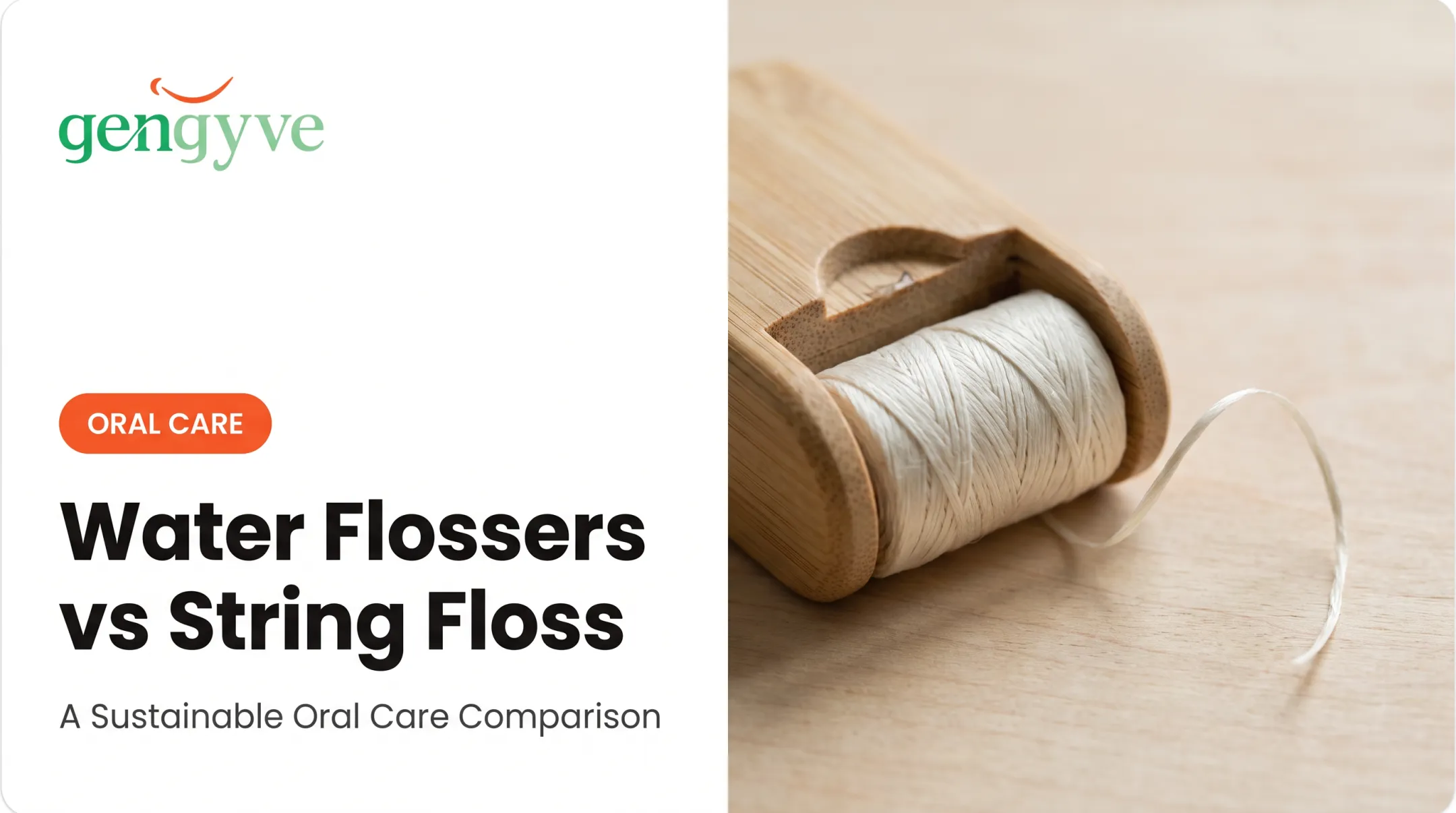
For something gentler and plastic-free, Gengyve's Silk Floss is a natural alternative worth considering. It's made from 100% natural silk, soft enough for sensitive gums while still gliding between teeth to lift plaque and debris.
It ships in a refillable glass container with compostable packaging, so there's no plastic dispenser to toss out. At around $6.97, it's priced in line with premium drugstore floss, and it's sold throughout the continental US and Canada. There's no published width or tight-contact spec for it yet, so if your contacts are very tight, test a section first.
Bleeding gums: what's normal, what isn't:
Starting any new flossing routine can cause some bleeding. The ADA notes this typically resolves within about a week as gums adjust. Persistent bleeding is different: the American Academy of Periodontology lists it alongside red, swollen, or tender gums and gums that pull away from teeth as warning signs of gum disease. No floss product treats gum disease. If bleeding continues past a week or two, see a dentist.
| Feature | Oral-B Satin Tape | Gengyve Silk Floss |
|---|---|---|
| Format | Flat, oval tape strand | Natural silk strand |
| Best for | Wider gaps, gentler feel | Sensitive gums, eco-conscious users |
| Sensitivity fit | Marketed for comfort | Marketed as soft for sensitive gums |
| Material disclosure | Limited (regional page) | 100% natural silk, plant-based wax coating |
| Packaging | Standard plastic | Refillable glass, compostable |
| Tight-contact limitation | May feel bulky in very tight spaces | No published tight-contact data |
Best Floss for Braces, Bridges, and Dental Implants
Standard floss often can't get under an orthodontic wire or around a bridge pontic without a fight. This is where purpose-built tools earn their keep.
Oral-B Super Floss is built for exactly this. The US version comes as 50 pre-cut, mint-flavored strands, each combining three sections in one piece:
- A stiffened threader end that slides under wires, brackets, and bridge pontics
- A spongy middle section that expands to clean around appliances and wider gaps
- Regular floss at the working end for standard cleaning below the gumline

For implants, proceed carefully. A rough or exposed implant surface can fray standard floss, and some research flags this as a potential peri-implant concern. Many clinicians favor interdental brushes with coated wire (designed not to scratch implant surfaces) or oral irrigators instead.
That doesn't mean every floss damages every implant, but it is a reason to ask your dentist which tool they recommend for your specific restoration.
A word of caution: never force a threader or floss strand around a restoration that resists. Forcing it risks damaging the appliance or injuring your gums. Ask your dentist or hygienist to demonstrate the correct angle at your next visit.
| Feature | Oral-B Super Floss | Interdental Brush (coated wire) |
|---|---|---|
| Appliance compatibility | Braces, bridges, wide gaps | Implants, wide embrasures, braces |
| Threading method | Built-in stiffened end | No threading needed |
| Cleaning reach | Under wires, around pontics | Between widely spaced teeth |
| Learning curve | Moderate | Low to moderate |
| Replacement needs | New strand per use (50-count box) | Replace brush head when bristles wear |
| Professional check-in | Recommended before first use on new appliances | Recommended for correct sizing |
Best Floss Picks and Water Flossers for Convenience and Access
For travel, caregiving, kids, arthritis, or a strong gag reflex, string floss isn't always practical. Picks and water flossers fill that gap when string floss is hard to use.
Floss Picks
DenTek Advanced Clean Floss Picks pack mint-flavored, fluoride-infused floss onto a micro-textured handle, with over 200 strands per pick and formats ranging from 20 to 150 count. Plackers Micro Line picks use a PTFE-free fiber the brand markets as resisting stretching and shredding.
Research backs picks up to a point: a 2019 review found holders perform similarly to hand-held floss for plaque and gingivitis, and holders can actually improve how consistently people floss. A separate trial found bleeding improved significantly only when a holder was paired with text-message reminders, which suggests the habit-forming nudge matters as much as the tool.
Trade-off to know: picks often offer less wrapping control around curved tooth surfaces than string floss, since you can't reshape the strand to hug each tooth.
Water Flossers
If you struggle with string floss altogether, or you're managing braces or complex restorations, a water flosser is worth testing as an add-on, not a replacement for brushing.
The Waterpik Aquarius WP-660 offers 10 pressure settings, seven interchangeable tips, and a reservoir holding 90-plus seconds of continuous use.
In a 2013 clinical study, participants using a water flosser plus manual brushing removed 74.4% of whole-mouth plaque versus 57.7% for string floss plus brushing. That figure is a single-use result, not a long-term disease-prevention guarantee. More recent pooled research found water jets didn't add much plaque reduction over flossing for regular patients, though bleeding improved slightly at some time points. Results vary by device, study length, and what's being measured.
| Feature | DenTek/Plackers Picks | Waterpik Aquarius WP-660 |
|---|---|---|
| Reach | Good for front teeth, limited wrapping control | Strong access around braces/bridges |
| Portability | Excellent, disposable | Moderate, needs power/counter space |
| Maintenance | None, single use | Rinse reservoir after each use |
| Best-fit users | Travel, kids, quick daily use | Braces, limited dexterity, implant maintenance (with guidance) |
| Ongoing cost | Replace box regularly | Replace tips periodically |

Conclusion
The best dental floss for 2026 is the format that fits your contacts and dental work, feels gentle enough for daily use, and still sits on the counter in February instead of a drawer. Price tags and flashy "dentist recommended" stickers matter less than that everyday fit.
When choosing, weigh these factors together rather than picking on price alone:
- Cleaning fit: does it pass through your contacts and wrap around each tooth without shredding?
- Comfort: does it irritate your gums, or can you use it without forcing or sawing?
- Consistency: will you actually reach for it every day?
- Transparency: does the manufacturer disclose materials and avoid vague PFAS-adjacent claims?
If floss repeatedly catches, breaks, or causes bleeding that doesn't settle down within a week or two, stop guessing and ask a dentist or hygienist for a personalized recommendation. Rough technique (snapping floss into the gumline or sawing aggressively) has been linked in clinical case reports to gum injury and even recession over time, so gentleness matters as much as format.
Floss handles plaque between teeth, but a complete routine includes rinsing too. An alcohol-free mouthwash such as Gengyve, formulated with cetylpyridinium chloride and hyaluronic acid, works as a complementary step after brushing and flossing. It does not replace either habit or professional dental care, but it adds one more piece to a daily routine built around gentler, natural ingredients.
Frequently Asked Questions
What dental floss do dentists recommend?
Dentists generally recommend whatever floss or interdental cleaner fits your specific contacts, restorations, and gum health rather than one universal brand. Ask your dentist or hygienist for a recommendation tailored to your mouth at your next cleaning.
Which flosser do dentists recommend?
It depends on your anatomy: string floss for tight contacts, interdental brushes for wider spaces, and water flossers for braces or dexterity challenges. There's no single device dentists recommend for every patient.
Do dentists recommend floss picks?
Floss picks can be a practical option for travel, kids, or limited dexterity, though they may offer less wrapping control and reach than string floss. Consistent, correct use matters more than which format you choose.
What floss do dental hygienists use?
Hygienists often switch between string floss, tape, or interdental brushes depending on contact tightness, gum condition, and whether a patient has restorations. No single product is a universal professional standard.
What is the strongest dental floss that won't break?
Strength depends on material, thickness, coating, and your technique, not just marketing claims like "shred resistant." If floss keeps breaking or shredding on you specifically, mention it to your dentist.
Can rough flossing cause gum recession?
Yes: forceful snapping, sawing, or incorrect pressure can injure or irritate gums over time. Persistent recession or sensitivity should be evaluated by a dentist rather than managed by switching floss brands alone.