Introduction
Scroll through any drugstore aisle and you'll notice the shift: fewer harsh blue rinses, more bottles promising "natural," "botanical," or "alcohol-free" relief. Many people switch to herbal mouthwash because standard formulas burn, taste medicinal, or contain ingredients they'd rather avoid.
That instinct makes sense. But "natural" doesn't automatically mean effective, and it certainly doesn't mean risk-free.
This article takes an evidence-first approach. We'll cover how herbal mouthwashes work, which ingredients have real research behind them, how to read a label critically, and when a rinse isn't enough on its own.
One point holds throughout: mouthwash supports your routine. It doesn't replace brushing, flossing, or a dentist's chair.
Key Takeaways
- Herbal mouthwash works alongside brushing and flossing, never instead of them
- Evidence quality varies widely by herb, concentration, and how a study measured results
- Lab findings on bacteria don't automatically translate into proven clinical benefits
- Choose products with complete, clearly labeled ingredients rather than vague "natural" claims
- Persistent bleeding, swelling, or pain always calls for a dental visit, not just a rinse
What Is Herbal Mouthwash, and How Does It Differ From Other Oral Rinses?
A mouthwash (or mouth rinse) is simply a liquid swished around the mouth for a specific purpose. An herbal mouthwash uses botanical extracts, essential oils, or plant-derived compounds as its active or supporting ingredients. The plant origin tells you nothing on its own about strength, safety, or evidence : those depend on concentration, formulation, and testing.


According to ADA's mouthrinse guidance, rinses fall into distinct categories:
- Cosmetic rinses freshen breath and leave a temporary clean feeling, without treating an underlying condition
- Therapeutic rinses target plaque, gum inflammation, cavity risk, sensitivity, or dry mouth, and may be sold over the counter
- Prescription rinses, such as chlorhexidine, require a dentist's direction and aren't automatically appropriate for daily long-term use
Where Rinses Fit Into Plaque Control
A rinse reaches areas a toothbrush might skip, like the back of the throat or deep between loosely spaced teeth. But liquid alone can't scrape off established plaque or tartar the way a toothbrush bristle or floss thread can.
That mechanical action is non-negotiable. No amount of swishing, herbal or otherwise, substitutes for it.
Which Herbs and Natural Ingredients Have Been Studied for Oral Care?
Not all evidence carries equal weight. A test-tube result showing an herb kills bacteria in a petri dish is a different claim than a randomized trial showing it reduces gum bleeding in real patients. Traditional use, lab testing, animal studies, and human clinical trials each answer different questions, and only the last two tell you much about what happens in your mouth.

Here's where current human research stands on commonly studied ingredients:
| Herb/Botanical | Outcome studied | What research shows |
|---|---|---|
| Green tea | Plaque, gum inflammation | A 2018 meta-analysis of 9 studies found no significant edge over chlorhexidine, with high variability between trials |
| Neem | Plaque, gingivitis | Three trials showed improvement, but evidence quality was rated low to very low |
| Sage & chamomile | Plaque, gum health | A 175-person 2026 trial found both beat placebo, with no clear winner between the two |
| Aloe vera | Plaque, gingival index | A 390-person, 30-day trial found aloe performed comparably to chlorhexidine |
| Curcumin/turmeric | Plaque, gingivitis vs. CHX | A 2022 review of 6 trials found no significant difference versus chlorhexidine, but 5 of 6 trials carried high bias risk |
| Pomegranate | Plaque, salivary bacteria | A 60-person, 21-day trial found greater plaque reduction than chlorhexidine |
| Triphala | Plaque, inflammation | Pooled results favored triphala, though heterogeneity limits firm conclusions |
| Clove & cinnamon | Plaque, gingivitis (blends) | Tested only combined with other herbs, so individual contribution can't be isolated |
| Tea tree oil | Plaque, bleeding | Improved outcomes in a small 14-day trial; some participants reported nausea |
| Propolis | Bacterial counts, plaque | Comparable to chlorhexidine at 3 months in a 120-person trial |
| Miswak (Salvadora persica) | Plaque, cariogenic bacteria | Reduced plaque versus placebo, but less effective than chlorhexidine overall |
A few caveats matter here. Concentration, extraction method, and how long the rinse sits in the mouth all affect outcomes. Evidence for one brand's 2% sage extract doesn't automatically apply to a different product that just lists "sage" on the label.
The Microbiome Question
Newer lab research explores whether certain rinses can suppress harmful bacteria, like P. gingivalis, without wiping out beneficial oral microbes. These findings come from cultured biofilm models, not human mouths, so they're a starting point rather than proof of real-world benefit.
Comparing Herbal Rinses With Chlorhexidine and Essential Oils
Chlorhexidine remains the benchmark for plaque reduction. Cochrane's 2017 review found strong evidence for plaque control at 4-6 weeks, but also documented staining, taste disturbance, and irritation with extended use, which is why it's typically prescribed short-term.
Standard essential-oil rinses have longer trial histories (six months or more) showing adjunctive plaque and gingivitis reduction, though most of that research was industry-sponsored.
Herbal formulations sit in a more mixed position: promising in specific trials, but limited by small sample sizes, blend confounding, and inconsistent methodology across studies.
How to Choose and Use an Herbal Mouthwash
Marketing words like "natural," "botanical," or "professional-grade" aren't proof of anything. Here's what actually matters when evaluating a bottle.
Label checklist:
- Complete ingredient list, not just a highlighted "hero" ingredient
- Intended use and directions (cosmetic freshening vs. therapeutic claim)
- Warnings, including alcohol content and known irritants
- Manufacturer name, lot number, and expiration date
- Any referenced clinical or quality testing
Check for added sweeteners, strong essential oils, or common allergens if you have sensitive oral tissue. A rinse that burns isn't necessarily "working harder"; it might just be irritating.
Using a Rinse Correctly
- Measure the recommended amount stated on the label, not a rough estimate
- Swish for the full stated time, usually 30-60 seconds
- Spit it out unless the product is specifically designed for ingestion
- Ask your dentist about timing relative to toothpaste, since rinsing immediately after certain fluoride formulas can wash away active ingredients before they work

Use the rinse as a daily add-on to brushing and interdental cleaning, not a stand-in for either.
Why Homemade Rinses Carry Extra Risk
DIY herbal mouthwashes sound appealing, but they come with real downsides:
- Inconsistent, unverified concentrations of active compounds
- No preservative system, meaning bacteria or mold can grow during storage
- Short, undefined shelf life compared to commercially tested products
- Concentrated essential oils that can irritate or burn oral tissue if improperly diluted
For consumers: favor a properly labeled, commercially manufactured rinse over a kitchen recipe, especially if you have any existing gum concern.
For dental practices considering chairside resale or protocols: look for documented formulation stability, available clinical evidence, and consistent batch testing before recommending any rinse to patients.
Safety, Limitations, and When to See a Dentist
Even gentle-sounding ingredients carry risk. Plant allergies, contact irritation, and burning sensations are all documented with herbal rinses. Swallowing concentrated extracts can cause nausea; some essential oils are genuinely dangerous if ingested.
NCCIH's tea tree guidance warns that swallowing tea tree oil can cause confusion, unsteady movement, or even coma. "Natural" and "harmless" are not synonyms.

Talk to a clinician before using any oral rinse if you are:
- A parent considering a rinse for a child under 6 (swallowing risk)
- Pregnant or breastfeeding
- Undergoing chemotherapy or head-and-neck radiation
- Recovering from oral surgery or living with implants or periodontal disease
- Managing chronic dry mouth or known allergies
Symptoms That Need a Dental Visit, Not Just a Rinse
A mouthwash can mask discomfort without fixing its cause. See a dentist if you notice:
- Gums that bleed regularly, not just occasionally after flossing
- Swelling, recession, or gums pulling away from teeth
- Pus, loose teeth, or a changed bite
- Persistent bad breath despite good hygiene
- Mouth sores that don't heal within two weeks, or fever with oral pain
Current FDA guidance makes clear that claims about preventing or treating disease shift a product into drug territory, regardless of whether its ingredients are botanical. A rinse promising to "cure gum disease" deserves skepticism, not trust.
Where Gengyve Fits in the Natural Oral-Care Conversation
Gengyve USA was built around a specific question its founder, oral and maxillofacial surgeon Dr. S. Thaddeus Connelly of UCSF, kept asking: what mouthwash would he actually recommend to his own patients? After deciding nothing on the market fit, he worked with researchers at UCSF and the University of Milano to develop an alternative.
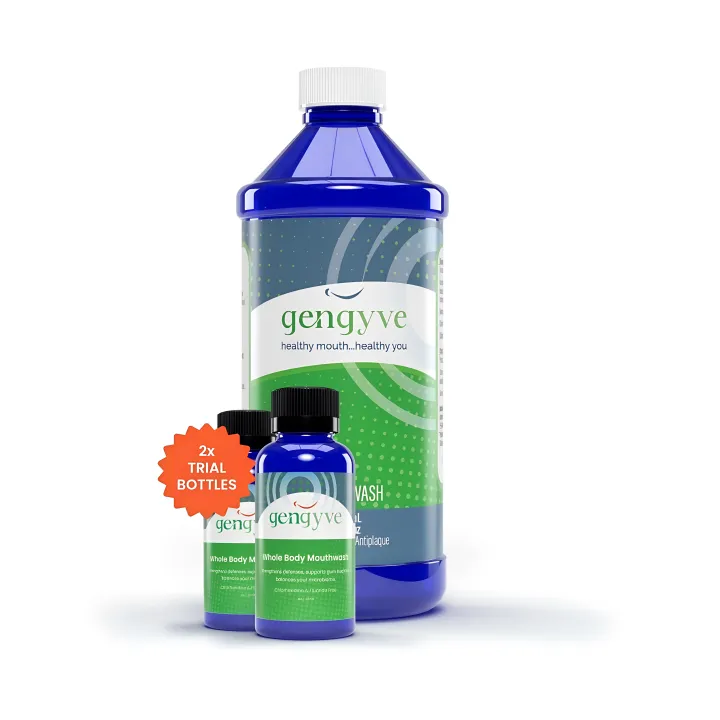
Gengyve isn't an herbal mouthwash in the botanical-extract sense covered above. Its formula centers on cetylpyridinium chloride (CPC) and hyaluronic acid, along with pullulan, PVP, and castor oil. It is alcohol-free, fluoride-free, and chlorhexidine-free. It's positioned as a cosmetic oral rinse intended to cleanse, freshen, and hydrate, not as a treatment for diagnosed gum disease.
A randomized, double-blind trial of 75 dental students compared this CPC-hyaluronic acid formula against chlorhexidine and placebo over 21 days. Gingivitis differences between groups weren't statistically significant, though the CPC-hyaluronic acid group showed no notable increase in staining, unlike the chlorhexidine and placebo arms. That's a short, specific study. It doesn't prove long-term superiority or replace a dentist's evaluation of active gum disease.

If you're comparing Gengyve against an herbal rinse or anything else on the shelf, look past the packaging:
- Full ingredient list and intended use
- Available clinical evidence and what it actually measured
- Manufacturing transparency and FDA registration status
- Comfort and tolerability for sensitive mouths
Dental practices evaluating a chairside or protocol option, and consumers curious about the formulation or clinical evidence behind it, can reach out to Gengyve directly for product details, wholesale information, or patient-use questions. Any rinse, natural or otherwise, works best alongside professional dental guidance rather than in place of it.
Frequently Asked Questions
What is mouthwash?
Mouthwash is a liquid oral rinse used to freshen breath or deliver specific ingredients into the mouth. It's designed to complement, not replace, brushing and interdental cleaning.
What are some herbs that can help with gum disease?
Green tea, neem, sage, aloe vera, curcumin, pomegranate, and triphala have all been studied for plaque and gum inflammation, with mixed results depending on formulation. Evidence varies by study, and suspected gum disease still needs a dental examination.
Is herbal mouthwash better than regular mouthwash?
"Better" depends on your goal, the specific formulation, and how well it's tolerated. Some herbal rinses perform comparably to chlorhexidine in small trials, while others show no measurable advantage over standard options.
Can I use herbal mouthwash every day?
Follow the product label for frequency and duration. If you have active gum disease, allergies, dry mouth, implants, or recent oral surgery, check with your dentist first.
Does herbal mouthwash replace brushing and flossing?
No. Rinses can support your routine, but brushing and interdental cleaning physically remove plaque in a way liquid alone cannot.
Are homemade herbal mouthwashes safe?
Homemade versions risk inconsistent concentrations, contamination, and short shelf life without proper preservation. A professionally formulated product, or guidance from your dentist, is the safer route if you have any existing oral-health concern.