Most patients have the same three questions: When can I actually start rinsing? Will alcohol or "strong" ingredients irritate the surgical site? And how do I clean my mouth without swishing hard or spitting forcefully?
This guide compares the main categories of post-operative rinses, what each one is actually for, and what to look for on the label. One thing to keep in mind throughout: your periodontist's specific instructions always override anything written here.
Key Takeaways
- The right mouthwash depends on your graft type, healing stage, and your surgeon's written protocol
- Skip alcohol-based or strongly flavored rinses unless your clinician specifically clears them
- Warm salt water, prescribed chlorhexidine, and gentle alcohol-free rinses each serve a different healing stage
- Bathe the area gently instead of swishing hard or spitting with force
- Call your periodontist for worsening pain, persistent bleeding, swelling, fever, or visible changes to the graft
Overview of Mouthwash After Gum Graft Surgery
Oral hygiene doesn't pause after a gum graft, but your usual methods probably need to. Brushing directly over the site, flossing nearby, and forceful rinsing are often restricted while the graft stabilizes.



Healing at this stage comes down to a few priorities:
- Protecting the clot and sutures that hold the graft in place
- Limiting chemical and mechanical irritation to fragile new tissue
- Controlling bacterial buildup without brushing the area directly
- Keeping the mouth comfortable while swelling and tenderness resolve
There's no single universal timeline for when rinsing begins. Some periodontists prohibit any rinsing or spitting for the first 24 hours after surgery. Others prescribe a specific rinse from day one or ask patients to gently soak the area instead of swishing.
This variation is normal; it reflects differences in graft type, surgical technique, and individual healing risk. Below, we break down the main rinse categories by use case, not as interchangeable substitutes, so you can see where each one fits into a typical recovery arc.

Top Mouthwash Options After Gum Graft Surgery
We looked at suitability for healing tissue, ingredient profile, how clinicians actually use each product, and what evidence exists for post-operative oral care. The categories below cover a specialized commercial rinse, a clinician-prescribed therapy, basic saltwater care, and a maintenance rinse for later recovery.
Gengyve Whole Body Mouthwash
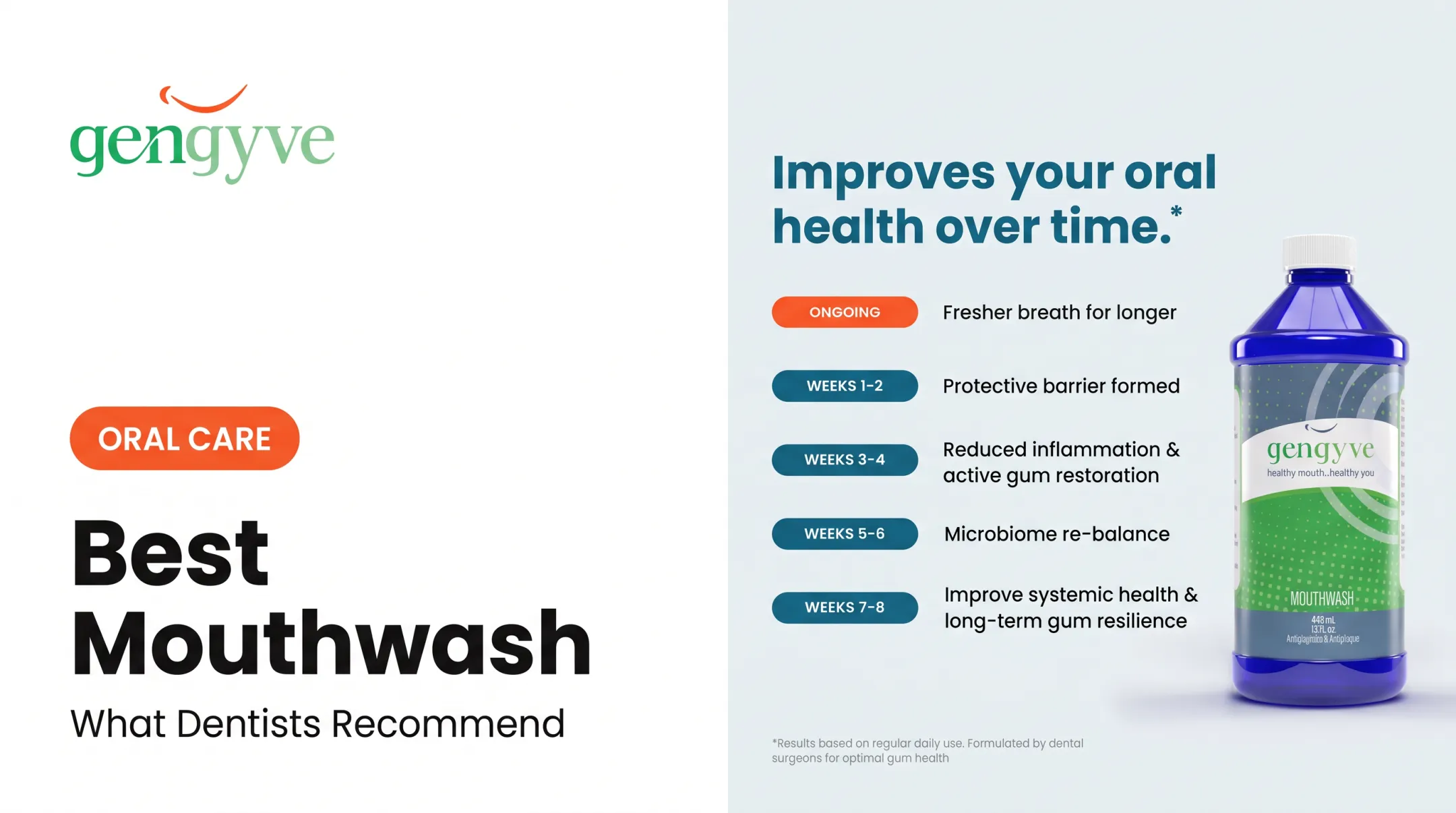
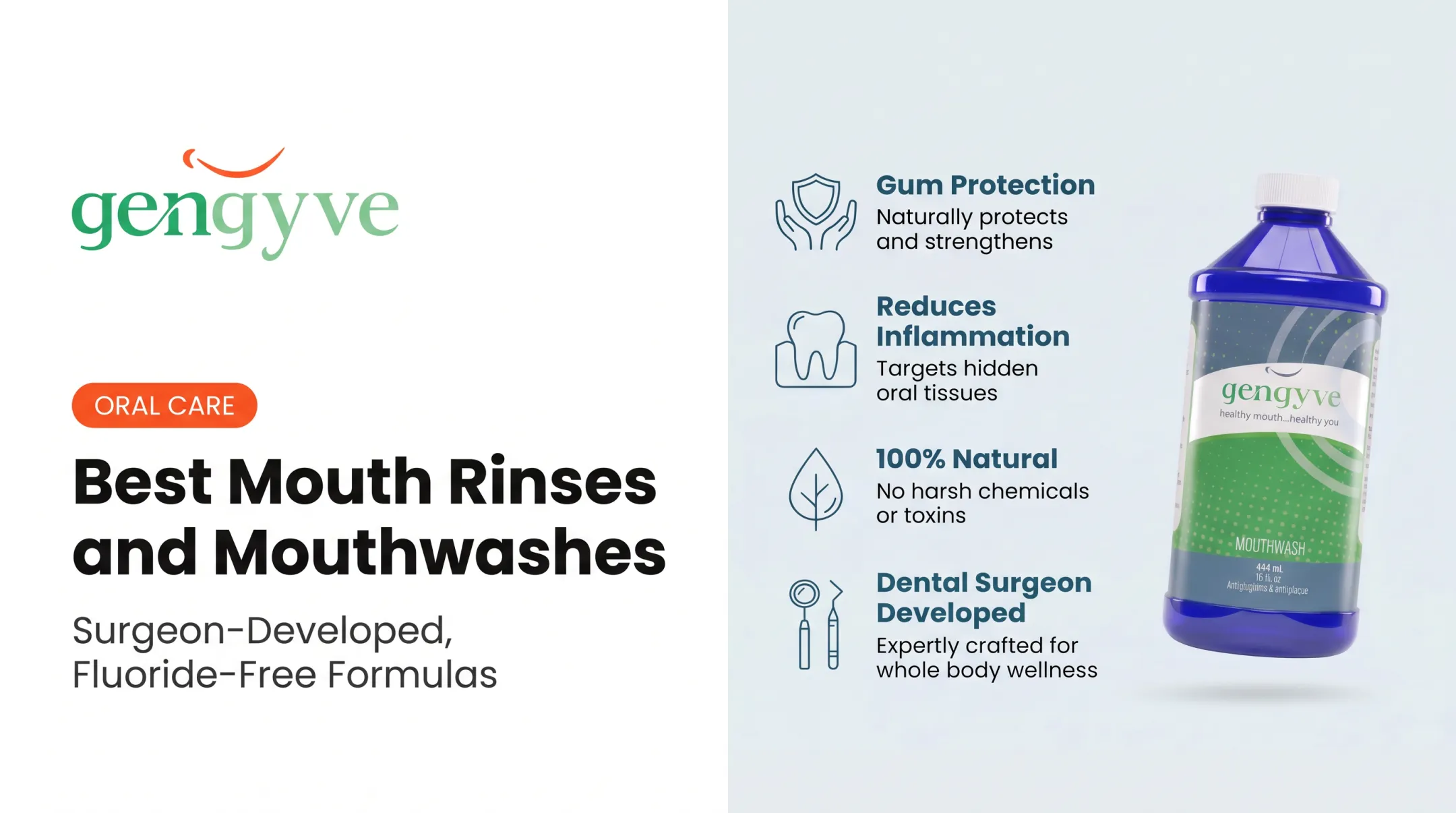
Gengyve is a USA-made, dental-surgeon-developed mouthwash formulated without alcohol or chlorhexidine. It's built around two active ingredients: cetylpyridinium chloride (CPC) for antimicrobial action, and hyaluronic acid for gum hydration and comfort.
Some patients ask their periodontist about using it later in recovery, after the initial no-rinse or saltwater phase. Do not start it before your surgeon clears commercial rinsing.
- Use after brushing: dip the bristles in Gengyve and massage over the gums (no rinsing afterward)
- Avoids the burning sensation common with alcohol-based rinses
- CPC-HA formula showed less staining than chlorhexidine in a 21-day trial
That 2020 randomized trial in the International Journal of Dental Hygiene enrolled young dental students, not gum-graft patients. It supports the formula's general tolerability rather than faster graft healing. Always check the current product label and confirm post-surgical use with your periodontist first.
Prescribed Chlorhexidine Rinse
Chlorhexidine is a common short-term prescription after periodontal surgery, used for plaque and infection control while brushing is restricted.
Guy's and St Thomas' recommends a 0.2% chlorhexidine rinse two to three times daily for two to four weeks following graft surgery, applied around the surgical area for about a minute.
In the US, chlorhexidine gluconate 0.12% is labeled for gingivitis, not specifically for graft recovery. Documented considerations from DailyMed's prescribing label include:
- Staining of teeth and other oral surfaces with continued use
- Altered taste perception
- Increased calculus buildup
- Oral irritation, and rarely, allergic reactions
Don't extend the prescription or swap it for another product without your periodontist's direction. Some chlorhexidine formulations also contain alcohol, so "prescribed" doesn't automatically mean "gentle."
Warm Salt Water, Used as Directed
A simple saltwater rinse is often the first thing surgeons allow, sometimes starting the day after surgery. Exact recipes vary by practice: some use a teaspoon of salt in a full glass of warm water, others in a half glass, used several times daily for roughly a week.
The technique matters more than the recipe:
- Let the water sit gently in your mouth rather than swishing vigorously
- Let it drip out passively or spit with minimal force
- Follow your surgeon's exact concentration and frequency, not a generic online version

Salt water supports hygiene; it doesn't replace a professional evaluation if you notice signs of infection, bleeding that won't stop, or the graft shifting position.
Gentle Alcohol-Free Maintenance Rinse
Later in recovery, once your periodontist confirms the graft has stabilized and tissue can tolerate normal products, a standard alcohol-free maintenance rinse may become appropriate.
Before switching, check the label for ingredients that can still bother healing tissue:
- Essential oils like eucalyptol or thymol, which can irritate at higher concentrations
- Hydrogen peroxide, generally not recommended beyond seven days without professional direction
- Intense flavoring agents or strong menthol
- Any ingredient flagged by your surgeon as off-limits
Choose based on what your surgeon has cleared for your stage of healing, not because a product is marketed for "gum health" or "sensitive mouths."
How We Chose the Best Mouthwash
What your surgeon has told you to use right now matters more than any brand ranking. A common mistake is reaching for a familiar drugstore mouthwash a day or two post-op, before the surgeon has cleared it.
Timing Across Recovery Stages
Rinse recommendations typically shift across four phases:
- Immediate post-op (first 24 hours): Often no rinsing or spitting at all, per hospital-level periodontal surgery protocols
- Early tissue healing (first week or two): Saltwater or a prescribed rinse, used gently
- Suture-removal period: Transition point where surgeons reassess what's tolerable
- Later maintenance: Standard alcohol-free rinses, once cleared

There's no single universal day-by-day schedule here. Your practice's instructions are the authority.
Ingredient Tolerability
| Ingredient | Intended function | Key consideration |
|---|---|---|
| Alcohol | Preservative/solvent in some rinses | Can be drying; some prescribed chlorhexidine contains up to 11.6% alcohol |
| Chlorhexidine | Short-term plaque control | Staining, taste change, irritation with extended use |
| CPC | Antimicrobial | Can cause staining in some products |
| Hyaluronic acid | Hydration, comfort | Graft studies test direct gel application, not mouthwash, so results aren't directly interchangeable |
| Hydrogen peroxide | Debriding minor wounds | Not recommended past seven days without guidance |
| Essential oils | Antimicrobial | Concentration-dependent irritation risk on healing tissue |
Application and Evidence Standards
How you use a rinse matters as much as what's in it. Key variables include amount, contact time, whether you swish or gently hold it, and whether you avoid eating afterward. Follow the label and your clinician's directions, not habit.
We also weighed whether products disclosed a current ingredient label, cited peer-reviewed research on oral wounds, and included clear warnings for allergies or medical conditions. Vague marketing language did not count.
Red Flags That Need a Phone Call, Not a New Rinse
Contact your periodontist promptly if you notice:
- Pain or swelling that worsens after initial improvement, or swelling that keeps increasing past day three or four
- Bleeding that won't stop with gentle pressure
- Fever, pus, or a persistent foul odor
- Dark, detached, or unusually pale patches of graft tissue
- Loose or missing sutures before your scheduled follow-up
None of these are solved by switching mouthwash brands.
Conclusion
The best mouthwash after gum graft surgery is the one that matches your current healing stage and your periodontist's specific instructions, not the strongest antimicrobial or the most popular brand at the pharmacy.
Protect the graft with gentle technique, stick to approved products, skip tobacco and alcohol, and keep your follow-up appointments. Ask your surgical team directly when you can resume brushing the area or switch back to regular mouthwash.
If your periodontist agrees a gentle, alcohol-free rinse fits your recovery plan once commercial rinsing is cleared, Gengyve's dental-surgeon-developed formula is one option worth discussing. Review the current product label and directions with your clinician before adding it to your routine.
Frequently Asked Questions
What is the best mouthwash to use after a gum graft?
It depends on your surgeon's protocol and your healing stage. Early on, that might mean saltwater or prescribed chlorhexidine; later, a gentle alcohol-free rinse may be appropriate. No single product is universally best for every patient.
What helps gum grafts heal faster?
Soft foods, no smoking, and exact adherence to your medication and rinse schedule support healing. A 2010 Journal of Periodontology study found 92% of nonsmokers had complete donor-site healing by day 15, versus 20% of smokers. No mouthwash alone guarantees faster healing.
What are the signs that a gum graft is healing?
Expect decreasing pain and swelling, stable sutures, less bleeding, and tissue shifting from pale to pink. Persistent pain after a week, heavy bleeding, or tissue detaching means call your periodontist.
Can you kiss after a gum graft?
Ask your surgeon directly. Most protocols advise avoiding pressure or pulling on the lips and cheeks near the graft for two to four weeks, so normal activity should wait until your clinician confirms it's safe.
When can I start using mouthwash after gum graft surgery?
Timing varies by procedure and surgeon. Some patients avoid all rinsing for the first 24 hours, then move to gentle saltwater or a prescribed rinse. Don't start a commercial mouthwash without your surgeon's clearance.
Should I use chlorhexidine after a gum graft?
Possibly, if your periodontist prescribes it for short-term plaque control. Don't self-prescribe it, extend the course beyond what's ordered, or substitute another product without your treating clinician's direction.