"Magic mouthwash" is the name many clinicians use for a prescribed or pharmacy-compounded rinse meant to ease these symptoms. It isn't one standardized product. Two patients handed a "magic mouthwash" prescription may receive entirely different ingredients, depending on their oncology team, pharmacy, and specific symptoms.
This article covers what's typically in these rinses, what they can and can't do, how to use them safely, and supportive oral care that fits alongside prescribed treatment.
Key Takeaways
- Magic mouthwash may ease pain and irritation, but it does not treat cancer or guarantee faster mucositis healing
- Ingredients, dosing, and storage vary by prescription, so use only the formula your care team approves
- Alcohol-based rinses can worsen dryness and irritation during cancer treatment
- Contact your oncology team immediately for fever, bleeding, worsening symptoms, or trouble eating and drinking
What Is Magic Mouthwash for Cancer Patients?
Magic mouthwash is a compounded oral rinse intended to relieve pain, inflammation, ulcers, or difficulty eating caused by cancer treatment. According to Mayo Clinic, the term describes a category of solutions rather than a single formula, and most contain ingredients from at least three different categories.



The name itself can be misleading. A compounding pharmacy might label the same general concept differently depending on the oncology practice, and one patient's mixture may look nothing like another's. Magic mouthwash relieves symptoms. It does not treat the underlying cancer. The rinse may coat irritated tissue, numb pain, or reduce inflammation, but it plays no role in destroying cancer cells or replacing your oncology treatment plan.
Common Ingredients and What They May Do
Formulas vary widely, but compounded rinses often draw from these categories:
- Numbing agents such as lidocaine temporarily reduce pain and sensitivity. Numbness can impair swallowing and raise the risk of biting your cheek or burning yourself on hot food.
- Antihistamines like diphenhydramine may add soothing effects in some formulas, but can cause drowsiness when combined with alcohol or sedatives.
- Antacid or coating agents such as aluminum or magnesium hydroxide suspensions help the rinse adhere to irritated tissue.
- Antifungal, antimicrobial, or corticosteroid ingredients, added only when a clinician identifies a specific cause such as fungal infection or localized inflammation. These components are not interchangeable.
Always check the pharmacy label against your own allergies, medications, and any swallowing restrictions before your first dose. If something looks different from what you expected, call the pharmacy before using it.
How Can Magic Mouthwash Help With Cancer-Related Mouth Symptoms?
Cancer treatments damage the fast-renewing cells lining your mouth, which is why mucositis, ulcers, dry mouth, and altered taste show up so often during chemo or radiation. A prescribed rinse typically aims to:
- Reduce pain enough to make eating and swallowing more tolerable
- Moisten or coat irritated tissue
- Support your ability to keep up basic oral hygiene despite soreness
Effectiveness isn't guaranteed, and results vary widely from patient to patient. A 2019 trial published in JAMA tested a diphenhydramine-lidocaine-antacid rinse against doxepin and placebo in 275 head-and-neck radiation patients.
The active rinse group reported a four-hour pain score of 11.7 versus 8.7 for placebo. That difference was statistically significant, but it fell below the threshold researchers had set as clinically meaningful. The relief was real, yet modest.
An earlier trial of 200 chemotherapy patients compared salt-water rinses, soda rinses, and a lidocaine-diphenhydramine-antacid mixture. It found no significant difference in how quickly symptoms resolved. Compounded rinses may feel more soothing in the moment, but they have not been shown to heal mucositis faster than simpler options.

This is also why magic mouthwash isn't interchangeable with other oral-care products:
| Option | Primary Purpose |
|---|---|
| Magic mouthwash (compounded) | Short-term pain relief, coating irritated tissue |
| Saline or bicarbonate rinse | Basic hygiene, comfort, debris clearance |
| Prescribed antifungal (nystatin) | Treats diagnosed oral candidiasis specifically |
| Saliva substitute | Addresses dry mouth, not pain from ulcers |
The right choice depends on what's actually causing your symptoms, not just what's most commonly recommended.
When It May Be Considered
An oncology clinician, pharmacist, or dentist may consider a prescription rinse for painful mucositis, mouth ulcers, or irritation that interferes with eating and drinking. They may choose a different treatment entirely if symptoms point to thrush, a bacterial infection, or medication toxicity.
Before starting, ask your care team:
- What specific symptom is this rinse treating?
- How long should I use it, and how often?
- Do I swish and spit, or swallow?
- How long should I wait before eating or drinking afterward?
- What symptoms mean I should call you right away?
How to Use Magic Mouthwash Safely During Cancer Treatment
Follow your exact prescription label. That means matching the dose, frequency, swishing time, and whether you spit or swallow to what's written, not to what worked for a friend or what you found online.
Never copy an internet recipe, combine leftover prescriptions, or share a bottle with someone else. Compounded rinses vary enough that even small differences in ratios can change how the product behaves in your mouth.
Numbing ingredients carry specific risks:
- Accidental biting or burns from hot food, since you may not feel pain normally
- Choking or swallowing difficulty if the throat becomes numb
- Injury from eating too soon while sensation is still reduced
Confirm with your pharmacist whether eating should be delayed after use. Commercial lidocaine labeling often specifies a 60-minute wait.
Tell your care team about allergies, kidney disease, diabetes, pregnancy, heart or neurologic conditions, and any other medications you're taking, including over-the-counter products. Sedating ingredients like diphenhydramine can interact with other sedatives and increase drowsiness.
Seek urgent medical guidance for: fever, uncontrolled bleeding, inability to keep fluids down, signs of dehydration, breathing difficulty, or inability to eat or drink at all.
Stop the rinse and call your clinician if you notice swelling, rash, breathing trouble, severe dizziness, confusion, worsening pain, or new swallowing problems after using it.

Daily Oral Care and Other Supportive Options
A magic mouthwash prescription doesn't replace daily oral hygiene. It supplements it. Talk with your oncology or dental team about a gentle routine that typically includes:
- A soft-bristled toothbrush and non-irritating toothpaste
- Careful plaque removal without aggravating sore tissue
- Steady hydration throughout the day
- Regular checks for infection or dental problems
Alcohol-based or strongly flavored rinses can sting and dry out already-irritated tissue. If a product isn't labeled alcohol-free, double-check the label before adding it to your routine during treatment.
Other supportive measures your team might suggest include:
- Saline or sodium bicarbonate rinses for gentle cleansing
- Saliva substitutes for dry mouth
- Ice chips when appropriate and soft foods
- Limits on tobacco, sharp foods, and spicy foods
- Prescribed pain control for more severe discomfort
None of these are automatically right for every patient. Someone with low blood counts, swallowing difficulty, or a recent oral surgery needs individualized guidance. A dentist or oncology dental team can also catch cavities, gum disease, or dental trauma before they complicate your cancer treatment further.
Where Gengyve May Fit Into an Oral-Care Conversation
Outside of prescription treatment, some patients look for a gentle, everyday rinse to use between doses or once mucositis symptoms have eased. That is where a product like Gengyve may enter the conversation, with clear limits on what it can and cannot do.
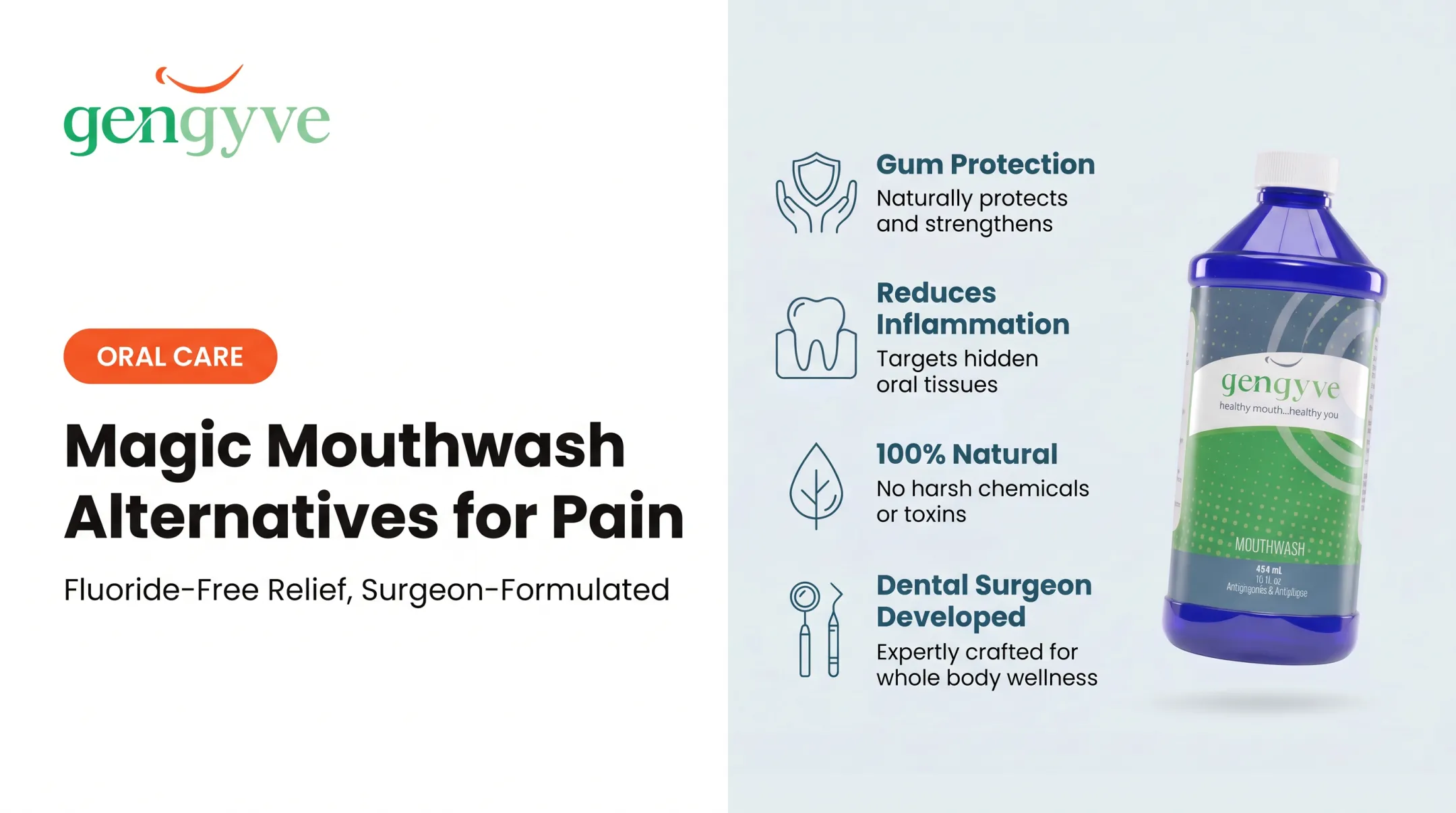
Gengyve is a natural, alcohol-free, chlorhexidine-free mouthwash developed in the USA by practicing dental surgeons, including Dr. S. Thaddeus Connelly, an oral and maxillofacial surgeon and UCSF clinical professor. It's built for gentle daily oral care, not as a substitute for a prescribed magic mouthwash, antifungal treatment, pain medication, or any part of active oncology care.
Key details:
- The formula avoids alcohol and chlorhexidine, ingredients that can sting or dry out irritated tissue
- It's positioned for everyday comfort and hydration rather than treating a diagnosed infection or disease
- Some oncology and radiation support teams consider gentle, non-alcohol rinses like this for dry mouth or mucositis discomfort alongside prescribed care
If you're considering any non-prescription rinse during chemotherapy or radiotherapy, ask your oncology team or dentist to review the ingredients first, especially if your oral tissue is ulcerated, bleeding, or if you're immunocompromised. Gengyve is a cosmetic oral rinse meant to cleanse, hydrate, and support comfort. It's not marketed as a treatment for mucositis or any cancer-related condition, and it shouldn't be used as one.

Frequently Asked Questions
How long does it take for oral mucositis to go away?
Recovery varies by treatment type, dose, and overall health. Chemotherapy-related mucositis often heals within 2 to 4 weeks, while radiotherapy cases can last 6 to 8 weeks. Contact your oncology team if symptoms worsen or interfere with hydration and nutrition.
What mouthwash is recommended for radiotherapy?
It depends on the radiation site, your symptoms, and your care team's protocol. Gentle saline or bicarbonate rinses, prescribed formulations, and alcohol-free options may all be considered, but confirm the right choice with your radiation or oncology team directly.
Where can I buy MuGard?
MuGard is a prescription-only product distributed through Walgreens Specialty Pharmacy in the U.S. Ask your oncology team or pharmacist about the correct prescription channel rather than purchasing it from an unverified source.
What is in magic mouthwash for cancer patients?
Formulations vary, but many include a numbing agent, an antihistamine, a coating or antacid ingredient, and sometimes an antifungal, antimicrobial, or anti-inflammatory component. Always rely on your prescription label and pharmacist for the exact formula and directions.