That's a useful job. But it's not the same job as fighting bacteria or healing an infection.
Many people searching for answers about glycerin mouthwash are really asking two different questions at once: is this ingredient safe, and can it treat whatever's going on in my mouth? This article answers both, separately, with a look at the benefits, the disputed claims, and what the label actually tells you.
Key Takeaways
- Glycerin acts as a humectant, helping mouthwash feel smoother and stay moist, not as a germ-killer.
- It doesn't cure gum disease, cavities, or oral infections on its own.
- Alcohol-free formulas can be gentler for dry or irritated mouths, but check the full ingredient list.
- Seek professional care for swallowed mouthwash, persistent swelling, or bleeding gums.
What Is Glycerin and Why Is It Used in Mouthwash?
Glycerin, also called glycerol or glycerine, is a humectant, meaning it attracts and holds onto water. You'll find it in lotions, toothpaste, and countless personal-care products for exactly this reason. In mouthwash, that moisture-grabbing property translates into a smoother texture and a rinse that doesn't feel harsh or drying when it hits your mouth.


Beyond texture, glycerin pulls a few other weights in a formula:
- Solvent support – it helps dissolve and distribute other ingredients evenly throughout the liquid
- Taste masking – its mild sweetness softens the flavor of more medicinal-tasting actives
- Mouthfeel – it contributes to that smooth, non-stripping sensation some rinses are known for
Why It Shows Up in Dry-Mouth Formulas
Alcohol-free and dry-mouth-oriented mouthwashes lean on glycerin because it doesn't dry out oral tissue the way ethanol can. That said, glycerin doesn't restore saliva production or address why someone has chronic dry mouth in the first place. It's a comfort ingredient, not a treatment for xerostomia's underlying cause.

Plant-Derived vs. Synthetic Doesn't Settle the Safety Question
Whether glycerin comes from plant oils or synthetic production doesn't, by itself, tell you whether a finished mouthwash is appropriate for you. What matters is the complete formulation: concentration, the other active ingredients, and how the product is meant to be used.
Compare that supporting role to what other mouthwash ingredients actually do:
| Ingredient | Primary Role |
|---|---|
| Glycerin | Moisture, texture, taste-masking |
| CPC or chlorhexidine | Antimicrobial action against bacteria |
| Fluoride | Cavity prevention |
| Flavoring agents | Taste and freshness |
| Preservatives | Shelf stability |
A mouthwash's safety and performance come down to its full formulation and directions for use, not whether glycerin is present.
Is Glycerin Mouthwash Safe?
Short answer: yes, when it's part of a properly formulated product used as directed. Glycerin has long-recognized oral use. FDA's 2022 monograph lists it as an oral demulcent, meaning it's recognized for soothing irritated mucous membranes under specified conditions.
That recognition applies to oral use under certain formulation conditions, not a blanket approval of every glycerin-containing product at every concentration.
Tolerability Concerns Usually Come From Elsewhere
Most reported irritation from mouthwash doesn't trace back to glycerin itself. More often, the culprit is:
- Alcohol content causing a burning sensation
- Strong flavoring agents triggering sensitivity
- An allergy to a different component in the overall formula
If a rinse bothers you, check the full ingredient list before assuming glycerin is to blame.
What to Do If a Child Swallows Mouthwash
Small kids are prone to swallowing rinse instead of spitting it out, which is exactly why age guidance on the label matters. If this happens:
- Rinse the child's mouth with water and watch for coughing or choking
- Identify the product and whether it contains alcohol
- Call Poison Control at 1-800-222-1222, or use webPOISONCONTROL for guidance specific to the product and amount swallowed
- Don't induce vomiting; call 911 for collapse, seizures, or breathing trouble
A small accidental sip is a very different scenario from intentionally drinking a large amount, and the right response depends on the product, not a one-size-fits-all rule.
Does Glycerin Coat Your Teeth?
This claim gets repeated often, usually pointing to toothpaste research rather than mouthwash. A 2026 in vitro comparison of therapeutic toothpastes measured remineralization and microhardness, but it didn't isolate glycerin or test for a persistent coating effect.
No reliable mouthwash study has demonstrated that glycerin blocks remineralization. The honest answer is: not established, in either direction.
Mouthwash supplements brushing with fluoride toothpaste, flossing, and professional checkups. It doesn't replace any of them.
Glycerin Mouthwash Benefits, Limitations, and Use Cases
For people dealing with occasional dryness, a humectant-containing rinse can genuinely improve comfort. It won't fix a chronic dry-mouth condition, though. Persistent xerostomia raises real oral-health risks, including higher cavity rates, and deserves a professional evaluation rather than a rinse-and-hope approach.
Alcohol-Free Doesn't Automatically Mean Gentler
A 2021 clinicocytological comparison followed 120 volunteers using different rinse formulations over 60 days. Alcohol-containing rinses caused mild discomfort in a handful of users, but no tissue damage was recorded in any group.
Alcohol-free formulas tend to be easier on sensitive mouths, but tolerability still depends on the entire formula, not one ingredient's absence.

Comfort Is Not the Same as Treatment
Glycerin supports a rinse's moisture profile. It is not an antibacterial or antifungal agent. If you're wondering whether glycerin is "good for mouth infection," the answer is no, not on its own. Seek prompt care for:
- Swelling or pus
- Fever
- Severe or worsening pain
- Spreading redness
- Difficulty swallowing
Quick Comparison
| Rinse Type | Purpose | Active Ingredient |
|---|---|---|
| Glycerin-based comfort rinse | Moisture, mouthfeel | None (glycerin is supportive, not antimicrobial) |
| Alcohol-containing rinse | Freshness, some antimicrobial action | Varies, often CPC or essential oils |
| Prescription chlorhexidine | Gingivitis management | Chlorhexidine gluconate 0.12% |
| Plain water | Rinsing debris | None |
Chlorhexidine is typically limited to short courses, given risks like staining and altered taste with extended use. That is one reason some dental teams look for alcohol-free, chlorhexidine-free daily options when patients need ongoing rather than short-term rinsing.
Gengyve's CPC and hyaluronic-acid formula is one of those options. A 2020 randomized trial studied it in dental students over 21 days for effects on plaque and gum health.
After dental procedures or during cancer treatment, rinse choice matters even more. Coordinate with your treating dental or medical team before adding any new product to that routine.
How to Choose and Use a Glycerin Mouthwash
Reading a mouthwash label takes less than a minute once you know what to look for:
- Active ingredient and purpose – is there one, or is this a cosmetic rinse?
- Alcohol content – listed or absent
- Fluoride – present for cavity protection, or not
- Allergens and warnings – swallowing precautions, age restrictions
- Directions – amount, swish time, frequency
Match the product to your actual goal. Moisture and comfort call for a different rinse than cavity prevention or post-surgical gum support. Don't choose a product just because it's labeled "natural" or "glycerin-based" without checking what it's actually meant to do.
Basic Use Instructions
- Measure the recommended amount per the label.
- Swish for the stated duration, not longer than directed.
- Spit; don't swallow.
- Skip eating or drinking afterward if the label advises it.
Stop using any mouthwash and seek dental or medical advice if you notice persistent burning, rash, worsening dryness, mouth sores, or symptoms that don't improve.
Store mouthwash out of reach of kids. If a child swallows some, contact Poison Control rather than guessing at next steps.
How Gengyve Fits Into the Alcohol-Free Oral-Care Conversation
Gengyve USA was built around a fairly direct question its founder, oral and maxillofacial surgeon Dr. S. Thaddeus Connelly, asked himself: what mouthwash would he actually recommend to his own patients?
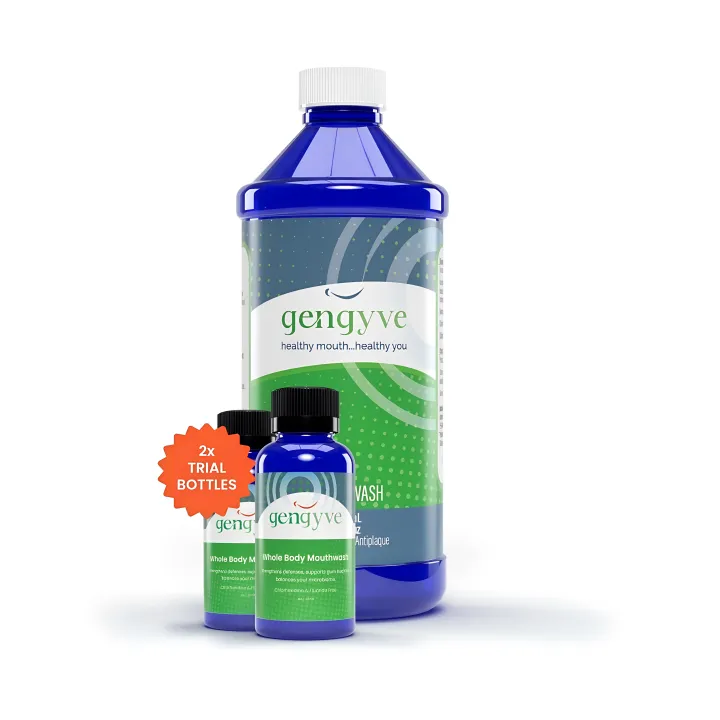
After concluding nothing on the market quite fit, he developed Gengyve as a natural, alcohol-free, chlorhexidine-free rinse. It uses cetylpyridinium chloride (CPC) as the antimicrobial ingredient and hyaluronic acid for hydration and gum comfort.
Gengyve's formula is not marketed as a glycerin mouthwash. Its moisture and comfort properties come from hyaluronic acid, along with pullulan and PVP, which help ingredients adhere to oral tissue longer.

If you're comparing Gengyve against a glycerin-containing rinse, take the same approach either way:
- Check the full ingredient list
- Understand the intended use
- Match the product to the benefit you actually want
One ingredient rarely tells the whole story.
Dentists have found practical uses for alcohol-free, chlorhexidine-free rinses in specific situations. Dr. Derick Flint, a dental surgeon, recommends Gengyve to patients after wisdom-tooth extractions and dental implants.
If you're managing implants, recent oral surgery, gum disease, or persistent dry mouth, ask your dentist or medical team whether a particular rinse fits your care plan. Gengyve is not positioned as a treatment; people with bleeding gums should still see their dentist for an evaluation.
Frequently Asked Questions
Is it safe to put glycerin in your mouth?
Yes, glycerin is commonly used in properly formulated oral-care products and is generally considered safe when used as directed. If a rinse causes irritation, it's more likely another ingredient in the formula, not the glycerin itself.
Is glycerin good for mouth infection?
No. Glycerin supports moisture and comfort but doesn't treat bacterial, fungal, or viral mouth infections on its own. See a dental or medical professional for infection symptoms like swelling, pus, or fever.
Can you use glycerin mouthwash every day?
That depends on the complete formula and the product's directions, not glycerin alone. Stop use and seek advice if you notice irritation, worsening dryness, or other new symptoms.
Is glycerin mouthwash good for dry mouth?
Glycerin can help retain moisture and improve lubrication for occasional dryness. Chronic dry mouth needs an evaluation of its underlying cause, along with a broader oral-care plan.
Does glycerin in mouthwash coat your teeth?
The evidence here comes mostly from toothpaste research, not mouthwash, and it doesn't isolate glycerin or confirm a lasting coating effect. Overall oral-health outcomes depend on your full routine, not one ingredient.