Many people search for oregano oil mouthwash because they're tired of alcohol-based rinses that burn, or they want something that feels more natural. Others are dealing with persistent bad breath or mildly irritated gums and want an alternative to harsh chemical formulas.
This article looks at what the evidence actually shows: the antimicrobial compounds in oregano oil, how to use a formulated product safely, where the research stops short, and when you need a dentist instead of a bottle.
Key Takeaways
- Carvacrol and thymol show antimicrobial activity in lab studies, but that doesn't prove a mouthwash treats gum disease
- Undiluted oregano oil can irritate or burn gums, tongue, cheeks, and throat
- A mouthwash supports brushing, flossing, and dental visits—it doesn't replace them
- Pick products with clear labeling, honest directions, and no claims to cure infections


What Oregano Oil May Do in an Oral-Care Formula
Terminology Gets Murky Fast
"Oregano oil," "oregano essential oil," and "oil of oregano" don't always mean the same thing on a label. Products vary in concentration, carrier ingredients, and whether they've been formulated for oral tissue at all. Always check the actual ingredient list rather than assuming a product name tells you the full story.
The Carvacrol and Thymol Mechanism
Carvacrol and thymol are the compounds most researchers credit with oregano's antimicrobial activity. In a 2017 laboratory study, these compounds damaged the cell membranes of Streptococcus mutans, causing visible cell deformation and lysis.

That's a real finding. It's also a lab result using isolated bacteria in a petri dish, not a clinical outcome in someone's mouth.
Why Biofilm Changes Everything
Oral bacteria don't float around freely for long. They organize into plaque biofilms, which behave very differently than loose bacteria in a test tube.
Research on carvacrol against oral pathogens found that planktonic (free-floating) susceptibility didn't predict how the bacteria responded once organized into an established biofilm, according to PMC's biofilm study. In some cases, low-dose exposure actually increased biofilm mass.
In plain terms: killing bacteria in a dish isn't the same as breaking up the plaque stuck to your teeth.
Matching Claims to Evidence
Here's how the evidence stacks up, from weakest to strongest:
| Evidence Type | What It Shows | What It Doesn't Show |
|---|---|---|
| Isolated compound testing | Carvacrol/thymol damage bacterial membranes | Safety or effectiveness in a mouth |
| Whole-oil lab testing | Antibacterial activity against oral pathogens | Tissue safety: toxicity to human cells was also observed |
| Biofilm testing | Mixed, dose-dependent bacterial response | Plaque removal or clinical improvement |
| Finished-rinse human trial | Short-term breath improvement in one small trial | Gum disease treatment or long-term safety |
A formulated oregano-containing rinse tested in a small clinical trial showed fresher-breath results comparable to chlorhexidine over just seven days. That's a legitimate finding for halitosis, but it says nothing about reversing gingivitis or treating periodontitis, and results from one specific formula can't be assumed to apply to a different bottle labeled "oregano oil."
How to Use Oregano Oil Mouthwash Safely
Never Apply Undiluted Oil Directly
Pure oregano essential oil on gums, teeth, or oral tissue can cause burning, irritation, and allergic reactions. Essential oils are also known sensitizers, meaning repeated exposure can trigger a delayed allergic response even in people who tolerated it before.
If you're using a finished product, follow its label. Don't improvise a "stronger" version by adding extra drops of pure oil.
Why DIY Recipes Are Risky
Carvacrol and thymol don't dissolve in water. Mix a few drops of oregano oil into a glass of water at home, and you don't get an evenly diluted rinse. You get concentrated droplets floating on the surface.
Swish that around, and those droplets can land directly on sensitive tissue at full strength. This is one reason properly formulated products matter more than kitchen experiments.

A Safer Routine for Commercial Products
If you choose a formulated rinse:
- Read the label fully before first use, including warnings and age restrictions
- Use only the directed amount—more isn't better
- Swish without swallowing, timing it as instructed
- Spit completely, then avoid rinsing with water immediately if the label says so
- Stop immediately if you notice burning, swelling, rash, or lingering irritation
Who Should Check With a Professional First
- Children under 6 generally shouldn't use any mouthrinse unless a dentist directs it, due to swallowing risk
- Pregnant or breastfeeding individuals, since safety data for oregano rinses in these groups is limited
- People with asthma, plant allergies, or swallowing difficulties, who may react more strongly to essential-oil vapors or residue
- Anyone on multiple medications, since essential oils can interact unpredictably
- Patients in cancer treatment, who should ask their care team which rinses are appropriate for treatment-related mouth sores
"Natural" doesn't mean risk-free. Store concentrated oils away from children and pets, check expiration dates, and treat accidental ingestion as a call to Poison Control (1-800-222-1222), not a minor mishap.
How to Choose an Oregano Oil Mouthwash
A Practical Selection Checklist
Before buying, look for:
- Complete, specific ingredient list (not just "oregano oil blend")
- Clear terminology: essential oil, extract, or isolated compound
- Concentration or formulation details, where disclosed
- Directions for use and explicit warnings
- Manufacturer contact information
- Batch or quality-control documentation
Formulated Beats Homemade
A professionally developed rinse typically accounts for dispersal, consistent dosing, ingredient compatibility, and stability testing that a kitchen mixture simply can't replicate. The practical difference is a product designed for oral tissue versus one that wasn't.

How Oregano Oil Rinses Compare
| Rinse Type | Purpose | Irritation Risk | Supervision Needed |
|---|---|---|---|
| Alcohol-based rinse | Plaque/gingivitis control | Can be drying | OTC, age precautions apply |
| Alcohol-free essential-oil rinse | Plaque/gingivitis adjunct | Still possible with certain oils | OTC, age precautions apply |
| Fluoride rinse | Cavity prevention | Low, product-specific | OTC |
| Chlorhexidine | Prescription-strength plaque control | Staining, taste changes | Prescriber-supervised |
This isn't a "natural versus chemical" contest. It's about matching the right tool to the right job, with evidence behind the specific formula you're using.
Watch for Overpromising
Per ADA's mouthrinse guidance, cosmetic rinses temporarily freshen breath, while therapeutic rinses contain active ingredients aimed at specific conditions like plaque or gingivitis. Be cautious of any product claiming to cure periodontal disease, eliminate all oral bacteria, or replace a dental cleaning. Those are drug claims, and they require evidence most oregano products don't have.
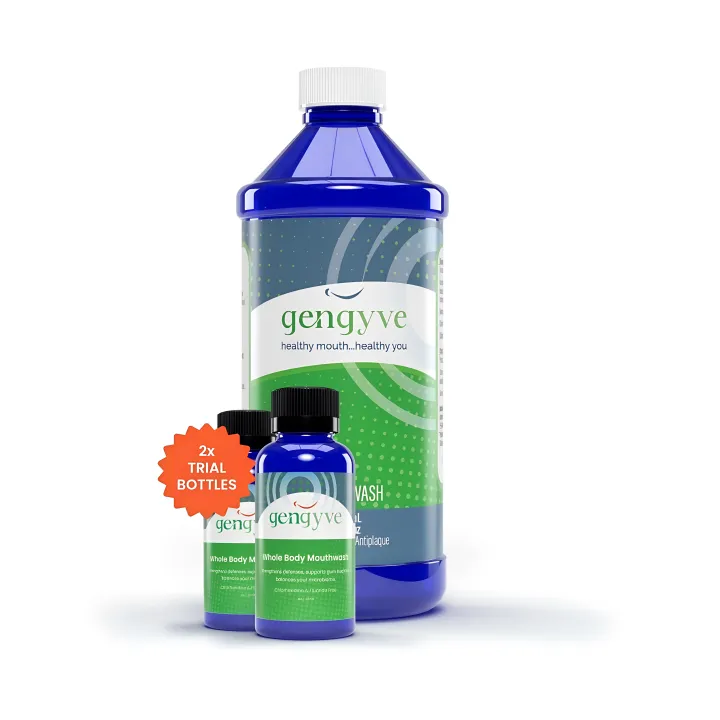
Gengyve USA, developed by a practicing oral and maxillofacial surgeon, offers one example of a transparently formulated alternative: a natural, alcohol-free, chlorhexidine-free mouthwash built around cetylpyridinium chloride and hyaluronic acid rather than oregano oil. It illustrates what professionally developed, clearly labeled oral care looks like, not an oregano oil substitute.
When Oregano Oil Is Not Enough
A mouthwash, oregano-based or otherwise, can't fix everything. Certain symptoms point to something a rinse won't solve:
- Persistent gum bleeding, even with gentle brushing
- Gum recession or teeth that feel loose or shifting
- Pus between teeth and gums
- Bad breath that keeps returning despite good hygiene
- Worsening or spreading pain
These can signal gingivitis, periodontitis, or decay: conditions that need an exam, not a stronger rinse. According to NIDCR's gum disease resource, people with periodontal disease need treatment from a dentist or hygienist, since hardened plaque (tartar) only comes off with professional cleaning.
Seek prompt care if you notice:
- Facial or jaw swelling
- Fever alongside dental pain
- Spreading redness
- Difficulty opening your mouth or swallowing
- Trouble breathing
That last group isn't a "try the rinse and see" situation. It warrants urgent attention.
A mouthwash, including a well-formulated oregano rinse, is an adjunct. It supports the work your dentist does. It doesn't substitute for diagnosis, professional cleaning, or treatment of tissue that's already damaged.
Frequently Asked Questions
Can oil of oregano be used as a mouthwash?
Only as part of a properly formulated, appropriately diluted product, never as undiluted essential oil. Always spit it out completely and follow the label's directions exactly.
What is the best mouthwash for killing periodontal bacteria?
There's no single "best" answer; it depends on your diagnosis, the ingredients, and your dentist's recommendation. No mouthwash replaces a periodontal evaluation or professional plaque removal.
Is oregano oil safe for gums?
Properly formulated or diluted products may be tolerated by some people, but concentrated oil can irritate or burn tissue. Stop use immediately if you notice burning, swelling, or a rash.
Can oregano oil cure gum disease or a tooth infection?
No. Oregano oil isn't established as a cure for periodontal disease or dental infections. Persistent pain, swelling, fever, pus, or loose teeth need professional dental evaluation.
How should you choose an oregano oil mouthwash?
Look for transparent labeling, clear directions, and evidence tied to that specific formula. Avoid any product claiming to cure disease or replace dental treatment.