The question most people actually want answered is simpler: does an arginine mouthwash do anything for your teeth, gums, or cavity risk? The honest answer depends on the full formulation, not just the presence of one amino acid.
This article breaks down how arginine is thought to work in the mouth, what the research actually covers, how mouthwash differs from toothpaste in this context, and how to evaluate a product label before you buy. We'll also look at when a dental visit matters more than any rinse on the shelf.
Key Takeaways
- L-arginine is an amino acid studied for its effects on plaque pH and the oral microbiome, not a standalone cure.
- Arginine toothpaste research doesn't automatically translate to mouthwash results — delivery method changes the evidence.
- A rinse should support brushing with fluoride toothpaste, flossing, and regular dental visits, not replace them.
- Check the full ingredient list and clinical backing of a specific product rather than trusting "arginine" or "natural" labeling alone.
What Is an Arginine Mouthwash?
L-arginine is a naturally occurring amino acid your body already uses for protein synthesis, wound healing, and blood flow regulation. In oral care, researchers are interested in it for a different reason: certain bacteria in your mouth can metabolize arginine into compounds that may help buffer plaque acidity.


That's the theory behind putting it in toothpaste, lozenges, and now some mouthwashes.
Arginine Shows Up in Several Different Products
These categories are not interchangeable:
- Arginine toothpaste: longer contact time, often combined with calcium compounds; most of the published research sits here
- Arginine mouthwash: shorter contact time, rinsed and spit, usually formulated with additional actives
- Arginine supplements: oral capsules or powders aimed at systemic effects, not local oral exposure
- DIY rinses: homemade mixtures with no standardized concentration or quality control
Commercial mouthwashes rarely contain arginine alone. Manufacturers often pair it with fluoride, calcium compounds, zinc, cetylpyridinium chloride (CPC), humectants, or flavoring agents. The combination, not just the arginine, determines what the product actually does. Before assuming one arginine product behaves like another, check the label on the exact bottle in front of you.
How Arginine May Work in the Mouth
The mechanism researchers focus on is called the arginine deiminase system (ADS), a metabolic pathway used by certain oral bacteria. These bacteria break down arginine into ammonia and ornithine. Ammonia is alkaline, so in theory, it can help counteract the acid produced by cavity-causing bacteria.
Here's why that matters: acidic conditions in plaque are a known contributor to enamel mineral loss over time. An alkaline shift, if sustained, could theoretically support a more stable environment. But that's a mechanistic explanation, not a guarantee that a specific rinse remineralizes anything.

The Prebiotic Angle
Some researchers frame this as a "prebiotic" concept: rather than killing bacteria broadly (like a traditional antiseptic), arginine may feed a healthier balance of oral microorganisms. This is a different approach from ingredients like:
- Fluoride: strengthens enamel directly and supports remineralization
- CPC: a quaternary ammonium compound that disrupts bacterial cell membranes
- Hyaluronic acid: not antibacterial in the same sense; studied for hydration and tissue support
What the Lab Research Actually Shows
A frequently cited 2016 laboratory study tested acidic arginine solutions against biofilms grown in a lab setting, using concentrations between 0.25-0.5 M at a pH of 3.5. The researchers found biofilm destabilization under these specific, controlled conditions, but they also flagged a real concern: an acidic arginine solution could pose a demineralization risk to enamel, and they called for further clinical safety testing.
That's a lab result, not a consumer-use recommendation. The presence of arginine on an ingredient list doesn't establish that a product works unless the full formulation, concentration, and delivery system have been clinically tested, in mouthwash form specifically.
Potential Benefits and What the Evidence Actually Shows
This is where things get genuinely confusing for consumers, because headlines about "arginine fighting cavities" often come from toothpaste research, not mouthwash trials.
Cavity Prevention
Most of the arginine-and-caries literature evaluates dentifrices (toothpaste), not rinses. A systematic review on arginine and caries prevention focused primarily on these non-rinse delivery formats. That means the oft-cited caries-prevention percentages don't carry over automatically to a bottle of mouthwash.
Plaque and Gingival Health
There's a meaningful difference between:
- Reducing bacterial metabolic activity
- Reducing plaque accumulation
- Reducing gum inflammation
- Treating diagnosed periodontal disease
Research on arginine's microbiome effects speaks mostly to the first point. It does not establish that an arginine rinse treats gingivitis or periodontitis.
Sensitivity: A Different Technology Entirely
Two 2013 randomized clinical trials did test an arginine-containing mouthwash specifically for dentin hypersensitivity. The formulation combined 0.8% arginine with a PVM/MA copolymer, pyrophosphates, and 0.05% sodium fluoride, tested against negative controls and against a potassium-nitrate comparator over six weeks.

Results supported sensitivity reduction for that complete formula. Here's the catch: arginine's individual contribution wasn't isolated from the other ingredients. This arginine-calcium sensitivity technology is also distinct from a general arginine mouthwash. The mechanism (occluding dentin tubules) depends on the full formulation, not arginine alone.
Fluoride Still Does the Heavy Lifting
Some research suggests arginine and fluoride may work through complementary mechanisms in certain toothpastes. That doesn't mean an arginine mouthwash can substitute for fluoride toothpaste or professional fluoride treatment. The anticaries evidence base for fluoride is far more established.
The Honest Gap
No identified rinse-specific clinical trial establishes that arginine mouthwash alone prevents cavities or treats gingivitis. That's an evidence gap, not proof the ingredient doesn't work, but it does mean marketing claims often run ahead of the data.
Arginine Mouthwash Formulations and Ingredients to Compare
Reading the label matters more than reading the front of the bottle. Check for:
- The actual form of arginine used and its listed concentration (when disclosed)
- Additional actives like fluoride, CPC, or zinc compounds
- Alcohol content, preservatives, and flavoring agents
- Specific usage directions, including rinse time and frequency
How Rinse Categories Compare
| Rinse Category | Primary Function | Evidence Base |
|---|---|---|
| Fluoride rinse | Anticaries support | Strong, FDA OTC monograph-backed |
| CPC rinse | Plaque and gingivitis support | Multiple clinical trials |
| Chlorhexidine rinse | Antimicrobial, limited professional use | Prescription-grade, staining risk |
| Arginine-combination rinse | Varies by formulation | Mostly toothpaste-derived; rinse-specific data is limited |
Marketing Language Needs Scrutiny
Terms like "alcohol-free," "natural," "prescription-grade," or "clinically tested" don't mean the same thing across brands. "Alcohol-free" typically refers to ethyl alcohol specifically. "Clinically tested" says nothing about what was tested, against what comparator, or for how long. Ask what documentation actually backs the claim.
A quick safety note on DIY rinses: homemade arginine mixtures carry real risks: inconsistent concentration, unpredictable pH, contamination, and no stability testing. If you're managing a diagnosed condition, talk to a dentist before experimenting at home.
How to Choose, Use, and Know When to Get Professional Help
Picking a mouthwash shouldn't be a guessing game. Here's a practical approach:
- Identify your actual goal: fresh breath, gum comfort, sensitivity, or post-surgical support all call for different ingredients
- Check the active ingredients, not just the front-label claims
- Confirm the intended population: some products aren't meant for children or specific medical conditions
- Look for evidence on that exact formulation, not a related product line
- Follow the manufacturer's directions on amount, duration, and timing
Using It Correctly
- Measure the recommended amount (don't eyeball it)
- Rinse for the directed duration (often 30-60 seconds)
- Avoid swallowing the rinse
- Don't treat mouthwash as a substitute for brushing or interdental cleaning
As the ADA's mouthrinse guidance emphasizes, rinsing works best as a complement to brushing with fluoride toothpaste and routine dental checkups, not a replacement for either.
Who Should Talk to a Dentist First
Check in with a dental professional before relying on any mouthwash if you have:
- Persistent gum bleeding or ongoing pain
- Loose teeth or suspected periodontal disease
- Recent oral surgery or dental implants
- Oral symptoms related to chemotherapy or radiation
- Significant dry mouth, allergies, or trouble swallowing
Warning Signs That Need Evaluation, Not a Rinse
See a dentist promptly if you notice ongoing bleeding, swelling, ulcers that won't heal, fever, facial swelling, or pain that worsens despite consistent home care. Comfort improving after using a rinse is a good sign, but it's not proof that an underlying condition is actually resolved.
Gengyve's Alternative Formulation Perspective
Not every oral-care company starts with arginine, and that difference works better as a point of comparison than as a competing claim.
Gengyve USA is a natural oral-care company founded by Dr. S. Thaddeus Connelly, DDS, MD, PhD, FACS, an oral and maxillofacial surgeon, UCSF Full Clinical Professor, and staff surgeon and residency director at the San Francisco VA.
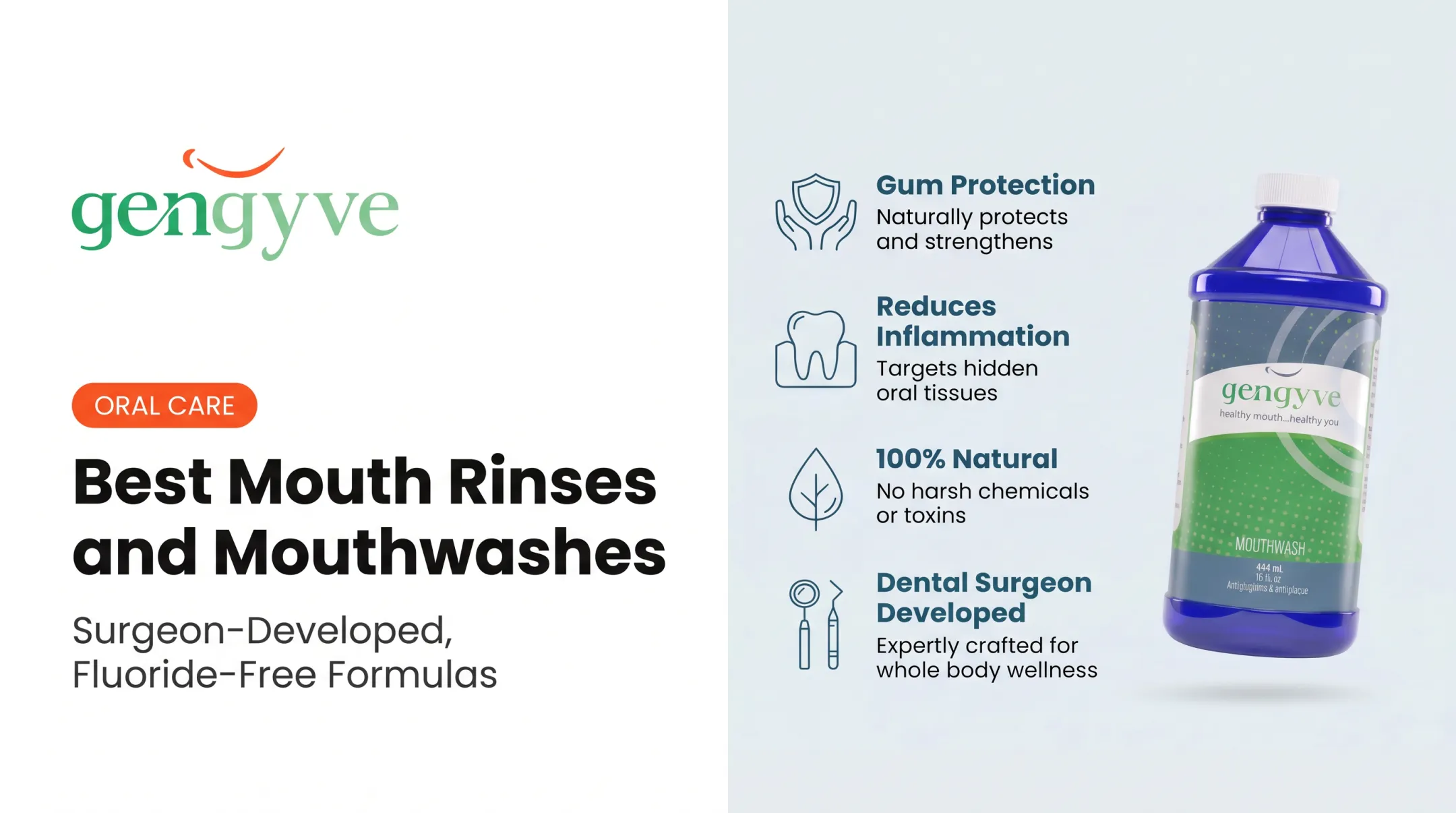
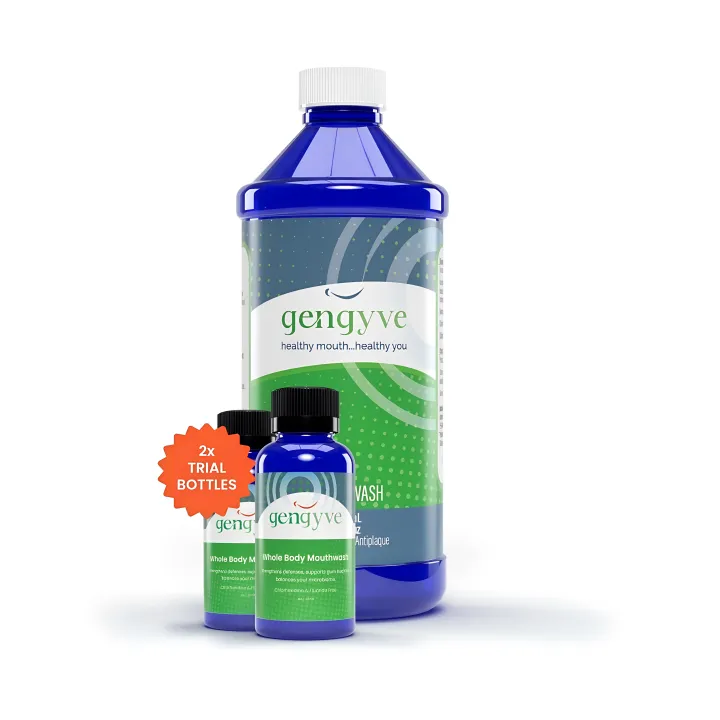
Gengyve's mouthwash takes a different route entirely: it's built around cetylpyridinium chloride (CPC) and hyaluronic acid, not arginine.
CPC is a long-studied antimicrobial that targets plaque bacteria directly, rather than feeding a metabolic pathway. Hyaluronic acid is included for hydration and gum comfort.
A 2020 randomized, double-blind trial compared a CPC-hyaluronic acid rinse against chlorhexidine and placebo in 75 participants over 21 days. Plaque accumulation was notably higher in the placebo group, though gingivitis differences didn't reach statistical significance.

Gengyve's formula is fluoride-free and chlorhexidine-free, developed with the goal of being strong enough for chairside use yet gentle enough for daily rinsing at home. It's a different active-ingredient strategy than arginine, not a direct substitute, and not positioned as one.
If you're weighing a rinse for gum health, post-operative comfort, or an ongoing symptom, the right move is the same regardless of which ingredient you're considering: ask your dentist which active ingredient actually fits your situation.
When to Seek Professional Guidance
A mouthwash, arginine-based or otherwise, is an adjunct. It cannot remove hardened calculus, repair a cavity, diagnose periodontal disease, or treat an active infection on its own.
Dentists often recommend a specific rinse for situations like:
- Recovery after oral surgery or implant placement
- Ongoing periodontal maintenance between cleanings
- High caries risk requiring fluoride-focused protocols
- Treatment-related oral irritation from chemotherapy or radiation
These are professional recommendations tailored to a diagnosis, not general consumer guidance you should self-apply.
One practical tip: bring the actual bottle or ingredient list to your next appointment. Your dentist can check it against your medications, implants, allergies, and any existing conditions before you commit to daily use.
Frequently Asked Questions
Is L-arginine good for teeth?
Arginine may help raise plaque pH through bacterial metabolism, supporting a healthier oral environment. Any benefit depends on the product's formulation, and it does not replace fluoride toothpaste or regular dental care.
What products contain arginine?
Arginine appears in some toothpastes, sensitivity products, oral-care rinses, lozenges, supplements, and foods. Check the label and intended use rather than assuming every arginine product works the same way.
What mouthwash reduces nitric oxide?
Arginine is involved in nitric oxide production elsewhere in the body, but that doesn't mean any mouthwash reliably reduces nitric oxide levels. If you have a specific health concern related to nitric oxide, discuss it with a clinician rather than relying on a rinse claim.
Are arginine mouthwashes safe to use every day?
Daily safety depends on the complete formulation, the directions on the label, your age, and any existing oral conditions. Check with a dental professional if you're unsure, and never swallow the rinse.
Can an arginine mouthwash replace fluoride toothpaste?
No. Mouthwash and toothpaste serve different roles, and fluoride toothpaste has a much stronger evidence base for cavity prevention. Talk to your dentist before replacing fluoride toothpaste with any rinse, especially if you have elevated caries risk.