Many smokers assume any mint-flavored rinse will fix the problem. It won't, at least not on its own. The right mouthwash depends on what's actually driving your breath issue: dryness, gum sensitivity, staining, or straight-up odor control. This guide compares five current US products by ingredients, alcohol content, and evidence, so you can match a rinse to your actual concern instead of the loudest marketing claim.
Key Takeaways
- Alcohol-free formulas suit smokers with dry or irritated mouths; still check the full ingredient list
- Mouthwash reduces odor temporarily; it doesn't reverse gum disease or offset smoking's health risks
- Match your shortlist to your main issue: freshness, dryness, gum support, or cigar odor
- Persistent bad breath, bleeding gums, sores, or loose teeth need a dental visit, not another rinse
Why Smoking Changes Your Breath Chemistry
Tobacco smoke dries out the mouth by reducing saliva flow. Saliva normally washes away food particles and bacteria that cause odor, so less of it means more buildup.



A dry, coated tongue becomes a breeding ground for bacteria that produce sulfur compounds. Those compounds drive bad breath on their own, separate from the smoke smell itself.
Smoking also drives other visible changes:
- Staining from tar (dark residue) and nicotine (yellows after oxidizing)
- Plaque accumulation that hardens into tartar if not professionally removed
- Gum disease risk, since smoking weakens the immune response needed to fight oral infection
Those shifts are why a minty cover-up often falls short for smokers. You need a rinse that can handle dryness, odor-causing bacteria, and gum stress, not just temporary smell.

Cosmetic Rinses vs. Therapeutic Rinses
Not every mouthwash does the same job. The ADA's mouthrinse guidance draws a clear line: cosmetic rinses temporarily mask odor or add flavor, while therapeutic rinses contain active ingredients aimed at plaque, gingivitis, decay, or dry mouth.
A rinse can excel at one job and do little for another. The products below are grouped by use case, not ranked as universal winners. Always check the current label before buying, since formulas change.
Top Mouthwashes for Smokers' Breath
We evaluated each product on ingredient transparency, alcohol content, intended purpose, tolerability, and available manufacturer or independent evidence exists. None of these claims substitute for a dentist's recommendation.
Gengyve Mouthwash
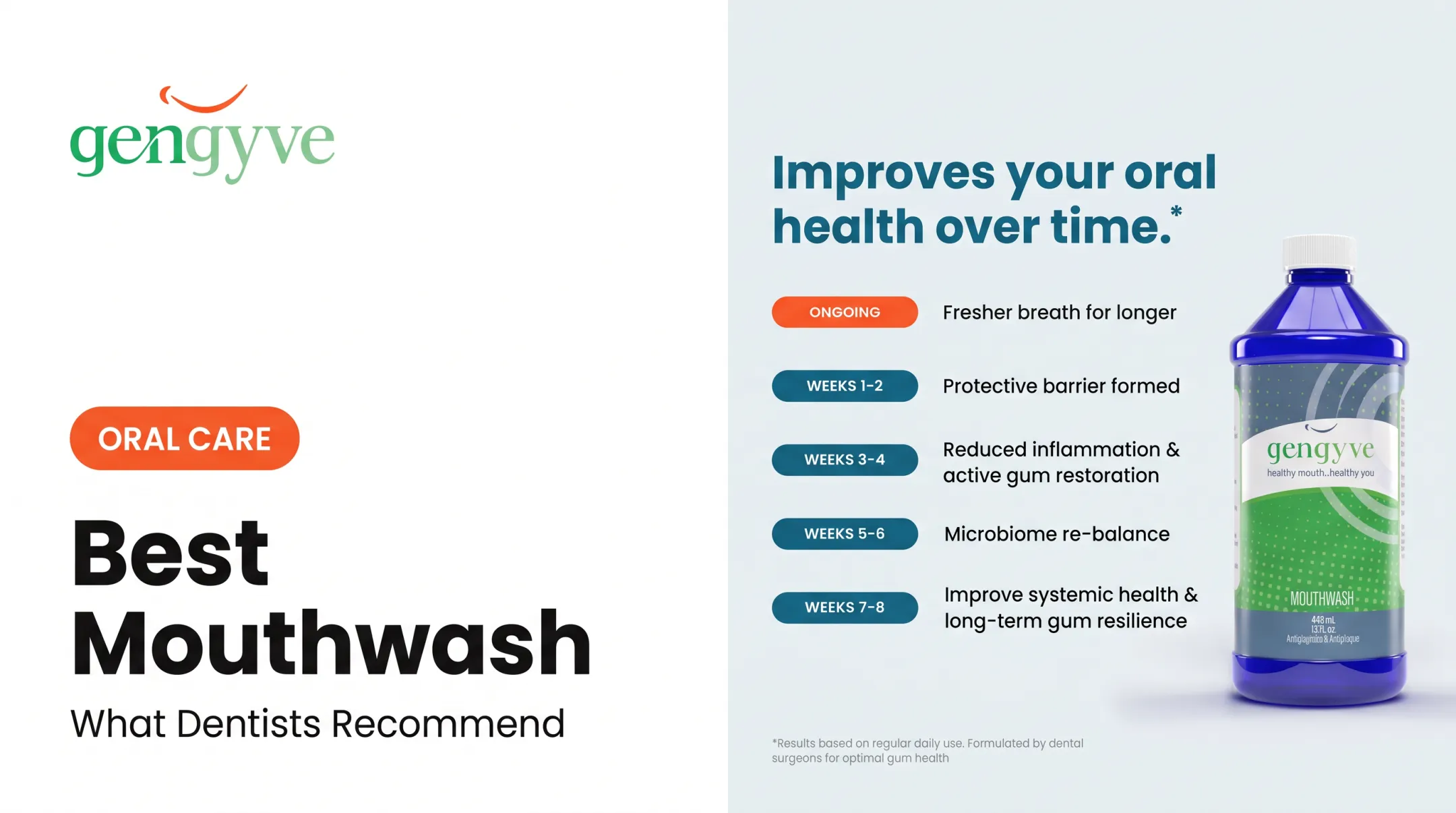
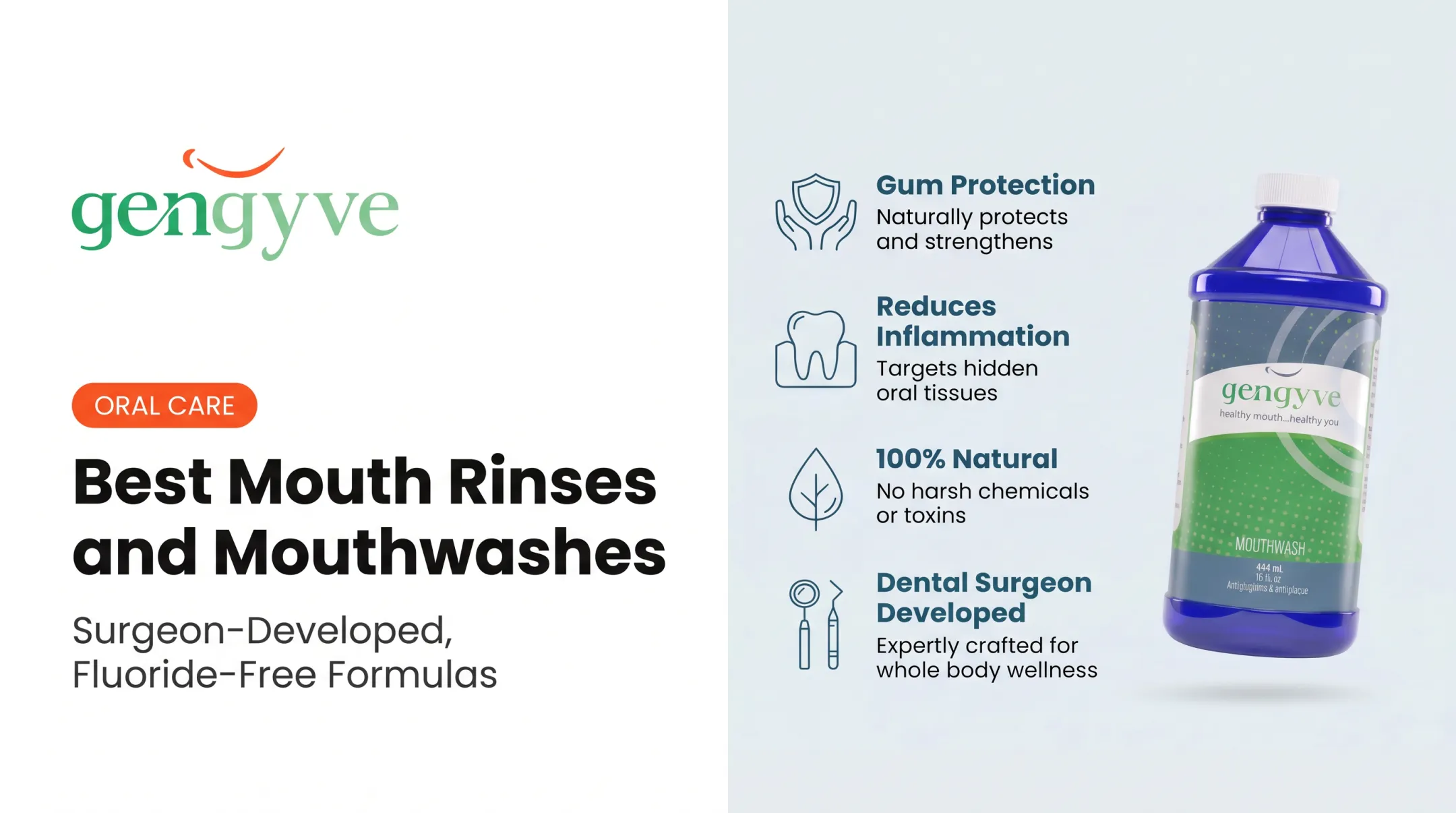
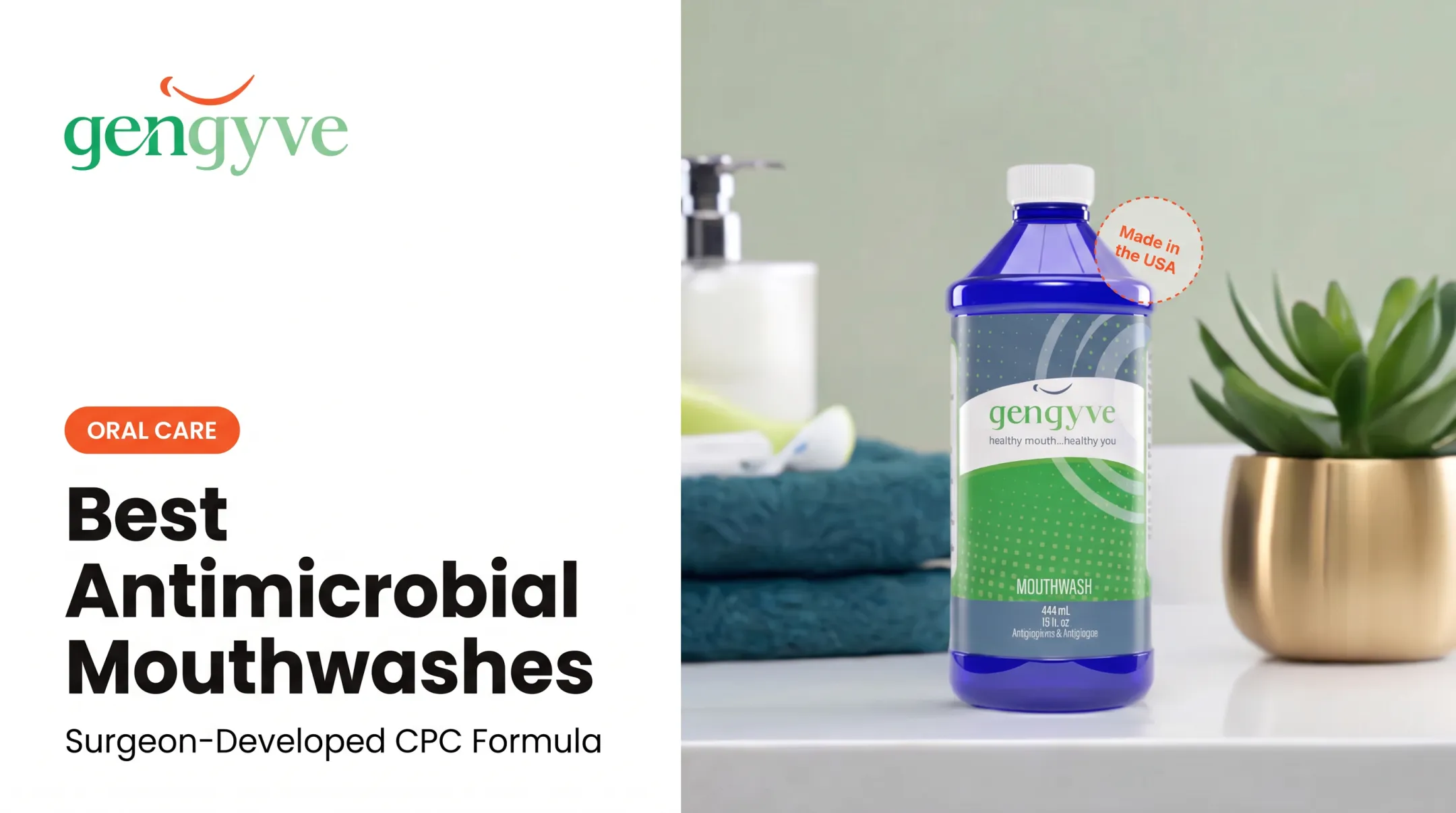
Gengyve is a USA-developed mouthwash created by practicing dental surgeons who wanted a rinse they'd actually recommend to patients. For smokers dealing with gum sensitivity alongside breath concerns, its non-burning, alcohol-free formula is built for daily comfort rather than a quick masking effect.
Best suited for: Smokers who want a gentle daily rinse that supports gum comfort and hydration, not just a temporary breath fix.
Formula and active ingredients:
- Cetylpyridinium chloride (CPC) at 0.05%, the antimicrobial ingredient
- Hyaluronic acid, included for hydration and gum comfort
- Pullulan, polyvinylpyrrolidone (PVP), and castor oil round out the formula
- Fluoride-free, chlorhexidine-free, alcohol-free, with no artificial dyes
Important considerations: Directions call for a 30-second swish after brushing, twice daily. Users report fresher breath immediately and gum improvements within one to two weeks, though Gengyve is positioned as a cosmetic daily rinse rather than a disease treatment.
Anyone in active dental treatment should mention it to their provider first. Persistent bleeding or pain still warrants a dental visit.
TheraBreath Fresh Breath Oral Rinse
TheraBreath's Mild Mint formula targets odor directly rather than relying on mint to cover it up. Its key ingredient, sodium chlorite, works by oxidizing the volatile sulfur compounds that cause bad breath instead of just masking them temporarily.
Best suited for: Smokers whose main complaint is persistent odor rather than dryness or gum sensitivity.
Formula and active ingredients:
- Sodium chlorite, the key odor-oxidizing ingredient
- Water, PEG-40 hydrogenated castor oil, tetrasodium EDTA
- Sodium benzoate, sodium bicarbonate, flavor, sodium hydroxide
- Alcohol-free
Important considerations: Chlorine-dioxide research on similar chemistry suggests odor reduction can last several hours, but those studies tested different named products, not this exact formula. Treat it as odor management, not a cure for underlying gum or dryness issues.
SmartMouth Original Mouthwash
SmartMouth uses a two-bottle system: solutions stay separate until you pour them together right before rinsing, which activates a zinc-ion reaction the manufacturer says neutralizes odor at the source.
Best suited for: Smokers wanting a longer-lasting odor-control claim and who don't mind the extra prep step.
Formula and active ingredients:
- Solution 1: purified water, sodium benzoate, sodium chlorite, and benzoic acid
- Solution 2: glycerin, zinc chloride, and other compounds, including benzyl alcohol
- Related-product evidence: 2004 TriOral trial (48 participants, four weeks) reported improved malodor scores
Important considerations: SmartMouth is labeled alcohol-free and fluoride-free, but benzyl alcohol does appear in Solution 2. That's worth knowing if you're avoiding alcohol-class ingredients entirely for dryness reasons.
Crest Pro-Health Clinical Mouthwash
This is an alcohol-free, multipurpose rinse aimed at plaque, gingivitis, and bad breath together, rather than odor control alone.
Best suited for: Smokers who want everyday gum maintenance alongside breath freshening, not just cosmetic masking.
Formula and active ingredients: Cetylpyridinium chloride at 0.07% is the stated active ingredient. Fluoride isn't listed as active in this particular formula, so it won't substitute for a fluoride rinse if cavity protection is a priority.
Important considerations: ADA Seal status should be verified for this specific product before assuming it carries that endorsement. CPC is a recognized therapeutic ingredient for plaque and breath concerns, but check the current label for exact claims and directions.
Biotene Dry Mouth Oral Rinse
If reduced saliva is your main issue, breath-focused rinses can feel more irritating than helpful. Biotene is built around moisturizing, not odor-neutralizing chemistry.
Best suited for: Smokers with a sticky-feeling mouth, trouble swallowing dry food, or breath that worsens specifically when their mouth feels dry.
Formula and active ingredients:
- Alcohol-free and sugar-free
- Humectants and lubricants: glycerin, xylitol, sorbitol, and hydroxyethylcellulose
- Designed to coat and moisturize oral tissue
Important considerations: This formula prioritizes comfort over aggressive odor control, so it may need to be paired with a separate breath-focused product. If dryness persists despite regular use, that's a signal to check in with a dentist rather than increasing frequency on your own.

How We Chose These Mouthwashes
We didn't rank products by mint strength or bold label claims. Instead, we looked at what each ingredient is actually meant to do, and whether that matches a documented smoker-related concern.
Alcohol-free vs. alcohol-containing: Alcohol can feel harsh or drying for people with reduced saliva, which includes many smokers. That doesn't mean every alcohol-containing rinse is unsuitable. A 2025 trial of essential-oil rinses found no dry-mouth adverse events in healthy adults over two weeks, with or without alcohol. Tolerance still varies by person.
Ingredient purpose, not hype:
- Fluoride protects against decay, relevant if saliva reduction raises cavity risk
- CPC and similar antimicrobials target plaque and gingival concerns
- Moisturizing agents address dryness specifically, not odor
- Oxidizing agents like sodium chlorite target the sulfur compounds behind bad breath
Masking vs. treating: Tobacco odor can come from the lungs and sinuses, not just the mouth, which is why rinsing alone sometimes isn't enough. Tongue coating and gum disease compound the problem further.
Practical factors we weighed:
- Taste tolerance and burning sensation
- Rinse time and daily-use suitability
- Price for ongoing use
- Current manufacturer directions
- Whether independent clinical evidence was limited or tested under a different product name than what's sold today

Conclusion
There's no single best mouthwash for smokers' breath. The right choice depends on your main priority and whether you'll use the rinse consistently:
- Dryness relief
- Gum support
- General freshness
- Cigar-specific odor control
A rinse only helps if it's comfortable enough to become part of your daily routine.
None of these products replace brushing, flossing, tongue cleaning, professional cleanings, or quitting smoking. If your breath stays unpleasant, your mouth stays dry, or you notice bleeding, swelling, sores, or loose teeth, see a dentist rather than switching bottles again.
If you're looking for a daily rinse developed by practicing dental surgeons, with a gentle, alcohol-free formula built for everyday use, review Gengyve's current formula and directions to see if it fits your routine before you buy.
Frequently Asked Questions
Should I use mouthwash after smoking a cigarette?
Rinsing can temporarily cut down on residue and odor, but it works best alongside brushing, tongue cleaning, and drinking water. Mouthwash doesn't offset the health risks tied to smoking itself.
How can I remove cigarette smell from my mouth?
Drink water, brush your teeth, floss, clean your tongue, and finish with a rinse suited to your main concern. If the smell lingers despite all that, dry mouth or gum disease may be contributing.
Why does my breath still stink after using mouthwash?
Most rinses mask odor rather than resolve its cause. Tongue coating, plaque, gum disease, dry mouth, or untreated dental issues can all keep producing smell. See Mayo Clinic's guidance on when persistent bad breath needs a dental evaluation.
What is the best mouthwash for smokers?
It depends on your main concern: dryness, gum sensitivity, or straight odor control. Check alcohol content, active ingredients, and daily-use directions rather than choosing based on brand name alone.
Is there an alcohol-free mouthwash that helps with bad breath?
Yes. Several alcohol-free, odor-focused, and multipurpose rinses exist. Confirm the current ingredient list and intended claims, and see a dentist if bad breath doesn't improve with consistent use.
What is the best mouthwash for cigar smokers?
Cigar smokers often need strong odor-neutralizing performance plus a non-drying formula, since cigar smoke is especially heavy. Pairing the right rinse with tongue cleaning and hydration matters more than the rinse alone.