A little pink in the sink after flossing once in a while is common. Bleeding that keeps coming back is different. It can point to gingivitis, periodontitis, a medication effect, hormonal shifts, or a health issue beyond your mouth. About 42% of US adults aged 30 and older had periodontitis in CDC data from 2009-2014, so this is a common problem.
Below: which ingredients have evidence, how to use a rinse, what it can't do, and when to see a dentist.
Key Takeaways
- Therapeutic rinses support brushing and flossing when plaque inflammation causes bleeding.
- No rinse removes tartar or treats advanced gum disease.
- Alcohol-free formulas feel gentler, but the active ingredient and evidence matter more.
- Persistent, severe, or unexplained bleeding needs a dentist or doctor.


Why Gums Bleed and What Mouthwash Can and Cannot Do
Why do gums bleed?
The most common cause is plaque along the gumline. It irritates the tissue, leads to gingivitis, and can harden into tartar. Gums then bleed when you brush or floss.
Other causes, according to MedlinePlus:
- Brushing too hard, flossing roughly, or ill-fitting dentures
- Pregnancy-related hormonal changes
- Blood thinners, including anticoagulants and antiplatelets
- Vitamin C or K deficiency
- Bleeding disorders or leukemia
Technique issues and pregnancy-related changes are common and often improve with gentler care and steady hygiene. Blood thinners, vitamin deficiencies, and bleeding disorders need medical evaluation, especially if bleeding is severe, chronic, or comes with other symptoms. Bleeding alone doesn't diagnose gingivitis.
What can mouthwash help with?
A therapeutic rinse reaches spots a brush misses and can reduce bacteria, plaque, odor, and some inflammation. The ADA says mouthrinse supplements brushing and flossing; it doesn't replace them.
Know the difference between rinse types:
- Cosmetic rinses only temporarily freshen breath and taste.
- Therapeutic rinses contain ingredients that target plaque or gingivitis.
- ADA Seal products must show significant gingivitis reduction, not just less plaque.
What can't mouthwash do?
- Remove hardened tartar (only professional cleaning does)
- Repair gum or bone loss
- Close periodontal pockets
- Cure advanced periodontitis
Less bleeding after a rinse doesn't prove the problem is gone. If bleeding returns, or you notice other symptoms, get examined.
Choosing a Mouthwash for Bleeding Gums
Chlorhexidine: dentist-directed, short-term use
Chlorhexidine 0.12% is a prescription rinse for gingivitis with redness, swelling, and bleeding, used within a professional treatment plan. Don't self-prescribe it.
Its evidence is mixed. A Cochrane review found a large plaque benefit, but the gingivitis improvement was small (0.21 points on a 0-3 scale) and judged not clinically relevant for mild inflammation.
Known downsides:
- Tooth staining and taste changes
- Increased calculus and oral irritation
- Rare serious allergic reactions (post-marketing reports)
Follow the prescribed duration and label directions. The US label says to use it after brushing and not to eat, brush again, or rinse right afterward.

CPC and other daily antiplaque ingredients
Cetylpyridinium chloride (CPC) is an antimicrobial used in over-the-counter rinses. Reviews show a small but significant added benefit for plaque and gingival inflammation.
Trials tested concentrations like 0.05% and 0.07%, so results depend on the full formulation and consistent use.
Check the "Active Ingredient" panel on the label rather than choosing by flavor or marketing. One ADA-accepted example, Colgate Total Active Prevention, lists 0.075% CPC.
Alcohol-free formulas
The ADA considers alcohol-free prudent for dry mouth, since alcohol can dry tissue. Some people also find them less burning.
Still, alcohol-free describes one trait. It doesn't prove a rinse will stop bleeding, and alcohol-containing essential-oil rinses have shown benefits too. Compare comfort, active ingredient, and evidence together.
Saltwater, hydrogen peroxide, essential oils, and "natural" formulas
- Saltwater: may soothe irritated tissue. A postoperative trial found results similar to chlorhexidine after surgery, but that doesn't apply to routine gingivitis.
- Hydrogen peroxide: one review found 1.5% improved inflammation versus placebo. Common 1.5% rinses are labeled for 7 days max unless directed, so don't use them routinely.
- Essential oils: a six-month trial found both alcohol and alcohol-free versions reduced bleeding versus brushing and flossing alone.
- Herbal products: evidence is weak. "Natural" doesn't mean safer or more effective.
Where a dental-surgeon-developed formula such as Gengyve may fit
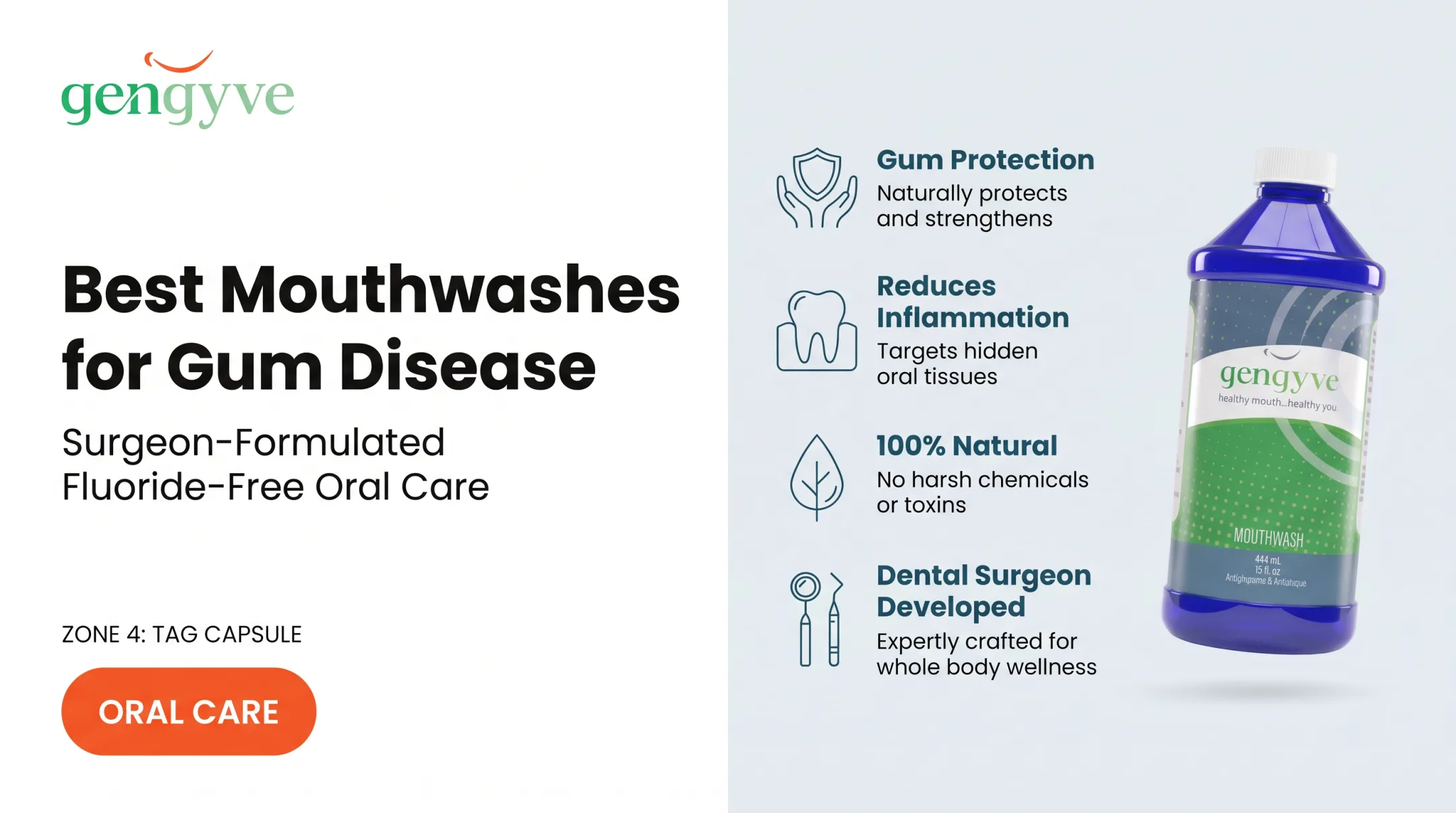
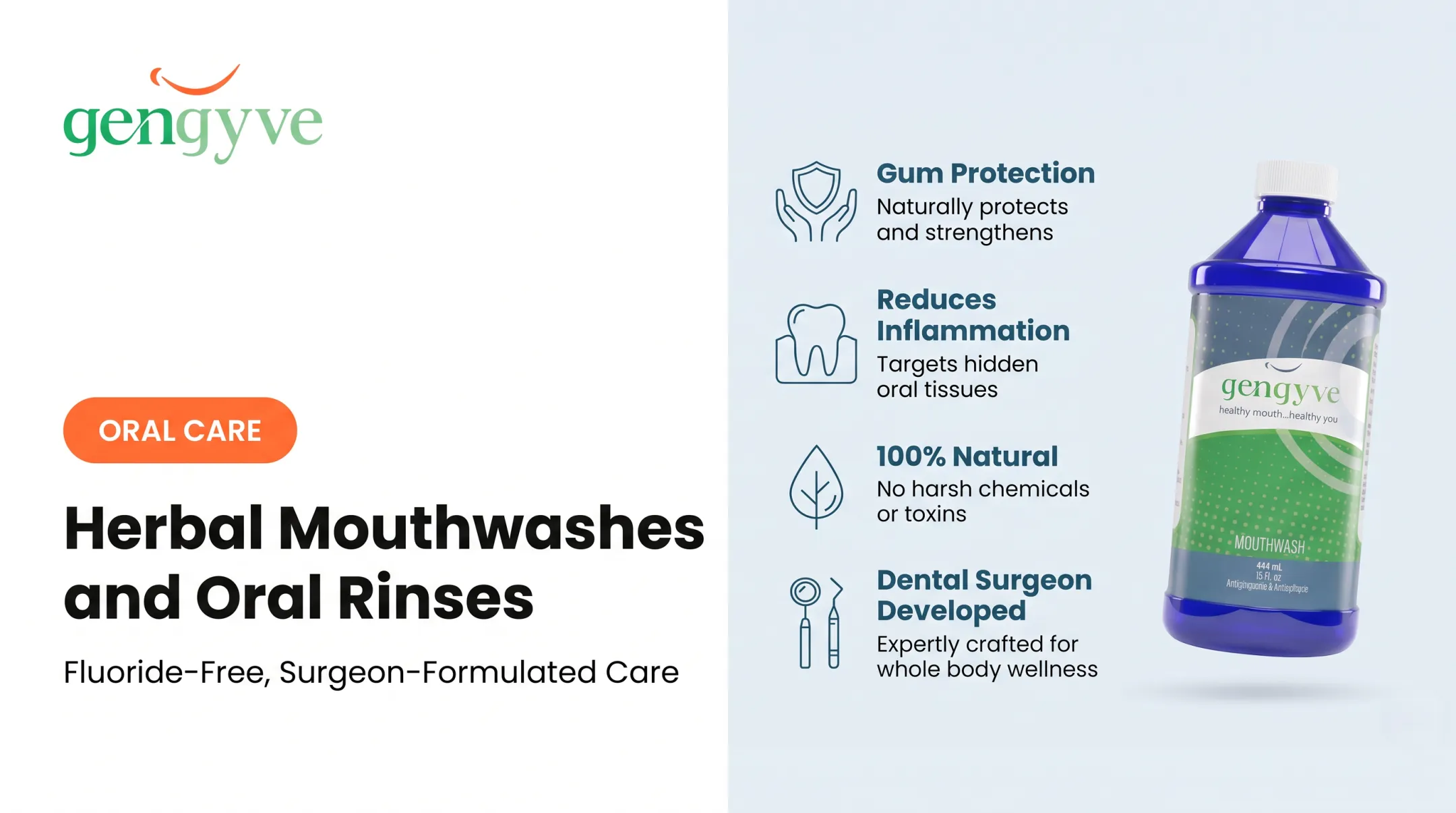
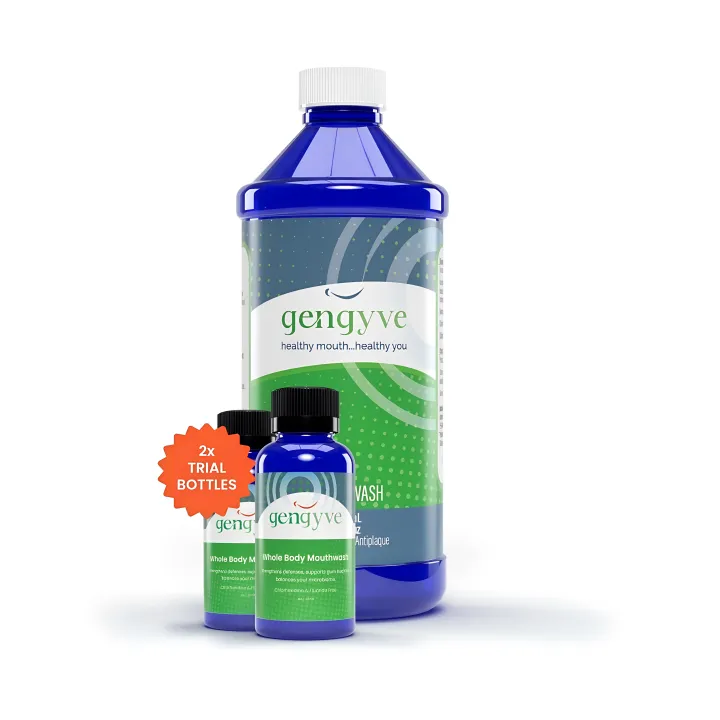
Gengyve is an alcohol-free, chlorhexidine-free CPC and hyaluronic acid mouthwash developed by oral and maxillofacial surgeon Dr. S. Thaddeus Connelly. It's meant as a gentle daily rinse, not a treatment.
The evidence is early. In a 21-day trial of 75 dental students, placebo allowed more plaque than the CPC-hyaluronic acid or chlorhexidine rinses, but gingivitis differences between groups weren't statistically significant.
That finding doesn't show long-term superiority or that a rinse treats periodontitis. Check the bottle for the current ingredient list and directions.
How to Use Mouthwash as Part of a Daily Gum-Care Routine
The ADA recommends fluoride toothpaste twice daily for at least two minutes and cleaning between teeth daily. Mouthwash works best after brushing and cleaning between teeth, so follow this order:
- Brush with fluoride toothpaste.
- Clean between teeth with floss or interdental tools.
- Rinse as the label or your dentist directs.

Directions vary by product. Listerine Original calls for 20 mL for 30 seconds, while typical chlorhexidine rinses use 15 mL undiluted for 30 seconds. Gengyve directions call for 30 or 60 seconds, so follow the bottle.
Practical rules:
- Measure the amount and spit it out; never swallow.
- Check whether the label says to wait before eating or drinking.
- Keep children under 6 away from rinsing unless a dentist directs it.
Avoid these mistakes:
- Layering several medicated rinses
- Diluting a product without instructions
- Scrubbing bleeding gums harder
- Continuing a rinse that causes persistent burning, rash, or swelling
When Bleeding Gums Need Professional Care
What do dentists typically recommend?
Dentists find the cause first. They check plaque and tartar, review medications and health history, then recommend better home care, a professional cleaning, or a targeted rinse. Early gingivitis often responds to this. Periodontitis may need scaling and root planing or a periodontist referral, not just a rinse.
When should you schedule an appointment?
Book a visit if bleeding:
- Is frequent or continues despite gentle, consistent hygiene
- Happens with no obvious cause
- Comes with redness, swelling, or tenderness
- Comes with persistent bad breath, receding gums, or loose teeth
When is bleeding urgent?
Get prompt care for:
- Uncontrolled or unusually heavy bleeding
- Facial swelling, fever, or pus
- Severe pain
- Bleeding elsewhere in the body
Go to an emergency room for trouble breathing or swallowing, or for fever and facial swelling when you can't reach a dentist.
Ask your clinician before changing your rinse if you are pregnant, take anticoagulants or antiplatelets, are in cancer treatment, are immunocompromised, or are recovering from oral surgery. Never stop prescribed blood thinners because your gums bleed.

What can you expect at an evaluation?
A dental professional will typically:
- Examine gum color and swelling
- Measure pocket depths (healthy pockets are usually 1-3 mm)
- Check for tartar and loose teeth
- Review risk factors and take X-rays for bone loss if needed
Frequently Asked Questions
Does mouthwash help bleeding gums?
A therapeutic rinse may help control plaque-related inflammation. Persistent bleeding still calls for good brushing, interdental cleaning, and a professional evaluation.
What do dentists recommend for bleeding gums?
They identify the cause, recommend gentle daily cleaning, and remove tartar when needed. A dentist-selected rinse is added for appropriate cases.
Can mouthwash cure gum disease?
It can support early gingivitis care. It can't cure advanced periodontal disease, remove tartar, or reverse bone loss.
Is alcohol-free mouthwash better for bleeding gums?
It may be more comfortable for sensitive or dry mouths. Let the active ingredient and evidence guide your choice.
Should I use chlorhexidine mouthwash for bleeding gums?
Only as directed by a dentist. It's meant for specific, limited use and can stain teeth and alter taste.
When should I see a dentist for bleeding gums?
See one for recurring or unexplained bleeding. Seek prompt care for severe pain, swelling, fever, pus, loose teeth, or bleeding you can't control.