This is a recognized side effect, not a sign you're doing something wrong. In this article, we'll cover why chlorhexidine changes taste, how long the effect typically lasts, practical ways to manage the discomfort, and when it's time to call your dentist or physician.
One thing upfront: don't stop a prescribed rinse on your own just because the taste bothers you. Talk to the person who prescribed it first.
Key Takeaways
- Chlorhexidine temporarily suppresses bitterness and saltiness perception by interacting with oral tissue and taste receptors.
- Aftertaste duration varies by concentration, frequency, and individual response, not a single fixed timeline.
- Never discontinue a prescribed rinse without talking to your dentist or physician first.
- Accidental swallowing requires checking the label and contacting Poison Control, not guessing at home remedies.
What Is Chlorhexidine Gluconate Used For?
Chlorhexidine gluconate is an antimicrobial oral rinse, typically prescribed for gingivitis and short-term bacterial or plaque control. In the U.S., it's prescription-only. DailyMed's product label describes its indication as treating gingivitis between dental visits, within a professional care program.


It's an adjunct, not a replacement. Chlorhexidine works alongside:
- Daily brushing with fluoride toothpaste
- Interdental cleaning (floss or similar tools)
- Regular professional cleanings
- Any broader treatment plan your dentist outlines
It isn't a standalone fix for advanced gum disease, and it isn't meant to replace routine hygiene.
Label specifics:
- Safety and effectiveness haven't been established in patients under 18, according to current labeling.
- Reassessment and thorough prophylaxis should happen at intervals no longer than six months; this isn't the same as a universal six-month treatment course.
- Clinical reviews describe gingivitis regimens running roughly 2 to 4 weeks, with postoperative courses often closer to 2 weeks, depending on the procedure.
Beyond altered taste, common side effects include tooth staining, increased tartar buildup, and oral irritation. Most of these are nuisances rather than emergencies, but persistent or worsening symptoms warrant a conversation with your provider.
Why Does Chlorhexidine Change the Way Food Tastes?
Two different taste experiences are happening here, and it helps to separate them.
How Chlorhexidine Affects Taste Perception
The rinse itself can taste bitter during use. That's expected. What surprises people is the lingering effect afterward, when food and drinks taste "off" even after rinsing and spitting.
Chlorhexidine is positively charged and binds readily to oral tissue. That retention property, called substantivity, is part of why it stays active in the mouth longer than a typical rinse.
A 2001 taste-perception study found that chlorhexidine selectively reduces perceived saltiness and bitterness (specifically quinine bitterness), while leaving sweetness and sourness largely untouched. In that research, the effect persisted for at least 30 minutes following a single treatment.
This is different from dysgeusia, a more generalized, persistent taste disturbance that can continue well beyond a single rinse session. If your taste stays altered long after you've stopped using the product entirely, that's worth flagging to your dentist.
What Influences the Intensity and Duration
Not everyone experiences the same severity. A 21-day clinical trial comparing three chlorhexidine concentrations found meaningfully different rates of self-reported taste disturbance:
| Concentration | Taste Perturbation Reported |
|---|---|
| 0.06% | 21.1% |
| 0.12% | 55% |
| 0.2% | 65% |

Higher concentration generally meant more complaints, though the study authors noted that formulation differences (alcohol content, flavoring, color) may have played a role too. This doesn't mean a lower concentration is automatically right for your situation; that's a clinical decision, not a DIY swap.
Staining and taste changes are both linked to chlorhexidine's retention in the mouth, but one doesn't reliably predict the other. You can have significant staining with mild taste disruption, or the reverse.
How the Taste Effect Can Affect Treatment Adherence
Here's the practical problem: a persistent bad taste makes people skip doses or rinse it out early, undermining the treatment's effectiveness. One review of adverse-event data found that among patients who discontinued chlorhexidine early, altered or bad taste was a commonly cited reason.
If the taste feels intolerable, say so. A dentist might adjust the timing of your rinse, shorten the counseling period, or reconsider whether the course length still makes sense. What they won't want is for you to quietly stop using it without telling them.
How to Get Rid of Chlorhexidine Taste in Mouth
There's no guaranteed fix, but there are label-consistent steps that help without compromising the treatment.
Use the Rinse Exactly as Directed
Follow the measured dose and rinse time on your specific product label; these details vary by formulation. Typical directions call for an undiluted rinse, swished for about 30 seconds, then spit out, not swallowed. Don't eat or drink immediately afterward if your label says to wait.

Manage Timing Around Brushing and Other Oral Products
Some toothpaste ingredients, particularly sodium lauryl sulfate (SLS), may interact with chlorhexidine. Research on exactly how long to wait is mixed:
- Current manufacturer labeling doesn't specify an SLS-specific waiting period.
- Some clinical reviews suggest waiting at least 30 minutes after brushing.
- Older systematic reviews suggest spacing closer to two hours for best results.
Ask your dentist what interval makes sense for your product. And resist the urge to "fix" the taste by immediately rinsing with water, using a second mouthwash, or reaching for something acidic or alcohol-based. None of these are confirmed to help, and some may interfere with how the treatment works.
Reduce Discomfort Without Masking Warning Signs
Minor comfort measures are fine if your dentist confirms they won't interfere with treatment. More useful: track your symptoms.
- When does the taste disturbance start after rinsing?
- How long does it last?
- Does it affect your ability to eat normal meals?
That record gives your dentist or physician something concrete to work with, rather than a vague "it tastes bad."
Know When a Treatment Change May Be Needed
Sometimes you need to reassess whether you still need the chlorhexidine course at all. Your dentist might determine the treatment period has run its course, or that a different product fits better.
This is also where everyday maintenance products come in. A chlorhexidine-free rinse can be useful for daily care, but it is not an automatic substitute for a prescribed antimicrobial treatment.
Gengyve, for example, is a natural, alcohol-free, chlorhexidine-free mouthwash built around cetylpyridinium chloride and hyaluronic acid. It is designed for everyday comfort rather than short-term prescription use, so it fills a different role than a prescribed rinse.
How Long Does Chlorhexidine Aftertaste Last, and When Is It Concerning?
Expected Course of a Temporary Aftertaste
In controlled experiments, taste perception returned to normal within days of stopping use. One study found no detectable taste effects just four days after a four-day rinse protocol.
That's experimental data, not a promise for your exact situation. Individual recovery timelines vary.
If taste disturbance continues well past your treatment course, or if it's substantially affecting your ability to eat, that's a conversation for your dentist or physician, not something to just wait out.
Signs That Require Prompt Professional Advice
A bothersome aftertaste is one thing. These symptoms are another, and shouldn't wait:
- Significant oral soreness or swelling
- Tongue or throat symptoms
- Skin rash or itching
- Difficulty breathing
- Rapid heart rate or lightheadedness
Current labeling lists these among possible allergic reaction symptoms. If you notice breathing difficulty or signs of a severe allergic reaction, seek emergency care immediately rather than waiting to see if it passes.
Accidental Swallowing and Overdose Concerns
A small accidental swallow during normal rinsing isn't the same as a larger ingestion. Chlorhexidine is poorly absorbed when swallowed. Small amounts typically cause only mild stomach upset or nausea, according to Poison Control's guidance. Larger amounts can cause more serious effects.

What to actually do:
- Check the product label for swallowing-specific instructions.
- Call Poison Control at 1-800-222-1222, or use poison.org, for product-specific guidance.
- Don't induce vomiting or attempt home remedies unless a professional tells you to.
Children, older adults, people with swallowing difficulties, and anyone unsure how much was swallowed should get guidance promptly rather than waiting to see what happens.
Chlorhexidine-Free Options for Everyday Oral Care
When an Alternative May Be Worth Discussing
If you need a daily maintenance rinse, dislike chlorhexidine's taste, or have been told to avoid it altogether, ask your dentist which ingredients fit your situation. A daily maintenance product serves a different purpose than a prescription rinse used for active gingivitis, post-surgical healing, implant care, or oncology-related mucositis.
Gengyve as a Daily Alternative
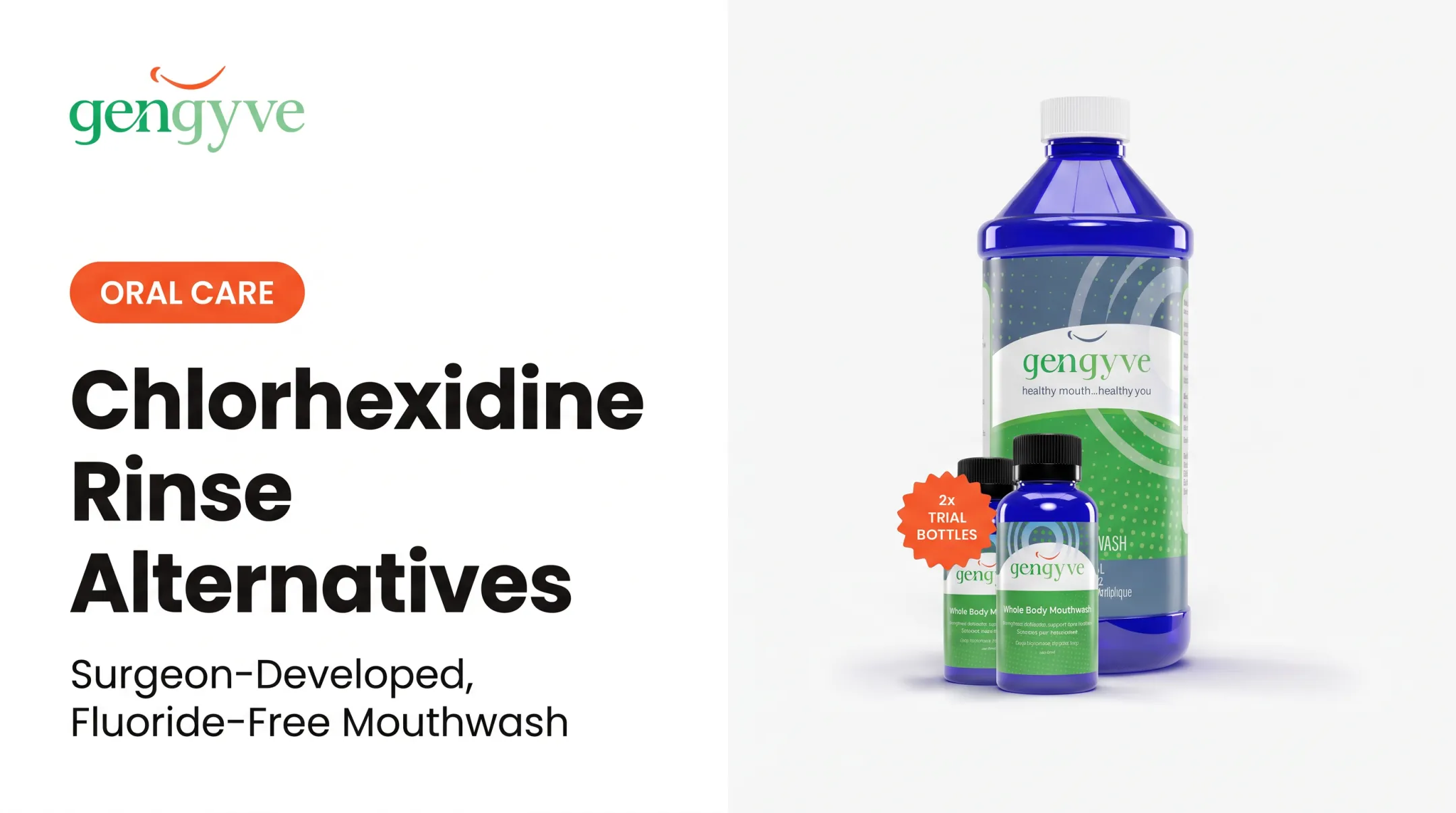
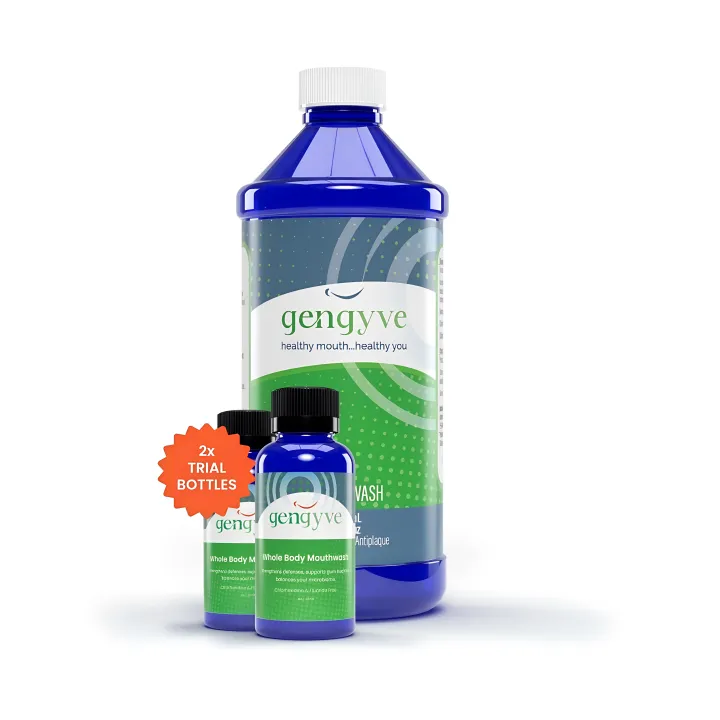
Gengyve USA, founded by a practicing UCSF oral and maxillofacial surgeon, developed a natural, alcohol-free, chlorhexidine-free mouthwash for everyday use. It's not positioned to eliminate the aftertaste of an active chlorhexidine prescription or to replace a prescribed antimicrobial course. It's built for the days between dental visits, when you want a gentler daily rinse without a harsh chemical bite.
Choosing and Using an Alternative Responsibly
Before switching products, compare:
- Active ingredients and what they're intended to treat
- Alcohol content
- Whether it's meant for daily maintenance versus a specific procedure or condition
- Your dentist's input, especially if you have bleeding gums, implants, recent oral surgery, or ongoing infections
Whatever rinse you choose, it works alongside brushing, interdental cleaning, and regular dental visits, not in place of them.
Frequently Asked Questions
How do I get rid of chlorhexidine taste in my mouth?
The taste usually fades as the product clears from your mouth. Follow your label's directions, avoid rinsing with other products right after, and ask your dentist about timing around toothpaste. Contact your prescriber if the taste feels intolerable.
How long does chlorhexidine aftertaste last?
Duration varies by formulation, concentration, and individual response. Experimental data suggests recovery within days of stopping use, but if the effect persists beyond your treatment course or affects eating, ask your dentist to evaluate it.
What happens if I accidentally swallow chlorhexidine?
A small accidental swallow typically causes mild stomach upset at most. Check your product label and call Poison Control at 1-800-222-1222 for guidance specific to the amount swallowed. Don't induce vomiting on your own.
Can chlorhexidine permanently change your taste?
Most taste changes are temporary and resolve after stopping the rinse. Rare reports of prolonged alteration exist in postmarketing data, so if your taste hasn't returned to normal, get it evaluated by your dentist or physician.
Can I rinse with water right after using chlorhexidine?
Follow your specific product's directions and your prescriber's advice. Rinsing immediately or using another product afterward may interfere with how the treatment is meant to work.
Should I stop chlorhexidine if I can't tolerate the taste?
Don't stop a prescribed rinse on your own. Contact your prescribing dentist or physician to discuss the taste issue. They may adjust timing or duration, or recommend a different approach.