That's where mouthwash gets complicated. Many patients grab whatever bottle is on the shelf, not realizing that some rinses can irritate healing tissue or do nothing for peri-implant health at all. Others assume a prescription rinse is meant to be used forever, when it's often intended for a short, defined window.
This guide breaks down five mouthwash categories, explains where each one fits, and separates dentist-directed post-operative care from everyday long-term maintenance. None of this replaces your implant provider's instructions. Think of it as a map for the conversation you should be having with them.
Key Takeaways
- The right mouthwash depends on your healing stage, implant restoration type, and your dentist's specific instructions
- Alcohol-free antimicrobial rinses tend to be more comfortable for daily implant care than harsher formulas
- Limit chlorhexidine and other prescription rinses to the duration your provider specifies, and avoid vigorous rinsing until cleared
- Mouthwash supplements brushing and interdental cleaning; it never replaces either one
- Gengyve is worth evaluating for ongoing gum-focused care, though it isn't a fit for every post-op situation
Overview of Mouthwash for Dental Implant Oral Care
An implant has three parts: the fixture anchored in the jawbone, the abutment connecting piece, and the visible restoration on top. Mouthwash doesn't touch the fixture itself. Its real job is managing soft tissue around the implant, controlling plaque, freshening breath, and protecting any remaining natural teeth.



Why does plaque control matter so much here? Bacteria that accumulate at the implant's base can irritate the gum tissue and, left unchecked, contribute to breakdown of the supporting bone. The American Academy of Periodontology describes two distinct stages of this process:
- Peri-implant mucositis – inflammation limited to soft tissue, often reversible when caught early
- Peri-implantitis – inflammation paired with bone loss around the implant
Risk factors tracked by the American Academy of Periodontology include poor plaque control, smoking, prior gum disease, and diabetes. Redness, tenderness, or bleeding during brushing are early warning signs worth mentioning at your next visit.

Healing Period vs. Long-Term Maintenance
During early healing, your provider may set a specific rinse schedule and limit certain ingredients while soft tissue stabilizes. Once the implant has integrated, daily plaque control becomes the long-term focus around the restoration.
Your implant provider's surgical instructions always take priority over anything you read online, including this article. The categories below are organized by formulation and typical use case, not as a diagnostic tool or substitute for individualized care.
Best Mouthwash Options for Dental Implants
When evaluating a rinse for implant care, weigh these factors:
- Safety during your current healing stage
- Alcohol content and potential for dryness or irritation
- The antimicrobial ingredient (if any) and its actual purpose
- Ingredient transparency on the label
- Suitability for daily, long-term use versus short-term courses
Gengyve Mouthwash
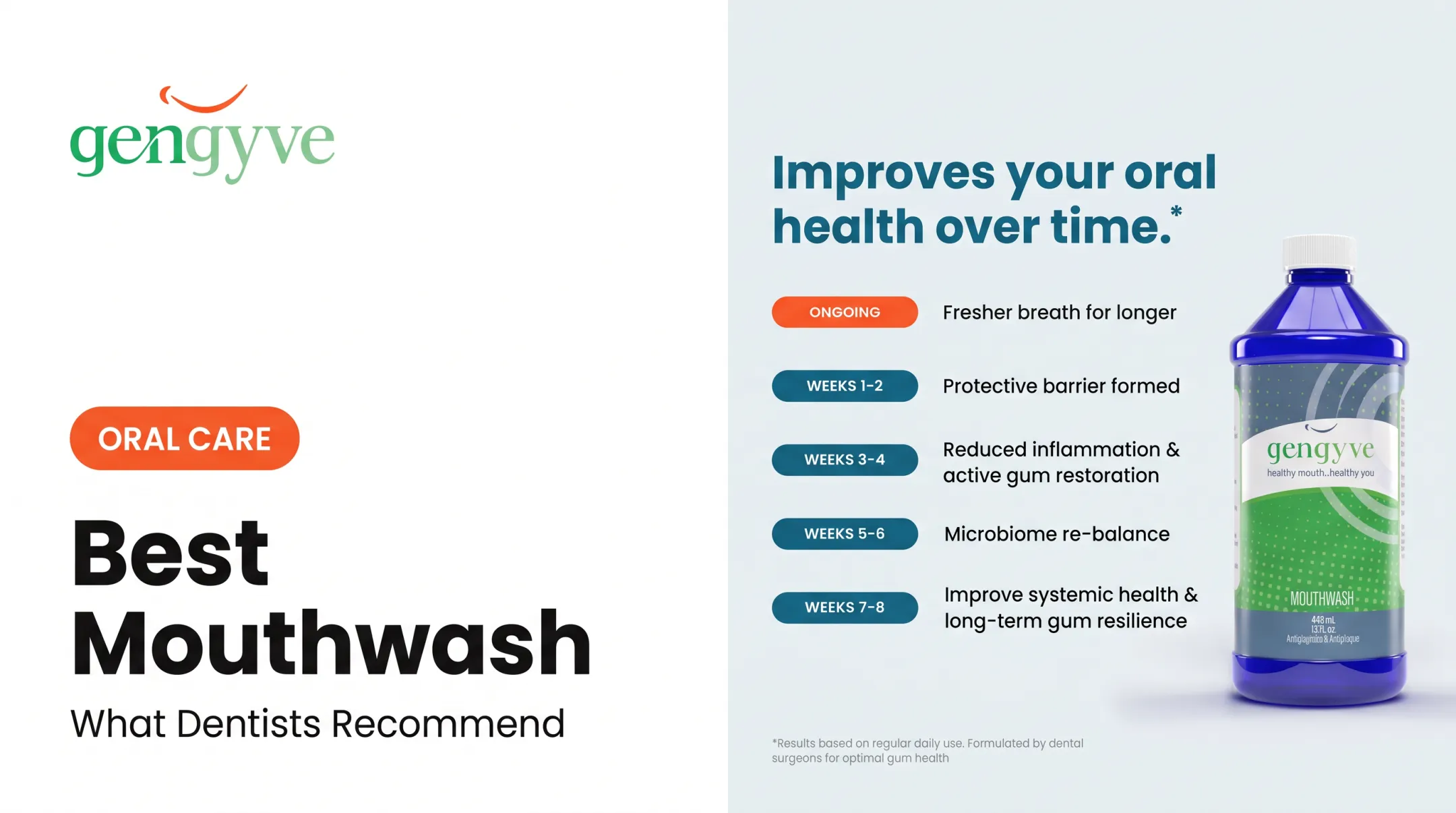
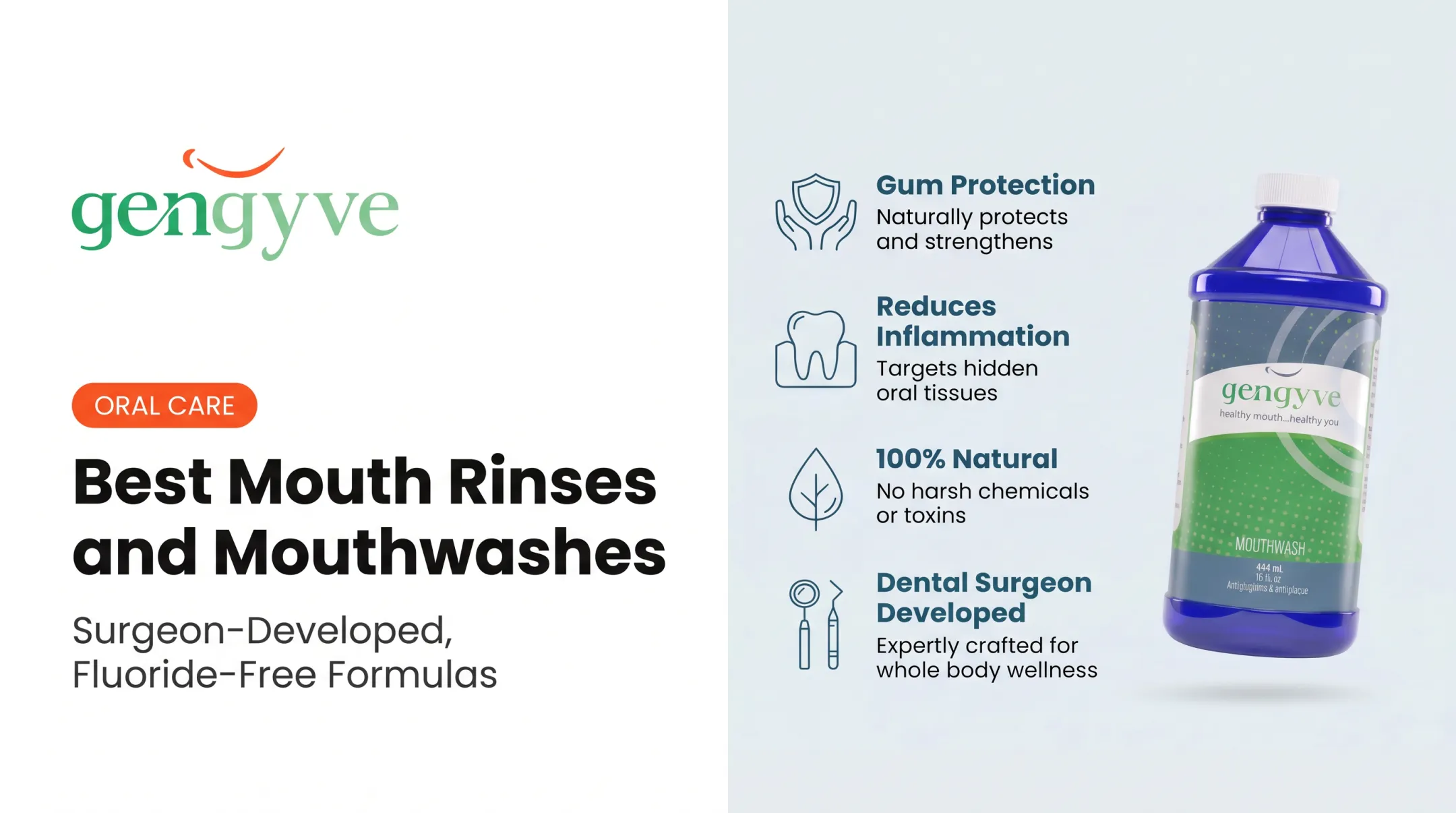
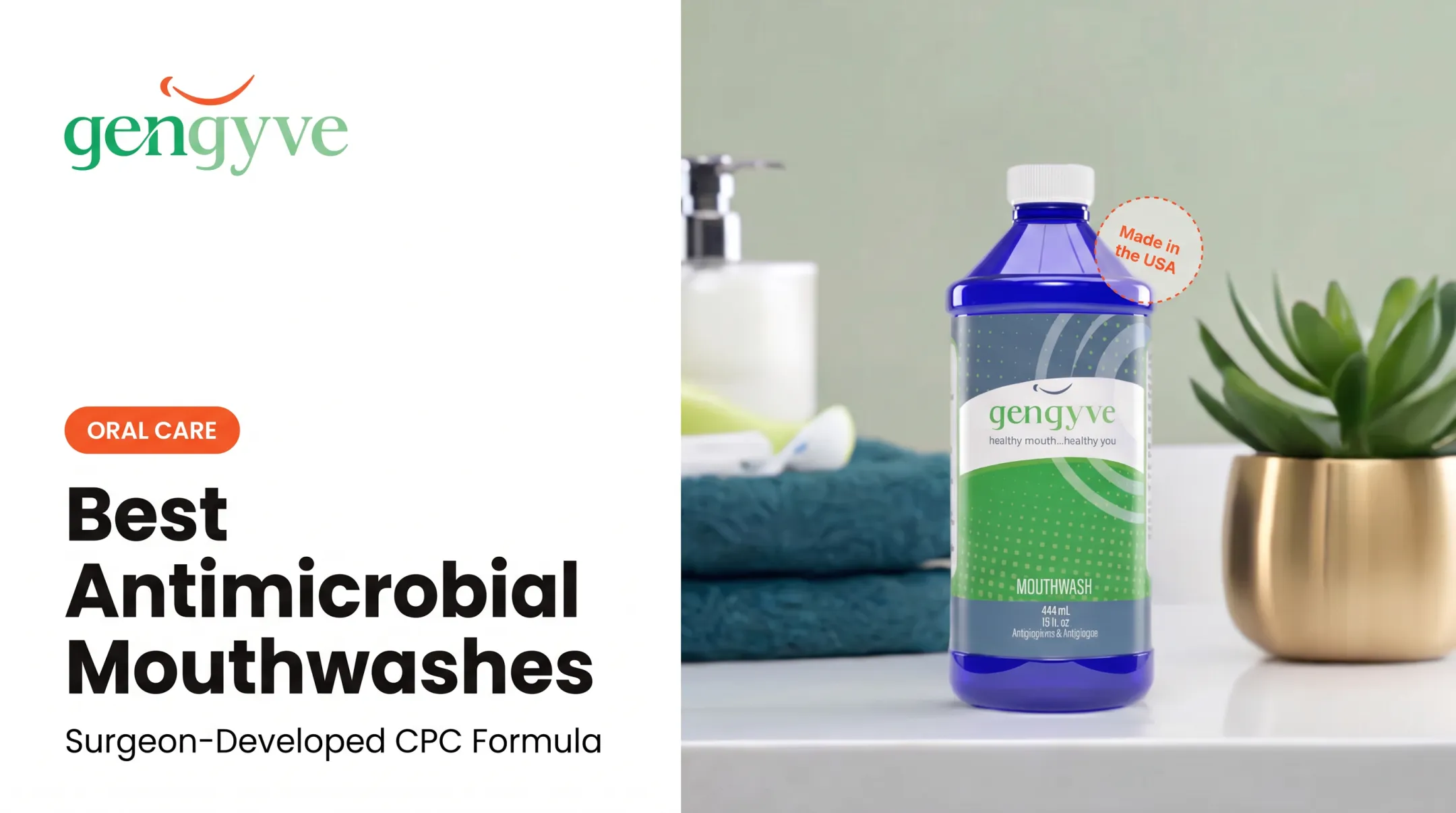
Gengyve is a USA-developed mouthwash created by Dr. S. Thaddeus Connelly, an oral and maxillofacial surgeon and UCSF clinical professor who wanted a rinse he could confidently hand to his own patients. The formula is alcohol-free and chlorhexidine-free, built around cetylpyridinium chloride (CPC) as its antimicrobial ingredient, combined with hyaluronic acid.
Gengyve's internal documentation describes the hyaluronic acid as creating a soothing, moisturizing layer over tissue, which may explain why some users report comfort during dry mouth or sensitivity. The product is positioned for:
- Routine daily gum-focused maintenance
- Pre-procedural rinsing (one day before surgery, per the company's usage directions)
- Post-procedural use twice daily, continued as long as needed
That last point matters: Gengyve markets itself for long-term use, unlike prescription rinses limited to short courses. Still, if your implant provider has prescribed a specific post-op rinse, follow that plan first. Gengyve positions itself as an option to discuss with your dentist, not an automatic swap-in. Always check the current label for the full ingredient list and directions before use.
Dentist-Prescribed Chlorhexidine Rinse
Chlorhexidine is a go-to for clinicians when short-term, aggressive plaque and bacterial control is the priority, including around selected implant procedures. The FDA labeling for Peridex, a 0.12% chlorhexidine gluconate rinse, specifies a defined regimen.
| Detail | Specification |
|---|---|
| Dose | 15 mL undiluted |
| Rinse time | 30 seconds |
| Frequency | Twice daily |
| Alcohol content | 11.6% |

That label, filed with DailyMed's drug database, also lists known effects:
- Staining of teeth, tongue, and restorations
- Increased calculus buildup
- Altered taste perception
- Possible oral irritation or allergic reaction
Notice that chlorhexidine isn't alcohol-free. If dryness is already a concern, that's a conversation to have with your prescriber rather than a reason to quietly stop. Chlorhexidine should be used for exactly the duration, frequency, and timing your dentist specifies. Unsupervised long-term use isn't the intended design.
Alcohol-Free Antimicrobial Mouthwash
If you deal with dry mouth, burning sensations, or general sensitivity, alcohol-free formulas are usually the more comfortable route. The American Dental Association specifically advises avoiding alcohol-containing rinses for patients managing xerostomia, since alcohol can dry tissue further.
But "alcohol-free" describes formulation, not performance. Here's what to actually check on the label:
- The active antimicrobial ingredient (CPC is a common one)
- The product's intended use (plaque control, gingivitis, breath, etc.)
- Alcohol status
- Directions and any warnings
A six-month clinical trial on a 0.07% CPC rinse found measurable gingivitis and plaque reductions compared to placebo as an adjunct to brushing. That's useful general evidence for gum health, but it's not proof that any particular alcohol-free rinse treats peri-implant disease or improves implant survival. Per ADA's mouthrinse guidance, antimicrobial actives like CPC support plaque and gingivitis control alongside daily brushing, not as a standalone fix.
Fluoride Mouthwash for Natural Teeth and Cavity Prevention
Fluoride rinses protect your remaining natural teeth from decay. That's a genuinely different job than antimicrobial plaque control around an implant restoration.
- Fluoride addresses cavity risk on natural tooth surfaces
- It does nothing to mechanically remove plaque around an implant's gumline
- A single rinse combining fluoride and an antimicrobial active may target both needs, but check the label rather than assuming
If you're already using a prescription-strength fluoride product, have swallowing difficulties, or have other specific conditions, run any new fluoride rinse by your dentist first.
Gentle Saltwater or Soothing Rinse
A warm saltwater rinse is often the gentlest option during early recovery, when your provider says you're ready for it. General oral surgery guidance suggests a simple ratio: roughly half a teaspoon of salt dissolved in a glass of warm water, swished gently rather than with force.
Saltwater is not a clinically tested antimicrobial mouthwash, and it shouldn't be treated as infection treatment. Follow your provider's specific timing and preparation instructions instead of a generic recipe pulled from the internet, since your procedure and tissue condition are unique to you.
How We Chose the Best Mouthwash for Dental Implants
Strong branding, an intense mint flavor, or whitening claims on a bottle don't tell you anything about peri-implant safety. We evaluated products against factors that actually matter for implant patients.
Healing stage first. Immediate post-op care, early tissue healing, established implants, and long-term maintenance can all call for different products and instructions. What's appropriate in week one may be unnecessary by month three.
Formulation factors we weighed:
- Alcohol content and dryness potential
- Antimicrobial ingredient and documented purpose
- Fluoride presence
- Abrasivity or whitening claims
- Flavor intensity and soothing ingredients
- Known sensitivity triggers
We prioritized evidence from clinical guidance, peer-reviewed research, and official product labeling over marketing copy. We avoided claims about bacteria, inflammation, or healing outcomes that the evidence did not directly support.
Restoration Design Changes the Cleaning Challenge
Your restoration type affects how plaque actually gets removed, which matters more than any single product choice:
| Restoration | Cleaning consideration |
|---|---|
| Single implant crown | Access around the gumline and adjacent contacts |
| Implant-supported bridge | Underside and spaces around supporting implants |
| Removable overdenture | Attachment areas accessible only when removed |
| All-on-4 / fixed full arch | Tissue-facing underside needs specialized tools |
A mouthwash is an adjunct in every one of these cases. It doesn't replace interdental brushes, water flossers, or professional cleanings suited to your specific restoration.
When to stop and call your dentist:
- Worsening pain or increasing swelling
- Bleeding, pus, or fever
- A persistent bad taste
- Implant mobility or any change in your bite
None of these are mouthwash problems. They're reasons to get evaluated.
Conclusion
The best mouthwash for dental implants is the one that fits your healing stage, oral health needs, restoration design, and your clinician's specific instructions, not the strongest or most popular rinse on the shelf.
Mouthwash is one piece of a larger routine. These habits still do most of the heavy lifting for implant longevity:
- Soft-bristle brushing
- Daily interdental cleaning
- Proper water-flosser technique
- Regular professional maintenance
If you want an alcohol-free, chlorhexidine-free option to discuss with your dentist, Gengyve was developed by a practicing oral surgeon for gum-focused daily care. It does not replace a prescribed post-surgical rinse, but it is worth reviewing with your dentist or periodontist during implant healing. Learn more about the formulation on Gengyve's site, or ask your dental practice whether it is available as part of your care.
Frequently Asked Questions
How long after dental implant surgery can I use mouthwash?
Vigorous rinsing is typically avoided right after surgery because it can disturb healing tissue and clot formation. Timing varies by procedure and patient, so follow your implant provider's written instructions rather than a general timeline.
What helps dental implants heal faster?
Careful adherence to post-op instructions, gentle oral hygiene, good nutrition, avoiding tobacco, and attending follow-up visits all support healing. No mouthwash can speed up osseointegration itself.
How do I clean under my dental implants?
Floss designed for implants, interdental brushes, and water flossers can all help, but the right tool depends on your specific restoration. Ask your dental team to recommend and demonstrate the best option for your case.
How do I clean my All-on-4 dental implants?
Cleaning beneath a fixed prosthesis usually requires provider-approved interdental tools or an oral irrigator aimed at the tissue-facing underside. Scheduled professional cleanings remain essential since some areas aren't fully reachable at home.
What is the best mouthwash for dental implants?
It depends on your healing stage and individual needs. Gentle, alcohol-free antimicrobial rinses typically work well for routine care, while chlorhexidine or other prescription rinses are reserved for clinician-directed, time-limited use.
What are the signs that a dental implant is healing well?
Gradual improvement in discomfort and swelling over days to weeks is a good sign. Persistent pain, increasing swelling, discharge, fever, looseness, or worsening bleeding are reasons to contact your dental professional promptly.