The real decision isn't just "natural versus not natural." A sustainable mouthwash should cut unnecessary packaging waste while still matching your oral-health needs, comfort preferences, and daily routine. A gorgeous glass bottle doesn't help much if the formula irritates your gums or skips the active ingredients your dentist recommended.
This guide compares five options across formula transparency, oral-care function, packaging, refillability, usability, and evidence-backed claims. One more thing worth saying upfront: mouthwash supplements brushing and flossing, according to ADA guidance — it doesn't replace them or professional dental care.
Key Takeaways
- Tablets, concentrates, refills, and glass or aluminum packaging cut waste; "natural" is not the same as "zero waste"
- Compare packaging, refill availability, alcohol content, and fluoride status with your oral-health goals
- Gengyve is a dental-surgeon-developed, US-made rinse that is alcohol-free and chlorhexidine-free; verify label claims
- Ask a dentist before switching if you have gum disease, implants, dry mouth, or recent oral surgery
Overview of Eco-Friendly Mouthwash in the US Oral-Care Market
An eco-friendly mouthwash is one that tries to lower its environmental footprint through lighter packaging, reusable or recyclable containers, concentrated or waterless formats, responsible ingredient sourcing, or refill systems. No single feature defines the category; it's a mix of choices.



Packaging format genuinely changes the shipping picture. A bottle of pre-mixed liquid is mostly water, which adds weight and volume to every shipment. Concentrated tablets or refill pouches ship lighter and smaller.
That said, recyclability and compostability depend heavily on local facilities and the complete package, not just the material printed on the label. The FTC's Green Guides require that unqualified "recyclable" claims only apply where at least 60% of consumers have access to that recycling stream. Otherwise the claim needs a qualifier.

It also helps to separate two different questions:
- Is this packaging sustainable? Depends on materials, refill options, and shipping format
- Is this formula right for my mouth? Depends on active ingredients, sensitivity, and any clinical concerns
A product can nail one and miss the other entirely. With that distinction in mind, here's how five US-available options stack up: a professional-style daily rinse, two tablet formats, a mainstream lower-plastic liquid, and a glass-packaged natural formula.
Best Eco-Friendly Mouthwashes in the US
Each product below is evaluated on ingredient transparency, intended oral-health function, comfort, packaging and shipping sustainability, refill or disposal options, US availability, and how well the claims hold up against available evidence.
Gengyve Natural Mouthwash
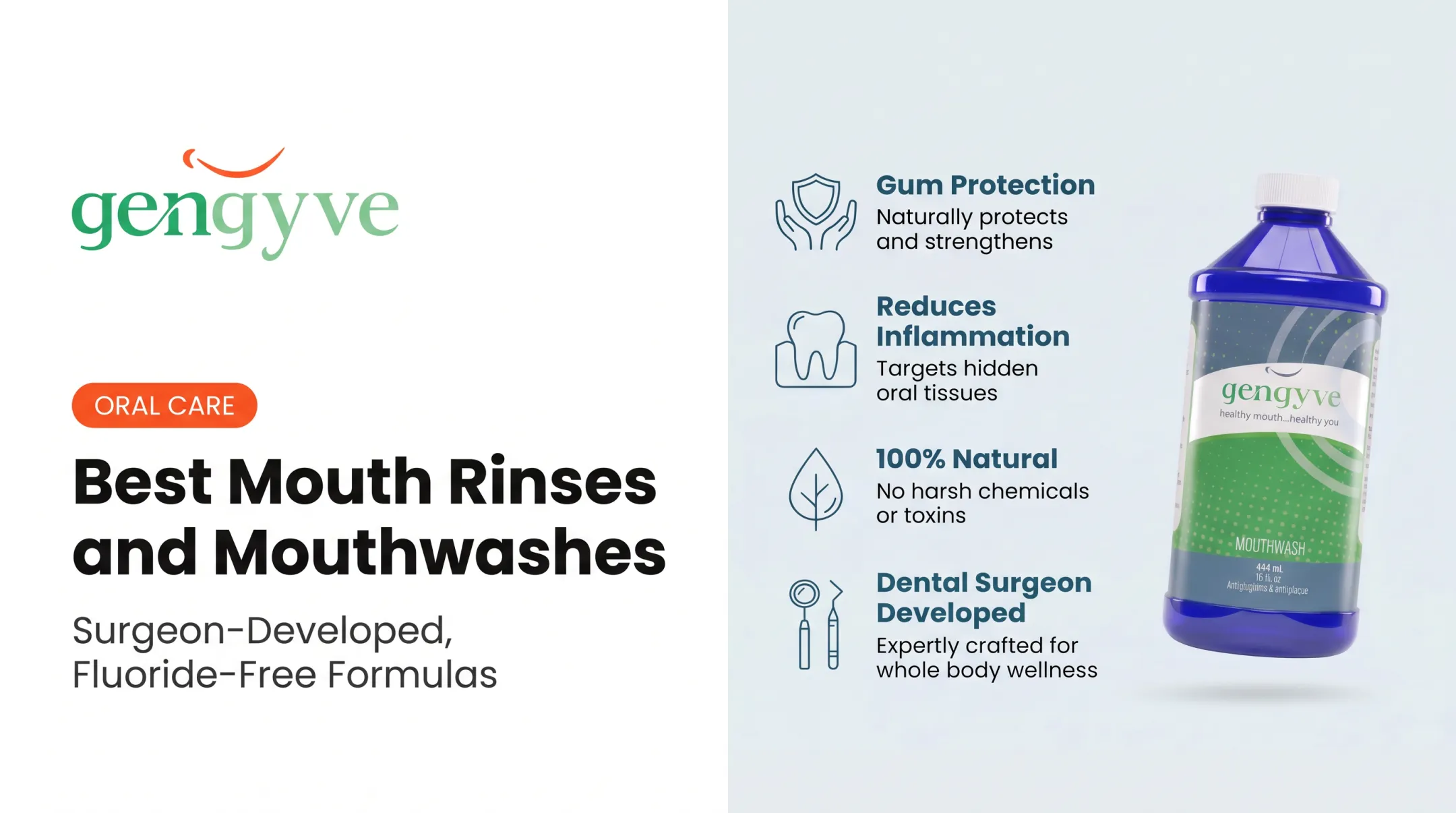
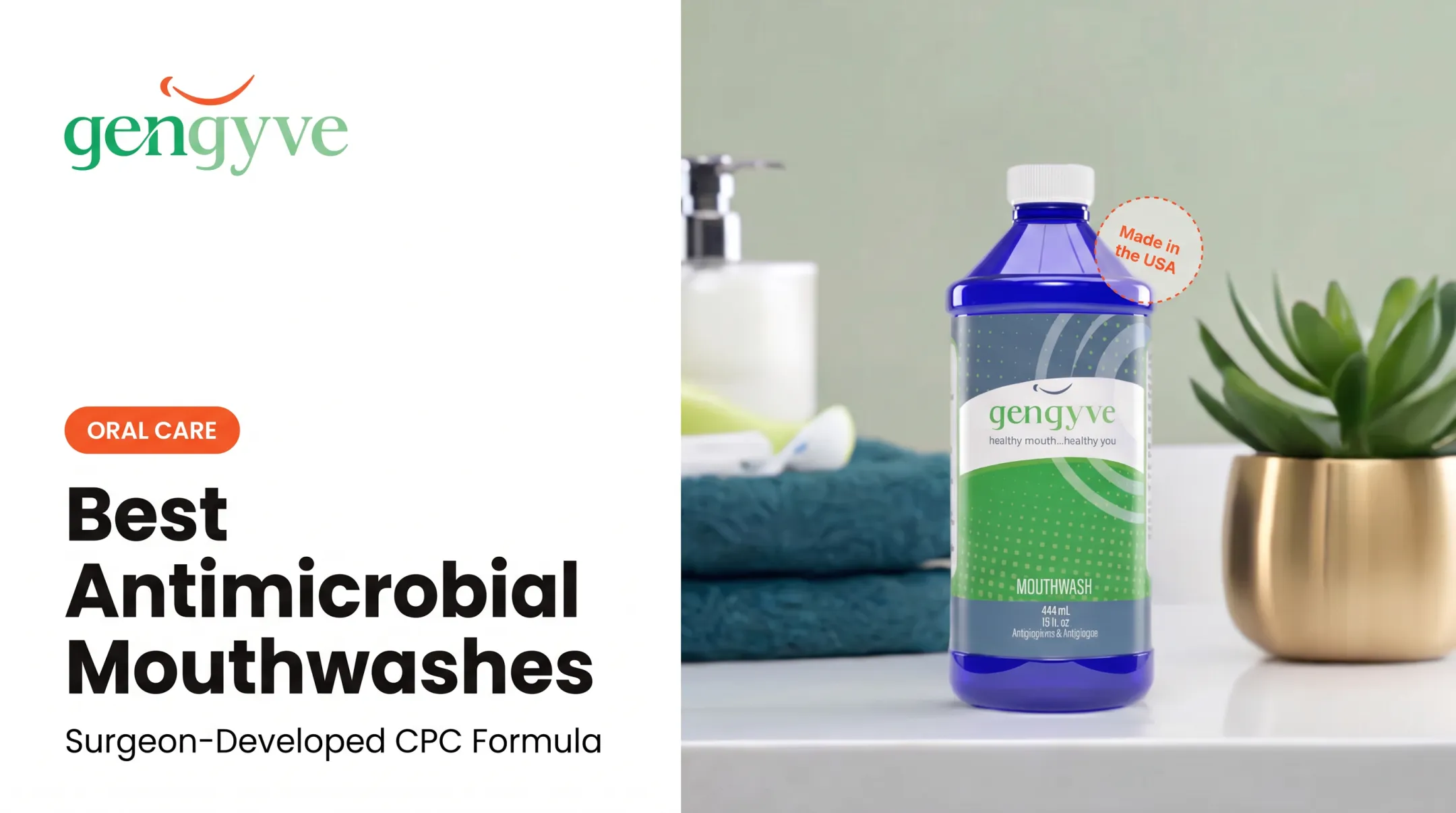
Gengyve is a US-developed oral-care rinse created by Dr. S. Thaddeus Connelly, an oral and maxillofacial surgeon and UCSF Full Clinical Professor, after concluding that no existing mouthwash was one he'd confidently recommend to his own patients. The brand positions itself as alcohol-free, chlorhexidine-free, and fluoride-free: a middle ground between harsh prescription rinses and purely cosmetic ones.
Product snapshot:
- Formula: Cetylpyridinium chloride (CPC) at 0.05% plus hyaluronic acid, with pullulan, PVP, and castor oil. Check the bottle label for the full list.
- Sustainability: Hyaluronic acid, pullulan, and castor oil are described as biodegradable and renewably sourced. Ships in a 15 fl oz (444 mL) bottle; confirm disposal guidance on the package.
- Best suited for: Adults wanting a gentle, gum-focused daily rinse, including recovery after extractions or implants.
- Caution: Get clinician sign-off first if you are in oncology or radiation care, or managing active periodontal disease.
Evidence and limitations: A randomized, double-blind trial of 75 dental students compared a CPC–hyaluronic acid rinse, chlorhexidine, and placebo over 21 days. Plaque was higher with placebo, and the CPC–hyaluronic acid group showed no significant staining increase, unlike chlorhexidine.
The study was funded by the formulation's original supplier, so it doesn't prove long-term superiority or treat diagnosed periodontitis. Gengyve sells for $19.99 (reduced from $23.99) and is HSA/FSA eligible.
Huppy Mouthwash Tablets
Huppy ships mouthwash as chewable or dissolvable tablets instead of liquid. You chew or drop a tablet per label directions, add water if instructed, swish, and spit.
The sustainability case rests on waterless shipping: tablets weigh and take up far less room than bottled liquid, the outer tin is reusable, and refills come in a compostable, plastic-free pouch.
- Formula: Current listings include xylitol, sodium bicarbonate, nano-hydroxyapatite, calcium carbonate, and a blend of organic essential oils like peppermint, spearmint, and tea tree. Confirm fluoride status and sweetener details directly with the manufacturer before purchase.
- Use case: Genuinely travel-friendly and easy to portion. Some users notice a learning curve with taste, texture, or dissolving time compared to liquid rinses.
- Safety note: Huppy's official FAQ confirms tablets are fine for kids who can reliably swish and spit, but not for swallowing. Xylitol is toxic to dogs, so store tablets the way you'd store any xylitol product, out of pet reach.
Georganics Mouthwash Tablets
Georganics takes a similar dissolve-in-water approach, aimed at shoppers who want a plastic-reduced, refillable oral-care routine without necessarily going the whitening or whole-mouth-therapy route.
Packaging leans heavily on glass, aluminum, and paper or cardboard rather than plastic, with refill packs sold separately.
- Formula: Sodium bicarbonate, tartaric acid, citric acid, mint oil (peppermint or spearmint), sodium benzoate, menthol, thymol, and limonene. The brand lists the formula as roughly 99% natural origin; it's alcohol-free and doesn't appear to contain fluoride.
- Best suited for: Travelers and minimalists who like a compact, pre-measured dose. One 2024 customer review described the flavor as faint, wishing for something more intense — a reminder that tablet taste is genuinely personal.
- Evidence check: The ingredients individually have research behind them, but that's not the same as clinical testing on the finished tablet. Treat any cavity, gum, or antimicrobial claims with appropriate skepticism until the brand publishes product-level data.
Colgate Swish Mouthwash
Colgate Swish represents a different sustainability angle entirely: a mainstream liquid rinse sold in a recyclable metal package instead of a tablet or refill-first system.
This is worth including precisely because most people aren't ready to abandon a familiar liquid format, and a recyclable aluminum bottle is a meaningfully lighter footprint than standard plastic.
| Detail | Status |
|---|---|
| Bottle and cap material | Check current Colgate.com listing before buying |
| Recycling instructions | Not independently confirmed at time of writing |
| Alcohol and dye status | Verify against the current label |
| US availability | Confirm current stock, as retailer listings can lag |
- Sustainability: Recyclable isn't the same as reusable, refillable, or plastic-free. It only means the material can re-enter the recycling stream where facilities accept it.
- Best suited for: Readers who want a familiar ready-to-use liquid and prefer lower plastic without switching to tablets. Liquid still ships heavier than tablets or concentrates, which is a real trade-off.
Lucky Teeth Organic Whitening Mouthwash
Lucky Teeth sells its rinse in glass bottles or jars — a 12 oz glass bottle and a 16 oz version that includes a bamboo cup — positioned around natural ingredients and reduced plastic.
The whitening claim deserves a closer look. The label lists distilled water, food-grade hydrogen peroxide, and organic peppermint, sage, oregano, and tea tree oils, but doesn't state the peroxide concentration.
A 2025 clinical trial tested a 2.5% hydrogen peroxide rinse against a placebo over 90 days and found noticeable color change starting around 60 days, with low sensitivity and no gum irritation reported. That trial tested a different formula entirely, so it can't confirm Lucky Teeth's own whitening performance.
- Formula: Distilled water, food-grade hydrogen peroxide, and the essential-oil blend above; labeled gluten-free, but other allergen and concentration details need confirming.
- Sustainability: Glass packaging plus a bamboo cup in the 16 oz version genuinely cuts plastic use, though shipping materials and secondary packaging aren't detailed.
- Best suited for: Readers who want a glass-packaged natural rinse and understand it's not a guaranteed whitening treatment. Anyone with sensitive gums or mucosal issues should check with a dentist before regular peroxide use.

How We Chose the Best Eco-Friendly Mouthwashes
This ranking weighs environmental performance and oral-care usefulness together. A product doesn't make the list just because it says "natural," "clean," or "zero waste" on the label.
Ingredient and oral-health review:
- Checked active ingredients, alcohol and fluoride status, essential oils, and label-supported benefits for each product
- Leaned on ADA guidance, which separates cosmetic rinses (temporary freshening only) from therapeutic rinses with actives aimed at plaque, gingivitis, or decay
Sustainability review:
- Looked at primary, secondary, and shipping packaging separately, since a glass bottle shipped in excess plastic padding isn't a clean win
- Distinguished reusable, refillable, recyclable, and compostable claims, since they aren't interchangeable
- Noted where US recycling access or disposal instructions weren't clearly published
Practical-use review:
- Compared liquids, tablets, and concentrates for travel convenience, taste, mess, and daily ease of use
- Considered whether refills shipped individually actually preserve the sustainability benefit, or just shift the packaging problem
Evidence and trust:
- Prioritized current manufacturer labels and independent clinical research over marketing copy
- Rejected the assumption that alcohol-free automatically means healthier
- Treated "recyclable" as distinct from "zero waste"
- Required product-specific testing before accepting whitening or antimicrobial claims
- Cautioned against dropping a dentist-recommended rinse without asking first

Conclusion
There isn't one universal "best" eco-friendly mouthwash. The right pick depends on what you're actually optimizing for:
- Minimal shipping weight: a tablet format wins
- Familiar liquid with less plastic: a recyclable bottle fits
- Sensitive gums or post-procedure care: a gentle, clinically informed daily rinse matters more than packaging
Before buying anything, check the current label: active ingredients, fluoride status, alcohol content, and disposal instructions all change over time. If you have gum disease, implants, dry mouth, or high cavity risk, loop in your dentist before switching rinses.
If you're after a dental-surgeon-developed, alcohol-free, chlorhexidine-free daily option, review Gengyve's current formula, sustainability details, and usage guidance before deciding if it fits your routine.
Frequently Asked Questions
What's the healthiest mouthwash to use?
It depends on your needs, ingredients, and comfort level; no single formula is universally healthiest. Confirm fluoride or therapeutic needs with a dentist before assuming natural or alcohol-free is better.
What is a natural alternative to mouthwash?
Options include labeled natural mouthwashes, tablets, concentrates, or a simple salt-water rinse for limited use. Do not treat peroxide, essential oils, vinegar, or homemade mixes as safe stand-ins for a therapeutic rinse.
What makes a mouthwash eco-friendly?
Reduced or reusable packaging, refill systems, concentrated or waterless formats, responsible ingredient sourcing, and lower shipping weight all count. Realistic recycling or disposal instructions matter just as much as the materials themselves.
Are mouthwash tablets effective?
Tablets can freshen breath and support a routine when used as directed, but effectiveness depends on the specific formula and claim being made. Evidence for individual ingredients doesn't automatically prove the finished tablet works the same way.
Is alcohol-free mouthwash better for sensitive gums?
Alcohol-free formulas often feel more comfortable and avoid the drying or burning alcohol can cause. Ongoing sensitivity or bleeding gums may need dental evaluation, not just a formula switch.