
Alcohol content affects comfort and that drying feeling after a rinse. The active ingredients and intended use, however, determine what the product actually does for your mouth. The American Dental Association ties therapeutic benefits to specific actives, not to alcohol content alone.
This article walks through a decision framework: ingredients, oral-health needs, daily tolerability, professional recommendations, and the situations where you should loop in your dentist before picking a bottle.
Key Takeaways
- Alcohol-based rinses can deliver a strong, fresh sensation but may irritate sensitive tissue or dry out the mouth.
- Alcohol-free rinses often feel gentler for dry mouth or sensitive gums; effectiveness still depends on the full formula.
- Judge a mouthwash by its active ingredients, like CPC, fluoride, or essential oils, not by its alcohol status.
- Mouthwash supports brushing and interdental cleaning; it doesn't replace them or your dental visits.
Alcohol-Free vs Alcohol-Based Mouthwash: Quick Comparison
The alcohol question boils down to four things: how it feels, how it affects dry mouth, what the alcohol actually does, and whether you'll stick with it daily.
| Factor | Alcohol-Based | Alcohol-Free |
|---|---|---|
| Comfort | Can burn or sting; tolerance varies widely | Generally gentler, easier to use consistently |
| Dry mouth | May require professional guidance for xerostomia | Avoids added drying sensation, but isn't a guaranteed fix |
| Antimicrobial role | Alcohol often acts as a solvent, not the active ingredient | Relies on actives like CPC, fluoride, or essential oils |
| Daily usability | Burning or irritation may discourage regular use | Comfort supports consistency, but check the label |
Comfort and the Dry-Mouth Question
A strong burning sensation doesn't prove a rinse is working harder. A 2013 crossover study found that higher-alcohol mouthwash caused earlier and more intense oral pain than lower-alcohol formulas, with individual tolerance varying considerably.
Dry mouth is trickier than it looks. A 2015 clinical trial found comparable salivary flow between an alcohol-based and an alcohol-free rinse in adults with normal saliva production.
That finding applies to healthy mouths, not people with xerostomia or reduced saliva flow. Those patients should still ask a dental or medical professional before choosing an alcohol-containing rinse.
What the Alcohol Is Actually Doing
Alcohol frequently works as a solvent, helping blend other ingredients into the formula rather than acting as the antimicrobial agent itself. Alcohol-free formulas accomplish similar antimicrobial or preventive goals using CPC, fluoride, or essential oils instead. Neither label tells you the full story on its own; you have to check what's actually active.
What Are Alcohol-Based and Alcohol-Free Mouthwashes?
Alcohol-Based Mouthwash
Alcohol-based mouthwash contains ethanol, typically as a solvent and formulation component rather than the primary antimicrobial agent. A Listerine Original label, for example, lists 26.9% v/v alcohol under inactive ingredients, while eucalyptol, menthol, methyl salicylate, and thymol do the active work.

Potential upsides:
- A strong, immediate sensation many people associate with "clean"
- Helps carry active ingredients that fight plaque or gingivitis when evidence backs that formula
Common drawbacks:
- Burning or stinging, especially for sensitive tissue
- A drying sensation that can be uncomfortable for people with reduced saliva flow
Check with a dentist first if you have: persistent dry mouth, oral soreness, recent oral surgery, complex dental treatment underway, or if the rinse is intended for a child.
Swallowing alcohol-containing rinse can cause intoxication in children. The ADA recommends no mouthrinse under age six unless a dentist directs otherwise.
Alcohol-Free Mouthwash
"Alcohol-free" simply means certain alcohol ingredients are absent. It doesn't mean the product lacks active or antimicrobial ingredients. Many alcohol-free rinses still contain:
- CPC (cetylpyridinium chloride) for antimicrobial action
- Fluoride for cavity prevention
- Essential oils for plaque and gingivitis support
- Hydrogen peroxide or clinician-prescribed ingredients for specific needs
Potential benefits:
- Gentler mouthfeel for sensitive gums or dry mouth
- Easier daily consistency without a harsh burn
Alcohol-free does not automatically mean more effective. Formulas vary widely, so match the rinse to your goal, age, medical context, and any dental restorations you have.
Everyday alcohol-free consumer rinses also differ from prescription or short-term clinical rinses. Not every ingredient designed for a two-week clinical protocol is meant for indefinite daily use. Always follow the label directions.
Alcohol-Free vs Alcohol-Based Mouthwash: What Is Better?
Neither category wins by default. The better option is the formula that matches your oral-health needs, active-ingredient goals, personal tolerance, and any professional recommendations you've received.
Choose alcohol-free when:
- Comfort and consistent daily use matter most
- You have dry mouth, sensitive gums, or a history of burning sensations from rinses
- You want a rinse suited to long-term daily care rather than short-term therapeutic use
If persistent symptoms continue, get a dental or medical evaluation regardless of which mouthwash you pick.
Get professional guidance first if you're:
- Pregnant (national consensus guidance favors alcohol-free, fluoridated rinses during pregnancy)
- Caring for a young child
- In alcohol recovery
- Managing diabetes or medication-related dry mouth
- Undergoing radiation or oncology treatment
- Recovering from implant placement, periodontal disease, or oral surgery
Reading the Label Like a Professional
When comparing two bottles, look past the "alcohol-free" or "alcohol-based" badge and check:

- Intended benefit – breath freshening, plaque control, gingivitis support, or cavity prevention
- Active ingredients – CPC, fluoride, essential oils, or something else entirely
- Age directions and warnings – some formulas aren't suitable for young children
- Daily vs. short-term use – therapeutic rinses sometimes carry time limits
A simple dentist-style checklist helps:
- What problem am I addressing?
- Is this rinse cosmetic or therapeutic?
- Does it cause discomfort when I use it?
- Do I have a diagnosed condition or recent procedure that changes the recommendation?
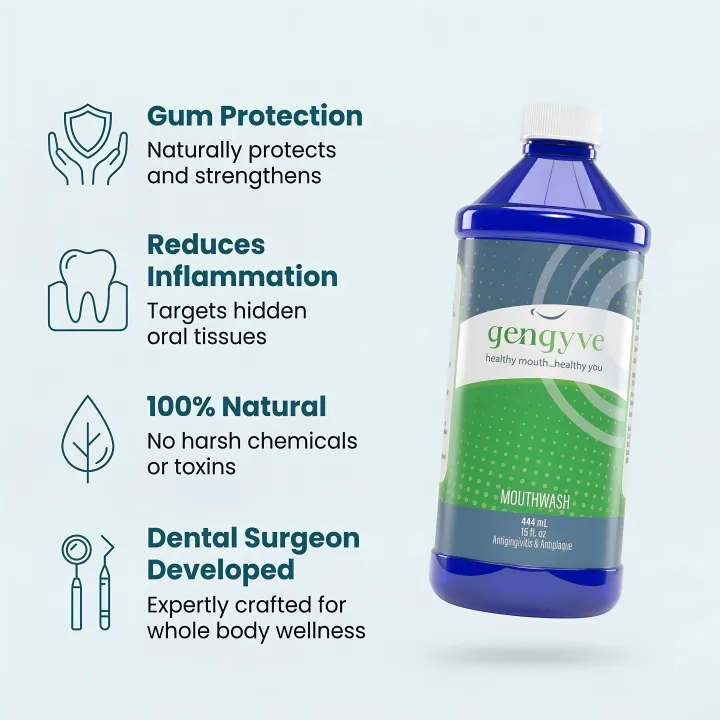
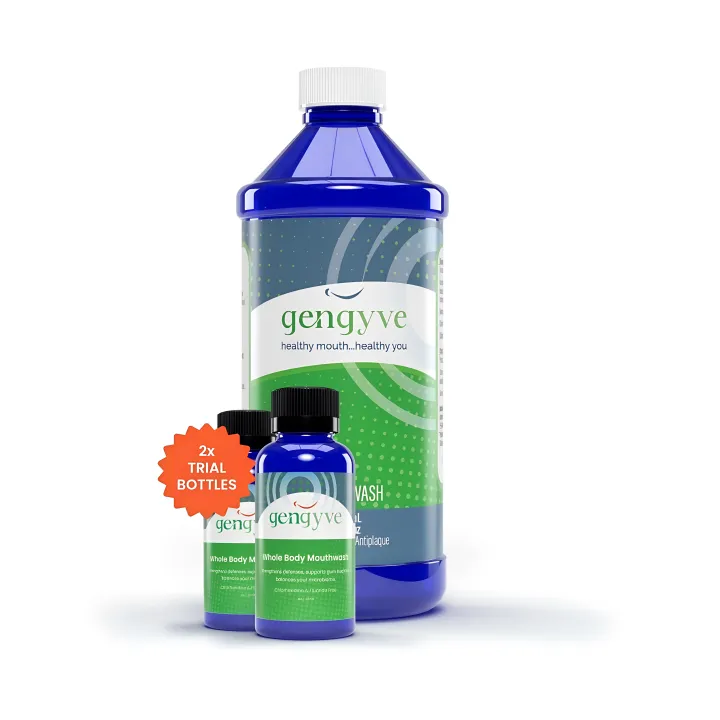
Gengyve's alcohol-free, chlorhexidine-free mouthwash is one example built around this reasoning. Developed by practicing dental surgeons, it pairs CPC for antimicrobial action with hyaluronic acid for gum hydration and comfort.
The formula is built for professional settings and daily home use, without the burn some traditional rinses produce. Anyone managing a diagnosed condition or recovering from a procedure should confirm product fit with their dental provider.
Real-World Use Cases and Evidence
Clinical evidence on this topic is more nuanced than marketing copy suggests. A six-month randomized trial comparing essential-oil rinses with and without alcohol found no statistically significant difference in gingivitis or plaque reduction between the two versions. Both outperformed mechanical hygiene alone. Comfort, salivary effects, and consistency of use are separate questions from raw plaque-fighting ability. They don't always point the same direction.
A few practical scenarios:
- Someone with dry mouth or sensitive gums: An alcohol-free rinse with a hydrating ingredient like hyaluronic acid may feel more comfortable for daily use, though persistent dryness still deserves a dental conversation.
- A patient following implant or oral-surgery instructions: Dr. Derick Flint, a dental surgeon in Austin, Texas, has patients use Gengyve after wisdom-tooth extractions and implant procedures per his recovery protocol.
- A hygiene team recommending a take-home rinse: Practices managing periodontal maintenance, post-scaling recall, or implant hygiene often look for an alcohol-free option patients will actually use consistently between visits.
In every case, pick the rinse based on the oral-health objective and how well you tolerate it, then confirm anything treatment-related with your dental provider.
Consumers and dental practices evaluating options can treat a dental-surgeon-developed, alcohol-free formulation like Gengyve as a reasonable starting point for gentle daily or take-home use. It is not positioned as appropriate for every condition.

Conclusion
Alcohol content is one factor among several. Other considerations carry equal weight:
- Active ingredients and intended purpose
- Comfort and how often you'll actually use it
- Your age and medical history
For many people who want a gentler daily experience, alcohol-free mouthwash makes sense. For others with a specific need and a professional's blessing, an alcohol-based rinse used as directed works just fine. There's no universal winner, just a better fit for your situation.
Whichever you choose, remember mouthwash complements brushing, flossing or interdental cleaning, and regular dental exams. It was never meant to replace them.
Frequently Asked Questions
Is alcohol-free mouthwash better than alcohol mouthwash?
"Better" depends on your needs, the active ingredients, comfort, and intended use. Alcohol-free may suit people dealing with dryness or sensitivity, but effectiveness comes down to the full formula, not the alcohol status alone.
Do dentists recommend alcohol-free mouthwash?
Dentists may recommend alcohol-free rinses for certain patients, such as those with dry mouth or sensitive tissue. Product selection should still be based on your specific oral-health condition and the formula's active ingredients.
Is it okay to use alcohol-free mouthwash every day?
Many alcohol-free products are designed for daily use when used according to the label. Check age directions, warnings, and any professional instructions specific to your situation first.
What is the best mouthwash without alcohol?
The best choice depends on your goal: fresh breath, fluoride support, plaque or gingivitis care, sensitivity relief, dry-mouth comfort, or post-procedure use. Compare active ingredients rather than relying on marketing claims.
Is it safe to use CPC mouthwash daily?
CPC mouthwash should be used according to its label and any dental professional guidance, including directions on frequency and age. Stop and check with your dentist if you notice persistent irritation or symptoms.