Your mouth needs a gentler touch in the days right after treatment. Numbness, tender gums, and a temporary restoration all mean this isn't the moment to grab whatever mouthwash is closest.
This guide covers when to wait, which rinses tend to work well, how to use them without disturbing healing tissue, and the warning signs that mean it's time to call your dentist instead of reaching for a rinse.
Key Takeaways
- Mouthwash isn't automatically off-limits after a root canal, but wait for your dentist's OK
- Choose a gentle, alcohol-free formula once approved; know everyday vs. prescription options like chlorhexidine
- Skip vigorous swishing or forceful spitting; brush and floss gently as directed
- Call the dental office promptly for worsening pain, swelling, fever, drainage, or a loose temporary filling
Why Timing Matters After a Root Canal
During a root canal, your dentist or endodontist removes infected pulp from inside the tooth, cleans and shapes the canal, then seals it with a rubber-like material. A temporary filling usually goes on top until you're ready for a permanent crown.



The tooth itself isn't an open wound the way an extraction site is, but the surrounding gum tissue can stay inflamed for a few days. Mild tenderness and jaw soreness are normal after the appointment, often from keeping your mouth open for an extended period, according to AAE's aftercare guidance.
Numbness changes the rules temporarily
Local anesthetic can leave your lips, cheek, and tongue numb for a couple of hours. Rinsing vigorously while numb raises the odds of irritating soft tissue you can't fully feel. That's one reason dentists often suggest waiting until sensation fully returns before swishing anything, even water.
Root canal vs. extraction aftercare
It's tempting to assume root canal aftercare mirrors the "no rinsing for 24 hours" rule given after an extraction. It doesn't, not entirely. A root canal doesn't leave an open socket prone to dry socket, so the classic warnings about dislodging a blood clot don't apply the same way.
That said, a few things still differ from everyday brushing:
- Temporary fillings or crowns can be disturbed by forceful rinsing or hard biting
- Gum tissue around the treated tooth may stay tender regardless of the procedure type
- The canal seal itself isn't exposed, but the tooth still needs protection until it's permanently restored

Mouthwash is also just one piece of aftercare, not a stand-in for the basics. Gentle brushing, careful flossing, taking medication as prescribed, and keeping your follow-up appointment all matter more to healing than any rinse.
When Mouthwash May Be Appropriate
There's no single "safe after X hours" rule that fits every root canal patient. The right time to restart mouthwash depends on:
- Whether treatment finished in one visit or needs a second appointment
- Whether a temporary filling or crown was placed
- How your symptoms are progressing
- Whether any additional gum treatment was performed alongside the root canal
Use the dentist's instructions as the primary timing guide
Your dentist's written and verbal aftercare instructions outrank any general advice, including this article. That's especially true if you've been handed a prescription rinse such as chlorhexidine, which comes with its own directions.
Before restarting any mouthwash, confirm with the office:
- When rinsing may begin - same day, next day, or after a follow-up check
- Which formula to use - prescription, a specific over-the-counter product, or anything gentle
- How often - once, twice, or more per day
- Whether to avoid the treated side while swishing
Select a gentle formula
Not all mouthwashes work the same way, and the differences matter more right after dental work:
- Alcohol-free formulas tend to be less drying and less likely to sting tender tissue
- Alcohol-containing rinses can dry soft tissue. A 2021 rinse study found no significant adverse cellular responses over 60 days, but that still doesn't make them the best pick right after treatment
- Fluoride rinses help prevent decay but aren't formulated for healing tenderness
- Antiseptic rinses, such as chlorhexidine or essential-oil blends, target plaque and gingivitis, not root canal recovery specifically
- Prescription chlorhexidine is typically reserved for defined clinical situations and a limited course, since longer use is linked to staining and taste changes
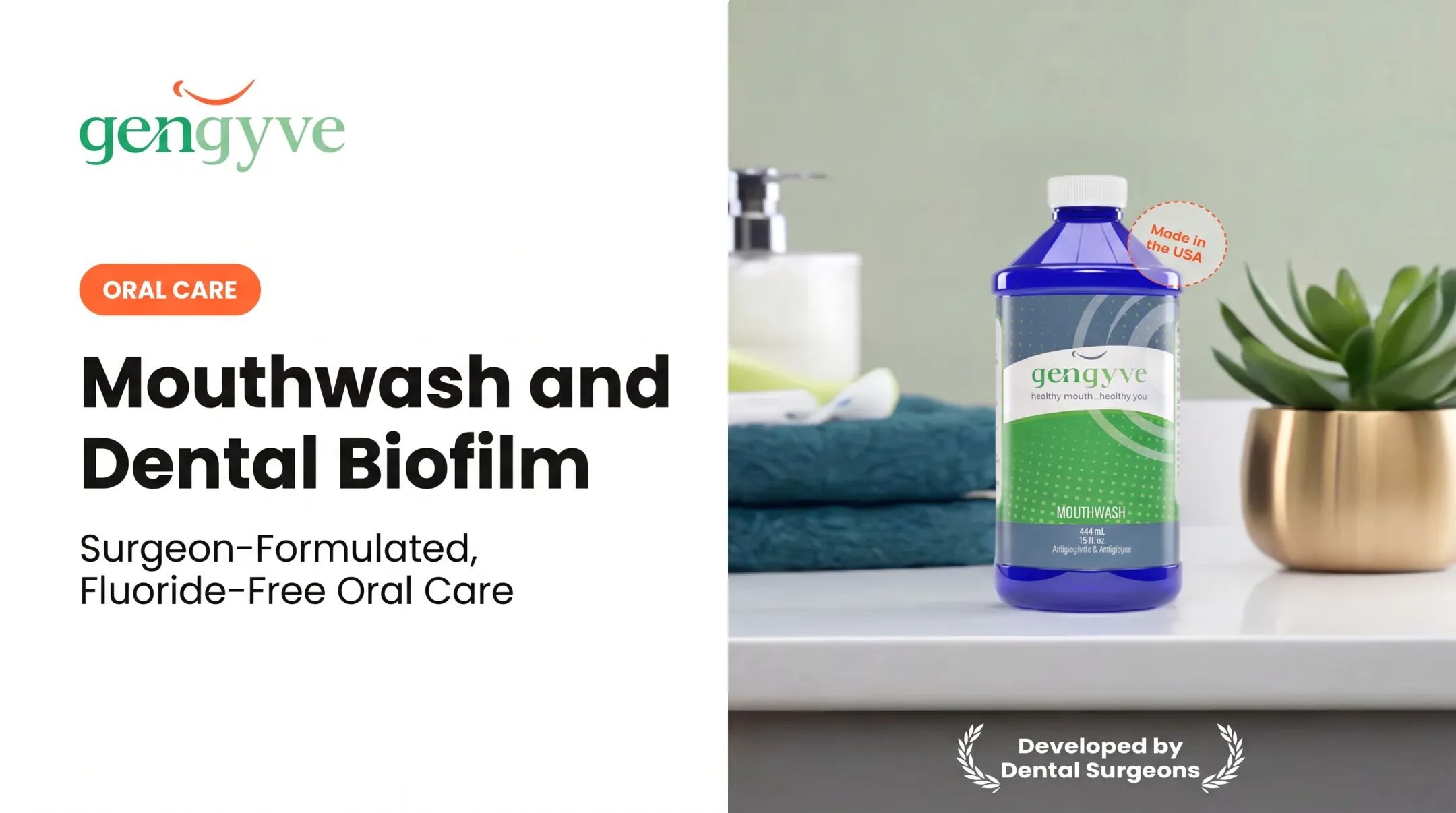
If your dentist clears an alcohol-free, chlorhexidine-free option for your recovery stage, ask what they recommend. Gengyve, a mouthwash developed by a practicing oral and maxillofacial surgeon, uses hyaluronic acid instead of alcohol to hydrate tissue rather than dry it out.
It isn't a substitute for anything your dentist has prescribed. Some dental professionals do point patients toward alcohol-free rinses once they're cleared. Dr. Derick Flint, a dental surgeon in Austin, Texas, has his own patients use Gengyve after procedures like wisdom-tooth extraction and implant placement.

Recognize signs that rinsing is being tolerated
Once you've started, pay attention to how your mouth responds:
- No burning or stinging sensation
- No increase in tenderness, bleeding, or swelling
- No new or worsening pain after rinsing
Feeling fine after a rinse is reassuring, but it doesn't replace your scheduled follow-up appointment.
When to Avoid Mouthwash
Certain situations call for skipping mouthwash altogether, at least for now.
Hold off if:
- You're still numb from local anesthetic
- Your dentist specifically said not to rinse yet
- A product causes burning, irritation, or increased sensitivity
- You notice new bleeding or swelling after use
Technique matters as much as the product
Even an approved mouthwash can cause problems if used too aggressively.
- Avoid vigorous swishing that puts pressure on the treated side
- Don't spit forcefully; let the liquid fall gently from your mouth instead
- Skip very hot rinses, which can irritate already-tender tissue
- Steer clear of any ingredient your dentist has flagged for you specifically
Alcohol, smoking, and medication interactions
If you've been prescribed metronidazole or another medication, read the label carefully. Some medications warn against alcohol during treatment and for a few days afterward, citing symptoms like nausea or flushing. Whether that extends to swishing and spitting an alcohol-containing mouthwash isn't always spelled out, so ask your dentist or pharmacist rather than assuming.
Smoking slows healing and irritates the treated area regardless of which mouthwash you use. If you smoke, your dentist has probably already mentioned cutting back while the tooth heals.
Best Practices for Using Mouthwash Safely
Once you're cleared to rinse, a careful routine protects the treated tooth while still giving you the benefits of good oral hygiene.
A simple sequence to follow
- Wait for dentist approval before using any mouthwash, even one you've used for years
- Read the label for amount, frequency, and swishing time
- Measure the recommended dose rather than estimating
- Rinse gently, avoiding concentrated pressure on the treated side
- Let the liquid fall from your mouth rather than spitting forcefully

Keep the rest of your hygiene routine gentle
Mouthwash supports your routine. It doesn't replace it.
- Brush with a soft-bristled toothbrush, especially near the treated tooth
- Clean surrounding teeth as usual
- Floss carefully around a temporary restoration without snapping the floss upward
- Avoid chewing hard or sticky foods on the treated tooth until it's permanently restored. An unrestored tooth is more prone to fracture
Saltwater rinses: only if your dentist recommends them
Some dentists suggest a warm saltwater rinse during recovery, but there's no universal recipe for every patient. If recommended, it usually means a mild saline solution swished gently, not a vigorous rinse. Don't treat a homemade saltwater recipe as mandatory unless your dentist specifically suggests it.
Don't skip the fundamentals:
- Finish prescribed medication, even once symptoms improve
- Keep your follow-up appointment, where your dentist checks healing and evaluates the permanent restoration
- Don't assume "it feels fine" means you can skip instructions
The ADA's mouthrinse guidance describes mouthwash as a helpful addition to brushing and flossing, not a replacement for either one. That holds especially true in the weeks after a root canal, when the permanent restoration and follow-up visit do the real work of protecting the tooth long-term.
Conclusion
The honest answer is: it depends. Many patients can return to a suitable mouthwash after a root canal, but the timing, formula, and technique all need sign-off from the dentist who treated them.
Protect the tooth and any temporary restoration first:
- Keep your hygiene routine gentle rather than vigorous
- Skip products that sting or dry out tender tissue
- Don't force a rinse through sheer habit
- Call the dental office if pain, swelling, or recovery feels off
Once you're cleared to rinse again, a gentle, alcohol-free option, whether that's a prescribed rinse or something like Gengyve, can support the gum health your dentist is working to restore. The goal isn't finding the "best" mouthwash online. It's following the plan built around your specific tooth.
Frequently Asked Questions
Can I use mouthwash immediately after a root canal?
Not usually. Wait until numbness wears off and follow your dentist's specific timing instructions, especially if the area feels tender or a temporary filling was placed.
What type of mouthwash is best after a root canal?
Ask your dentist about a gentle, alcohol-free formula first. Routine over-the-counter rinses differ from prescribed options like chlorhexidine, so don't substitute one for the other without checking.
Is alcohol-free mouthwash safe after a root canal?
Alcohol-free doesn't automatically mean appropriate for your situation. It's generally less drying, but your dentist should still confirm the product and timing fit your recovery stage.
Can I rinse with salt water after a root canal?
Some dentists recommend a gentle saline rinse during healing, but there's no universal recipe. If suggested, swish gently. Vigorous rinsing or forceful spitting can disturb the area.
What should I do if I used mouthwash too soon after a root canal?
Stop if you notice burning, bleeding, or increased pain. Follow your dentist's instructions going forward, and call the office if swelling, pain, or restoration problems develop.
When should I call my dentist after a root canal?
Reach out for worsening pain, facial or gum swelling, fever, drainage, an uneven bite, or a loose or lost temporary filling. Difficulty swallowing or breathing needs urgent care right away.