
That assumption causes problems. Poor aftercare can lead to infection, delayed healing, unnecessary pressure on the implant, or missed warning signs that something's off. Your surgeon's specific instructions always come first here. This guide covers the general roadmap: immediate aftercare, the first 30 days, daily hygiene and diet, warning signs, follow-up visits, and long-term maintenance.
Key Takeaways
- Your implant dentist's instructions on medication, rinsing, and diet override any general guidance, including this article
- Protect the surgical site early by avoiding pressure, tobacco, forceful rinsing, and strenuous activity
- Clean gently with clinician-approved methods only; skip aggressive brushing or water flossers until cleared
- Call your dental professional if pain, swelling, bleeding, or fever worsens instead of improving
Why Dental Implant Aftercare Is Important
Dental implants heal in two distinct phases, and confusing them is where a lot of recovery mistakes start.
Soft-tissue healing happens first. Your gums close up and the surgical wound settles over days to weeks. Osseointegration is the slower process: new bone grows around the implant and fuses with it over several months. AAOMS's healing guidance treats these as separate milestones, not one continuous timeline.
Here's the part that trips people up: feeling better doesn't mean you're done healing. Your gums can look normal and feel fine while the bone underneath is still integrating. Biting into something hard at that stage, out of confidence rather than clearance, can undo weeks of progress.
Several factors can interfere with healing:
- Excessive chewing pressure on the implant before it's ready
- Infection from bacteria reaching the surgical site
- Smoking or vaping, which the FDA's implant guidance links to impaired healing and lower long-term success
- Poor plaque control around the healing site
- Skipped follow-up visits, which means problems get caught later rather than early
Recovery also varies by bone quality, implant location, overall health, diabetes status, and whether bone grafting was involved. Don't compare your timeline to a friend's or a forum post. Your mouth, your procedure, your schedule.

Dental Implant Care During the First 30 Days
Think of the first month as stages, not a single rulebook. Exact instructions depend on how many implants you received, whether grafting was done, and your clinician's specific protocol.
First 24–72 Hours
This window is about protecting the blood clot that's forming over your surgical site. Disturbing it slows everything down.
- Rest with your head elevated if your surgeon recommends it
- Use a cold compress only as instructed, not continuously
- Avoid touching or probing the site with your tongue or fingers
- Skip forceful spitting and vigorous rinsing
- Take only clinician-approved medications, and ask before combining OTC pain relief with prescriptions
You'll likely be told to avoid smoking, vaping, alcohol, straws, hot foods, and strenuous exercise during this stretch. Confirm the exact duration with your surgeon rather than guessing based on how you feel.
Days 4–14
Discomfort usually starts easing, but the site still needs care:
- Soft, cool, or lukewarm foods first; add variety as comfort allows
- Keep chewing off the implant site until you're cleared
- Resume gentle brushing and rinsing carefully
- Avoid anything that could dislodge sutures or irritate healing tissue
Don't skip your first follow-up visit, even if pain and swelling have improved. Your clinician needs to physically check tissue healing and implant stability, something you can't accurately judge yourself.
Weeks 3–4
Gums often look healed by now, but osseointegration (bone bonding to the implant) is still working underneath. This is the stage where patients sometimes test their implant with harder foods just to see if it holds. Don't.
Resume normal activity and tools like water flossers, interdental brushes, and electric toothbrushes only after your clinician gives the go-ahead.

Daily Hygiene, Diet, and Lifestyle for Implant Recovery
The goal here is simple: reduce plaque and food buildup without traumatizing the site. That is a different standard than your normal routine.
Oral Hygiene
Ask your clinician specifically about timing for:
- Brushing and flossing
- Salt-water rinses
- Antimicrobial rinses
- Interdental cleaning
Surgical sites heal at different rates, so a timeline that worked for a friend's implant might be too aggressive for yours.
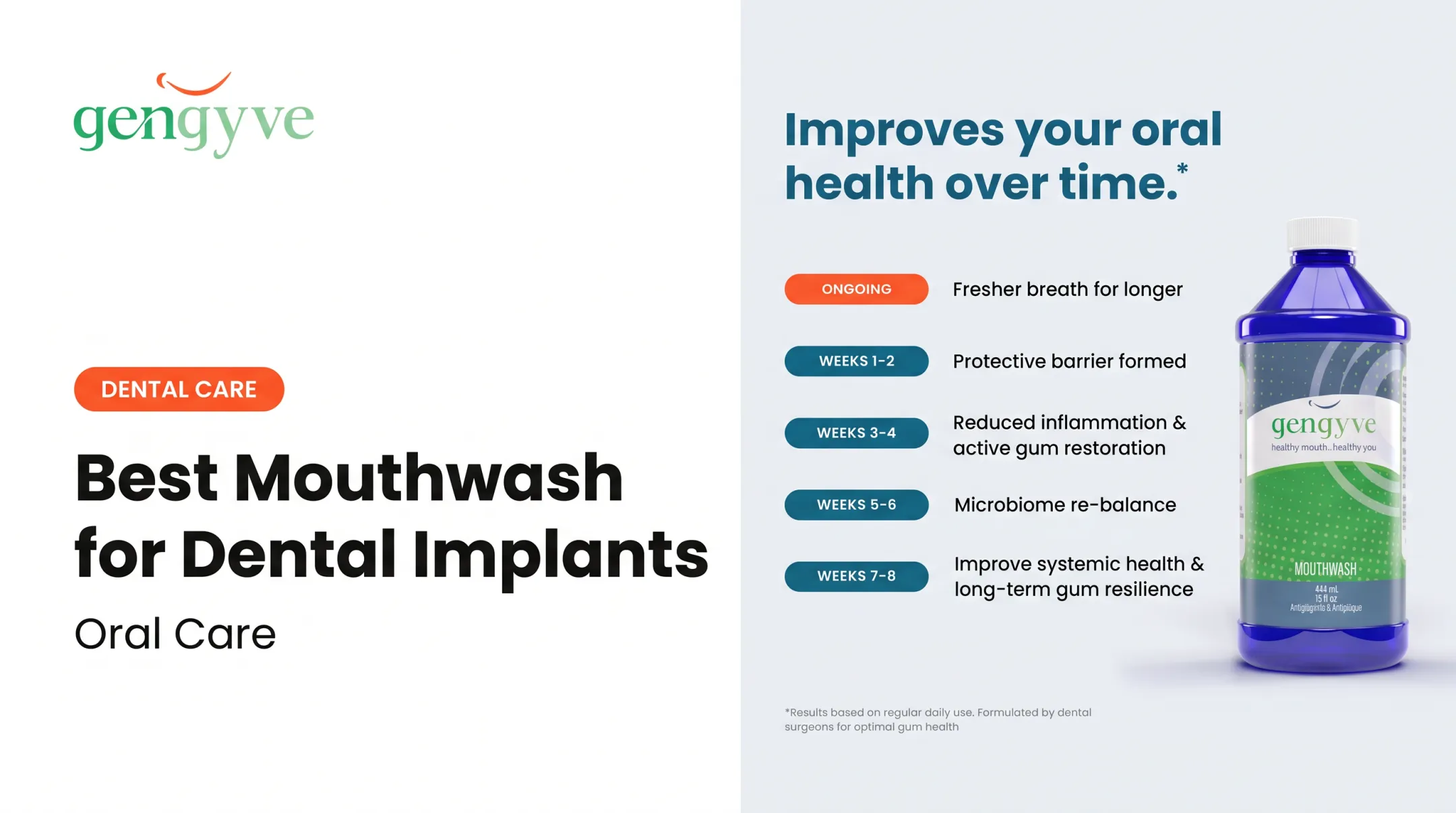
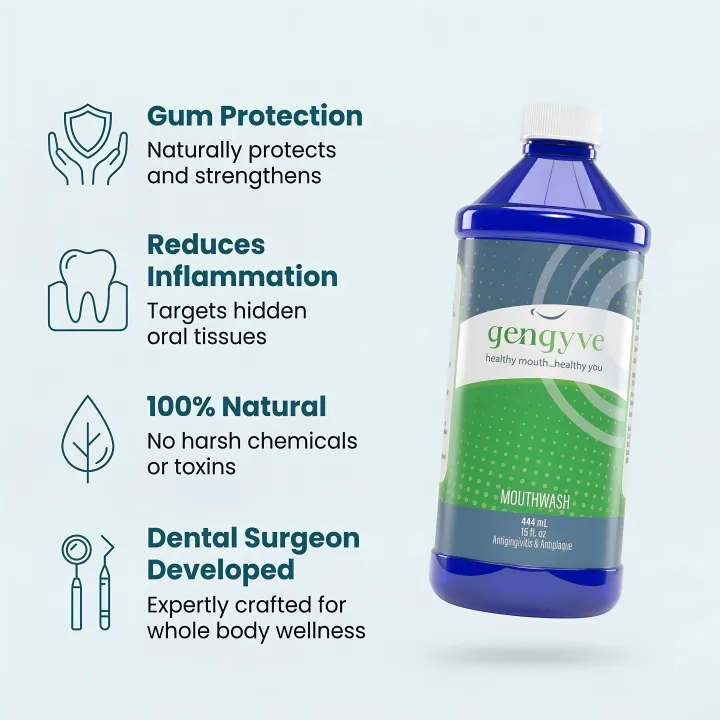
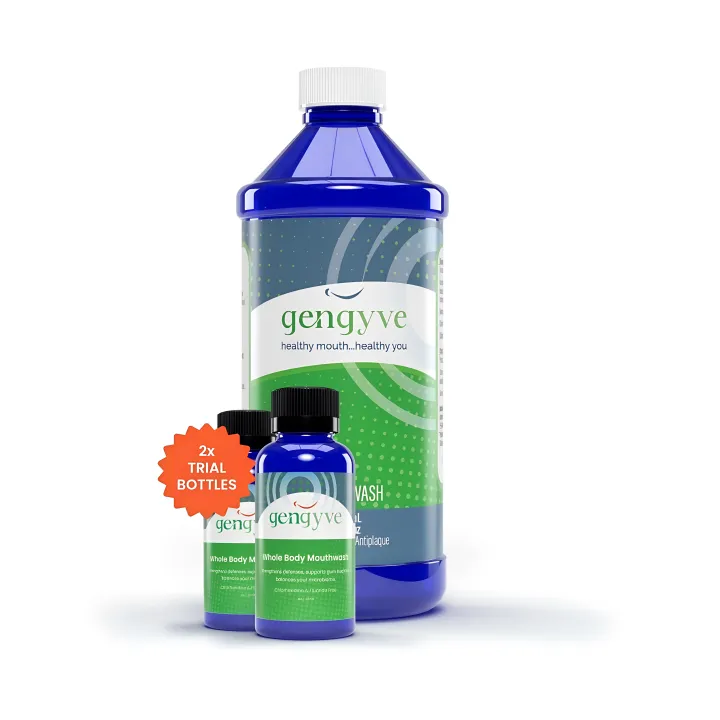
Once your surgeon clears general oral care, a gentle everyday rinse can support ongoing hygiene. Gengyve's alcohol-free, chlorhexidine-free mouthwash, developed by an oral and maxillofacial surgeon, is designed for that stage of recovery. It is not a replacement for prescribed rinses or follow-up care, and should only be added once your dental professional approves it.
Austin-based dental surgeon Dr. Derick Flint recommends Gengyve to patients recovering from implant surgery as part of their broader care routine, alongside (not instead of) their prescribed protocol.
Long-term plaque control around both the implant and natural teeth matters well past the recovery window. A soft brush and implant-appropriate cleaning aids, once cleared, help reduce the risk of inflammation around the implant site.
Food and Hydration
Early recovery favors soft, nutrient-dense foods:
- Yogurt and eggs
- Oatmeal and mashed vegetables
- Blended foods without seeds
- Tender proteins like fish or ground meat
Hard, crunchy, sticky, spicy, seedy, or very hot foods can irritate the site or put pressure on a healing implant. Shift textures gradually based on comfort, not a calendar date.
Drink plenty of water to support general recovery. Be cautious with alcohol and heavy caffeine, especially if either conflicts with your medication instructions.
Lifestyle and Health Factors
Several health and lifestyle factors can complicate healing:
- Tobacco use
- Uncontrolled diabetes
- Teeth grinding
- Poor nutrition
If any apply to you, ask your clinician about cessation support, diabetes management, or a night guard. Never stop a prescribed medication or alter your treatment plan without talking to the prescribing clinician first.
Warning Signs and When to Contact Your Dental Professional
Some discomfort is expected. The question is whether your symptoms are improving or getting worse.
Expected Symptoms
Tenderness, mild swelling, bruising, minor bleeding, and sensitivity are all common in early recovery. They should gradually fade, not intensify.
There's no universal recovery duration. Pay attention to your own symptom pattern and follow the specific guidance your clinician gave you.
Concerning Symptoms
Contact your dental professional promptly if you notice:
- Increasing or severe pain instead of gradual improvement
- Worsening swelling, especially after the first few days
- Persistent or heavy bleeding
- Pus, drainage, or a foul taste or odor
- Fever
- Numbness that isn't improving
- An implant or temporary restoration that feels loose
Seek urgent medical attention for difficulty breathing or swallowing, severe swelling, or uncontrolled bleeding. These aren't wait-and-see situations.
Follow-Up and Assessment
Follow-up visits let your clinician check gum appearance, signs of infection, sutures, bite alignment, restoration fit, and implant stability. These are things you can't reliably assess by looking in a mirror.
Come prepared with:
- A full list of symptoms
- Current medications
- Tobacco use
- Any relevant health conditions
Dental Implant Maintenance Schedule
Once surgical recovery ends, aftercare shifts to lifelong preventive care. Your dental team should personalize this schedule to your specific risk factors.
| Stage | What it involves |
|---|---|
| Daily | Brush teeth and implant restorations with clinician-approved technique; clean between teeth with recommended tools; inspect without manipulating the site |
| First days to weeks | Follow surgeon's instructions on medication, rinsing, diet, and wound care; attend scheduled checks |
| Ongoing visits | Professional exams and cleanings at intervals matched to your gum health and risk profile |
| Long term | Watch for bleeding, redness, persistent bad taste, or bite changes; get assessed rather than waiting for your next scheduled visit |
Recall intervals aren't one-size-fits-all. An AO/AAP consensus review recommends supportive care every 3-4 months for higher-risk patients and every 5-6 months for patients with stable tissue and no disease signs.
The same review estimates that roughly 21% of implant patients experience peri-implantitis at some point, so skipping maintenance visits carries real risk.

These risk factors usually call for closer monitoring than the baseline schedule:
- Periodontal disease
- Diabetes
- Tobacco exposure
- Bruxism
- Complex restorations
- Prior implant complications
Conclusion
Successful implant aftercare rests on a series of smaller choices:
- Protect the surgical site
- Follow your clinician's specific instructions
- Keep hygiene gentle
- Choose foods that won't irritate healing tissue
- Show up to follow-up appointments
Your symptoms should trend toward improvement. If pain, swelling, bleeding, drainage, or fever moves the other direction, that's your cue to call your dental professional, not wait it out.
Long-term, daily habits matter more than hitting any single recovery milestone. A gentle, consistent routine, including a rinse like Gengyve once your surgeon clears it for ongoing use, protects both your implant and the natural teeth around it for years to come.
Frequently Asked Questions
How long does it take to heal after dental implant surgery?
Gum tissue typically heals within days to weeks, while osseointegration, the bone fusing with the implant, continues for several months. Your exact timeline depends on your procedure, bone health, and overall health, so follow your clinician's specific assessment rather than a fixed date.
What should I avoid after getting dental implants?
Avoid tobacco, alcohol if it conflicts with medication, straws, forceful rinsing, and strenuous activity in the early days. Skip hard or sticky foods, don't touch the surgical site, and don't chew on the implant until your dentist clears it.
What are the signs a dental implant is healing properly?
Discomfort and swelling should gradually decrease, tissues should look stable, and there shouldn't be drainage or fever. Only your dental professional can confirm actual implant integration through a clinical exam.
How many years do dental implants typically last?
Longevity depends on your oral hygiene, gum and bone health, tobacco use, bite forces, and how consistently you attend maintenance visits. No dentist can guarantee an exact lifespan, but good daily care and regular checkups meaningfully improve long-term outcomes.