Many patients start searching for alternatives a few weeks in. Common complaints include brown staining, a metallic or altered taste, more tartar buildup, burning or dryness, and discomfort with the alcohol in some formulations. Others simply find the dosing rules hard to maintain.
This guide compares prescription and over-the-counter alternatives, including cetylpyridinium chloride (CPC), essential oils, chlorine dioxide, saltwater, and hyaluronic-acid rinses. None of these should replace a prescribed chlorhexidine protocol without your dentist's sign-off. The goal here is a neutral look at what each option actually does and where the evidence stops.
Key Takeaways
- Match the alternative to your goal: gingivitis, plaque, breath, post-op healing, or daily maintenance.
- Never stop or swap a prescribed chlorhexidine rinse without consulting the prescribing dentist.
- Alcohol-free, chlorhexidine-free rinses can improve comfort, but check the evidence behind the active ingredient.
- A rinse supports brushing, flossing, and procedure-specific instructions. It doesn't replace them.
Why Do People Look for an Alternative to Chlorhexidine?
Chlorhexidine gluconate is a broad-spectrum antimicrobial rinse, typically prescribed at 0.12%. It binds to oral tissue and keeps killing bacteria for hours, which is why dentists reach for it after periodontal surgery, extractions, or short flare-ups of gingivitis.


That strength comes with trade-offs. According to Cochrane's 2017 review, rinsing for four weeks or longer is linked to noticeably more extrinsic tooth staining, and that discoloration can keep building with continued use.
Side Effects Patients Report Most
- Staining: Brown or yellow discoloration on teeth, fillings, and the tongue, worse with longer use
- Taste changes: A metallic or muted taste that can linger for hours
- Calculus buildup: Some studies show more tartar formation, though pooled results are inconsistent
- Irritation: Burning, dryness, or mucosal sensitivity, especially in thinner oral tissue
- Hard to stick with: Strict timing rules around eating, drinking, and rinse duration that are easy to forget
Rare but serious allergic reactions, including swelling, difficulty breathing, or widespread rash, have also been reported. If you notice any of these symptoms, stop rinsing and seek urgent medical care right away.
Duration Matters More Than People Realize
Chlorhexidine's U.S. labeling covers gingivitis management as part of a professional care program, not indefinite daily use. Dental reviews generally recommend two to four weeks, with reevaluation around the 30-day mark, and no more than two weeks for surgical use.

A rinse that works well for two weeks after a procedure isn't automatically right for daily maintenance, implant care, or long-term periodontal therapy. Antibacterial power alone doesn't settle the choice. Tissue healing, comfort, staining risk, and the specific diagnosis all matter.
What Types of Chlorhexidine Rinse Alternatives Are Available?
Formulations vary widely in how they work, what they're approved for, and how much evidence backs them up.
| Category | How It's Meant to Work | Evidence Snapshot | Typical Use |
|---|---|---|---|
| Chlorine dioxide | Neutralizes volatile sulfur compounds and odor-causing bacteria | Improved breath scores at one day; limited long-term gum data | Breath-focused rinsing |
| Cetylpyridinium chloride (CPC) | Disrupts bacterial cell membranes to cut plaque | Chlorhexidine's edge is small, and only shows up without brushing | Daily plaque and gingivitis maintenance |
| Essential oils (thymol, eucalyptol, menthol) | Antiseptic action against plaque bacteria | Chlorhexidine shows better plaque control; gingivitis results are often similar | Daily use, alcohol or alcohol-free |
| Saltwater and botanicals | Mechanical cleansing, mild comfort | Small postoperative trial found saline comparable to chlorhexidine for inflammation | Short-term comfort, post-op rinsing |
| Hyaluronic acid or barrier rinses | Hydrates, may form a temporary protective layer | Symptom improvement in dry-mouth trials, not antimicrobial equivalence | Dry mouth, daily comfort |
CPC: The Most Studied OTC Swap
CPC rinses, often at 0.05%, show up in gingivitis-focused mouthwashes without a prescription. A 2025 systematic review covering 14 papers found chlorhexidine holds only a small plaque-control advantage over CPC when brushing isn't part of the routine.
Once brushing is added back in, the difference is not meaningful. CPC can still stain teeth with long-term use, so check the label.
Chlorine Dioxide and Essential Oils: Different Jobs
Chlorine dioxide rinses are studied mostly for breath, not gum disease, so don't expect gingivitis results from a product marketed for odor control. Essential-oil rinses come in alcohol and alcohol-free versions, and a six-month trial found no statistically significant difference between the two for plaque or gingivitis outcomes.

Outside the antimicrobial category, saltwater remains a reasonable, low-cost option for short-term comfort after a procedure. It isn't a substitute for a prescribed antimicrobial your dentist has specifically ordered.
Hyaluronic acid barrier rinses sit in a similar comfort lane: they hydrate and may form a temporary protective layer. Dry-mouth trials show symptom improvement, not antimicrobial equivalence with chlorhexidine.
How Do the Main Alternatives Compare for Different Oral-Care Goals?
The "best" rinse depends entirely on what you're trying to fix.
Gingivitis, Plaque, and Bleeding Gums
CPC, essential oils, chlorine dioxide, and botanical rinses all show some plaque or gingivitis benefit. None consistently matches chlorhexidine's plaque-reduction numbers once brushing is removed from the comparison.
Persistent bleeding that does not improve with solid brushing habits and a rinse needs a dental evaluation, not a different bottle.
Bad Breath
There's a real difference between masking odor and reducing the bacteria that cause it. Chlorine dioxide trials measure actual volatile sulfur compound levels, a step beyond a minty flavor. If a product only promises "fresh breath" without naming a tested mechanism, treat that claim skeptically.
Post-Op, Implant, and Periodontal Care
This is where self-directed swapping carries the most risk. Your oral surgeon's protocol accounts for your specific wound, graft, or implant site, something no over-the-counter product is designed around. Don't substitute saltwater, a CPC rinse, or a "natural" product for a prescribed post-surgical regimen without approval.
Dry Mouth, Sores, and Sensitive Tissue
Alcohol-free and soothing formulas, including hyaluronic-acid rinses, tend to be better tolerated for xerostomia, mucositis, or general tissue sensitivity.
A 2023 crossover trial of a sodium-hyaluronate rinse found meaningful symptom improvement over two weeks, though it did not beat every comparator tested. These formulas address comfort and hydration, not infection control.
Lab Results Aren't the Same as Patient Outcomes
A product can look strong in a petri dish and still fail to improve bleeding, plaque scores, or healing time in real patients. When you compare claims, ask whether the number came from a lab test or a human clinical trial, and whether that trial measured an outcome you actually care about.

How to Choose and Use a Chlorhexidine Rinse Alternative Safely
Before switching, read the label the way a pharmacist would.
Check for:
- Active ingredient and concentration
- Alcohol content
- Intended duration of use
- Age guidance and allergen warnings
- Whether it's prescription-only or OTC
- Storage instructions and directions
When evaluating a product's claims, look for:
- Human clinical studies with a comparison group
- A reasonable study length
- A patient population similar to yours
- Transparent funding, and results that apply to your condition
Practical factors that affect whether you'll stick with a rinse:
- Taste and burning sensation
- Staining risk over weeks of use
- Timing around brushing, eating, and drinking
- Dilution instructions, if required
- Swallowing risk, particularly for children
A rinse doesn't replace brushing with fluoride toothpaste, cleaning between teeth, periodontal treatment, or follow-up visits. Use it as one piece of a complete routine.

Stop using any rinse and contact your dentist if you notice:
- Worsening pain or swelling
- Bleeding that doesn't improve
- Ulcers or sores that persist
- Fever or other signs of infection
- Allergic symptoms, like rash or swelling
A Chlorhexidine-Free Option to Consider: Gengyve
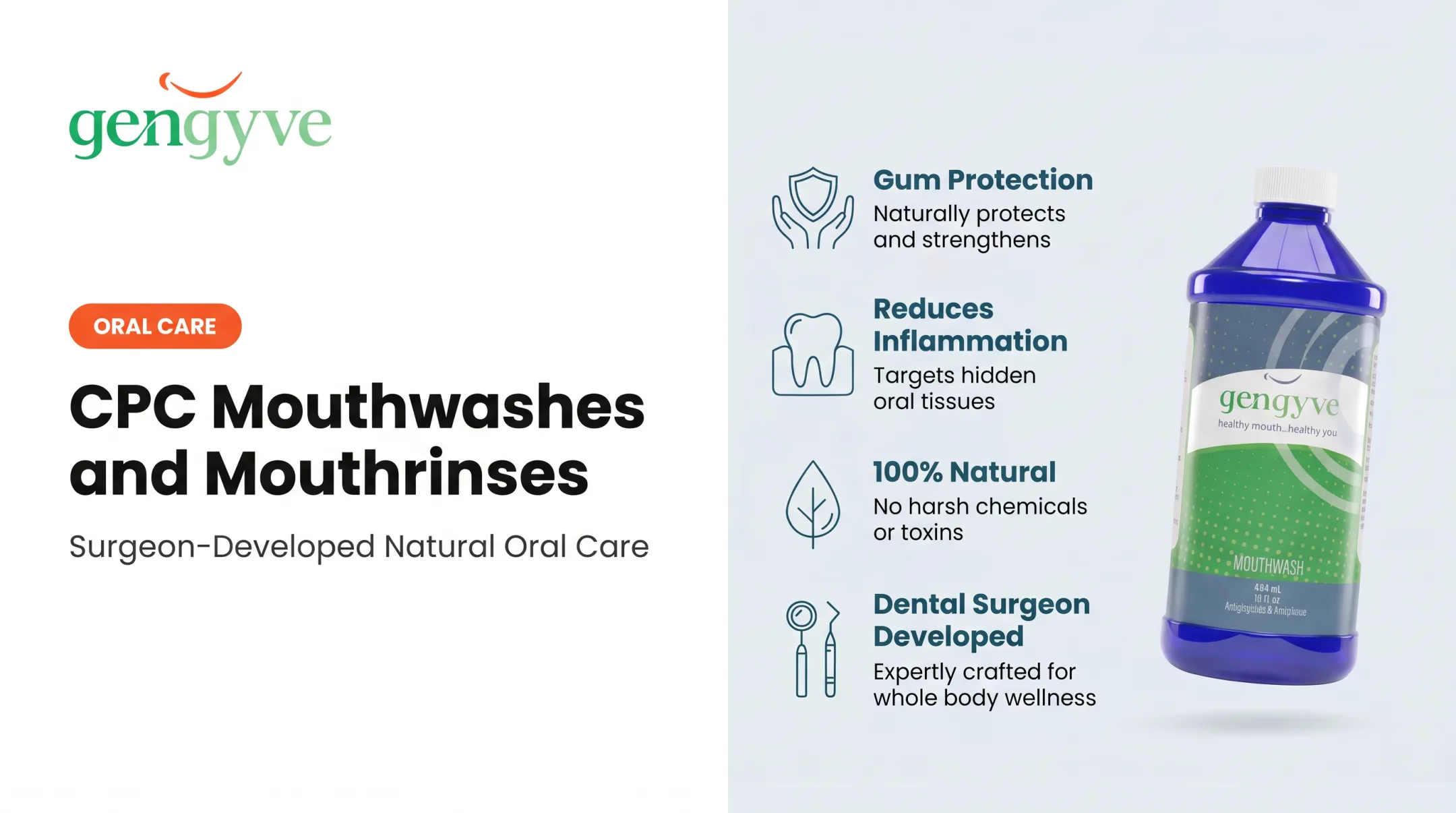
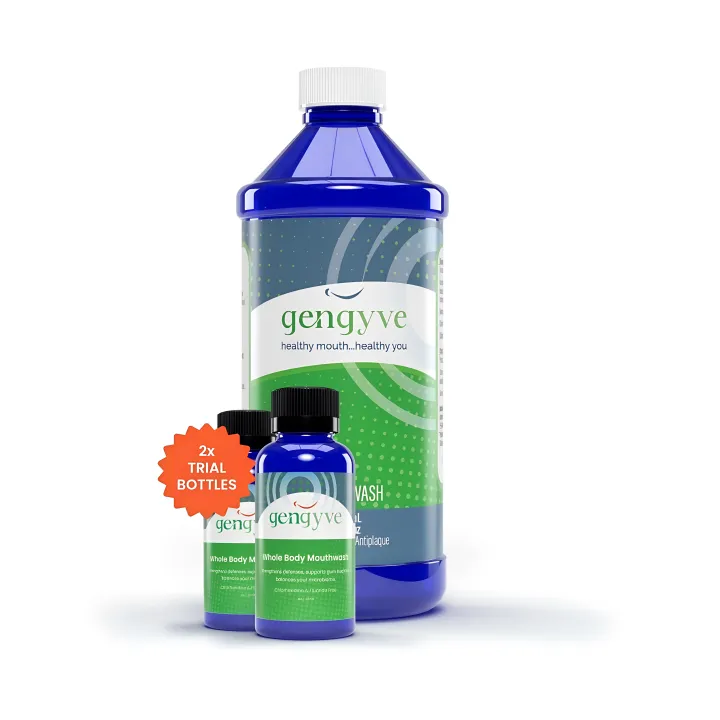
Gengyve is a U.S.-made mouthwash built around cetylpyridinium chloride at 0.05% and hyaluronic acid. It's registered as an OTC monograph antigingivitis and antiplaque rinse (NDC 82161-141), alcohol-free, fluoride-free, and chlorhexidine-free. Dr. S. Thaddeus Connelly, an oral and maxillofacial surgeon and UCSF clinical professor, founded the company after concluding no existing rinse met the standard he wanted to recommend to his own patients.
Company-reported formulation details:
- CPC at 0.05%, targeting plaque bacteria
- Hyaluronic acid, for gum hydration and comfort
- Pullulan and polyvinylpyrrolidone, which the company describes as mucoadhesive agents that help the formula linger on oral tissue
A company-funded, 21-day randomized trial compared this CPC and hyaluronic-acid formula with chlorhexidine and placebo in 75 dental students. Reported findings included:
- Higher plaque accumulation with placebo
- No statistically significant gingivitis differences between groups
- Staining rose in the chlorhexidine and placebo groups, but not in the CPC and hyaluronic-acid group
That short study used a narrow population, so treat it as early evidence rather than proof of long-term superiority.
Who might ask their dentist about it:
- Adults wanting a gentler daily rinse without alcohol or chlorhexidine
- Hygiene teams evaluating a take-home option for perio maintenance patients
- Consumers seeking a fluoride-free CPC rinse for everyday gum support
Patients recovering from surgery, managing implants, undergoing cancer treatment, or treating active periodontal disease should still get individualized guidance from their own dental team before changing their rinse. Before deciding if any product fits your routine, review its full ingredient list, directions, and supporting evidence, not just the marketing copy.
When Should You Speak With a Dentist Before Switching?
Some situations call for a conversation before you change anything.
Talk to your dentist or oral surgeon before replacing chlorhexidine if you're:
- Recovering from an extraction, periodontal surgery, implant placement, or grafting
- Being treated for an active infection
- Following aftercare instructions specific to a recent procedure
Certain patients face higher risk from self-directed changes, including those who are:
- Pregnant or immunocompromised
- Undergoing cancer or radiation treatment
- Managing severe dry mouth or extensive oral wounds
- Taking multiple medications
- Giving a rinse to a young child
Watch for symptoms a mouth rinse alone can't fix:
- Persistent gum bleeding
- Loose teeth
- Pus or visible infection
- Severe sensitivity
- Facial swelling or fever
- Mouth sores that keep coming back
These symptoms point to something a bottle swap won't solve. A rinse is not treatment for gum disease, and bleeding gums deserve a conversation with your dentist rather than a wait-and-see approach with a new product.
Frequently Asked Questions
What can I use instead of chlorhexidine?
Options include CPC, chlorine dioxide, essential-oil, botanical, saltwater, or hyaluronic-acid rinses, depending on whether your goal is plaque control, breath, or comfort. Always check with your dentist before replacing a prescribed rinse.
What mouthwash is best for gum health (gingivitis)?
No single rinse is universally "best." CPC and essential-oil rinses show reasonable plaque and gingivitis benefits in trials, but brushing, interdental cleaning, and treating the underlying cause matter more than the bottle you choose.
How does chlorhexidine compare to other mouthwashes, like Listerine or Betadine?
Chlorhexidine is prescription-only and targets gingivitis short-term. Listerine's essential-oil formula is OTC with similar plaque benefits alongside brushing. Betadine's povidone-iodine products serve different purposes, such as sore-throat relief or professional oral prep. They're not interchangeable.
Is there an over-the-counter chlorhexidine mouthwash?
Under ADA guidance, chlorhexidine rinses remain prescription-only in the U.S., while CPC and essential-oil rinses sit on store shelves. Check the current product label and ask your dentist about an appropriate OTC option.
What are the side effects of chlorhexidine?
Common issues include tooth staining, altered taste, increased calculus, and oral irritation, especially with use beyond a few weeks. Rare but serious allergic reactions can occur, so seek urgent care for swelling, breathing trouble, or widespread rash.
Is chlorhexidine the same as bleach?
No. Chlorhexidine gluconate is chemically different from household bleach, which typically contains sodium hypochlorite. Never use household bleach as a mouth rinse. It can cause serious tissue damage.