Many shoppers assume "ADA approved" means a single universal seal of quality. In reality, the ADA's Seal program evaluates one specific product and one specific claim at a time. A mouthwash can be accepted for fighting gingivitis but never tested for cavity prevention, and vice versa.
This guide breaks down currently verified ADA-accepted mouthwashes by use case, explains what their active ingredients actually do, and reminds you why rinsing never replaces brushing, flossing, and regular dental visits.
Key Takeaways
- The ADA Seal belongs to a specific product and claim, not an entire brand lineup.
- Fluoride targets cavities; CPC and essential oils target plaque and gingivitis; moisturizing ingredients target dry mouth.
- Alcohol-free formulas tend to suit sensitive tissue and dry mouth better than alcohol-based rinses.
- Children under 6 generally shouldn't use mouthwash unless a dentist says otherwise.
- Always check the current ADA product database before buying, since formulas and listings change.
Overview of ADA-Approved Mouthwash in the US Oral-Care Market
"ADA approved" is shorthand most consumers use for products that have earned the ADA Seal of Acceptance. Technically, the manufacturer submits safety and efficacy evidence, and the ADA Council on Scientific Affairs evaluates it against requirements tied to a specific claim.


That's different from a few things people often confuse it with:
- FDA regulation: OTC mouthwashes follow FDA monograph rules for ingredients and labeling, but that's a separate process from ADA review.
- A dentist's personal recommendation: your dentist might suggest a product that has no ADA Seal at all, based on your specific needs.
- Prescription status: chlorhexidine rinses require a prescription and aren't part of the OTC ADA Seal conversation in the same way.
Cosmetic vs. therapeutic mouthwash
Cosmetic rinses mainly mask bad breath temporarily and offer no lasting chemical benefit. Therapeutic rinses contain active ingredients meant to address a specific condition, according to ADA's mouthrinse guidance.
Common active ingredients fall into a few buckets:
- Fluoride: strengthens enamel and helps prevent cavities
- Essential oils or CPC (cetylpyridinium chloride): reduce plaque and support gingivitis control
- Moisturizing or barrier-forming ingredients: ease dry mouth and support tissue comfort
Before buying anything on a "best of" list, including this one, confirm the exact product name and current listing status in the ADA database yourself. Formulas change, and sellers sometimes keep outdated packaging on shelves longer than the listing stays current.
Best ADA-Approved Mouthwashes in the US
We selected these based on current ADA Seal status, clearly stated active ingredients, a specific purpose, and practical safety factors like alcohol content and age guidance. Each option fits a particular job; there is no single overall winner.
Listerine Antiseptic (Cool Mint Intense)
Listerine Antiseptic carries an ADA Seal for helping prevent and reduce gingivitis and plaque above the gumline. The formula relies on four essential oils rather than a single antimicrobial agent.
- Active ingredients: Eucalyptol, menthol, methyl salicylate, and thymol
- Alcohol content: Yes, roughly 21.6%
- ADA-accepted claim: Gingivitis and plaque reduction
- Who should be cautious: People with dry mouth, canker sores, or alcohol sensitivity may find the burn uncomfortable
- Age guidance: Not recommended under 12
Not every Listerine product shares this exact status. Check the label and ADA listing for the variant you're actually buying.
Colgate Total Active Prevention (Gum Health)
This Colgate rinse earned its ADA Seal for the same gingivitis-and-plaque claim as Listerine, but it takes a different chemical approach using CPC instead of essential oils.
- Active ingredient: Cetylpyridinium chloride (CPC) at 0.075%
- Alcohol content: None
- ADA-accepted claim: Helps prevent and reduce gingivitis and plaque above the gumline
- Notable limitation: CPC can occasionally cause mild staining with regular use
- Age guidance: 12+; supervise ages 6 to under 12; not for under 6
If alcohol burn is a dealbreaker but you still want gum-focused protection, this is the more comfortable daily option.
TheraBreath Fresh Breath Oral Rinse (Mild Mint)
TheraBreath's Fresh Breath formula holds a current ADA Seal, specifically for reducing bad breath, not for cavity prevention or gingivitis control.
- Active ingredient: Sodium chlorite, an oxygenating compound
- Alcohol content: None
- ADA-accepted claim: Helps reduce bad breath
- Directions vary by age: Once daily for ages 12-17, twice daily for adults 18+
- Limitation: This is a bad-breath formula, not a therapeutic plaque or gingivitis rinse
Don't assume every TheraBreath product carries this seal. Check the specific bottle.
ACT Anticavity Fluoride Rinse
ACT appeared in the ADA's October 2025 seal reference guide under its fluoride mouthrinse category, but a current database lookup didn't return an active ACT listing as of this writing. That doesn't necessarily mean the seal was pulled; it means you should verify before relying on it.
- Active ingredient: Sodium fluoride 0.05%, equal to 0.02% fluoride ion
- Alcohol content: None ("zero alcohol" on current labeling)
- Historical/label claim: Anticavity, cavity prevention
- Age guidance: 6+; supervise under 12; consult a dentist under 6
- Limitation: Fluoride rinse supplements, but never replaces, fluoride toothpaste
Biotene Dry Mouth Oral Rinse
For people whose main complaint is dryness rather than plaque or breath odor, Biotene carries an ADA Seal specifically for temporary dry-mouth symptom relief.
- Key ingredients: Glycerin, xylitol, sorbitol, and propylene glycol for moisture
- Alcohol content: None
- ADA-accepted claim: Temporary relief of dry-mouth symptoms
- Who it suits: People on medications that reduce saliva, or those recovering from radiation therapy affecting the mouth
- Age guidance: Over 12 per manufacturer FAQ; follow package directions
| Product | Primary Use | Active Ingredient | Alcohol | ADA Claim |
|---|---|---|---|---|
| Listerine Antiseptic | Gum health | Essential oils | Yes | Gingivitis/plaque |
| Colgate Total Active Prevention | Gum health, alcohol-free | CPC 0.075% | No | Gingivitis/plaque |
| TheraBreath Fresh Breath | Bad breath | Sodium chlorite | No | Bad breath reduction |
| ACT Anticavity | Cavity prevention | Sodium fluoride 0.05% | No | Anticavity (status unverified currently) |
| Biotene Dry Mouth | Dry mouth relief | Glycerin, xylitol, sorbitol | No | Temporary dry-mouth relief |
How We Chose the Best ADA-Approved Mouthwashes
Our first screening step was verifying each product's current listing in the ADA Seal database, including the exact variant and the claim it was accepted for. Retailer product pages aren't reliable enough on their own since they sometimes lag behind formula changes.
From there, we matched formulas to real goals:
- Fluoride for people with active decay risk
- CPC or essential oils for plaque and gingivitis support
- Odor-control ingredients for halitosis
- Moisturizing agents for dryness and oral discomfort
We also weighed tolerability. Alcohol can intensify dry mouth symptoms. CPC and chlorhexidine can both cause staining, and chlorhexidine also carries risks of taste changes and tartar buildup.

Chlorhexidine itself is prescription-only and intended for short-term, dentist-directed use, not daily long-term maintenance like an OTC rinse. A 2020 review of chlorhexidine's clinical uses backs up treating it as a limited-duration tool rather than an everyday swap for OTC options.
A few symptoms should send you to a dentist instead of a different bottle:
- Persistent gum bleeding or swelling
- Ongoing tooth pain
- Bad breath that won't resolve
- Complications after oral surgery
Where a Fluoride-Free, CPC-Based Option Fits
Not everyone wants fluoride or chlorhexidine in their daily routine, especially people managing dry mouth, recovering from oral surgery, or dealing with sensitive gum tissue. This is a gap that fluoride-free, CPC-based rinses are built to address.
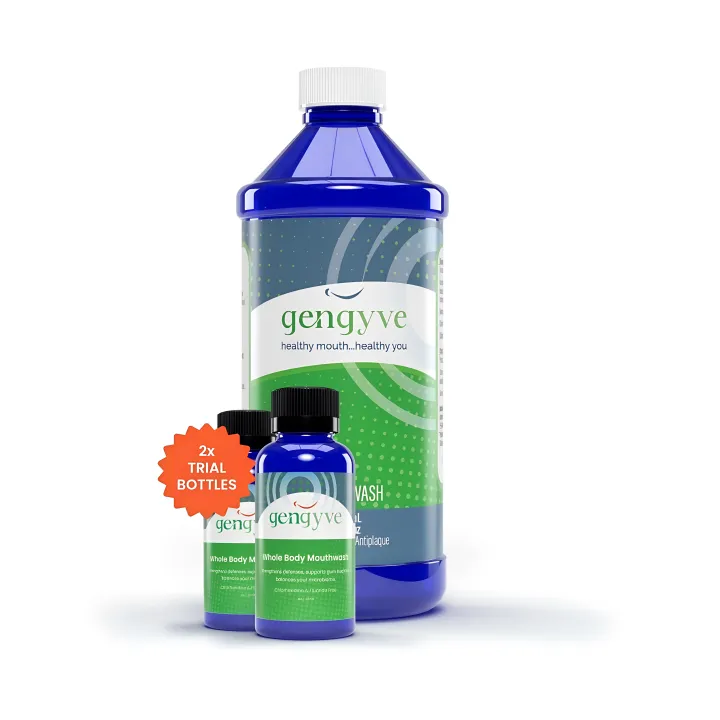
Gengyve, developed by a UCSF oral and maxillofacial surgeon, is one example worth knowing about if you're in that category. It's an OTC monograph antigingivitis and antiplaque rinse built around 0.05% cetylpyridinium chloride, with supporting ingredients that form a soothing barrier on oral tissue instead of relying on alcohol or chlorhexidine.
The formula centers on:
- 0.05% cetylpyridinium chloride for plaque and gingivitis control
- Hyaluronic acid, pullulan, and polyvinylpyrrolidone for a tissue barrier
- Alcohol-free and chlorhexidine-free daily use
Gengyve's directions call for a twice-daily swish after brushing, and it's marketed for long-term daily use rather than the short courses typical of prescription rinses. We have not independently verified ADA Seal acceptance for Gengyve, so don't assume it carries that designation. If the Seal matters to your decision, confirm status directly in the ADA database before purchasing.
Conclusion
The best ADA-approved mouthwash for you depends on what you're trying to solve: cavity risk, gum inflammation, chronic bad breath, or dry mouth. Match that need to ingredients with evidence behind the specific claim.
Before buying, check the current ADA product database and read the actual label rather than trusting brand reputation alone. Mouthwash supports your routine; it doesn't replace brushing twice daily, cleaning between teeth, and keeping up with dental checkups.
If you're looking for a natural, alcohol-free, chlorhexidine-free daily rinse, Gengyve is worth a look alongside the ADA-accepted options above. Explore it on its own merits, not as a substitute for verifying ADA status when that designation matters to you.
Frequently Asked Questions
What mouthwashes are ADA approved?
Check the ADA's product search database for current listings, since acceptance applies to a specific product and claim. A brand name alone doesn't guarantee every variant it sells carries the seal.
Is LISTERINE mouthwash ADA approved?
Listerine Antiseptic carries a current ADA Seal for gingivitis and plaque reduction, but not every Listerine formula shares that status. Always verify the exact product name before assuming.
Is TheraBreath mouthwash ADA approved?
TheraBreath Fresh Breath Oral Rinse does carry a current ADA Seal for reducing bad breath. That doesn't extend automatically to every other TheraBreath product in the lineup.
Is ACT mouthwash ADA approved and can it treat gingivitis?
ACT appeared in the ADA's 2025 reference guide for its anticavity fluoride claim, but current listing status wasn't confirmed as of this writing. ACT's fluoride formula addresses cavities, not gingivitis.
What mouthwash do dentists recommend?
Recommendations vary by patient needs like cavity risk, gum disease, dry mouth, or sensitivity. A dentist might suggest a product with or without the ADA Seal, depending on the situation.
What is the safest mouthwash to use?
Safety depends on ingredients, age, existing conditions, and correct use rather than one universal answer. Alcohol-free formulas often suit sensitive mouths better, but your dentist's guidance should still come first.