
The actual risk depends on a few things: how much was swallowed, the person's age and body size, what's in the product, and whether symptoms show up afterward. A toddler who finds an open bottle faces different stakes than an adult who swallows a trace amount while rinsing.
This article walks through what actually happens after swallowing mouthwash, what to do immediately, and how to lower the risk for kids and adults alike. It draws on current guidance from Poison Control, the American Dental Association, and product labeling. It's not a substitute for medical advice. If you're dealing with an active ingestion, skip ahead to the poison control steps below.
Key Takeaways
- Never intentionally swallow mouthwash, even alcohol-free or "natural" formulas
- A trace residual swallow is usually less concerning than multiple mouthfuls, especially in young children
- Don't induce vomiting; keep the bottle handy and call Poison Control for guidance
- Seizures, breathing trouble, collapse, or unresponsiveness mean call 911 immediately
What Happens If You Swallow Mouthwash?
There's a real difference between three scenarios: swallowing residual liquid left in your mouth after rinsing, accidentally gulping one mouthful, and ingesting a larger or unknown amount. No single "dangerous dose" applies across every product and every person. A 180-pound adult and a 25-pound toddler don't process the same ounce of liquid the same way.
Mild vs. More Serious Effects
A small accidental swallow often produces nothing more than an unpleasant taste, mild nausea, or brief stomach discomfort. But absence of symptoms doesn't mean intentional ingestion is fine. It only means the amount stayed small enough to avoid noticeable effects.
Larger ingestions tell a different story. If the product contains ethanol, Poison Control's guidance notes that bigger quantities can cause:
- Dizziness and drowsiness
- Confusion or impaired coordination
- Vomiting
- Slowed breathing in severe cases
Other active ingredients carry their own risks when swallowed in quantity:
- Fluoride can trigger nausea, vomiting, and diarrhea
- Hydrogen peroxide may cause throat irritation or belching as it decomposes
- Methyl salicylate, chlorhexidine, and certain essential oils can contribute to GI upset or more serious toxicity depending on concentration and volume
The specifics vary by product, so Poison Control or a toxicology resource is the right place to verify ingredient-specific effects for what you actually swallowed.
Who Faces Higher Risk
Some situations warrant extra caution regardless of symptoms:
- Young children, especially those under 6
- Anyone with lower body weight
- Unknown or unmeasured quantities
- Concentrated or prescription-strength rinses
- Intentional or repeated ingestion
- People with existing kidney, heart, or GI conditions
Symptom Triage
Call 911 immediately if you see:
- Trouble breathing
- Seizure activity
- Loss of consciousness or inability to wake
- Severe confusion
Call Poison Control promptly if you see:
- Persistent vomiting
- Significant drowsiness
- Stomach pain that won't settle
- Any symptom after a child's ingestion
What Should You Do After Swallowing Mouthwash?
Panic doesn't help here, and it clouds judgment. Work through these steps calmly:
- Check for emergency signs first. Breathing difficulty, seizure, collapse, or an unresponsive person means calling 911 before anything else.
- Remove the product and spit out remaining liquid. Rinse the mouth with water if that feels comfortable.
- Check the label. Note the active ingredients, alcohol content, and any warnings printed on the bottle.
- Don't induce vomiting. Vomiting can introduce new risks, including aspiration, and it isn't recommended unless a poison specialist specifically directs it.
- Gather details before calling for advice:
- Exact product name, ingredient list or concentration
- Estimated amount swallowed and time of ingestion
- Age, approximate weight, current symptoms, and relevant medical history

Poison Control is reachable at 1-800-222-1222 around the clock, or through the online tool at webpoisoncontrol.org. This is especially important for children, unknown amounts, larger ingestions, or any symptoms at all.
In one documented case, a 2-year-old was found after an unknown amount disappeared from an 8-ounce bottle containing nearly 27% ethanol. Because the exact quantity couldn't be confirmed and the alcohol content was high, poison control recommended medical evaluation.
The child vomited during transport and was briefly sleepy at the hospital before recovering under observation.
That case illustrates why uncertainty, not just symptoms, often drives the recommendation for professional evaluation. With kids, don't wait to see what happens. Call promptly, keep the bottle nearby, and avoid guessing based on how big you think the sip was.
How Should You Evaluate Mouthwash Ingredients and Safety?
Not all mouthwashes carry the same swallowing risk profile, and label-reading matters more than marketing claims.
Alcohol-Free vs. Alcohol-Containing
Removing alcohol reduces the risk of alcohol-related toxicity and can ease dryness or burning for some users. That said, an alcohol-free label doesn't make a product safe to swallow. Fluoride, antimicrobial agents, and other actives are still present and still matter if ingested in quantity.
Fluoride, Chlorhexidine, and Other Actives
Fluoride supports cavity prevention when used as directed, but excessive ingestion can cause GI symptoms, and the right response depends on the specific product and dose, something only Poison Control can assess case by case.
Chlorhexidine is a prescription-strength ingredient typically used short-term and under professional supervision, unlike everyday cosmetic rinses meant for daily use. Its label states it is poorly absorbed from the GI tract and should never be swallowed.
Swallowing it can cause gastric distress, and alcohol-containing formulations add intoxication risk on top of that.
Hydrogen peroxide, essential oils, and methyl salicylate each carry their own ingestion concerns, and "natural" doesn't automatically mean harmless. Concentration and quantity drive the actual risk.

A Practical Label-Reading Checklist
Before choosing or using any rinse, check for:
- Active ingredients and their concentrations
- Alcohol content
- Fluoride concentration, if present
- Age restrictions and dosage instructions
- Warning statements and swallowing instructions
- Child-resistant packaging
- Whether it's meant for short-term or long-term use
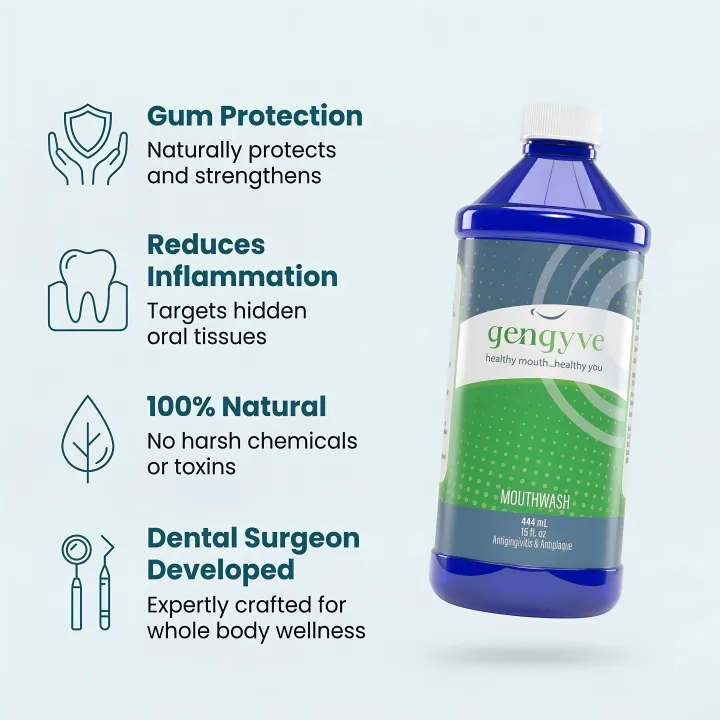
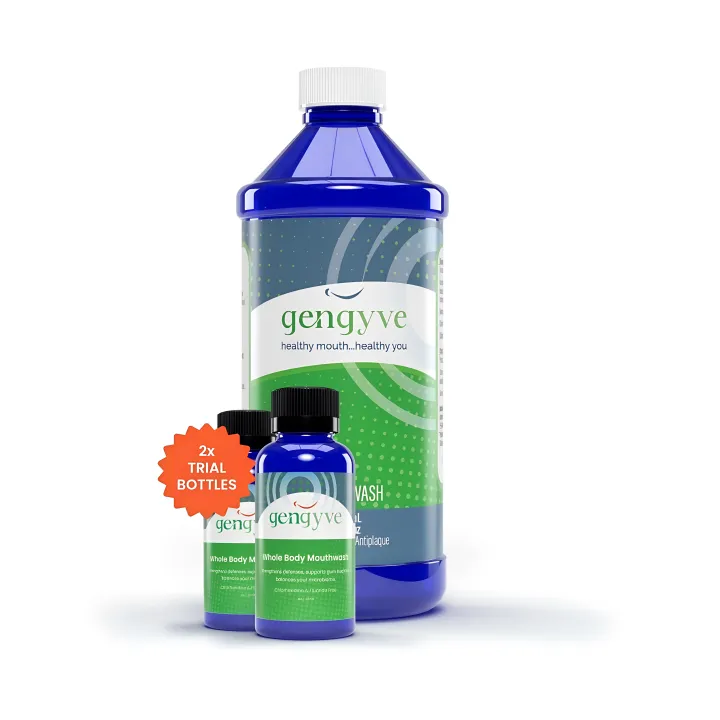
This is where formula choice matters. Gengyve USA built its mouthwash to be alcohol-free and chlorhexidine-free, using cetylpyridinium chloride (CPC) and hyaluronic acid instead. Developed by practicing dental surgeons, it's formulated for long-term daily use rather than the short-term windows typical of prescription rinses.
Still, that doesn't change the basic rule: check the label, swish as directed, and spit it out. No mouthwash, including this one, is meant to be swallowed.
How to Use Mouthwash More Safely, Especially Around Children
Correct routine use starts with following the label, not guessing.
Everyday Use
- Measure only the label-directed amount
- Swish for the instructed time, not longer
- Spit completely; never swallow
- Remember that mouthwash supplements brushing and flossing; it doesn't replace them
Gengyve's directions, for example, call for swishing twice daily after brushing for 30 seconds, without rinsing afterward. Instructions vary by product, so follow the label rather than assuming one routine fits all.
Protecting Children
The ADA advises against mouthrinse for children under 6 unless a dentist specifically directs otherwise, since younger kids are more likely to swallow substantial amounts rather than spit. Older children who can reliably spit should still be supervised.

Storage Matters
- Store mouthwash up high or in a locked cabinet, not on a bathroom counter within reach
- Keep original child-resistant packaging intact
- Never transfer mouthwash into unlabeled cups or containers
Special Situations
Adults with dry mouth, oral irritation, alcohol-use concerns, recent oral surgery, or cancer treatment should ask a dentist or clinician which ingredients and duration suit their situation, rather than relying solely on front-of-bottle marketing language. The same goes for anyone on a prescribed rinse who's considering a switch.
Frequently Asked Questions
Is mouthwash safe to swallow?
No, mouthwash isn't intended for swallowing. A small accidental amount is usually less concerning than a large or repeated ingestion, but children, unknown quantities, or any symptoms warrant a call to Poison Control.
Why do cardiologists warn against mouthwash?
Some research links frequent antiseptic rinse use to changes in the oral microbiome and small blood pressure shifts, a separate issue from acute poisoning risk. MedlinePlus reports that overdose symptoms differ from these longer-term microbiome concerns, so discuss personal worries with a clinician rather than stopping a prescribed rinse on your own.
What's the best non-toxic mouthwash?
No mouthwash should be judged solely on "non-toxic" or "natural" labeling. Match alcohol-free, fluoride, therapeutic, or prescription options to your actual oral-health needs, and confirm the choice with your dentist and the product label.
What should I do if I accidentally swallow mouthwash?
Don't induce vomiting. Identify the product and estimated amount swallowed, then contact Poison Control for individualized guidance. Seek emergency care immediately for severe symptoms like breathing trouble or loss of consciousness.
Is alcohol-free mouthwash safer if it's swallowed?
Removing alcohol lowers the risk of alcohol-related toxicity, but alcohol-free formulas can still contain fluoride or other active ingredients. They're still meant to be spit out, not swallowed, regardless of formula.