A rinse can help close that gap, but it works alongside brushing, fluoride toothpaste, interdental cleaners, and regular orthodontic visits, not instead of them. None of these steps can be skipped.
This guide compares the leading mouthwash options available to US consumers. We'll look at ingredients, comfort, orthodontic compatibility, and the actual evidence behind each product, so you can match a rinse to your specific needs.
Key Takeaways
- Match your mouthwash to your main goal: cavity prevention, gum support, dry-mouth comfort, or breath freshness
- Look for fluoride, alcohol-free formulas, and antimicrobial ingredients with clear labeling
- Remove clear aligners before rinsing, and follow your orthodontist's guidance for any prescription rinse
- Skip whitening mouthwash during fixed-braces treatment since uneven whitening becomes obvious once brackets come off
- Ask your dentist before adding any new rinse if you have cavities, gum disease, or recent oral surgery
Overview of Mouthwash for Braces
Fixed appliances create physical barriers that a toothbrush bristle simply can't reach. Food debris collects around bracket edges and under wires, and bacteria feed on it. Left alone, that combination leads to cavities, gum inflammation, bad breath, and something called white spot lesions.


White spots happen when acid from plaque bacteria pulls minerals out of enamel. The result is a chalky, matte patch that often shows up once brackets are removed. According to the American Association of Orthodontists, braces don't directly cause this mineral loss. Poor cleaning does.

Mouthwash is a liquid adjunct. It can reach into some of those crevices, but it doesn't scrub away established plaque or tartar the way a toothbrush or professional cleaning does. Think of it as a supplement, not a substitute.
Fixed Braces vs. Clear Aligners
The rinsing routine differs depending on your appliance type:
- Fixed braces stay in your mouth, so you rinse around them without removing anything
- Clear aligners should come out before brushing and rinsing, then go back in on clean teeth
Main Mouthwash Categories
- Fluoride anticavity rinses – help prevent decay and support remineralization
- Antimicrobial or gum-care rinses – target plaque and gingivitis with ingredients like CPC
- Alcohol-free moisturizing rinses – reduce dryness and irritation around brackets
- Cosmetic breath rinses – mask odor temporarily with no therapeutic effect
- Prescription products – used only under a dentist's direct supervision
The products below cover these categories. None of them replace a conversation with your orthodontist about your specific risk factors.
Best Mouthwashes for Braces
We ranked these based on ingredient purpose, orthodontic compatibility, alcohol content, label transparency, comfort, and everyday availability. Here's a quick snapshot before the details:
| Product | Best For | Fluoride | Alcohol-Free | Key Ingredient |
|---|---|---|---|---|
| Gengyve CPC Mouthwash | Gentle daily comfort | No | Yes | CPC + hyaluronic acid |
| Colgate Phos-Flur Ortho Defense | Cavity prevention | Yes | Yes | Sodium fluoride 0.04% |
| ACT Anticavity Rinse | Everyday fluoride protection | Yes | Yes | Sodium fluoride 0.05% |
| Crest Pro-Health Clinical | Gum and plaque support | No | Yes | CPC 0.1% |
| Listerine Total Care Alcohol-Free | Mild cavity protection | Yes | Yes | Sodium fluoride 0.02% |
Gengyve Mouthwash
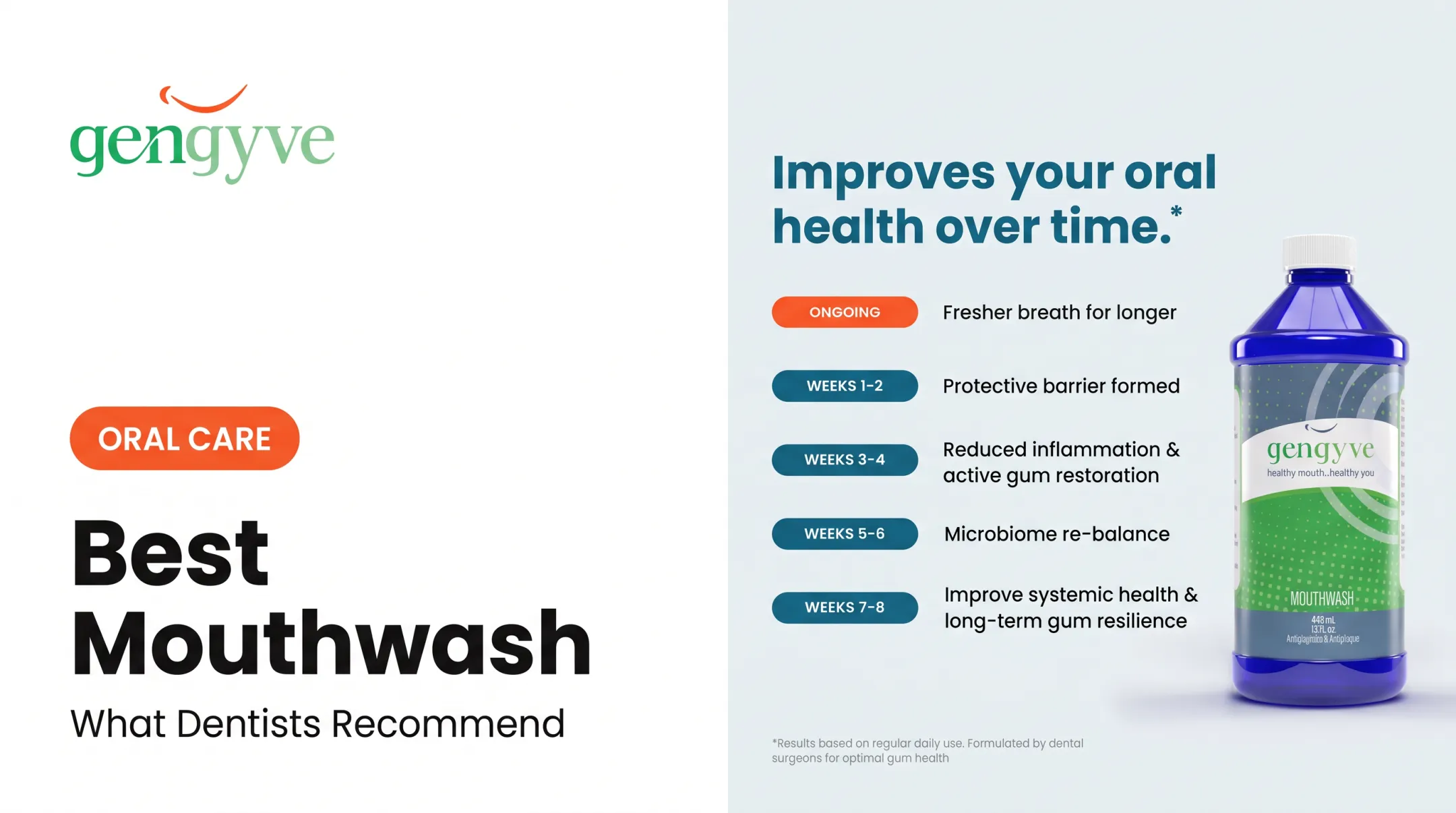
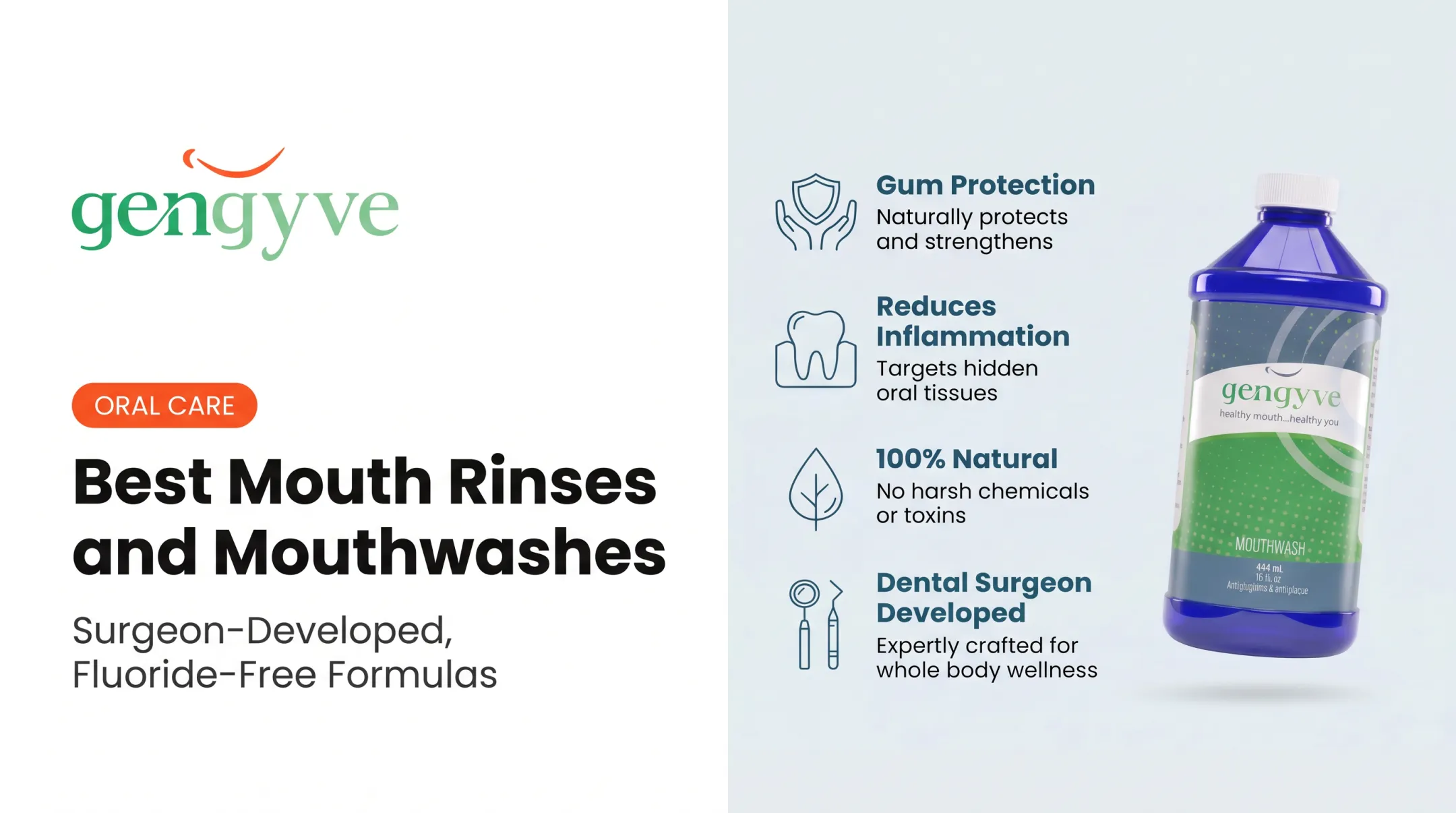
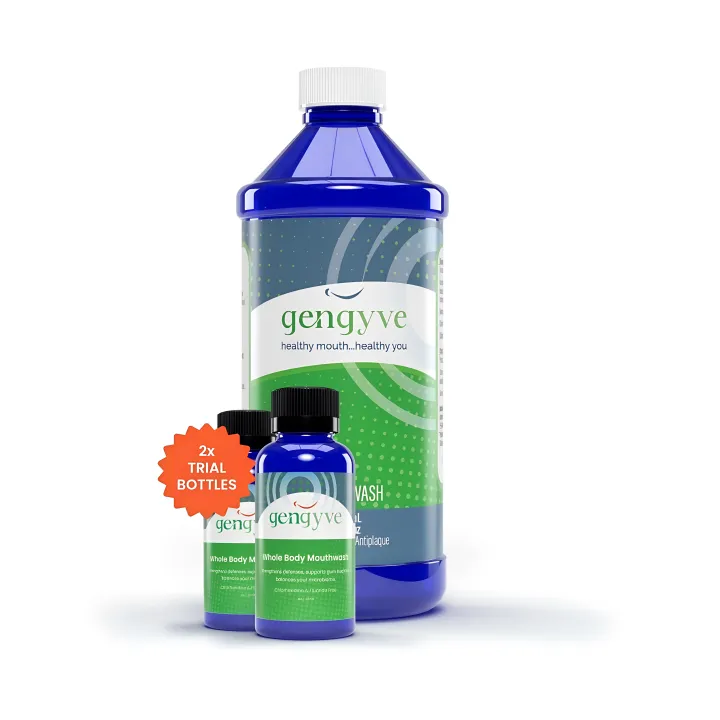
Gengyve is a US-developed oral-care rinse created by Dr. S. Thaddeus Connelly, an oral and maxillofacial surgeon and UCSF clinical professor. The formula pairs cetylpyridinium chloride (CPC), an antimicrobial ingredient, with hyaluronic acid, which forms a soothing, hydrating layer over oral tissue.
It's alcohol-free, chlorhexidine-free, and fluoride-free, and built for gentle daily use rather than short-term treatment. The label describes a fresh feel with no harsh burn, which matters when your gums already feel tender around brackets.
- Price: $19.99 for a 15 fl. oz. (444 mL) bottle, with a 10% subscription discount
- Directions: Swish for 30 seconds after brushing, twice daily
- HSA/FSA: Eligible
- Key ingredients: CPC, hyaluronic acid, pullulan, PVP, castor oil
Who it fits: A gentle, non-alcohol rinse for everyday comfort, especially if you have mild gum irritation from bracket friction. Gengyve does not market itself as orthodontic-specific or fluoride-containing, so if you have active cavities or elevated decay risk, pair it with a fluoride source and confirm the plan with your dentist.
Colgate Ortho Defense Anticavity Fluoride Rinse
Marketed in the US as Colgate Phos-Flur Ortho Defense Rinse, this one is built specifically with orthodontic patients in mind. It carries the ADA Seal for helping prevent tooth decay when used as directed.
- Fluoride: Sodium fluoride 0.04% (0.02% w/v fluoride ion)
- Alcohol: Alcohol-free
- Flavors: Mint and Gushing Grape
- Age guidance: 6 years and older, supervised until independent use
- Directions: 10 mL once daily, swish for 1 minute, avoid food or drink for 30 minutes after
A randomized trial of orthodontic patients using a fluoride rinse found white spot lesions in 31% of the fluoride group compared to 47% on placebo, a meaningful difference according to a 2015 clinical trial. That's a strong argument for fluoride rinses in patients at elevated demineralization risk, though your treating dentist should confirm whether supplemental fluoride makes sense for you.

Limitation: It's a cavity-prevention product, not a gum-care or antimicrobial rinse. If bleeding or swelling is your main concern, look elsewhere on this list.
ACT Anticavity Fluoride Rinse
ACT's Anticavity line is one of the most widely available fluoride rinses in US drugstores. Current flavors are Cinnamon and Mint, both using sodium fluoride 0.05% (0.02% w/v fluoride ion).
- Alcohol: Zero alcohol, per current packaging
- Age restrictions: 6+ for independent use; younger children need dentist guidance
- Directions: 10 mL once daily for 1 minute, same 30-minute food/drink wait
ACT Anticavity Fluoride Rinse appears in the ADA's 2025 Seal Reference Guide for cavity prevention, which supports its anticavity claim specifically, not every ACT product.
Practical notes: The taste is mild and the price point is low, making it easy to use consistently. It doesn't remove plaque the way brushing and interdental cleaning do, and children under 12 should rinse under adult supervision until they can reliably spit rather than swallow.
Crest Pro-Health Clinical Mouthwash
This is Crest's alcohol-free gum-care option, labeled Crest Pro-Health Clinical Mouthwash, Gingivitis Protection, Deep Clean Mint. The manufacturer's SmartLabel lists cetylpyridinium chloride 0.1% as the active ingredient, an antigingivitis and antiplaque formula.
- Alcohol-free
- Fluoride: Not listed as an active ingredient on this SKU
- Flavor: Deep Clean Mint
Who it helps: If you're noticing swelling, bleeding, or plaque-related irritation during orthodontic treatment, this can work as a daily add-on. Persistent symptoms still need a dental evaluation, since swelling around brackets can also signal food trapped in a spot you can't see.
Limitation to know: Crest's own FAQ mentions that a small percentage of users notice temporary surface staining with Pro-Health formulas. It's also not a fluoride anticavity product, so pair it with fluoride toothpaste if decay prevention is your priority.
Listerine Total Care Alcohol-Free Mild Mouthwash
If you want fluoride protection without the burn of traditional Listerine formulas, Listerine Total Care Alcohol-Free Mild is a practical pick. It lists sodium fluoride 0.02% and is marketed as alcohol-free.
- Directions: 10 mL twice daily, swish 1 minute, avoid food/drink for 30 minutes
- Age guidance: 6+, with supervision for children under 12
The ADA's 2025 guide lists Listerine Total Care Zero Anticavity Mouthwash for cavity prevention. The exact Alcohol-Free Mild naming wasn't separately confirmed against that listing, so check your bottle's label before assuming Seal status carries over.
Best for: People who want fluoride protection twice a day without alcohol-related dryness. If you've found traditional Listerine too intense around sensitive gum tissue, this milder formula is worth a look.
A reminder that applies to every product above: formulas, names, and availability change. Confirm the current label before you buy.
How We Chose the Best Mouthwash
"Best" isn't universal. It depends on your oral-health goals, so we separated general consumer picks from anything that requires a prescription or active disease management.
Fluoride and anticavity support. We confirmed the exact fluoride ingredient and concentration printed on each label rather than trusting marketing copy. The American Dental Association notes that mouthrinse supplements but never replaces brushing and flossing, and that distinction guided our rankings.
Antimicrobial and gum-care claims. Cosmetic breath benefits are temporary. Therapeutic claims, like plaque or gingivitis reduction from CPC, need to be backed by the product's actual label. Chlorhexidine rinses fall outside consumer recommendations entirely and should only be used as directed by a dental professional.
Comfort and formulation. We weighed:
- Alcohol content and drying effects
- Burning sensation and flavor intensity
- Artificial color and sugar content
- Suitability for frequent, long-term use
Braces and aligner compatibility. Whitening ingredients and heavily colored rinses can complicate orthodontic treatment, so we flagged any product with those concerns. Manufacturer-specific instructions always take priority over general advice.
Practical value. Price, bottle size, and availability matter if you're trying to build a routine you'll actually stick with for the full length of treatment, often 18 to 30 months. We confirmed current details rather than estimating.

Conclusion
The best mouthwash for braces is the one that matches your actual needs, whether that's cavity risk, gum sensitivity, dry mouth, or simple comfort. Choose a rinse you'll use every day without dreading it.
See a dentist or orthodontist promptly for persistent bleeding, swelling, pain, mouth sores, sensitivity, white spots, or suspected cavities. None of these products substitute for that evaluation.
If you're looking for a gentle, alcohol-free option to round out your routine, Gengyve's current ingredient list and daily-use directions are worth reviewing. As with any new rinse, confirm it fits your treatment plan with your orthodontist first.
Frequently Asked Questions
Can you use mouthwash with braces?
Yes. Mouthwash is generally compatible with fixed braces and can supplement brushing and interdental cleaning. Always follow the product label and any specific instructions from your orthodontist.
Do you need a special mouthwash for braces?
Not necessarily. A dedicated orthodontic formula isn't required, but fluoride content, alcohol-free comfort, and your personal cavity or gum-risk profile should guide your choice.
What mouthwash does an orthodontist recommend?
Recommendations vary by patient, but common factors include fluoride content, appropriate antimicrobial ingredients, alcohol-free comfort, and age suitability. Ask your orthodontist what fits your specific risk factors.
What is the best mouthwash for braces?
There's no single best product for everyone. Choose between anticavity, gum-care, moisturizing, or professionally prescribed rinses based on whichever issue concerns you most.
Is Listerine safe to use with braces?
It depends on the specific formula. Alcohol content and intensity vary across Listerine products, so check the label and ask your orthodontist if a rinse causes irritation or dryness.
How to fix yellow teeth after braces?
Yellowing can stem from plaque buildup, surface staining, or natural tooth color. See a dentist before whitening, and avoid whitening while brackets are still in place since it often creates uneven color once they're removed.