The right mouthwash for sensitive teeth isn't one-size-fits-all. It depends on what's causing the sensitivity, which active ingredients the formula contains, the condition of your gums and enamel, and whether you'll actually tolerate using it every day.
This guide covers the real causes of sensitivity, which ingredients to look for (and skip), mouthwash types matched to specific needs, how to use rinses safely, and when it's time to call a dentist instead of your pharmacy.
Key Takeaways
- Mouthwash supports, but never replaces, brushing with fluoride toothpaste and daily interdental cleaning.
- Match the formula to your goal: fluoride for enamel, a desensitizing agent for nerve pain, antimicrobials for gum inflammation.
- Alcohol-free options reduce burning and dryness, though that label alone doesn't guarantee effectiveness.
- Severe, spontaneous, or worsening sensitivity often signals decay, a crack, or gum disease that needs a dental exam.
Why Teeth and Gums Become Sensitive
Tooth sensitivity and gum sensitivity are two different problems, even though they often get lumped together.



Tooth sensitivity typically happens when dentin—the layer beneath your enamel—becomes exposed. Dentin is packed with microscopic tubules that connect directly to the nerve. When they're uncovered, hot, cold, sweet, or acidic triggers reach the nerve almost instantly. Common causes include:
- Enamel erosion from acidic foods and drinks
- Gum recession exposing the tooth root
- Aggressive brushing with a hard-bristled brush
- Teeth grinding or clenching
- Cavities, cracks, or worn fillings
- Temporary sensitivity following whitening or recent dental work
Gum sensitivity usually stems from inflammation or tissue irritation rather than exposed dentin. According to NIDCR's gum disease guide, early gingivitis shows up as red, swollen, or bleeding gums, while advanced periodontal disease can damage the bone supporting your teeth and cause recession, looseness, and pain when chewing.
Ill-fitting dental appliances, tobacco use, and even a reaction to a mouthwash ingredient can also irritate gum tissue.
Mouthwash can play a supporting role here. It may strengthen enamel, calm plaque-related inflammation, or soothe irritated tissue. What it cannot do is repair a cavity, seal a crack, or reverse advanced gum disease. As JADA's sensitivity review points out, pinpointing the actual cause matters more than reaching for whatever bottle is on the shelf—because treating a crack like simple dentin hypersensitivity won't fix the underlying issue.

How to Choose a Mouthwash for Sensitive Teeth
Picking the right rinse comes down to reading labels carefully, not just grabbing whatever says "sensitive" on the front.
Alcohol-Free Isn't a Magic Word
Alcohol-based rinses can dry out oral tissue and sting on contact, which is rough if you're already dealing with sensitivity or dry mouth. An alcohol-free formula tends to feel more comfortable for daily use. That said, alcohol-free alone doesn't make a product effective; it just makes it more tolerable. You still need to check what active ingredient is actually doing the work.
Fluoride for Enamel, Desensitizers for Nerve Pain
If cavity risk or enamel erosion is your main concern, look for a fluoride rinse and verify the concentration and age directions on the label. Fluoride's job is decay prevention, not nerve desensitization.
For temperature-triggered pain, ingredients like potassium nitrate have shown benefit in clinical trials, though results vary by study and formulation. Relief typically builds with consistent use rather than happening overnight.
For plaque and gum inflammation, antimicrobial agents such as cetylpyridinium chloride (CPC) are commonly used as an adjunct to brushing and flossing. Follow label instructions rather than assuming every antimicrobial rinse suits long-term daily use.
Screening Out Irritants
If you've had reactions before, check labels for:
- Strong flavoring agents or added dyes
- High acidity levels
- Known personal allergens
- Harsh antiseptics that have previously caused burning
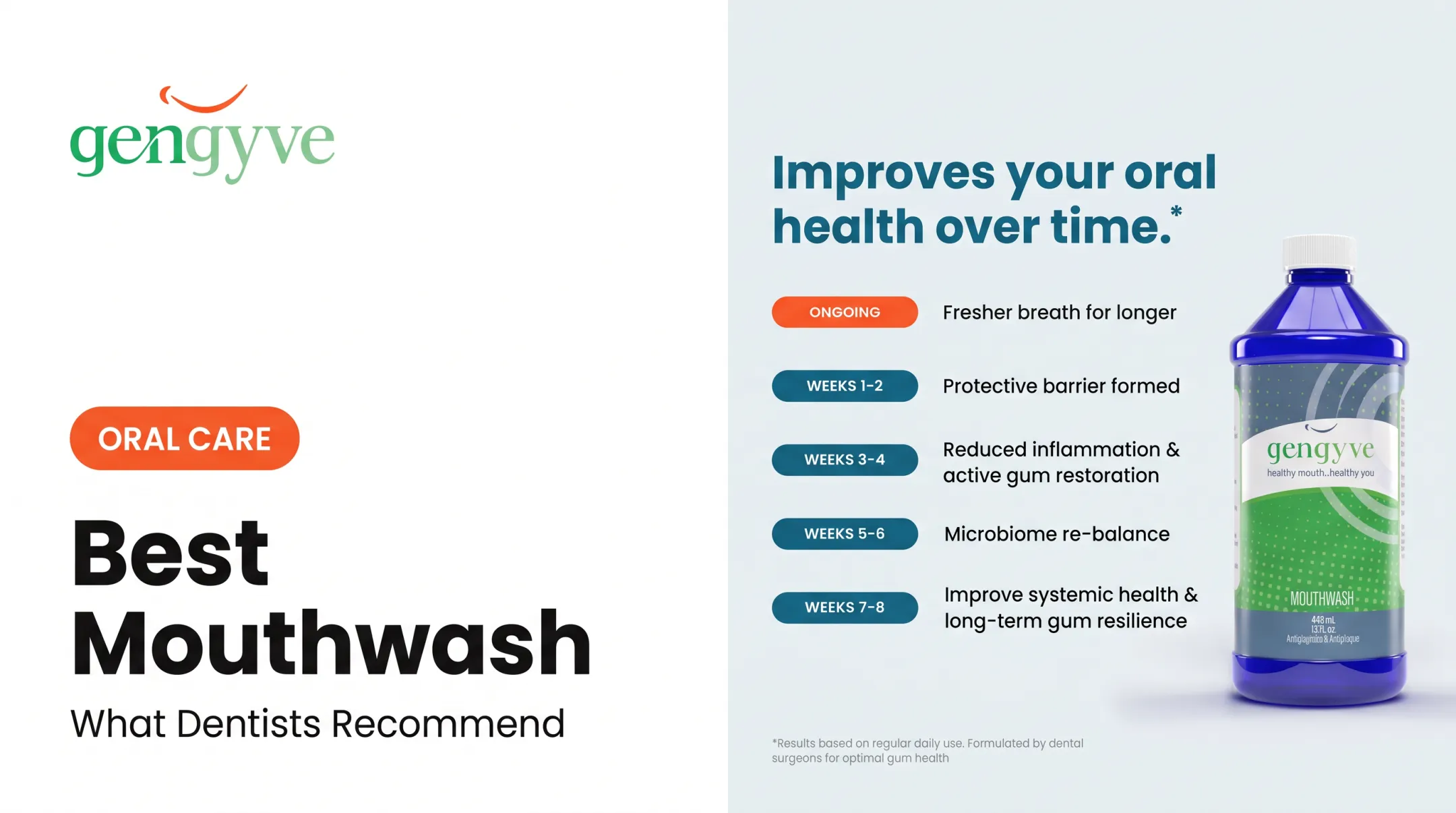
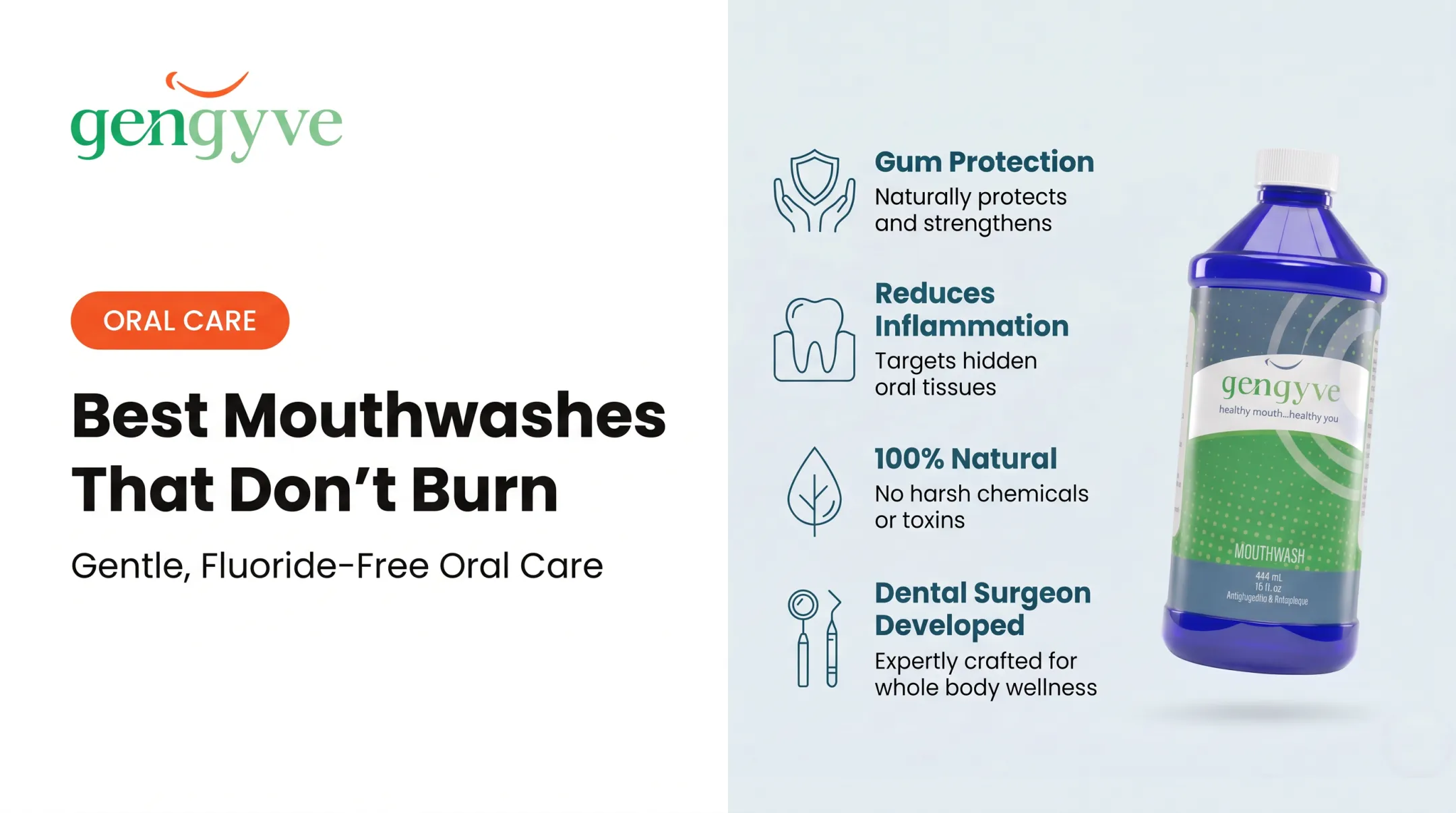
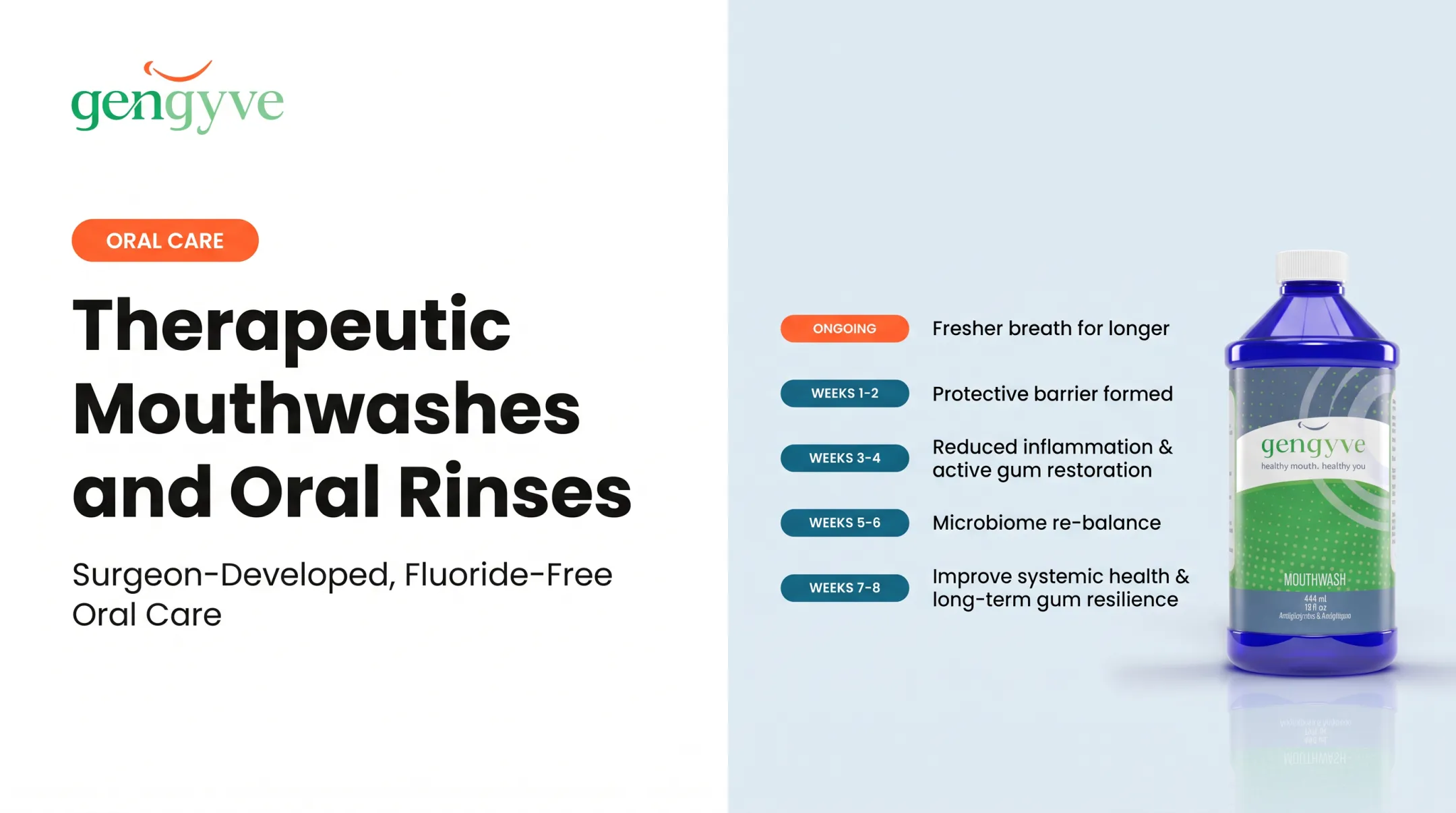
One example in this space is Gengyve, a USA-developed, dental-surgeon-formulated mouthwash positioned as alcohol-free and chlorhexidine-free, built around CPC and hyaluronic acid. Verify current packaging, label claims, and published research before assuming any specific benefit applies to your situation. The formula shows how an antimicrobial ingredient can pair with a hydrating one aimed at gum comfort rather than a burning sensation.
Best Mouthwash Types by Need
Not every "sensitive teeth" rinse solves the same problem. Here's how to match the formula to your actual goal:
| Your Primary Concern | Ingredient Category to Look For | Safety Note |
|---|---|---|
| Enamel weakness or cavity risk | Fluoride rinse | Pair with fluoride toothpaste; doesn't repair existing damage |
| Temperature-triggered pain | Desensitizing agent (such as potassium nitrate) | Benefits build over weeks, not days |
| Bleeding or inflamed gums | Antimicrobial/antiplaque formula | Adjunct only; professional cleaning may still be needed |
| Dry mouth | Alcohol-free, moisturizing rinse | Persistent dryness may need medical evaluation |
| Post-surgical or periodontal recovery | Clinician-recommended rinse | Follow your dentist's specific instructions first |
Enamel and cavity protection: A fluoride mouthwash can support prevention when used alongside fluoride toothpaste, though professional advice should still guide your overall approach.
Temperature sensitivity: Pair a desensitizing rinse with a soft-bristled toothbrush and a toothpaste made for sensitive teeth. Switching toothbrushes alone sometimes makes a bigger difference than people expect.
Sensitive or bleeding gums: A gentle antiplaque formula can help, but persistent bleeding, swelling, recession, or pus is a sign to see a dentist, not a sign to switch brands again.
Dry mouth: Alcohol-free, moisturizing rinses are the safer comfort choice. Ongoing dry mouth can raise your risk of decay and infection, and it's sometimes linked to medication or an underlying medical condition worth investigating.
Post-procedure care: After oral surgery, implants, or periodontal treatment, follow your clinician's rinse instructions first. An over-the-counter product shouldn't replace specific post-operative directions, even if it's gentle enough for everyday use otherwise.
How to Use Mouthwash Safely
Even a well-matched mouthwash can cause problems if it's used incorrectly.
- Measure the recommended amount stated on the label—don't eyeball it.
- Swish for the stated time, usually 30 to 60 seconds, not longer in hopes of extra benefit.
- Spit, don't swallow, and follow age restrictions. Young children should only use mouthwash once they can reliably rinse and spit, and only when the label or a dentist permits it.
- Check timing with brushing. Some fluoride rinses work best after brushing, while other ingredients may need to be used separately so toothpaste has full contact with your teeth. When in doubt, ask your dentist.

Gengyve's label, for example, directs users to swish for 30 seconds after brushing, twice daily, without rinsing afterward. Directions vary by product and shouldn't be assumed to transfer from one brand to the next.
Stop and seek advice if you notice:
- Ongoing burning that doesn't fade after the first few uses
- Mouth sores, swelling, or rash
- Worsening sensitivity instead of improvement
- Unusual changes to your gum or tongue tissue
A brief flavor sensation when you first start a new rinse is normal. Persistent irritation is not.
Everyday habits that complement any mouthwash routine include:
- Gentle brushing technique
- A desensitizing toothpaste
- Daily interdental cleaning
- Limiting frequent acidic snacks or drinks
- A night guard if grinding is suspected, after a professional assessment confirms it
For ongoing daily routines, a gentle, alcohol-free rinse like Gengyve may fit comfortably alongside these habits. If you're recovering from a procedure or managing a complex medical condition, confirm suitability with your dentist or medical team before adding anything new.
Frequently Asked Questions
What is the best alcohol-free mouthwash for sensitive teeth?
The best option depends on what's causing your sensitivity. Look for a comfortable, alcohol-free formula paired with an appropriate active ingredient, such as fluoride for enamel or a desensitizing agent for nerve pain.
What mouthwash do dentists recommend for sensitive teeth?
Recommendations vary by diagnosis. Professional guidance matters most for cavities, cracks, gum recession, gum disease, or sensitivity following dental treatment.
Can mouthwash help with tooth sensitivity?
Yes, in supporting roles: strengthening enamel, aiding cavity prevention, controlling plaque, or desensitizing nerve endings. It cannot fix structural issues like decay, a crack, or exposed roots.
What is the best mouthwash for sensitive gums and teeth?
Choose a gentle formula matched to the underlying need: fluoride for enamel, antimicrobial support for plaque-related inflammation, or a moisturizing formula for dry mouth.
Why do my gums feel sensitive after using mouthwash?
Possible culprits include alcohol content, strong flavoring, high acidity, an ingredient allergy, or an underlying gum condition. Stop using the product if symptoms persist and check in with your dentist.
What is the best treatment for sensitive gums?
Treatment depends on the cause: better plaque control, gentler brushing, professional cleaning, gum disease therapy, or care for recession or trauma, as diagnosed by a dental professional.