But here's the real question: does that astringent sensation mean witch hazel is actually treating anything? Having a pleasant tingle in your mouth isn't the same as reversing gingivitis, fighting periodontitis, or preventing cavities. This guide breaks down what witch hazel mouthwash can realistically do, where the evidence runs thin, how to use it safely, and when you need something with actual clinical backing behind it.
Key Takeaways
- Witch hazel mouthwash may offer temporary freshness or a tightening feel, not a gum disease cure
- Oral use requires a product labeled specifically for rinsing, not a skin-care witch hazel extract
- Mouthwash supports, but never substitutes for, brushing, interdental cleaning, and dental visits
- Persistent bleeding, swelling, or pain means it's time to see a dentist, not keep rinsing
What Is Witch Hazel Mouthwash?
Witch hazel comes from Hamamelis virginiana, a shrub whose bark and leaves contain tannins. These compounds pull tissue proteins together, creating that familiar tightening, astringent sensation when applied topically. It's the same effect that makes witch hazel popular in facial toners and after-sun sprays, and the reason some oral rinses include it.



Skin Product vs. Oral Rinse
A bottle of witch hazel sold for skin care is formulated, tested, and preserved for external use. It isn't automatically safe or appropriate to swish and spit. Oral products need to account for:
- Concentration levels that won't irritate mucous membranes
- Preservatives and additives approved for oral contact
- Taste and pH balanced for repeated daily use
- Clear labeling confirming the product is intended for the mouth
Even when a rinse is made for oral use, formulas still vary widely. Some target bad breath, plaque, cavities, tooth sensitivity, gum inflammation, or healing after dental work. A "natural" label alone doesn't prove a product works or that it's safe for your situation.
Before using any witch hazel rinse, check:
- The full ingredient list, not just the front-label marketing
- Directions for use and any warnings
- Whether the manufacturer provides oral-specific testing information
What Are the Potential Oral-Health Benefits of Witch Hazel?
The proposed benefit of witch hazel in the mouth comes down to its tannin content. In theory, that astringent action might temporarily make puffy or irritated gum tissue feel tighter and less swollen. That's a sensory change, though, not a reduction in the bacterial plaque that actually causes gum disease.
What the Research Actually Shows
No qualifying human clinical trial has specifically tested witch hazel mouthwash for plaque, gingival bleeding, or periodontitis outcomes. That is a genuine evidence gap rather than proof of zero effect. Related herbal-rinse studies still help set context:
| Evidence Type | What It Shows | Applies to Witch Hazel? |
|---|---|---|
| Human witch hazel mouthwash trials | None identified for gum disease outcomes | N/A |
| Herbal mouthrinses (general category) | Some reductions in plaque and gingivitis reported | No, not ingredient-specific |
| Evidence quality overview | Inconsistent findings; calls for standardized trials | No, not ingredient-specific |
A systematic review overview looking at herbal oral care products found inconsistent results across studies and called for better-designed, long-term trials using standardized formulations. That review wasn't testing witch hazel specifically, and its findings can't be stretched to cover it.
Breath Freshness and Comfort
Could witch hazel help with breath or general oral comfort? Possibly, in the same temporary way any pleasant-tasting rinse might. But that is a cosmetic effect, not a therapeutic one. The American Dental Association draws the same distinction for basic cosmetic mouthwashes.
The distinction matters in practice. If your gums feel less swollen after a witch hazel rinse but the underlying plaque buildup hasn't changed, you might skip the dental visit that would have caught early gum disease. Temporary relief can mask a problem that's still progressing underneath.
How to Use Witch Hazel Mouthwash Safely
If you're going to try a witch hazel rinse, use a product clearly labeled and formulated for oral use, not a facial toner from your bathroom cabinet. Follow the label directions exactly. Don't improvise a homemade dilution. No validated concentration or frequency exists for oral use.

Safety Checks Before You Buy
Run through this checklist before adding any new rinse to your routine:
- Alcohol content - can dry out mucous membranes and worsen sensitivity
- Added fragrance or essential oils - potential irritants for sensitive mouths
- Sugar and allergens - check against any known sensitivities
- Preservatives and expiration date - oral products degrade over time
- Child-safety warnings - confirm the product states appropriate age use
Watch for Adverse Effects
Stop using the rinse and seek care if you notice burning, dryness, altered taste, swelling, or signs of an allergic reaction. Do not keep using it if symptoms linger or worsen.
Certain people should talk to a dentist or physician before trying any botanical rinse, including those with:
- Dry mouth or mucosal sensitivity
- Oral sores that haven't healed
- Recent dental or oral surgery
- Orthodontic appliances
- Active cancer treatment affecting the mouth
Children under 6, anyone who struggles to spit reliably, and people at risk of swallowing mouthwash need age-appropriate guidance from a dental professional. General rinse instructions are not enough.
If someone swallows a significant amount of any mouthwash, contact Poison Help at 1-800-222-1222 right away.
Witch Hazel Mouthwash vs. Other Oral-Rinse Options
Every rinse category serves a different purpose, and witch hazel's role is narrower than most people assume. Here's how the main options stack up:
| Rinse Type | Primary Purpose | Key Limitation |
|---|---|---|
| Witch hazel | Temporary astringent sensation | No established clinical indication for gum disease |
| Fluoride | Cavity prevention | Doesn't address gum inflammation |
| CPC / essential oil | Plaque and breath support, adjunct use | Results vary by formulation |
| Chlorhexidine | Short-term professional plaque/gingivitis control | Prescription-only; can stain teeth |
The ADA's mouthrinse guidance lists CPC, chlorhexidine, and essential oils as ingredients that support plaque and gingivitis control alongside brushing and flossing. Witch hazel isn't among them.
Alcohol-Free Doesn't Mean Superior
A lot of people choose alcohol-free formulas to avoid the burning or drying sensation that comes with traditional rinses. That's a reasonable comfort choice, especially for dry mouth. But "alcohol-free" by itself says nothing about whether a rinse actually controls plaque or gum inflammation better than an alcohol-containing one.
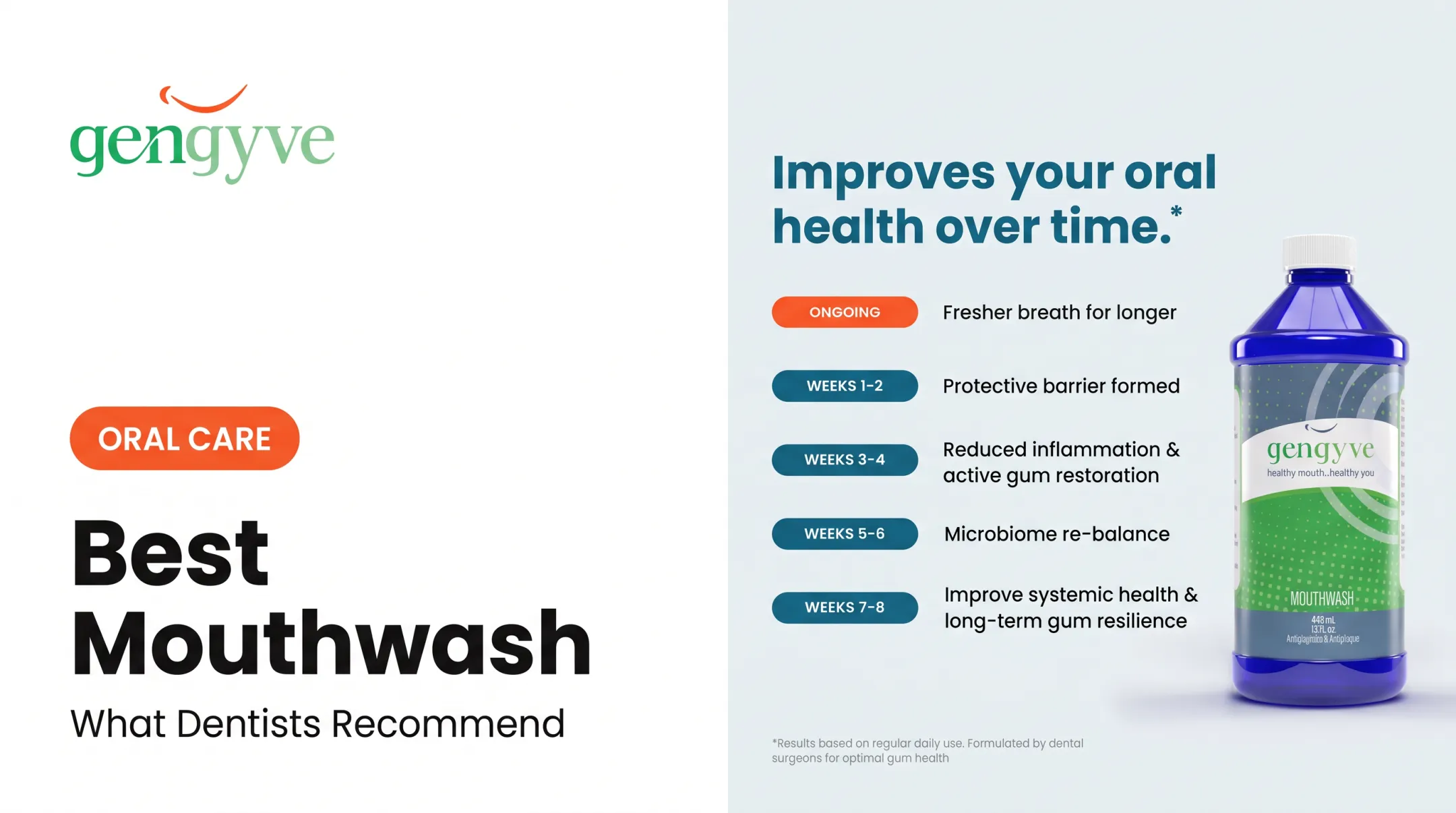
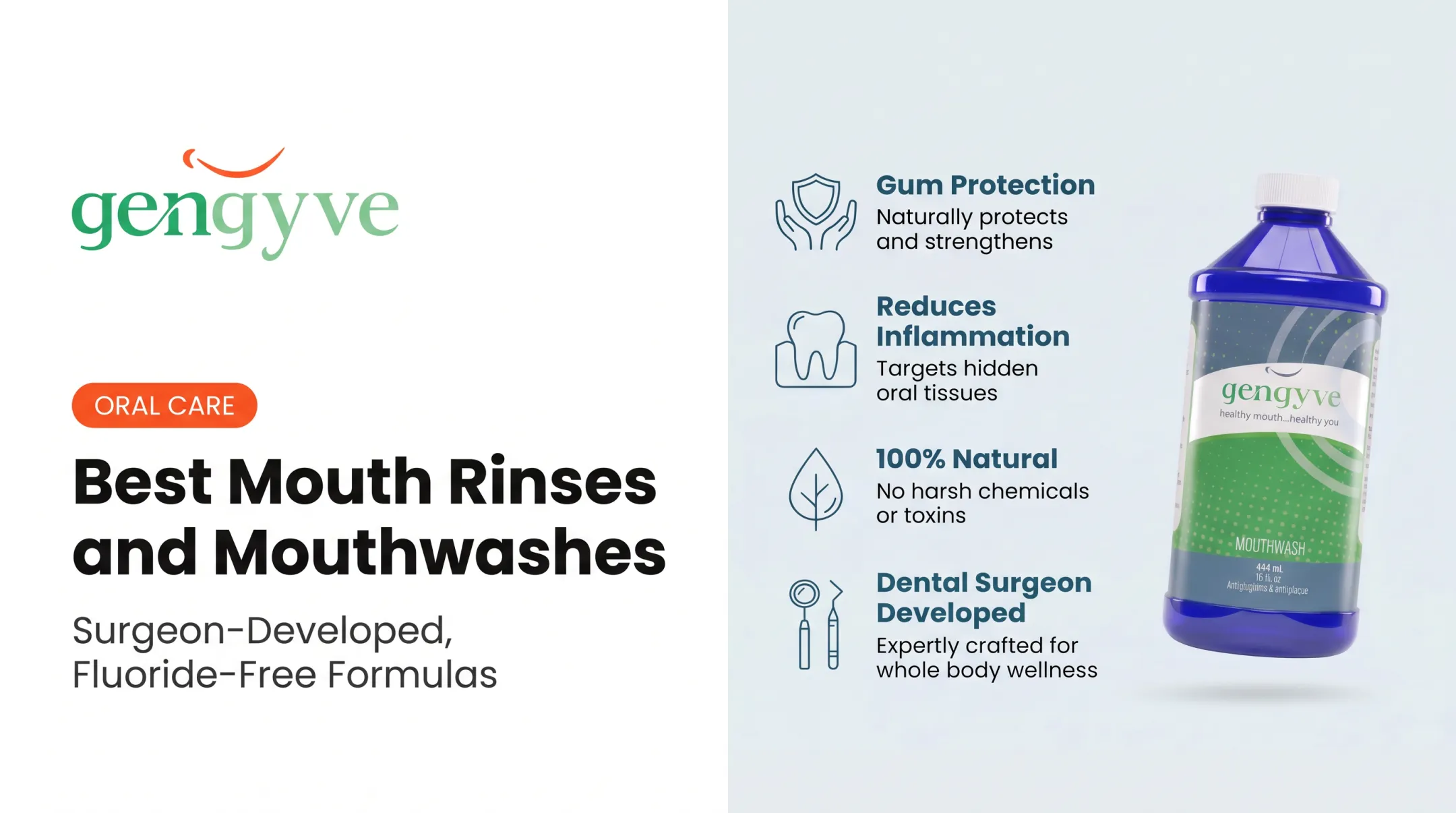
This is where formulation specifics matter more than marketing language. Gengyve USA's mouthwash, developed by an oral and maxillofacial surgeon, was built around that distinction: it's natural, alcohol-free, and chlorhexidine-free, combining cetylpyridinium chloride (CPC) with hyaluronic acid rather than leaning on a botanical astringent alone.
A 21-day randomized, double-blind trial comparing a CPC-hyaluronic acid rinse, chlorhexidine, and a placebo found plaque accumulation was higher with placebo, while the CPC-hyaluronic acid formula showed no significant increase in staining, unlike chlorhexidine and placebo. That's a different evidence standard than what currently exists for witch hazel alone.

Choosing the right rinse depends on your actual goal:
- Fresh breath only → a cosmetic rinse may suffice
- Cavity prevention → fluoride rinse
- Dry mouth or sensitive gums → alcohol-free formula without harsh additives
- Gum inflammation or post-surgical recovery → ask a dentist about a CPC or professionally developed rinse
- Diagnosed periodontal disease → professional treatment, not an over-the-counter rinse alone
When Witch Hazel Is Not Enough
Some symptoms shouldn't wait for a rinse to "work." See a dentist if you notice:
- Bleeding that continues beyond a few days
- Gum swelling that's worsening, not improving
- Gum recession or loose teeth
- Pus, persistent bad breath, or sores that won't heal
- Severe pain or fever
Gum Disease Needs Diagnosis, Not Just a Rinse
The NIDCR's gum disease guidance describes swollen, red, bleeding gums progressing to painful chewing and loose teeth if left untreated. Gingivitis and periodontitis often require professional scaling, improved plaque control, or a prescribed rinse, not an over-the-counter botanical product used on its own.

Higher-risk situations deserve extra caution, including recent oral surgery, dental implants, radiation or chemotherapy affecting the mouth, and immune-compromised conditions. In these cases, follow your treating clinician's specific rinse instructions rather than substituting a general-purpose product.
Whatever rinse you choose, it works alongside, not instead of:
- Brushing twice daily with fluoride toothpaste
- Cleaning between teeth once daily
- A balanced diet and adequate hydration
- Regular dental checkups
Frequently Asked Questions
Is witch hazel mouthwash effective for gum disease?
Evidence for witch hazel alone treating gingivitis or periodontitis is limited or nonexistent in clinical trials. It shouldn't replace diagnosis, professional treatment, daily brushing and flossing, or a clinically indicated rinse.
What is mouthwash?
Mouthwash is a rinse-and-spit oral-care product, with formulas differing based on purpose, whether that's breath, cavity prevention, or gum health. It supplements mechanical cleaning like brushing and flossing, never replaces it.
Which antimicrobial mouthwash is best?
The best choice depends on your specific goal, medical history, and dental advice. Cavity-focused rinses use fluoride, breath-focused rinses often use CPC or essential oils, and prescription-strength chlorhexidine is reserved for short-term professional treatment.
Is alcohol-free mouthwash better for sensitive gums?
Alcohol-free formulas tend to feel gentler and avoid the drying effect of alcohol-based rinses, which helps with sensitivity or dry mouth. That comfort factor doesn't automatically mean better plaque or gum-disease control, so check the active ingredients too.