
Left unchecked, biofilm contributes to plaque buildup, gum inflammation, tooth decay, and complications around dental implants. Mouthwash is often marketed as the fix. The real answer is more nuanced.
Mouthwash can help control the microorganisms that make up dental biofilm, but only as part of a complete routine. It doesn't replace brushing, cleaning between your teeth, professional cleanings, or treatment for existing gum disease. This article breaks down what biofilm actually is, how mouthwash interacts with it, and how to build a routine that works.
Key Takeaways
- Dental plaque is biofilm, and mature biofilm resists disruption far more than fresh deposits
- Mouthwash supplements brushing and interdental cleaning; it doesn't replace either one
- Active ingredients vary widely, so strength and evidence differ by product, not by category
- See a dentist for persistent bleeding, swelling, pain, loose teeth, or implant discomfort
What Is Dental Biofilm and Why Does It Matter?
Biofilm is a community of microorganisms attached to a surface and wrapped in a protective, slime-like matrix. In your mouth, that community is called dental plaque. It forms constantly, starting within hours of brushing, as bacteria attach to a thin protein film on your teeth.
Biofilm Isn't the Same as Tartar
Plaque and calculus (tartar) are often used interchangeably, but they're not the same thing.
- Plaque is soft, living biofilm you can disrupt at home with brushing and interdental cleaning
- Calculus is hardened, mineralized plaque that only a dental professional can remove
Only professional cleaning removes established tartar, according to the NIDCR. No amount of rinsing dissolves it once it's calcified.
Where Biofilm Builds Up
Biofilm doesn't stick to just one spot. You'll find it:
- On tooth surfaces and along the gumline
- Between teeth, where toothbrush bristles rarely reach
- Across the tongue's surface and fissures
- Inside periodontal pockets, below the gum's edge
- On the surfaces of fillings, crowns, and dental implants
Why Mature Biofilm Fights Back
Fresh biofilm is fragile. Give it a day or two, and the matrix thickens, creating a physical barrier that shields bacteria from disruption. Attached, matrix-embedded organisms simply tolerate antimicrobial exposure better than free-floating bacteria do.

Uncontrolled biofilm shows up as redness, swelling, bleeding gums, persistent bad breath, and a higher risk of cavities or gum disease. The goal of oral hygiene was never to sterilize your mouth. It's to disrupt harmful buildup often enough that a balanced, healthy environment can hold its ground.
How Does Mouthwash Work Against Dental Biofilm?
Brushing and interdental cleaning work mechanically. Bristles and floss physically scrape deposits off the tooth surface. Mouthwash works differently. A rinse can reach places a brush misses and influence the microorganisms or conditions that let biofilm form in the first place.
How well it does that depends on four things:
- The active ingredient - cetylpyridinium chloride (CPC), essential oils, and chlorhexidine all behave differently
- Concentration - too little active ingredient and the effect weakens considerably
- Contact time - a five-second swish isn't the same as thirty seconds
- Evidence type - lab results don't automatically translate into everyday clinical results
What the Lab Research Actually Shows
A frequently cited example here is a laboratory study testing a foam rinse against biofilms grown in controlled conditions. Researchers found that a 30-second exposure removed up to 66% of biofilm from one tested surface, and that 4-hour-old biofilm was far less resistant than 24-hour-old biofilm, according to BDJ Open researchers.
That's a meaningful finding, but it's an in-vitro experiment. It tells you something about one formulation under lab conditions. It doesn't prove every mouthwash on a store shelf performs the same way in your mouth every morning.
Three Jobs a Biofilm-Control Rinse Can Do
Not every mouthwash does all three. Look for a product that can:
- Help loosen or penetrate existing deposits
- Reduce the specific microorganisms it's formulated to target
- Limit the conditions that let new buildup accumulate
A rinse earns its place after meals, in hard-to-reach spots, or for people who struggle with brushing technique. What it can't do is remove hardened calculus or substitute for periodontal treatment once gum disease has set in.
The Microbiome Question
Some research on prescription-strength chlorhexidine has raised concerns about shifting the balance of oral bacteria with regular use. That doesn't mean every mouthwash damages your microbiome. An expectorated, targeted rinse formulated with ingredients like CPC isn't automatically equivalent to a strong prescription antimicrobial. Evaluate the specific product rather than generalizing from one ingredient's data to an entire category.
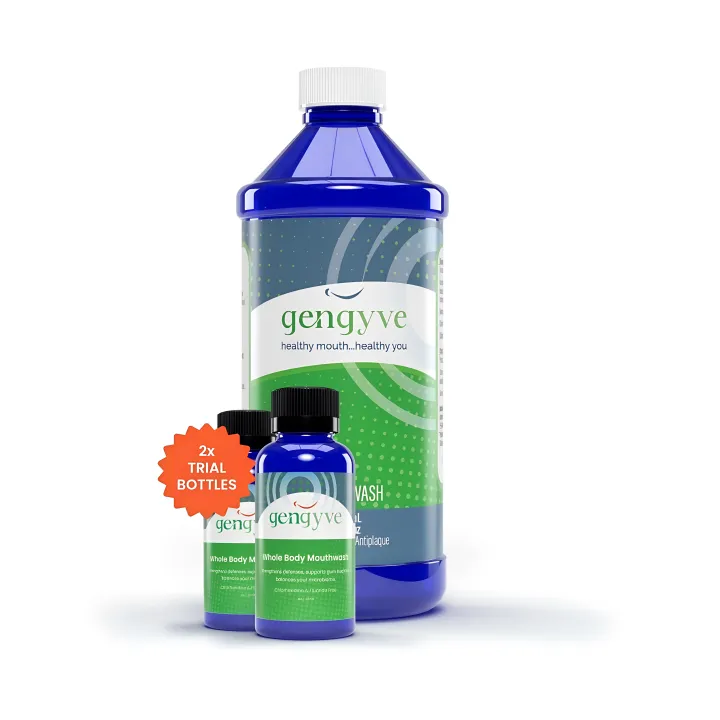
Gengyve, for instance, pairs CPC with hyaluronic acid rather than relying on chlorhexidine or alcohol. In a randomized, double-blind trial of 75 dental students over 21 days comparing a CPC-hyaluronic acid rinse, chlorhexidine, and a placebo, researchers found that tooth staining increased significantly in both the chlorhexidine and placebo groups, but not in the CPC-hyaluronic acid group, according to Tadakamadla and colleagues. That study doesn't prove the formula treats existing periodontitis, but it does illustrate why formulation specifics matter more than broad category claims.

How to Use Mouthwash as Part of a Biofilm-Control Routine
Sequence matters. A rinse layered onto a weak brushing routine won't accomplish much.
- Brush with fluoride toothpaste for two minutes, covering every surface
- Clean between your teeth with floss or an interdental brush
- Rinse with mouthwash according to the product label or your dentist's instructions
Getting the Technique Right
- Measure the labeled amount rather than eyeballing it
- Swish for the full recommended duration, not a quick rinse
- Angle the liquid toward the gumline, where biofilm concentrates
- Spit rather than swallow
- Avoid diluting the rinse with water unless the label says to
Timing can depend on the formulation. Some products are designed to follow toothpaste residue; others caution against immediate rinsing after brushing because it can wash away fluoride. Follow the product directions, and check with a dentist or hygienist if you're using a prescription rinse, a fluoride treatment, or a post-surgical regimen.
Consistency Beats Perfection
A rinse that doesn't burn is easier to stick with day after day. Comfort alone doesn't prove clinical effectiveness, but a product you'll actually use twice daily beats one that sits unused in the cabinet.
That twice-daily habit is built into Gengyve's directions: brush and floss first, then rinse morning and night without rinsing with water afterward. Post-surgical guidance recommends starting the rinse one day before a procedure and continuing twice daily afterward, a schedule some periodontal and implant practices build into recovery protocols.

When to Stop Relying on Mouthwash Alone
Increasing how often you rinse isn't the answer to every symptom. See a dentist if you notice:
- Bleeding that persists beyond a few days of improved hygiene
- Swelling, pus, or receding gums
- Loose teeth or new sensitivity
- Pain or discomfort around a dental implant
Choosing a Mouthwash for Daily Biofilm Control
Not all mouthwashes serve the same purpose. Before you buy, consider:
- Your goal - cosmetic freshening, cavity prevention, or gum-specific support
- Active ingredients - cetylpyridinium chloride (CPC), essential oils, fluoride, or chlorhexidine each work differently
- Alcohol content - can cause dryness or irritation for some users
- Sensitivity and dry mouth - gentler, alcohol-free formulas tend to suit these better
- Dental appliances or implants - some rinses are formulated specifically for post-surgical healing
- Your dentist's recommendation - especially if you have active gum disease
Marketing Labels Aren't Proof
Terms like "natural," "antibacterial," "professional-grade," or "alcohol-free" sound reassuring, but they're not evidence of superior performance on their own. Look past the label copy for a transparent ingredient list and evidence tied to that specific formula, not the category in general.
Not All Rinses Are Interchangeable
| Rinse Type | Typical Role |
|---|---|
| Alcohol-containing | Breath freshening; can dry or irritate tissue with frequent use |
| Alcohol-free | Gentler daily option, often better tolerated |
| Prescription chlorhexidine | Short-term, professionally directed use for specific clinical situations |
| Salt water | Soothing, supportive rinse, particularly after extractions or minor irritation |
Chlorhexidine can be appropriate for selected short-term clinical scenarios, but it's not designed for open-ended daily use without professional direction. Staining and taste changes are common trade-offs with extended use.
Where Gengyve Fits
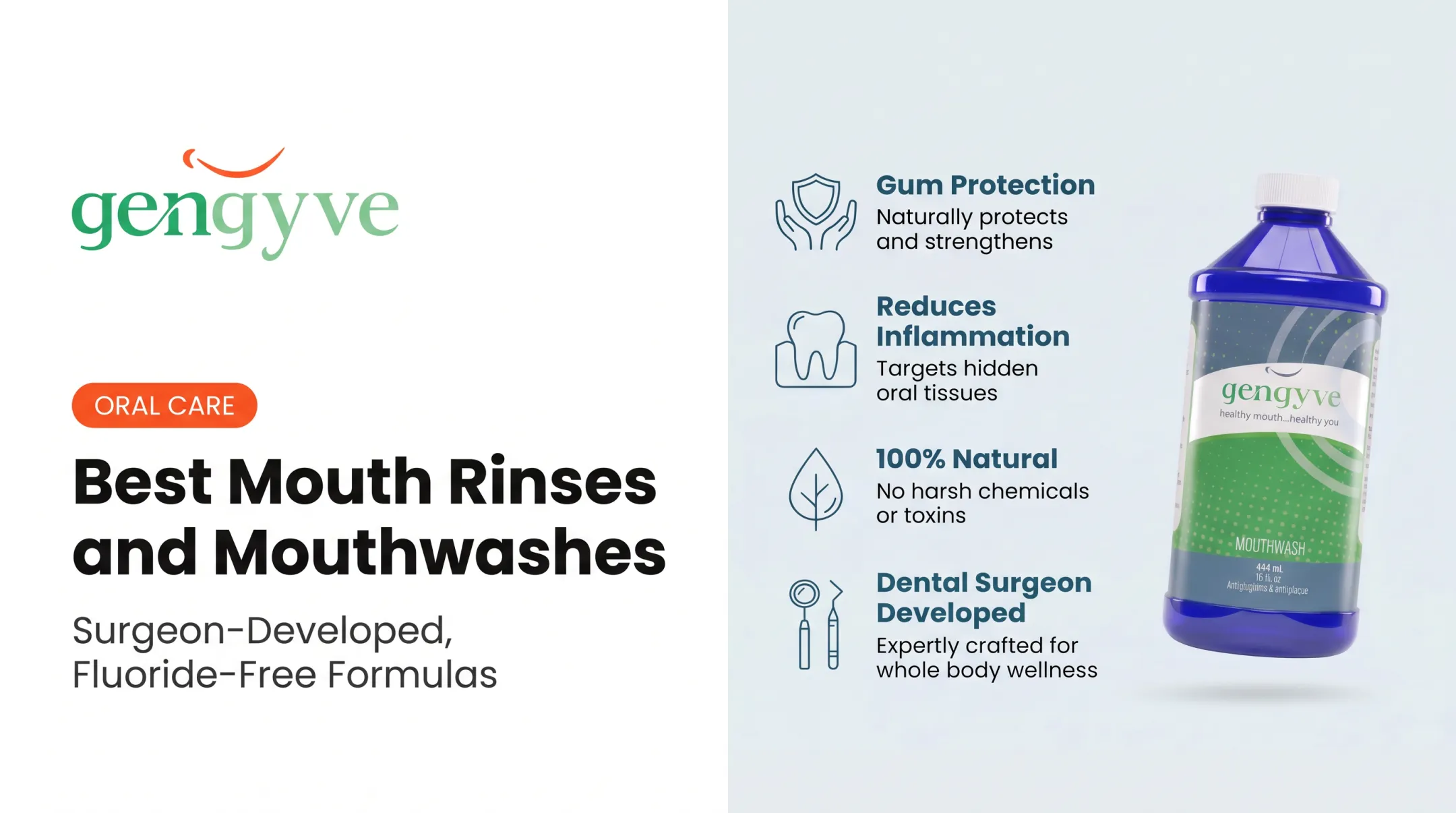
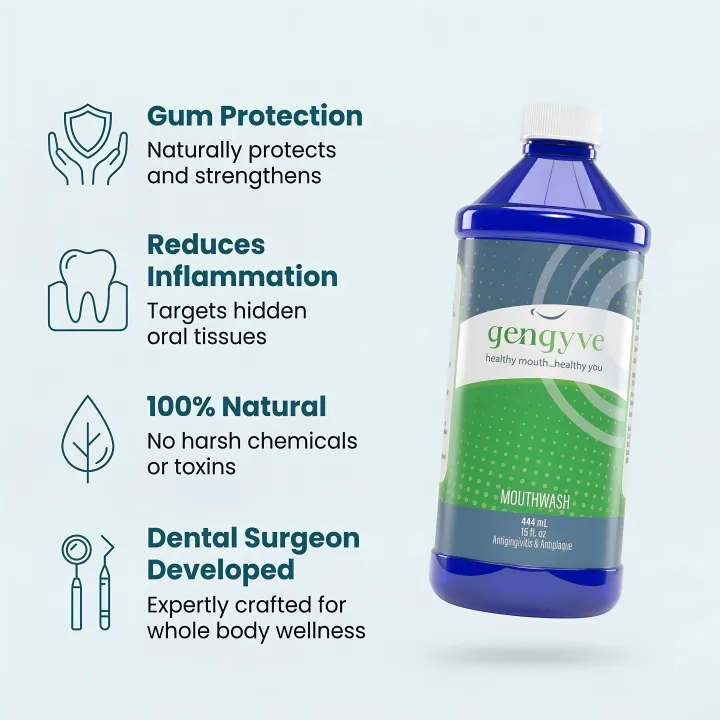
Gengyve USA's formula was developed by a practicing oral and maxillofacial surgeon who wanted a daily rinse he could recommend to his own patients. It combines CPC with hyaluronic acid, pullulan, and PVP. The brand describes these ingredients as forming a mucoadhesive barrier over gum tissue, without alcohol or chlorhexidine.
It is intended for everyday gum maintenance and for use before and after dental procedures, following the surgeon-developed directions on the product label. No mouthwash, including this one, eliminates all biofilm or replaces brushing, flossing, periodontal treatment, or your dentist's specific post-operative instructions.
Frequently Asked Questions
Does mouthwash destroy gut bacteria?
You're not meant to swallow mouthwash, so it isn't the same as taking an oral antimicrobial. Ingredients differ by product, so don't swallow the rinse or make long-term digestive assumptions without talking to a professional.
Is salt water better than mouthwash?
Salt water can soothe, especially after procedures like extractions. Mouthwash formulas target specific concerns with evidence behind their ingredients. Which is better depends on your goal and what your dentist recommends.
Can mouthwash remove dental biofilm?
Some formulations help disrupt or reduce biofilm, particularly fresher deposits. Brushing and interdental cleaning remain essential, and hardened calculus still requires professional removal.
Should you use mouthwash before or after brushing?
Follow the product label, since timing varies by formulation. Some rinses interact with toothpaste ingredients or fluoride exposure, so manufacturer instructions matter more than general habit.
Can mouthwash replace brushing and flossing?
No. Mouthwash is an adjunct to brushing with fluoride toothpaste, cleaning between teeth, routine dental exams, and any necessary gum disease treatment, not a substitute for any of them.