Many people are turning away from traditional rinses. Harsh alcohol-based formulas dry out the mouth, chlorhexidine can stain teeth with extended use, and the burning sensation from some products keeps people from rinsing consistently. That frustration has pushed interest toward plant- and algae-based alternatives like spirulina.
This article walks through what spirulina actually does, what the research shows (and doesn't), safety considerations, how to use a rinse correctly, and when a dental visit matters more than any mouthwash.
Key Takeaways
- Spirulina mouthwash research is preliminary, not proof of clinical effectiveness for gum disease or cavities.
- No evidence supports spirulina as a teeth-whitening or enamel-remineralizing ingredient.
- Contamination risks exist in poorly tested spirulina products, making sourcing transparency essential.
- A rinse works as an adjunct — it never replaces brushing, flossing, or dental checkups.
- Certain groups, including pregnant individuals and those with PKU, should check with a clinician first.
What Is Spirulina Mouthwash?
Spirulina is a blue-green cyanobacterium, scientifically grouped under Arthrospira, commonly sold as a powder, tablet, dietary supplement, or oral-care ingredient. Researchers are interested in compounds like phycocyanin — a pigment-protein found in spirulina — for potential antioxidant, anti-inflammatory, and antimicrobial activity.


Not All Spirulina Products Are the Same
A mouthwash containing spirulina is a different product entirely from a swallowed spirulina supplement, a spirulina gel applied directly to gum tissue, or a lab extract tested in a petri dish. Evidence from one format doesn't automatically carry over to another.
Why this matters: a study showing spirulina reduces inflammation in a swallowed capsule says nothing about whether rinsing with it for 30 seconds produces the same effect.
What a Trustworthy Label Should Disclose
Before buying, check whether the product discloses:
- The specific spirulina species or extract used
- Concentration or standardized active content, where available
- A complete list of inactive ingredients
- Clear directions for use and intended purpose
- Testing information, such as third-party contaminant screening
If a label is vague about these details, that's a red flag — not a sign of simplicity.
What Can Spirulina Mouthwash Do for Oral Health?
Gum Health and Inflammation
Spirulina's phycocyanin content has been studied for its effect on inflammatory pathways in laboratory and animal research. These findings are mechanistic: they describe how something might work biologically, not whether it works in a human mouth over time.
One directly relevant human study, the 2017 clinical study by Maniyar and Umashankar, examined spirulina mouthwash for dental plaque and gingivitis. It's a meaningful data point, but published details on sample size, duration, and comparison methods are limited, so it shouldn't be treated as definitive proof of efficacy.

Plaque and Biofilm: An Adjunct, Not a Cure
Any antimicrobial activity spirulina might have works alongside physical plaque removal, not instead of it. Plaque is a sticky biofilm; rinsing alone, regardless of ingredient, cannot scrub it off your teeth the way a toothbrush can.
Bad Breath and Tongue Coating
Bad breath often comes from bacteria producing volatile sulfur compounds on the tongue and between teeth. A rinse that tastes fresh can mask odor temporarily. That's different from treating the bacterial source of persistent halitosis, which usually needs mechanical cleaning or a dental evaluation.
Whitening and Remineralization: Not Established
Spirulina's green pigment is not a bleaching agent. There is currently no verified evidence that spirulina rinses:
- Whiten teeth
- Harden or rebuild enamel
- Prevent cavities
- Reduce tooth sensitivity
What the evidence shows: available studies are small in scope, vary in delivery format, and don't support strong clinical claims. Promising lab findings aren't the same as proof it works in your mouth.
How to Choose and Use a Spirulina Mouthwash
Product-Selection Checklist
Look for these markers before buying:
- Transparent ingredient panel: full disclosure of active and inactive ingredients
- Reputable U.S. manufacturer or importer with traceable sourcing
- Batch or third-party testing for heavy metals and cyanotoxins like microcystins
- Clear expiration and storage instructions
- No unsupported disease-treatment claims on the label or marketing
Using It Correctly
Follow the product label exactly:
- Use the recommended amount; don't eyeball it
- Swish for the specified time (commonly around 30 seconds)
- Rinse at the stated frequency, typically once or twice daily
- Spit out afterward unless the label explicitly permits swallowing
- Avoid ingesting any mouthwash not labeled for that purpose
A rinse fits into your routine after brushing and interdental cleaning, not instead of them. Gengyve USA, for instance, directs users to swish for 30 seconds after brushing, twice daily, with no water rinse needed afterward, a pattern typical of adjunct rinses designed to layer onto, not replace, mechanical cleaning.
Taste, Comfort, and Practical Considerations
Spirulina has an earthy, sometimes strong flavor that not everyone enjoys. Other practical notes:
- Temporary green tinting of the tongue is possible
- Check for alcohol content if you have dry mouth concerns
- Essential oils in some formulas can cause sensitivity or burning
Tracking Results Safely
Monitor gum bleeding, irritation, breath, and overall comfort over several weeks. There's no guaranteed timeline for results. Stop use and seek professional advice if symptoms worsen or you notice signs of an allergic reaction.
Safety, Limitations, and Who Should Be Cautious
Contamination Is a Sourcing Issue, Not a Universal Risk
Poorly controlled spirulina products can carry contamination risks, but that doesn't mean every spirulina product on the market is unsafe. Quality controls worth looking for include microcystin screening, heavy-metal testing, and microbiological checks during manufacturing. The point is sourcing transparency, not avoidance of spirulina altogether.

Who Should Talk to a Clinician First
- Children
- Pregnant or breastfeeding individuals
- People with autoimmune conditions
- Those with phenylketonuria (PKU)
- Anyone with known algae or spirulina allergies
- People with thyroid concerns or complex medical conditions
- Anyone taking medications that might interact
ANSES's 2017 opinion specifically advises against consuming spirulina supplements in people with PKU or an allergic predisposition, due to phenylalanine content and reported allergic reactions. That guidance concerns ingestion, but it's a reasonable basis for caution with any spirulina-containing product.
When Self-Care Isn't Appropriate
Seek professional evaluation, not a new mouthwash, if you notice:
- Persistent bleeding or swelling
- Pus or visible infection
- Tooth mobility
- Severe or worsening pain
- Ulcers that won't heal
- Unexplained oral discoloration
- Bad breath that doesn't improve with hygiene changes
There's limited long-term evidence on continuous daily spirulina mouthwash use. Natural doesn't automatically mean risk-free, and it doesn't automatically mean clinically effective either.
Spirulina Mouthwash vs. Other Natural Oral-Care Options
| Option | Best suited for | Evidence strength | Common trade-offs |
|---|---|---|---|
| Spirulina rinse | Gum comfort, adjunct use | Preliminary, limited human trials | Earthy taste, unresolved formulation questions |
| Salt-water rinse | Mild irritation, post-procedure comfort | Mixed; often tested combined with other ingredients | Doesn't address plaque buildup alone |
| Xylitol rinse | Bacterial reduction support | Limited standalone evidence | Usually paired with other actives in studies |
| Essential-oil rinse | Plaque and gingivitis, alongside brushing | Recognized by the ADA's mouthrinse guidance | Can cause burning for sensitive users |
| Fluoride rinse | Cavity prevention | Well-established therapeutic category | Different purpose than gum-focused rinses |
| Hydroxyapatite rinse | Enamel-related support | Emerging, formulation-dependent | Not interchangeable with plaque-control evidence |
A gum-comfort rinse and an enamel-focused product serve different purposes. If cavity prevention is your priority, fluoride and hydroxyapatite-based formulas have a stronger evidence base than spirulina currently does.
Where Gengyve USA Fits
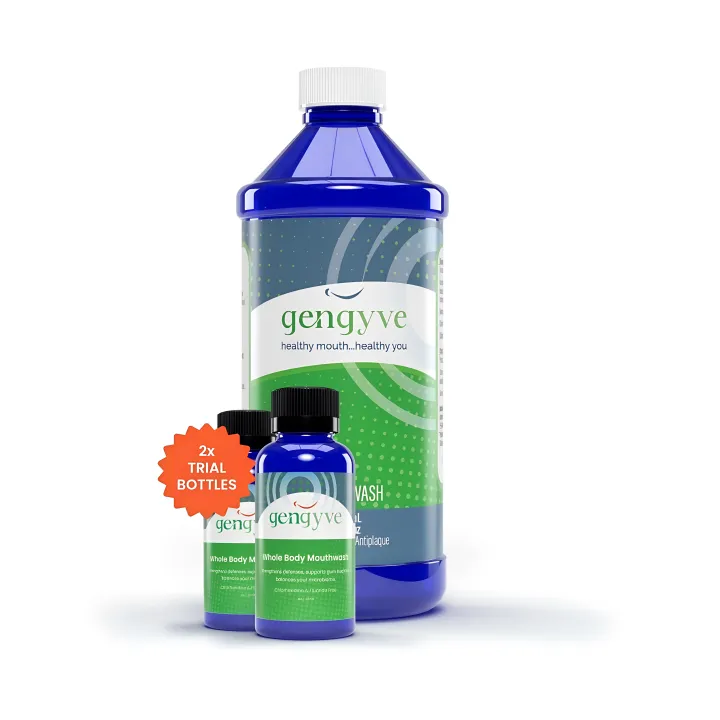
If you want a ready-to-use, gentle daily option, Gengyve USA offers an alcohol-free, chlorhexidine-free mouthwash developed by a dental surgeon. The formula centers on hyaluronic acid, CPC, castor oil, pullulan, and PVP.

Gengyve's formula does not contain spirulina. It appears here as a comparison point for readers seeking a natural, non-alcohol, non-chlorhexidine daily rinse, not as a spirulina-based product.
Whatever brand you consider, including Gengyve, check the current ingredient list, directions, and testing claims before buying. Labels and formulas change, and your own dental needs should guide the decision.
Conclusion: Is a Spirulina Mouthwash Worth Trying?
Spirulina mouthwash is a promising but unproven adjunct for gum comfort and plaque support. Evidence for whitening, enamel repair, or cavity prevention simply isn't there yet.
If you want to try one:
- Choose a formula with transparent ingredients and contamination testing
- Use it alongside brushing and interdental cleaning
- See a dentist for persistent symptoms or diagnosed gum disease
If you're looking for a gentle, natural daily rinse rather than a spirulina formula, review Gengyve USA's current ingredients and directions. It is a complementary rinse, not a treatment, and not a spirulina product.
Frequently Asked Questions
Is spirulina good for your teeth?
Spirulina may support gum health or plaque control as an adjunct, but there's not enough evidence that it rebuilds enamel, prevents cavities, or replaces standard oral hygiene practices.
Does spirulina mouthwash whiten teeth?
No. Spirulina isn't a proven bleaching ingredient, and its pigment may even temporarily tint the tongue or oral surfaces green.
Can spirulina mouthwash help gingivitis?
Limited clinical evidence suggests possible reductions in plaque or inflammation, but brushing, interdental cleaning, and professional dental care remain essential for managing gingivitis.
Is it safe to use spirulina mouthwash every day?
Short-term evidence is limited but generally reassuring for well-sourced products. Check for contamination testing, follow label directions, and consult a clinician if you're in a higher-risk group.
Can spirulina mouthwash replace brushing and flossing?
No. A rinse can't physically remove established plaque the way brushing and interdental cleaning do. It should only be used as an adjunct to mechanical cleaning.
How do I choose a natural spirulina mouthwash?
Look for transparent ingredients, clear usage directions, reputable sourcing, contaminant testing, proper packaging and storage, and no unsupported medical claims on the label.