Dentists generally treat mouthwash as a helpful addition to your routine, not a substitute for it. Brushing with fluoride toothpaste, cleaning between your teeth, and keeping up with regular dental visits still form the foundation of oral health. Mouthwash works alongside those habits.
This guide compares leading mouthwash options by active ingredients, intended use, tolerability, and available evidence. We'll also flag which products are fine for everyday use and which require a dentist's direction before you start swishing.
Key Takeaways
- Match your mouthwash to a specific oral-health goal rather than picking based on flavor or marketing claims
- Check active ingredients and ADA Seal of Acceptance status before buying a therapeutic rinse
- Choose alcohol-free formulas if you have dry mouth, sensitive tissue, or dislike a burning sensation
- Never use prescription rinses like chlorhexidine without explicit dental guidance
- Ask your dentist which formula fits your current oral-health needs
Overview of Mouthwash and What Dentists Recommend
Mouthwash is an oral rinse that delivers ingredients to your teeth, gums, tongue, and other soft tissues. What it actually does for you depends entirely on the formulation and your personal needs.



Cosmetic vs. Therapeutic Formulas
There are two broad categories, according to the American Dental Association:
- Cosmetic mouthwash temporarily masks bad breath or leaves a pleasant taste, without addressing an underlying cause
- Therapeutic mouthwash contains active ingredients meant to help control plaque, gingivitis, cavities, or persistent bad breath
Neither type is universally "better." Match actives to your goals:
- Fluoride for cavity protection
- Cetylpyridinium chloride (CPC) or essential oils for plaque and gum support
- Moisturizing ingredients for dry or irritated tissue
OTC vs. Dentist-Directed Rinses
Over-the-counter daily rinses are one thing. Prescription-strength products, such as chlorhexidine, are another entirely. Chlorhexidine is typically reserved for short-term, dentist-directed use because it can cause staining and taste changes with extended use.
Alcohol-free formulas tend to suit people with dry mouth, sensitive gums, irritated tissue, or kids old enough to rinse under supervision. The ADA notes that alcohol can be drying, which matters most for anyone already dealing with low saliva flow.

From here, we'll organize products by practical use case, evaluating each one on ingredients, evidence, comfort, and everyday suitability rather than marketing language alone.
Top Mouthwashes Recommended by Dentists
These products address different goals. Always check the current label, directions, and warnings before use, since formulations change over time.
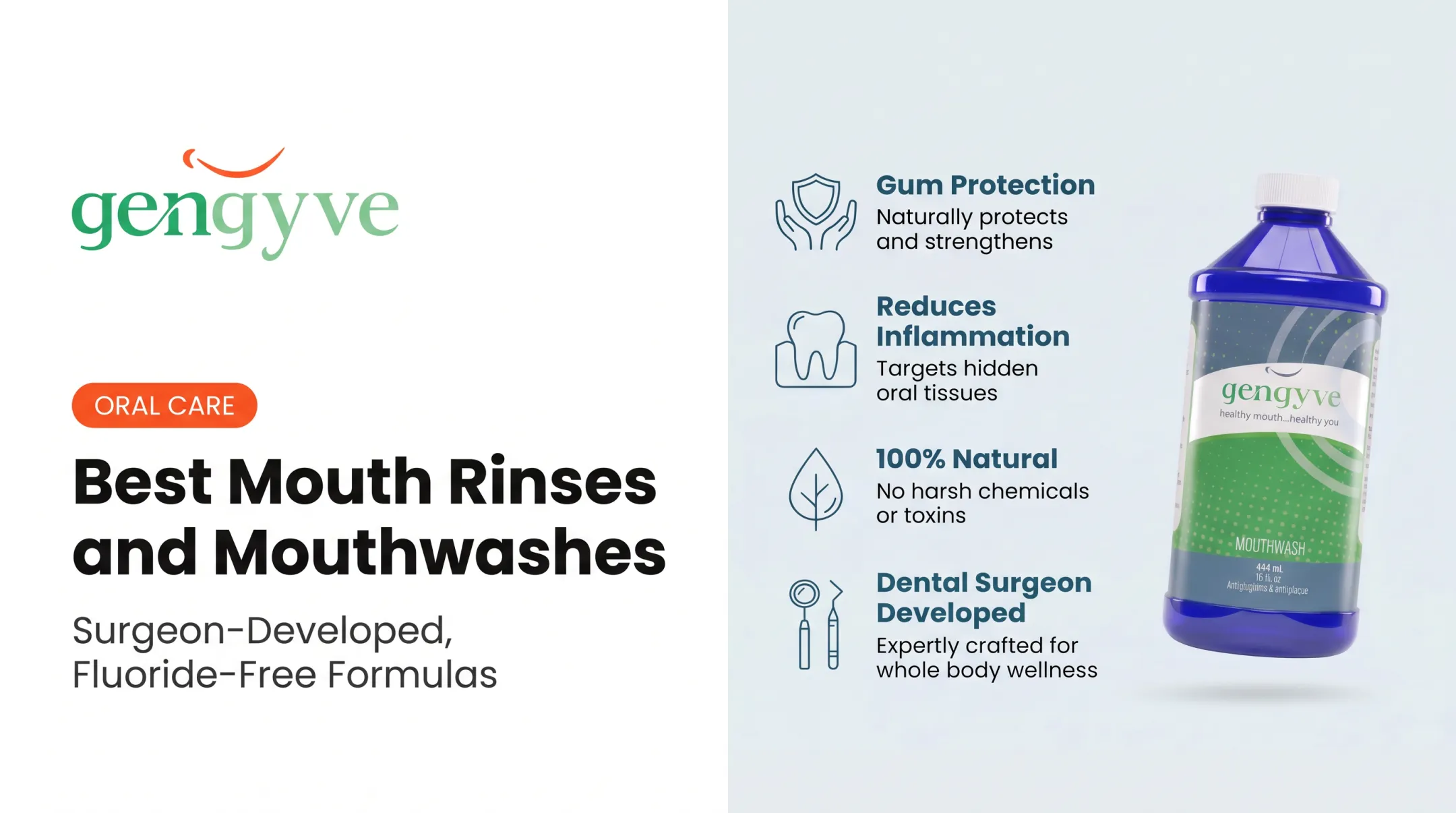
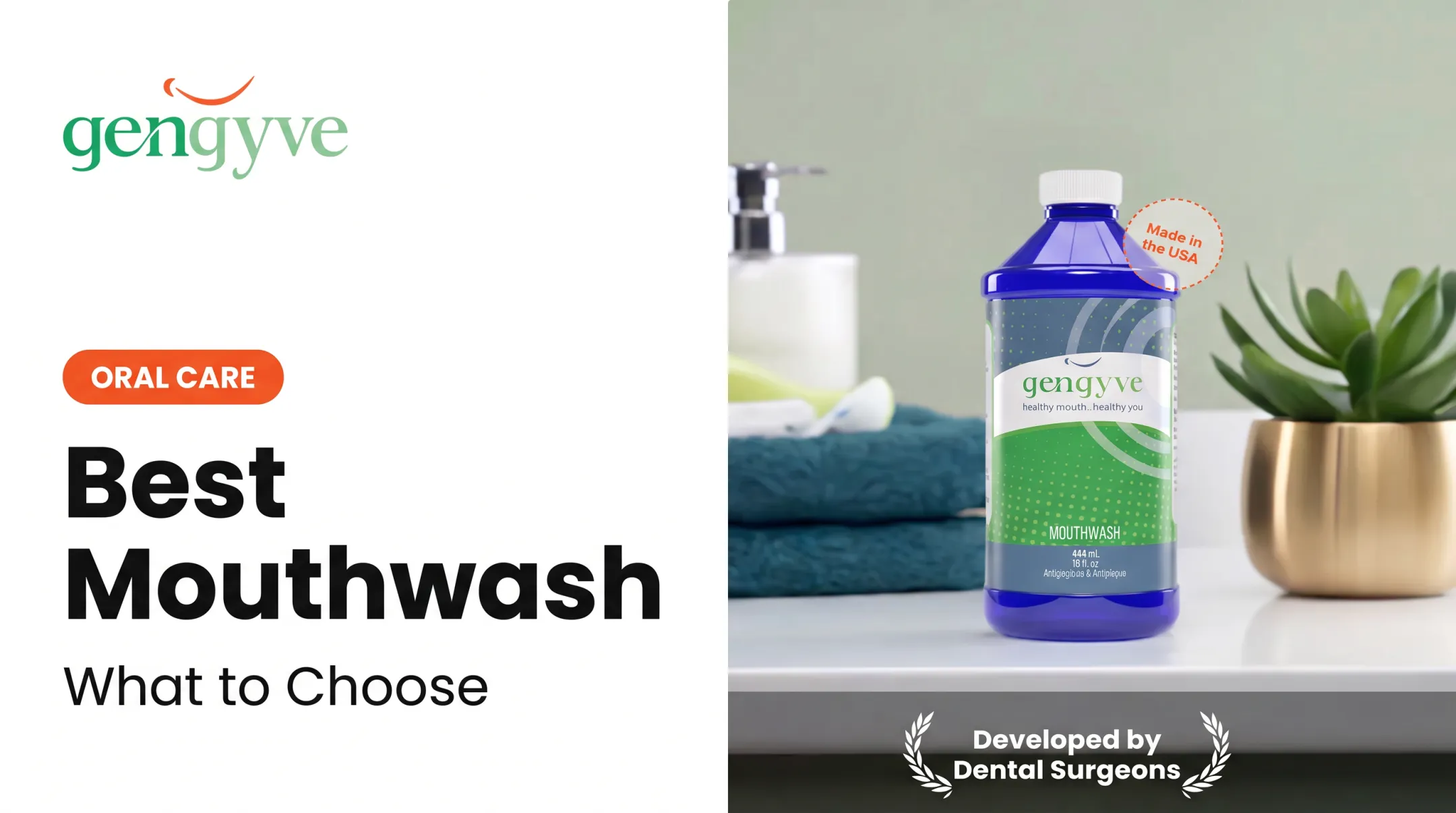
Gengyve Mouthwash
Gengyve is a USA-made oral rinse developed by Dr. S. Thaddeus Connelly, an oral and maxillofacial surgeon and Full Clinical Professor at UCSF. The formula focuses on gentle, everyday use rather than short-term intervention.
- Active ingredients: Cetylpyridinium chloride (CPC) at 0.05%, paired with hyaluronic acid for hydration and gum comfort
- Alcohol and chlorhexidine status: Free of both, along with artificial dyes
- Evidence: A 2020 double-blind trial (75 dental students, 21 days) found higher plaque with placebo vs. a CPC-hyaluronic acid rinse; gingivitis differences weren't statistically significant
- Comfort: Described as having no harsh burn, suited to sensitive mouths
- Directions: Swish 30-60 seconds morning and night (check label); use one day before surgery and twice daily after if directed
- Ask a dentist first if: You're managing active gum disease, recent oral surgery, or ongoing bleeding
Note: Gengyve's product page classifies it as a cosmetic rinse, so it isn't marketed to treat, cure, or prevent disease, even though CPC is recognized under the OTC monograph for antigingivitis and antiplaque support.
Crest Pro-Health Clinical
This CPC-based rinse targets plaque and gingivitis support for people without a specific prescription need.
- Active ingredient: Cetylpyridinium chloride 0.1%, labeled for antigingivitis and antiplaque use
- Alcohol status: Alcohol-free
- Directions: Adults and children 12+, rinse 20 mL for 30 seconds twice daily after brushing; not for children under 12
- Manufacturer claim: Helps prevent plaque regrowth and reverse gingivitis in as little as two weeks (brand claim, not a head-to-head clinical result)
- Caution: CPC rinses support gingivitis control, but peer-reviewed research notes mouthwash alone isn't enough for established periodontitis, which needs professional care
TheraBreath Healthy Gums or Fresh Breath Rinse
TheraBreath sells two distinct formulas, and they're not interchangeable.
- Healthy Gums (CPC 0.05%): Therapeutic rinse for plaque and bleeding gums; alcohol-free; ages 12+ use 20 mL for 30 seconds twice daily
- Fresh Breath (sodium chlorite-based): ADA-accepted for reducing bad breath; alcohol-free; adults rinse 10 mL for 90 seconds twice daily
Persistent bad breath can point to gum disease, decay, dry mouth, or a medical issue such as sinus or gastrointestinal problems. A breath rinse helps temporarily, but mention ongoing odor to your dentist rather than masking it indefinitely.
Fluoride Rinse for Cavity Prevention: ACT Anticavity
Fluoride rinses target decay prevention specifically, not gum health or breath.
- Active ingredient: Sodium fluoride 0.05% (0.02% fluoride ion)
- Age guidance: 6 and older; consult a dentist for younger children
- Directions: Once daily, 10 mL, swish for 1 minute, spit out; avoid eating or drinking for 30 minutes
- Best for: People at elevated cavity risk who want an add-on to fluoride toothpaste, not a replacement for it
This rinse won't help with gingivitis or bad breath. It's built for one job: supporting remineralization.
Alcohol-Free Multi-Benefit Rinse: Listerine Total Care
Multi-benefit rinses combine several ingredients to cover more ground, though broader doesn't always mean better for a specific concern.
- Active ingredient: Sodium fluoride 0.02% (0.01% fluoride ion), plus inactive essential oils (eucalyptol, menthol, thymol, methyl salicylate)
- Alcohol status: Alcohol-free, marketed as a milder option
- Directions: Ages 6+, 10 mL for 1 minute twice daily; avoid food or drink for 30 minutes
- Claim boundary: The anticavity benefit here comes from fluoride, not the essential oils, which are listed as inactive in this specific formulation
If you need targeted gum support, dry mouth relief, or sensitivity treatment, a more specialized product may serve you better than a general multi-benefit rinse.

How We Chose the Best Mouthwash
Our comparison prioritized a clear oral-health purpose, evidence behind the active ingredient, label compliance, tolerability, and how well each product fits into a routine a dentist would actually recommend.
ADA Seal and Ingredient Function
The ADA Seal of Acceptance requires a company to submit safety and efficacy data for a product's specific claim. It's not a brand-wide endorsement, and absence of the seal doesn't automatically mean a product is ineffective.
| Ingredient | Primary Function |
|---|---|
| Fluoride | Remineralization, cavity prevention |
| CPC / essential oils | Plaque and gingivitis support |
| Moisturizing agents | Dry mouth comfort |
| Chlorhexidine | Dentist-directed, short-term antimicrobial use |
Common Selection Mistakes
Watch for these missteps when choosing a rinse:
- Picking a product because it "burns," assuming that sensation equals effectiveness
- Assuming "natural" automatically means safe or clinically proven
- Using a cosmetic breath rinse to address a therapeutic problem like gingivitis
- Ignoring the active ingredient list entirely and shopping by brand name alone
- Continuing prescription-strength rinses past the timeframe your dentist specified
We also weighed swallowing risk, age restrictions, and allergy potential, since a product that's technically effective isn't useful if it's uncomfortable enough that you stop using it.

Conclusion
The best mouthwash is the one whose verified ingredients match your actual oral-health goal, and whose directions you can follow comfortably and consistently. A fluoride rinse won't help gingivitis. A breath rinse won't prevent cavities. Matching the formula to the problem matters more than brand loyalty.
Talk to a dentist or periodontist before self-treating with any rinse if you have:
- Bleeding gums or suspected periodontal disease
- Persistent bad breath, pain, or ulcers
- Loose teeth, dry mouth, implants, or recent oral surgery
For a dental-surgeon-developed, alcohol-free, chlorhexidine-free daily rinse, review Gengyve's current formula, directions, and product information to see whether it fits your routine.
Frequently Asked Questions
Which is the best mouthwash recommended by dentists?
It depends on your goal. Dentists typically match fluoride rinses to cavity risk, CPC or essential-oil rinses to plaque and gum concerns, and alcohol-free formulas to dry mouth or sensitive tissue.
What mouthwash do periodontists recommend?
Recommendations vary by condition, including gingivitis, periodontitis, post-surgical healing, or implant maintenance. Prescription rinses like chlorhexidine should only be used exactly as your periodontist directs.
What is the most effective mouthwash?
Effectiveness depends on the outcome you're targeting. Fluoride is proven for decay prevention, while CPC and essential oils support plaque and gingivitis control. There's no single universal winner.
Which is the healthiest mouthwash you can buy?
Alcohol-free formulas with ingredients suited to your tissue tolerance tend to be the gentlest everyday choice. For active disease or post-surgical care, follow your dentist's specific guidance instead of a general "healthiest" label.
What is the best brand of mouthwash?
Brand name alone doesn't determine quality. Compare the formulation, supporting evidence, intended use, and directions, then check that it aligns with what your dentist has recommended for your situation.