Peppermint oil does show some antimicrobial activity in lab settings, and the sensory effect is real. What it isn't is a guaranteed safe or effective solution on its own. Concentrated essential oil behaves very differently in a petri dish than it does against your gums for 30 seconds twice a day.
This article covers what peppermint oil may realistically offer, where the safety limits are, how to pick and use a product correctly, and when fresh breath isn't enough to skip a dental visit.
Key Takeaways
- Peppermint oil shows lab antimicrobial activity, but isn't proven to treat gum disease or cavities in people
- Never put undiluted peppermint essential oil on gums or tongue; use only products labeled for oral rinsing
- Mouthwash supports brushing, flossing, and dental visits; it doesn't replace them
- Children, pregnant or breastfeeding people, and post-oral-surgery patients should check with a dentist first



What Peppermint Oil May Do for Oral Health
Peppermint Oil Isn't the Same as Peppermint Flavoring
"Peppermint" on a label can mean very different things. Peppermint essential oil is a concentrated extract. Peppermint flavoring, peppermint tea, and diluted extracts are much weaker.
Concentration changes everything:
- Essential oil is potent enough to irritate soft tissue if used undiluted
- Flavoring agents are formulated at safe, low concentrations for direct oral contact
- Tea and diluted extracts carry minimal risk but also minimal antimicrobial punch
A mouthwash labeled "peppermint" doesn't tell you which of these it actually contains, or at what strength. That's why checking the ingredient list matters more than the flavor name on the front of the bottle.
What the Research Actually Shows
Lab findings on peppermint oil are mixed, and the gap between a petri dish and your mouth is significant. A 2024 laboratory study found that Mentha piperita oil reduced biofilm formation and disrupted bacterial communication tied to Streptococcus mutans, the bacteria most associated with cavities. That's promising on paper.
But an earlier 2012 assay testing nine commercial oils against the same bacteria found peppermint oil showed no measurable antibacterial activity under those test conditions. Two studies, two different labs, two different answers. That inconsistency alone should temper any confident claims.
None of these studies tested people using peppermint oil mouthwash daily over months. They're test-tube snapshots, not proof of real-world results.

Fresh Breath Doesn't Equal a Healthy Mouth
A cooling sensation and short-term breath improvement are the most reliably documented effects of peppermint oil. One small study tested a peppermint-containing oil blend on 32 ICU patients and found reduced odor and sulfur compounds within an hour.
That's useful for masking odor temporarily. It is not evidence the oil eliminated the bacteria or conditions causing bad breath in the first place, including gum disease, dry mouth, or cavities.
Peppermint oil hasn't been shown to replace fluoride, professional periodontal treatment, or prescribed post-surgical care. Treat it as optional support for daily freshness, not a treatment on its own.
Safety, Risks, and Who Should Be Cautious
Why Concentrated Oil Doesn't Belong Directly on Gums
Essential oils and water don't mix the way you'd expect. Peppermint oil is only slightly soluble in water, meaning drops added to a glass can clump unevenly rather than disperse.
That creates an unpredictable dose: one swish might barely register, the next might deliver a much stronger concentration against sensitive tissue.

Applied directly, undiluted peppermint oil can cause:
- Burning or stinging on gums, tongue, or inner cheeks
- Allergic reactions or contact sensitivity
- Worsening of existing mouth sores or ulcers
- General tissue irritation with repeated use
Never swallow an essential-oil mouthwash. If someone ingests a concerning amount, call Poison Control at 1-800-222-1222 immediately rather than attempting a home remedy.
Who Should Ask a Dentist Before Using It
Certain groups face higher risk and should get professional guidance first:
- Children, since swallowing risk and dosage control are harder to manage
- Pregnant or breastfeeding individuals, as medicinal-strength exposure hasn't been well studied in this group
- People with asthma or fragrance sensitivities, since strong scents can trigger airway constriction in some individuals
- Anyone with oral ulcers, chronic dry mouth, or recent oral surgery or radiation treatment
The NCCIH's peppermint oil guide notes that medicinal use during pregnancy hasn't been well studied, and cautions against applying peppermint products near infants' or young children's faces due to breathing concerns. "Natural" doesn't mean automatically safe for every user.
Signs That Call for a Dentist, Not a Rinse
Stop self-treating and book an appointment if you notice:
- Gums that bleed persistently, not just occasionally
- Swelling in the face or gums
- Severe or worsening pain
- Visible pus, fever, or loose teeth
- Mouth sores that keep recurring
- Bad breath that doesn't improve despite consistent hygiene
Any of these points to an underlying issue a mouthwash, peppermint or otherwise, cannot fix.
How to Choose and Use a Peppermint-Oil Mouthwash
Reading the Label Before You Buy
Skip anything marketed vaguely as "minty" with no ingredient transparency. Look for:
- A complete ingredient list that clearly identifies peppermint oil (not just "flavor")
- Clear directions on quantity, swish time, and frequency
- Visible warnings and age restrictions
- A manufacturer you can actually research
Products formulated specifically for oral use go through more scrutiny on dilution and tissue safety than anything mixed at home. That formulation step is what makes a commercial rinse safer for daily use than a homemade mix.
Fitting It Into a Real Routine
A peppermint mouthwash works best as a supporting habit alongside daily brushing and flossing:
- Brush twice daily with fluoride toothpaste
- Clean between teeth daily
- Keep regular dental checkups on the calendar
- Use mouthwash at a separate time from brushing so you don’t rinse away fluoride from toothpaste
Follow the label's instructions on amount and swish time exactly. More product or a longer swish won't make it work better; it just increases irritation risk.
Watch How Your Mouth Responds
During the first few uses, pay attention to your body's reaction. Stop immediately if you notice burning, swelling, rash, altered taste, or persistent irritation, and contact a dental professional if symptoms continue.
If you've recently had dental work, implants, or periodontal treatment, don't substitute a retail peppermint rinse for your clinician's specific post-care instructions. Those protocols are tailored to your healing tissue; a general mouthwash isn't.
DIY vs. Professionally Formulated Mouthwash
Why Homemade Recipes Carry More Risk Than They Look
Mixing a few drops of peppermint oil into water at home seems harmless. In practice, several problems stack up:
- Dosing is inconsistent. Oil doesn't dissolve evenly in water, so each rinse from your homemade batch could vary in strength.
- Contamination is a real concern. The FDA's guidance on cosmetic safety points to contaminated water and ineffective preservation as common ways homemade liquid products become unsafe.
- Shelf life is unknown. Without preservatives formulated for the mix, a water-based rinse can degrade or harbor bacteria faster than expected.
Recipes that add baking soda, hydrogen peroxide, vinegar, or salt compound the issue further. Proportions, storage conditions, and frequency of use all affect safety, and there's no validated recipe that accounts for all of it. Don't store a homemade batch for extended periods; if you're going to rinse daily, consistency matters more than it seems.
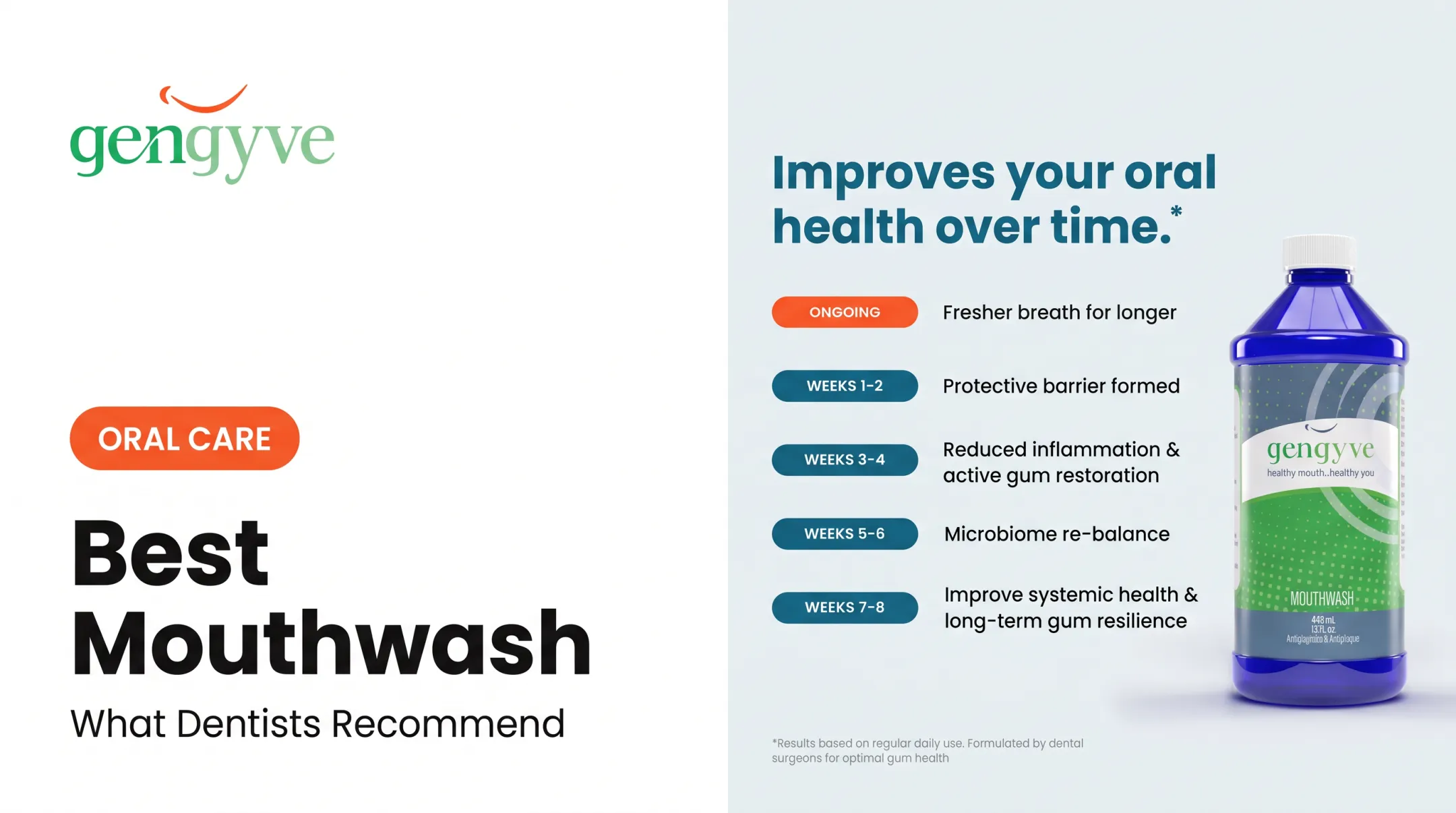
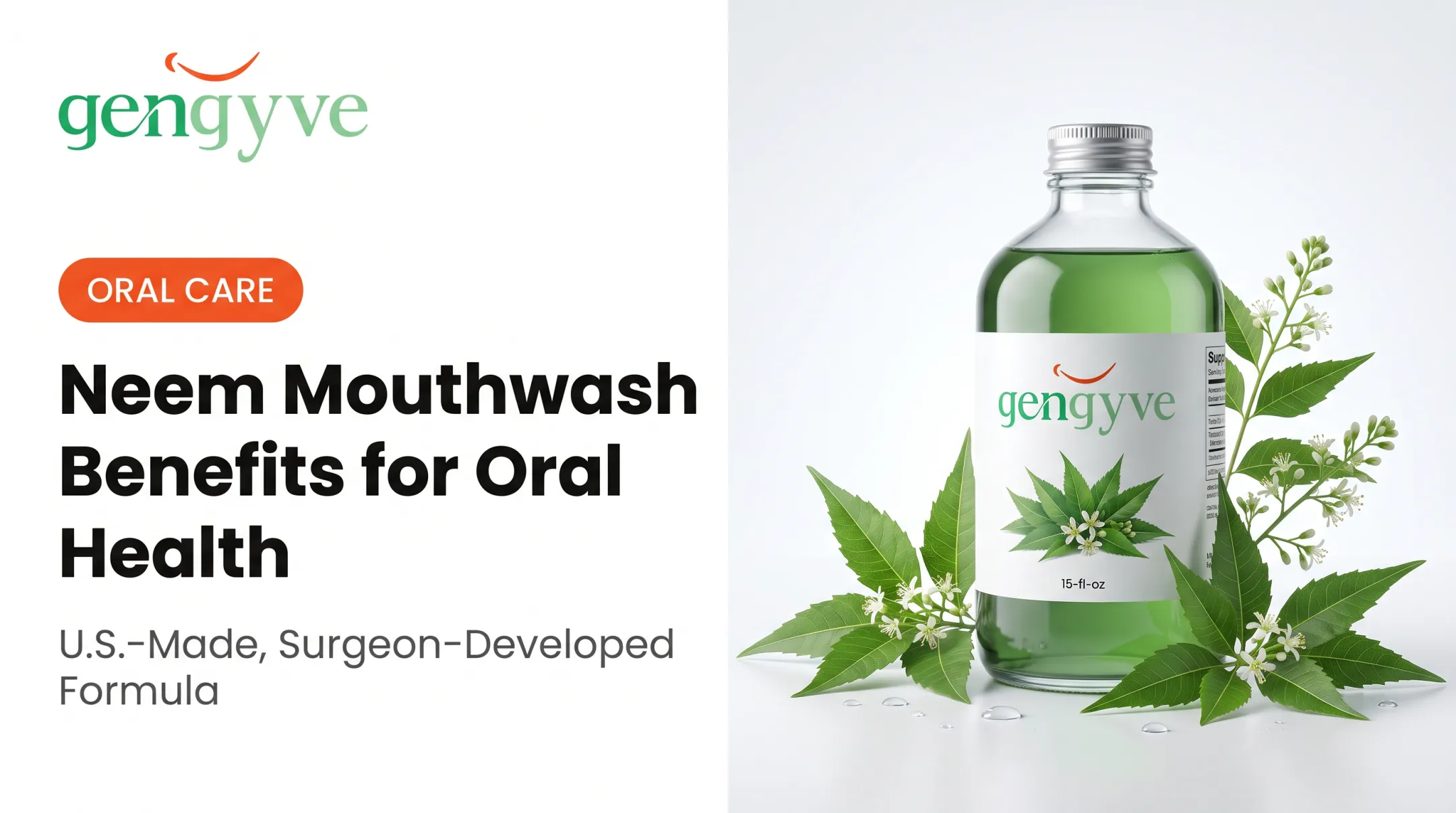
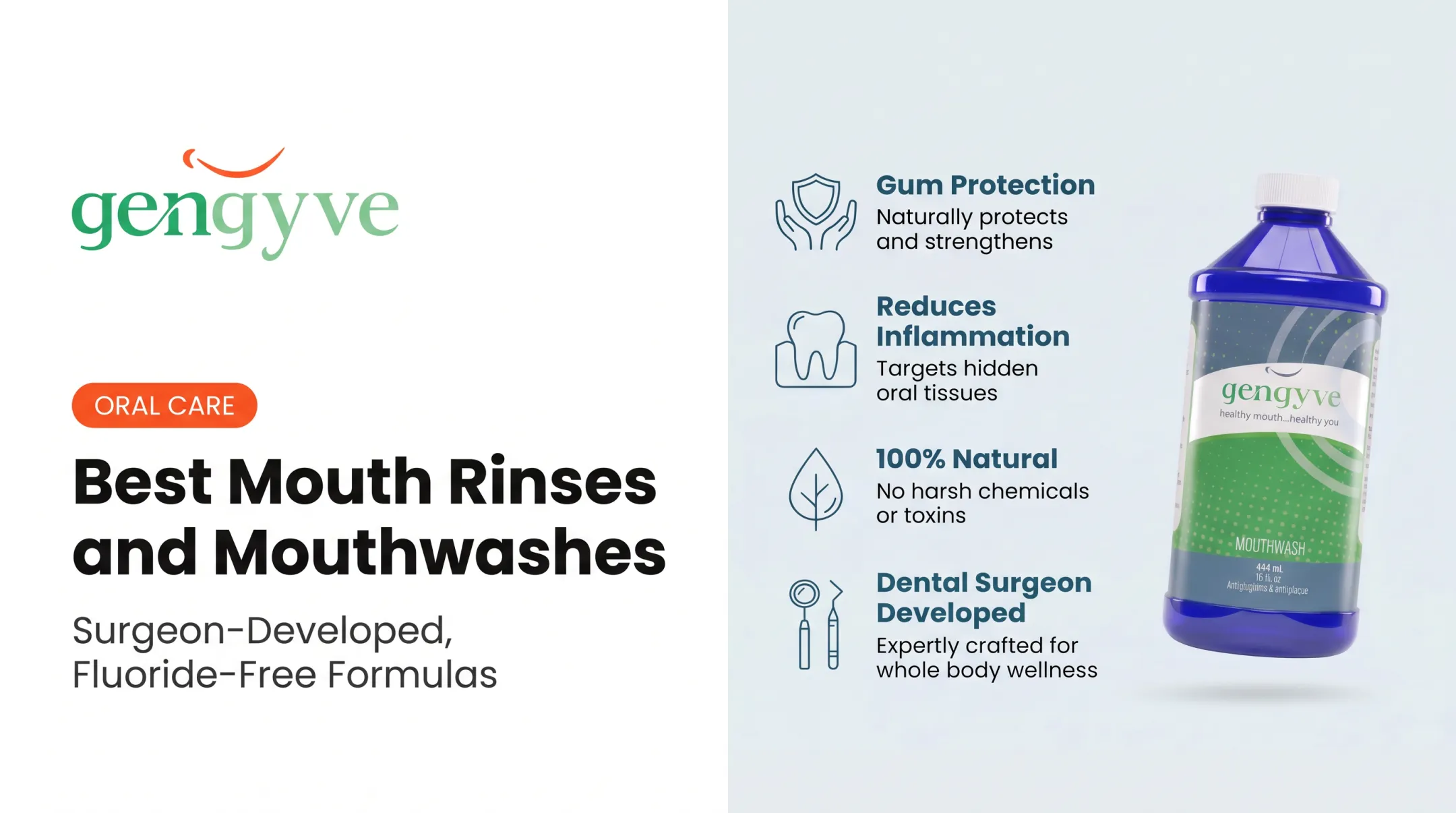
A tested, professionally formulated product has a clear advantage over anything mixed in a kitchen. Gengyve USA, developed by practicing dental surgeons and educators, was built for that gap: a formula researched and manufactured in the U.S. for safe, long-term daily use rather than guesswork.
Its fluoride-free, chlorhexidine-free formula (always check the current bottle label for full ingredients and directions) delivers accurate dosing and oral-tissue safety testing a DIY rinse cannot match. If you want a rinse twice daily without measuring or remixing each time, a finished product designed for that purpose removes the guesswork.

Frequently Asked Questions
Is it good to rinse your mouth with peppermint oil?
A properly diluted, oral-use formulation containing peppermint oil may support fresh breath and has shown some antimicrobial activity in lab settings. Undiluted oil can irritate your gums and tongue, and peppermint oil isn't a treatment for gum disease or cavities.
Can peppermint oil mouthwash replace brushing or flossing?
No. It's an adjunct to a full routine, not a substitute. Keep brushing with fluoride toothpaste, cleaning between teeth, and visiting your dentist regularly.
Is it safe to swallow peppermint oil mouthwash?
No. These products are meant to be spit out. If someone swallows a concerning amount, contact poison control right away rather than waiting to see what happens.
Can kids use peppermint oil mouthwash?
Mouthrinses generally aren't recommended for children younger than 6 due to swallowing risk, unless a dentist directs otherwise. Always check the product's age guidance.
Does peppermint oil cure bad breath for good?
It can mask odor temporarily, but it doesn't treat the underlying cause, whether that's gum disease, dry mouth, or decay. Persistent bad breath needs a dental evaluation.