Introduction
Oil pulling is having a moment again. Social media is full of people swishing coconut oil before breakfast, claiming everything from whiter teeth to clearer sinuses.
Some of these claims hold up. Many don't.
The practice is cheap and simple: a spoonful of oil, a few minutes of swishing, spit it out. But whether it actually does anything for your teeth and gums depends heavily on how you use it and what you expect from it.
This article separates what the research actually shows from what's just internet folklore. We'll cover the limited benefits that hold up, the claims that don't, and the risks of using it as a stand-in for real dental care. If you decide to try it, you'll also see how to do it safely.
Key Takeaways
- Oil pulling means swishing edible oil in your mouth and spitting it out, rooted in Ayurvedic tradition
- Small studies suggest temporary reductions in some oral bacteria or fresher breath, but evidence remains weak
- It should supplement, never replace, brushing, flossing, and regular dental visits
- Persistent bleeding, pain, or swelling needs a dentist, not a home remedy
What Is Oil Pulling?
Oil pulling is exactly what it sounds like. You put a small amount of edible oil, usually coconut, sesame, sunflower, or olive, into your mouth and swish it around before spitting it out.



The practice traces back to Ayurvedic medicine in ancient India, where it's referenced in texts like the Charak Samhita under the name Kavala Graha. Centuries of traditional use, though, don't equal clinical proof. That distinction matters as oil pulling gets rebranded as a trendy wellness hack.
How It's Supposed to Work
The proposed mechanism isn't fully settled in the research. Theories include:
- Emulsification: the oil may bind with some bacteria and debris during swishing
- Saponification: a soap-like reaction that could loosen surface residue
- Mechanical disruption: physical interference with bacteria clinging to oral surfaces
None of this comes close to what brushing and interdental cleaning accomplish. A toothbrush physically scrubs plaque off tooth surfaces; floss or an interdental brush gets between teeth where a toothbrush can't reach. Swishing oil doesn't scrape anything off a tooth the way bristles do.
Think of oil pulling as an optional add-on sitting alongside your real oral-care routine, not a replacement for it.

Potential Benefits of Oil Pulling—and What the Evidence Says
Research on oil pulling tends to share the same weaknesses: small participant groups, short follow-up windows (often just 7 to 45 days), and inconsistent comparisons between oils, techniques, and control groups. That context matters before looking at any specific claim.
May Reduce Some Oral Bacteria
A 2022 meta-analysis of 9 trials involving 344 participants found a pooled reduction in total salivary bacterial counts after oil pulling, comparing sesame and coconut oil against water or antiseptic rinses. But there was no significant difference in Streptococcus mutans, the bacteria most closely tied to cavity formation.
A more recent 2024 systematic review covering 25 trials and 1,184 participants rated the overall evidence quality as very low, citing inconsistent regimens and short intervention periods. A separate 2021 crossover trial testing virgin coconut oil found no significant reduction in bacterial counts at all compared to palm oil.

The takeaway: a short-term dip in total bacteria is not the same as preventing cavities or gum disease. The 2024 systematic review makes this distinction clear.
May Support Fresher Breath
Reducing or loosening odor-producing debris could create a temporary sense of freshness. That's a subjective feeling, though, not a measured clinical outcome.
Persistent bad breath usually has a specific cause:
- Gum disease
- Tongue coating
- Dry mouth
- Sinus infections or post-nasal drip
- Acid reflux
If oil pulling makes your mouth feel fresher for an hour, that's not treatment for any of these underlying issues.
May Complement Gum-Care Habits
Proponents link oil pulling to less plaque and gum irritation. The evidence is mixed at best. The 2022 meta-analysis found no significant pooled difference in plaque or gingival index scores. The 2024 review found a possible gingival-index benefit against one specific comparator, but rated the certainty very low.
Bleeding or swollen gums aren't something to manage indefinitely with home remedies. If you notice ongoing symptoms, that's a signal to get evaluated, not a reason to swish longer.
What Oil Pulling Has Not Been Proven to Do
The American Dental Association has addressed this directly. According to MouthHealthy, there are no reliable scientific studies showing that oil pulling reduces cavities, whitens teeth, or improves overall oral health. The ADA does not recommend it as a dental hygiene practice.
Oil pulling has not been shown to:
- Reverse tooth decay or fill cavities
- Remove hardened tartar (only a professional cleaning can do that)
- Whiten teeth
- Clear sinuses or treat systemic illness
- Pull "toxins" out of the bloodstream through oral tissue
What Happens When Oil Pulling Is Used Incorrectly or as a Replacement
The biggest risk with oil pulling isn't usually the swishing itself. It's what happens when someone assumes it can stand in for brushing, flossing, or professional care.
Oil cannot remove hardened tartar. It cannot repair a cracked, decayed, or infected tooth. Those problems need a dentist's evaluation and treatment, full stop. Delaying that care while relying on oil pulling can let a small problem become a bigger, more expensive one.
Practical Risks Worth Knowing
- Nausea or gagging, especially for beginners unused to swishing oil
- Accidental swallowing, which can upset the stomach
- Aspiration into the lungs, with a documented case report of lipoid pneumonia from repeated sesame-oil aspiration
- Allergic reactions, particularly with sesame or nut-derived oils processed in shared facilities
- Clogged plumbing if oil is spit into a sink rather than the trash
When to Seek Professional Care Instead
Don't try to swish away these symptoms:
- Gum bleeding that persists beyond a few days
- Facial or gum swelling
- Severe or worsening tooth pain
- Fever or visible pus
- A loose tooth
- A mouth sore that isn't healing
Any of these warrant a dental visit, not a longer oil-pulling session.
How to Get the Most Value from Oil Pulling
If you want to try oil pulling, it should sit on top of an established routine, not replace one. NIDCR guidance is consistent here: brush with fluoride toothpaste, clean between teeth daily, limit frequent sugar exposure, and keep up with dental checkups. Oil pulling, at best, complements that foundation.

How to Oil Pull Responsibly
- Use a modest amount of edible oil (about a tablespoon)
- Swish gently, without forcing or straining your jaw
- Don't swallow it
- Spit it into the trash, not the sink
- Rinse your mouth with water
- Continue with your normal brushing and flossing
There's no proven ideal duration or time of day. If you experience gagging, jaw soreness, nausea, or any breathing difficulty, stop.
Choosing an Oral-Care Adjunct
Some people want a convenient daily rinse without committing to oil swishing. That's a reasonable alternative, as long as it's understood as a complement to brushing and flossing, not a substitute for either one.
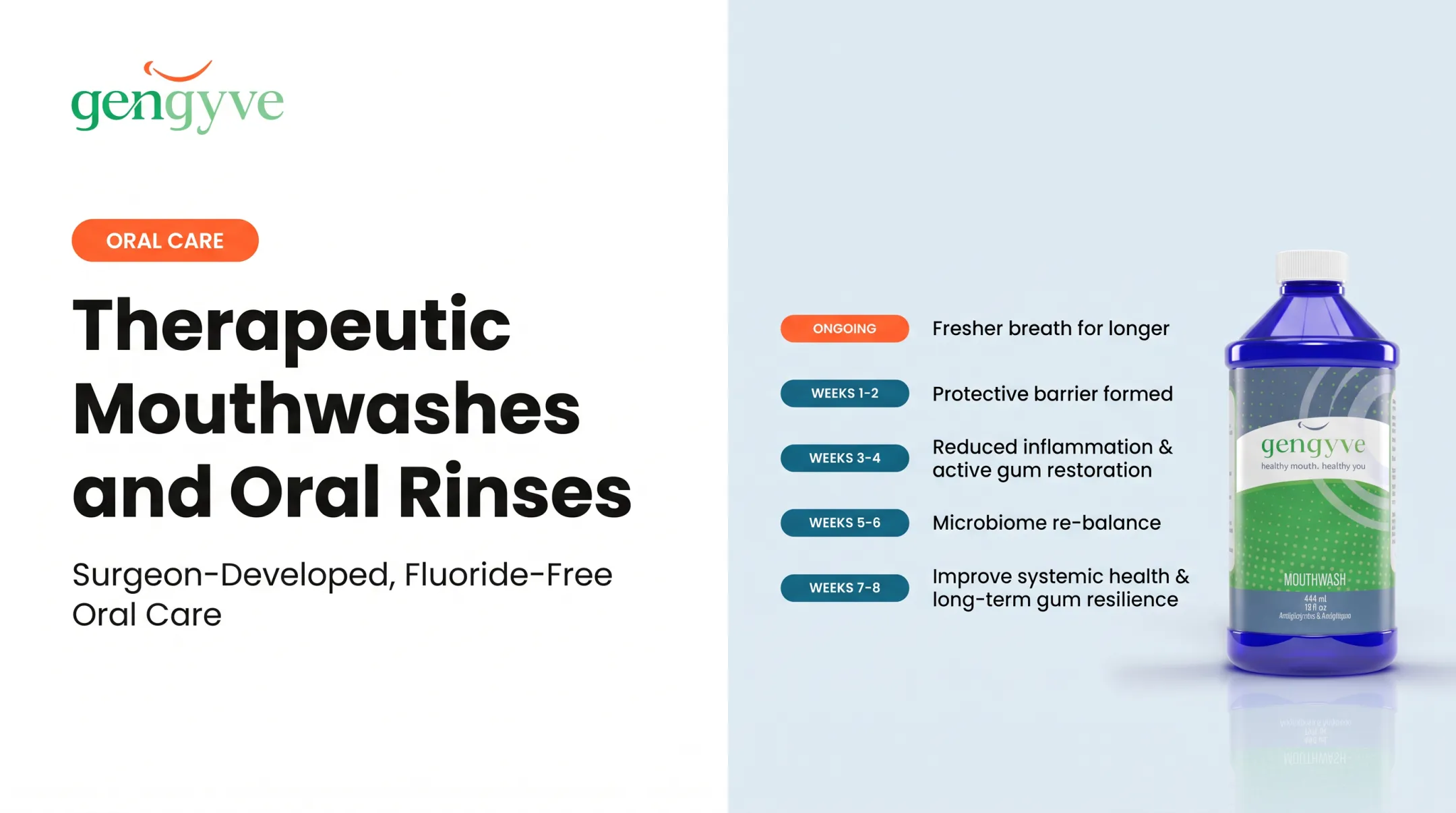
Gengyve USA, for example, makes an alcohol-free, chlorhexidine-free daily mouthwash developed with input from dental surgeons, including founder Dr. S. Thaddeus Connelly, a practicing oral and maxillofacial surgeon and UCSF professor. It's designed for people who want a gentler rinse without the burning sensation common in alcohol-based products. Like oil pulling, a rinse like this works alongside brushing and interdental cleaning, not in place of them.
When to Ask a Dental Professional
Talk to a dentist before adding oil pulling to your routine if you have:
- Active gum disease
- Extensive dental work or implants
- Recent oral surgery
- Swallowing or aspiration concerns
- Known allergies to common oils
- Symptoms that are persistent or getting worse
A dentist can recommend a rinse or treatment suited to your actual oral findings, medications, and risk factors, rather than a one-size-fits-all home remedy.
Conclusion
Oil pulling is a low-risk, optional ritual for some people. It is not a substitute for proven dental hygiene or professional care, and current research doesn't support treating it as one.
The habits that reliably protect your teeth and gums haven't changed:
- Brush twice daily with fluoride toothpaste
- Clean between your teeth
- Eat sensibly
- See your dentist regularly
If you add oil pulling on top of that, keep your expectations realistic, stop if it causes discomfort, and don't let it delay a dental visit when something doesn't feel right.
Frequently Asked Questions
Does oil pulling mouthwash actually work?
It may loosen some debris or temporarily affect certain oral bacteria, but evidence remains limited. It is not a substitute for brushing, flossing, fluoride toothpaste, or dental treatment.
How many times a day should I use oil pulling mouthwash?
There's no well-established, evidence-based frequency for oil pulling. Avoid excessive or uncomfortable use, and keep your standard brushing and flossing routine as the priority.
Can oil pulling remove cavities or reverse tooth decay?
No. Oil pulling cannot repair a cavity or reverse established tooth decay. Suspected decay needs evaluation and treatment from a dentist.
Can oil pulling replace brushing and flossing?
No. It cannot replace mechanical plaque removal, fluoride toothpaste, daily interdental cleaning, or routine dental visits.
How long should you swish oil in your mouth?
Commonly promoted durations vary widely, and no ideal duration is proven. Swish gently for only as long as you comfortably can, without swallowing or struggling to breathe.
Is oil pulling safe for everyone?
Many healthy adults tolerate it without issues. People with swallowing or aspiration risks, relevant allergies, significant oral symptoms, or recent dental procedures should check with a dental professional first.