The stakes are real. Reduced saliva flow, tissue contact under the appliance, and adhesive residue all make denture wearers more sensitive to harsh ingredients than the average mouthwash shopper. Add in the temptation to soak dentures in leftover mouthwash, and you've got a recipe for confusion.
This guide ranks five mouthwash options by use case: dry mouth, sensitive gums, full versus partial dentures, and dentist-directed needs. You'll also learn the safe way to rinse with dentures, when to take them out, and when it's time to call a professional instead of switching products again.
Key Takeaways
- Your best mouthwash choice depends on denture type, dry mouth severity, gum sensitivity, and whether natural teeth remain
- Alcohol-free formulas deserve a first look, though that label alone doesn't guarantee comfort for every mouth
- Mouthwash cleans oral tissue only; never use it to soak or clean the denture itself
- Persistent soreness, white patches, or a poorly fitting denture means it's time to see a dentist, not switch rinses
Overview of Mouthwash for Denture Wearers
Mouthwash supports the soft tissues in your mouth: gums, tongue, cheeks, and palate. It doesn't clean your dentures.


The American Dental Association separates cosmetic rinses that temporarily freshen breath from therapeutic rinses meant to reduce plaque, gingivitis, or decay. Neither type replaces mechanical denture cleaning, according to the ADA's mouthrinse guide.
Why Denture Wearers Need Extra Care
Reduced saliva production, common with age and certain medications, thins the film that helps a denture stay seated and comfortable, according to the American College of Prosthodontists. Less saliva means more friction, more dryness, and more sensitivity to alcohol or strong flavoring agents.
Adhesive residue and the process of adjusting to a new appliance only add to tissue sensitivity. A rinse that works fine for someone with natural teeth might sting or dry out a denture wearer's gums within seconds.
Full Dentures vs. Partial Dentures
- Full-denture wearers should prioritize gum comfort, tongue and palate health, moisture retention, and a consistent appliance-cleaning routine
- Partial-denture wearers need all of the above, plus protection for remaining natural teeth. Ask your dentist whether a fluoride rinse makes sense for your situation
Mouthwash Categories to Know
You'll typically encounter five types:
- Alcohol-free antiseptic
- Dry-mouth or moisturizing rinses
- Fluoride rinses
- Cosmetic breath-freshening rinses
- Prescription or dentist-directed formulas
Before buying any of them, check the label for:
- Current ingredient list and alcohol status
- Intended use (cosmetic versus therapeutic)
- Directions, warnings, and age restrictions
- Whether it's meant for rinsing only, not soaking
Safe-use sequence: Remove your dentures, gently clean your mouth, rinse per the label, clean the appliance separately with a denture-specific product, then reinsert once both are ready.

Top Mouthwashes for Denture Wearers
These five picks were evaluated for denture-wearer relevance, ingredient transparency, and how well the label matches real-world needs, not brand recognition or a strong burning sensation. Think of these as use-case recommendations. Always verify the current formula and label before you buy, since manufacturers update products over time.
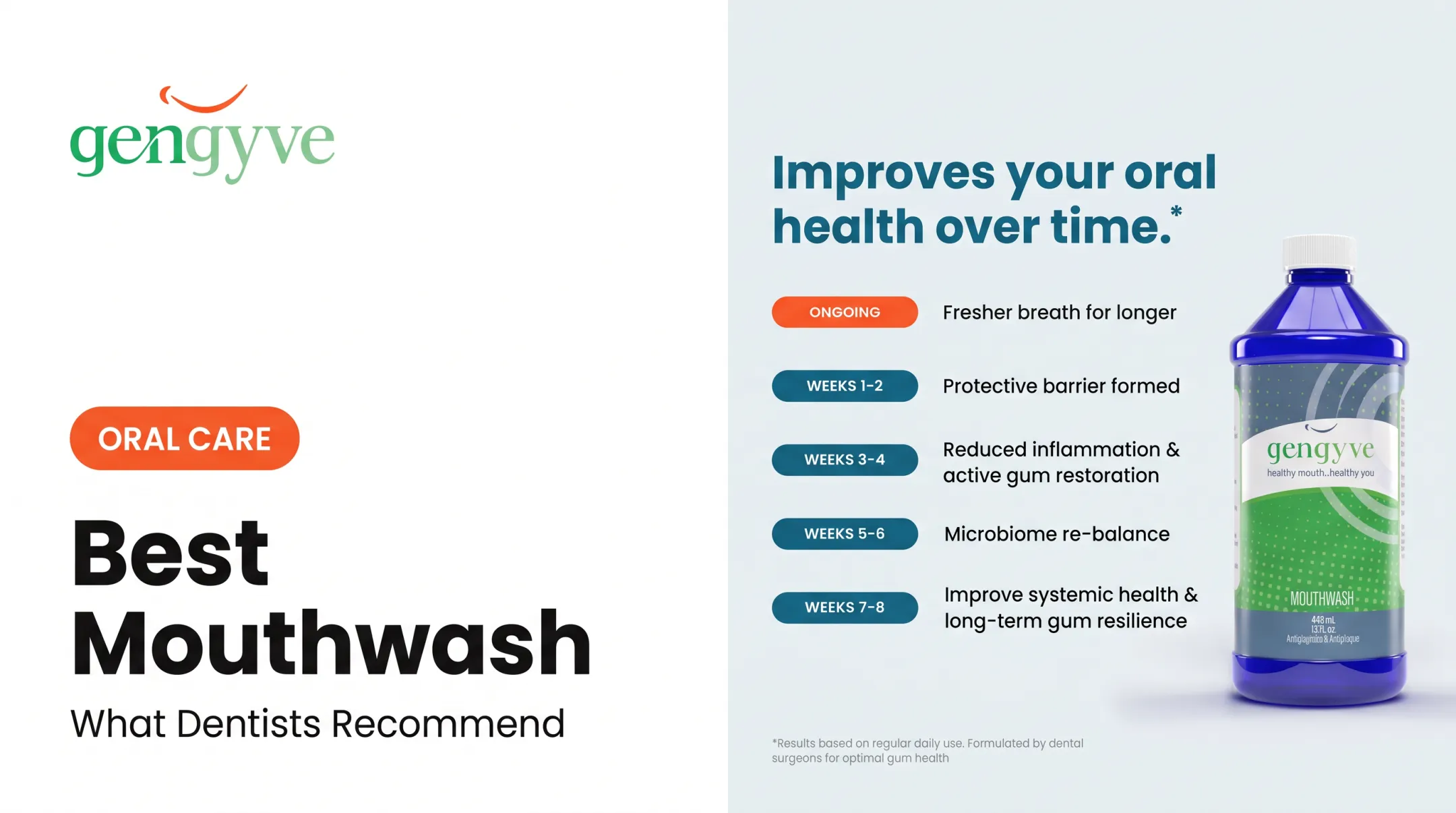
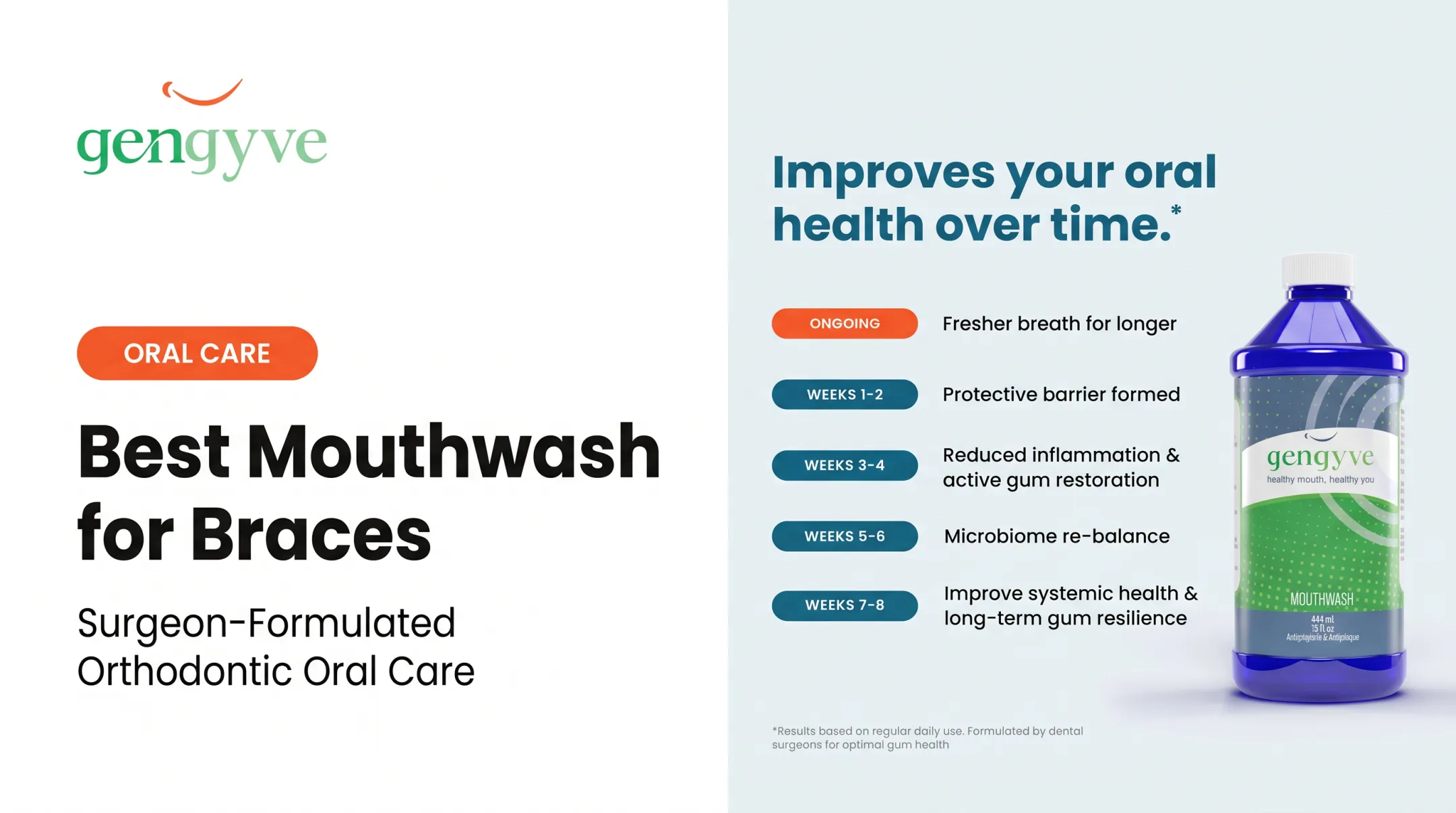
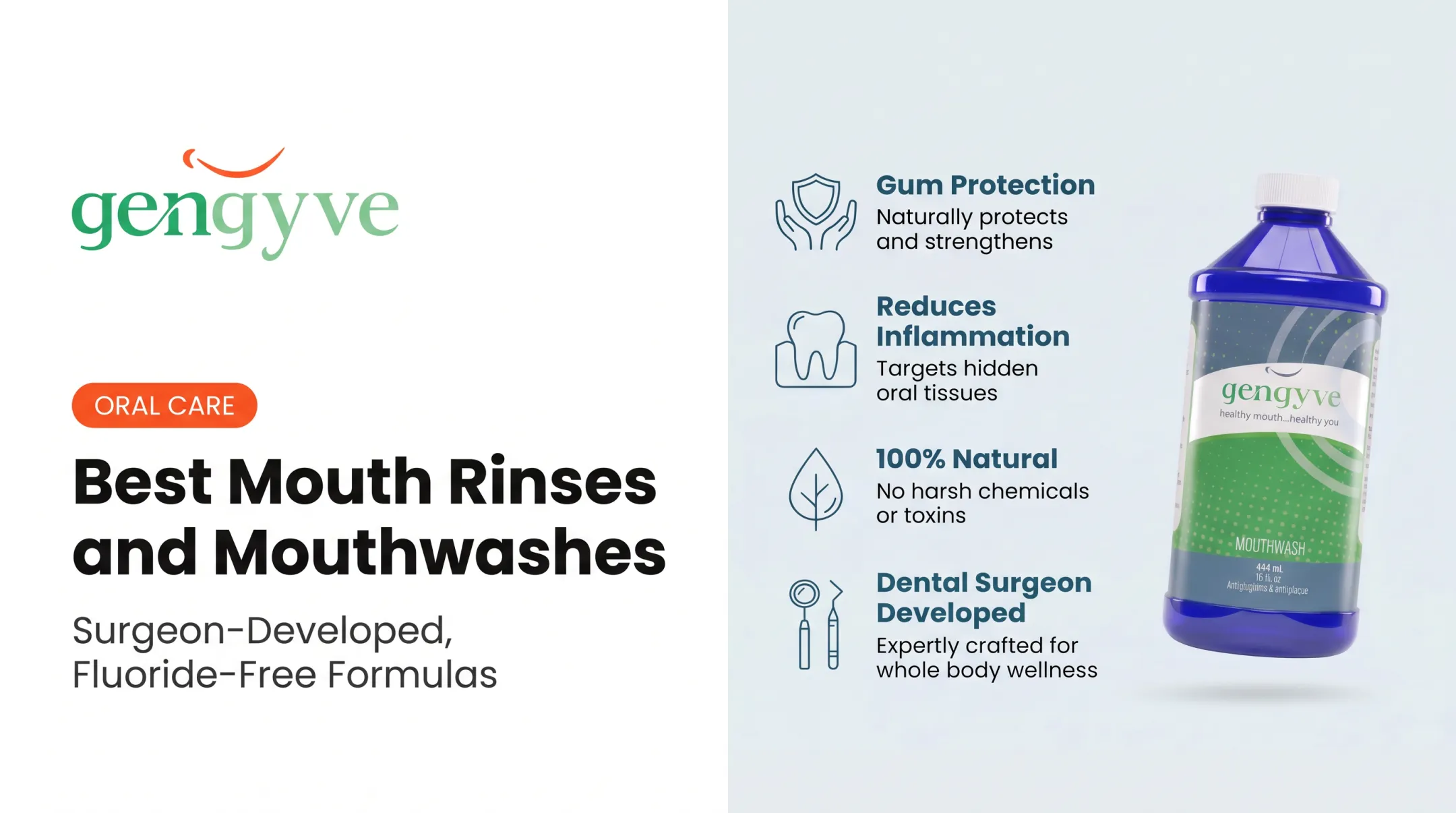
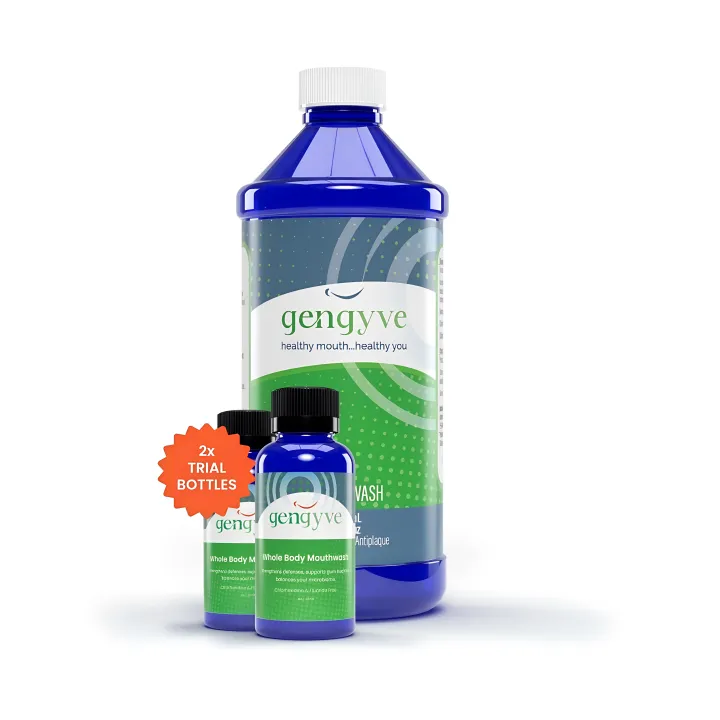
Gengyve Mouthwash
Gengyve is a US-made, alcohol-free, chlorhexidine-free mouthwash developed by practicing dental surgeons, built around cetylpyridinium chloride (CPC) and hyaluronic acid. It's positioned as a gentle daily rinse rather than a burning antiseptic, which appeals to people tired of products that sting on contact.
- Best suited for: Daily oral care, sensitive or sore gums, and people seeking a natural alternative to harsh antiseptic rinses
- Formula and evidence: CPC provides antimicrobial action; hyaluronic acid supports hydration and soothing. A 21-day trial found no statistically significant difference in gingivitis outcomes versus chlorhexidine or placebo
- Denture-use caution: Remove your dentures before rinsing. Gengyve is formulated for oral tissue, not as an overnight denture soak, unless a dental professional specifically says otherwise for your case
Biotène Oral Rinse
Biotène targets one problem specifically: dry mouth. It's alcohol-free, sugar-free, and built around moisturizing agents like glycerin and xylitol rather than antimicrobial actives.
- Best suited for: Denture wearers whose main complaint is reduced saliva, sticky tissue, or friction that worsens as the day goes on
- Formula and evidence: Manufacturer study claims relief lasting up to four hours. Directions call for about 15 mL swished 30 seconds, up to five times daily (the brand FAQ lists two to three times)
- Limitations: It won't replace denture brushing, a proper denture cleanser, or fluoride guidance for any remaining natural teeth
CloSYS Oral Health Rinse
CloSYS Ultra Sensitive is unflavored, alcohol-free, dye-free, and marketed as pH-balanced for people who find typical mouthwash uncomfortably strong.
- Best suited for: Sensitive mouths, everyday freshness, and anyone actively avoiding alcohol or artificial flavoring
- Formula and evidence: Built around stabilized chlorine dioxide rather than a listed fluoride or CPC active; manufacturer directions call for one capful swished for 30 seconds, twice daily
- Use with dentures: Remove dentures before rinsing. Clean the appliance itself with a denture-specific cleanser, not this rinse
ACT Dry Mouth or Fluoride Rinse
ACT's anticavity fluoride rinse is built for protecting natural teeth, which makes it most relevant to partial-denture wearers rather than those with full dentures.
- Best suited for: Partial-denture wearers with remaining natural teeth who need cavity protection, pending a dentist's input
- Formula and evidence: Contains sodium fluoride 0.05% (0.02% w/v fluoride ion). Use 10 mL once daily after brushing for one minute; avoid eating or drinking for 30 minutes afterward
- Limitations: This rinse does nothing for the denture base itself and won't address irritation, infection, or a loose-fitting appliance
Listerine Antiseptic or Alcohol-Free Listerine
Not all Listerine products are interchangeable, and that matters a lot for denture wearers. The Cool Mint Intense Antiseptic formula contains 21.6% alcohol with essential oils as active ingredients for plaque and gingivitis. The Total Care Alcohol-Free version swaps that out for a fluoride active, with the essential oils listed as inactive.
- Best suited for: The antiseptic version targets plaque and gingivitis; the alcohol-free version targets cavity prevention. Check the label to know which one you're buying
- Formula and evidence: Alcohol-containing version: 20 mL swished for 30 seconds twice daily. Alcohol-free version: 10 mL for one full minute. A strong burning sensation isn't a reliable measure of how well either works
- Denture safety: Remove dentures before rinsing with either formula, and never soak dentures in Listerine overnight unless a dental professional gives you product-specific instructions

How We Chose the Best Mouthwashes
We prioritized oral condition and denture type over brand recognition or a strong burning sensation, since burn intensity tells you nothing about whether a formula suits your tissue.
What we checked against current labels and dental guidance:
- Alcohol, peroxide, dyes, flavoring strength, antimicrobial actives, fluoride, and moisturizing ingredients
- Whether the manufacturer states the product is for rinsing only, with no denture-soak endorsement
- Fit for full dentures, partial dentures, dry mouth, sensitive tissue, bad breath, and remaining natural teeth
- Manufacturer documentation, current directions, and independent clinical literature where available
Common Mistakes to Avoid
- Picking a mouthwash based on how intensely it burns
- Rinsing with dentures still in place
- Using mouthwash as a substitute for a real denture cleanser
- Soaking dentures overnight in an unapproved liquid
- Ignoring persistent soreness, redness, or a poor-fitting appliance
A safety boundary worth repeating: Chlorhexidine, peroxide-based rinses, prescription formulas, and specialized antimicrobial protocols should come from a dentist's direction, not a self-care decision made at the drugstore aisle. The ADA notes that denture soaking and brushing remain a separate cleaning procedure from any mouth rinse, no matter how the bottle is marketed.

Conclusion
There's no single "best" mouthwash for every denture wearer. The right choice depends on your denture type, saliva level, tissue sensitivity, and whatever natural teeth you still have, paired with your dentist's input.
The routine matters more than the brand:
- Remove your dentures before rinsing
- Clean your mouth and the appliance separately
- Follow the label's directions exactly
- Never assume a mouthwash doubles as an overnight soak
If you're looking for a gentle, dental-surgeon-developed daily rinse without alcohol or chlorhexidine, Gengyve is worth a look, especially if burning sensations have put you off mouthwash entirely. That said, sores, signs of infection, ongoing dryness, or a denture that no longer fits right call for a dentist's chairside evaluation, not another bottle off the shelf.
Frequently Asked Questions
What is the best mouthwash for denture wearers?
The best choice depends on full versus partial dentures, mouth dryness, and gum sensitivity. Start with alcohol-free, moisturizing formulas, and always check the current label rather than assuming one product fits everyone.
Is it safe to use mouthwash while wearing dentures?
Remove your dentures before rinsing so the mouthwash reaches your gums, tongue, and palate directly. Clean the denture itself separately, using a denture-specific brush and cleanser rather than mouthwash.
Is Listerine safe to use with dentures?
Only if that specific formula is suitable. Check alcohol content and active ingredients, remove your dentures before rinsing, and follow the manufacturer's directions plus any guidance from your dentist.
Is it safe to soak dentures in Listerine overnight?
No, not unless a dentist or the denture manufacturer specifically recommends that exact product and method. Use a denture-specific soaking solution instead, then rinse thoroughly before reinserting.
What do dentists recommend to clean dentures?
Remove the denture, rinse away loose debris, and brush all surfaces with a soft, denture-safe brush and non-abrasive cleanser. Soak using an appropriate solution, and avoid hot water, bleach, or abrasive household cleaners that can warp or damage the material.
How do I clean my mouth and keep my gums healthy while wearing dentures?
Remove your dentures, then gently brush your gums, tongue, and palate before using a suitable mouthwash if needed. Clean the denture separately and see a dentist promptly for persistent redness, sores, white patches, or bleeding.