That confusion matters. The right rinse depends on your specific goal: cutting bacteria that cause bad breath, supporting inflamed gums, preventing cavities, healing after a dental procedure, or simply avoiding the burn of alcohol-based formulas.
Here's the short version: neither "antiseptic" nor "antibacterial" is automatically better. What matters is the active ingredient, how long you're meant to use it, the evidence behind it, and whether a dentist has recommended it for your situation.
Key Takeaways
- Antibacterial rinses typically target bacteria tied to plaque, gingivitis, and bad breath
- Antiseptic is a broader term that can cover bacteria, fungi, and other microorganisms
- Chlorhexidine-based antiseptic rinses are prescription-only and meant for short, supervised use
- Mouthwash supports brushing and flossing — it doesn't replace either one
- Alcohol-free formulas help with comfort, but gentleness alone doesn't prove effectiveness
Antiseptic vs. Antibacterial Mouthwash: Quick Comparison
The two categories differ in the organisms they target, their active ingredients, and how long you typically use them.



| Factor | Antibacterial | Antiseptic |
|---|---|---|
| Target organisms | Bacteria linked to plaque, gingivitis, and oral odor | Broader microorganism activity, depending on ingredient |
| Common active ingredients | CPC (cetylpyridinium chloride), essential oils | Chlorhexidine, hydrogen peroxide, some essential oil blends |
| Typical use | Daily plaque and breath maintenance | Short-term or clinician-directed situations |
| Availability | Mostly over the counter | Often requires professional guidance or a prescription |
| Possible side effects | Mild staining or taste changes (ingredient-dependent) | Staining, taste alteration, irritation, dry mouth |
A few things to keep in mind as you compare labels:
- Not every antibacterial formula works against every oral bacterium. Check the specific active ingredient and its concentration
- Antiseptic doesn't guarantee stronger results; it describes a broader mechanism, not automatic superiority
- Side effect risk depends heavily on concentration, frequency, and how long you use the product
According to ADA's mouthrinse guidance, the American Dental Association groups CPC, chlorhexidine, and essential oils together as antimicrobial agents. Match the product and its directions to your actual need rather than choosing based on the label's adjective.
What Is Antiseptic Mouthwash?
Antiseptic mouthwash is designed to reduce microorganisms more broadly than a typical over-the-counter antibacterial rinse. In practice, that often means it's formulated for situations beyond routine daily freshening, such as managing gum inflammation, supporting healing after oral surgery, or addressing mouth sores under a dentist's direction.
The terms get muddy in real life. Products marketed as "antiseptic," "antimicrobial," and "antibacterial" sometimes overlap in function, and labeling isn't always consistent from brand to brand. That's why the active ingredient matters more than the category name.
Chlorhexidine (CHX) is the most commonly discussed prescription antiseptic. It's effective against a wide range of bacteria, but dentists tend to limit how long patients use it because of documented side effects. The chlorhexidine prescribing label notes that its effect on periodontitis specifically has not been established. It is labeled for gingivitis within a professional treatment program, not as a cure for gum disease.

Antiseptic mouthwash can't diagnose or fix the underlying cause of gum disease, an abscess, or persistent sores. It reduces microorganisms temporarily. It doesn't replace an exam.
Use Cases of Antiseptic Mouthwash
Antiseptic rinses generally fall into two camps:
- Dentist-directed short-term use: after periodontal surgery, tooth extraction, or during active gum disease treatment, often limited to two weeks or less
- Self-directed daily use: less common for prescription-strength antiseptics, since side effects like staining tend to accumulate with prolonged exposure
Certain symptoms warrant a dental visit instead of reaching for a stronger rinse:
- Bleeding gums that don't improve with better hygiene
- Swelling, pus, or a visible abscess
- Fever alongside mouth pain
- Difficulty swallowing or breathing
These aren't situations to manage with mouthwash alone. They call for prompt professional evaluation.
What Is Antibacterial Mouthwash?
Antibacterial mouthwash is designed to reduce or inhibit specific oral bacteria, usually the kind linked to plaque buildup, gingivitis, and bad breath. It's the category most people reach for daily, and it's widely available without a prescription.
CPC and essential oils are the two most common antibacterial ingredients in OTC products. A 2014 randomized trial of 338 participants found meaningful reductions in gingivitis and plaque indexes with both: 17.1% and 13.9% respectively with 0.07% CPC, and 42.6% and 42.0% with an essential oil rinse. Results like these are formula-specific, not a guarantee across every product on the shelf.

Antibacterial mouthwash and anticavity fluoride rinse solve different problems:
- Antibacterial formulas target microorganisms connected to plaque and gum inflammation
- Fluoride rinses primarily support enamel strength and cavity prevention
Alcohol-free versions matter for comfort. People prone to dry mouth or burning often tolerate them better, but "alcohol-free" by itself doesn't prove a formula is more clinically effective. That still comes down to the active ingredient.
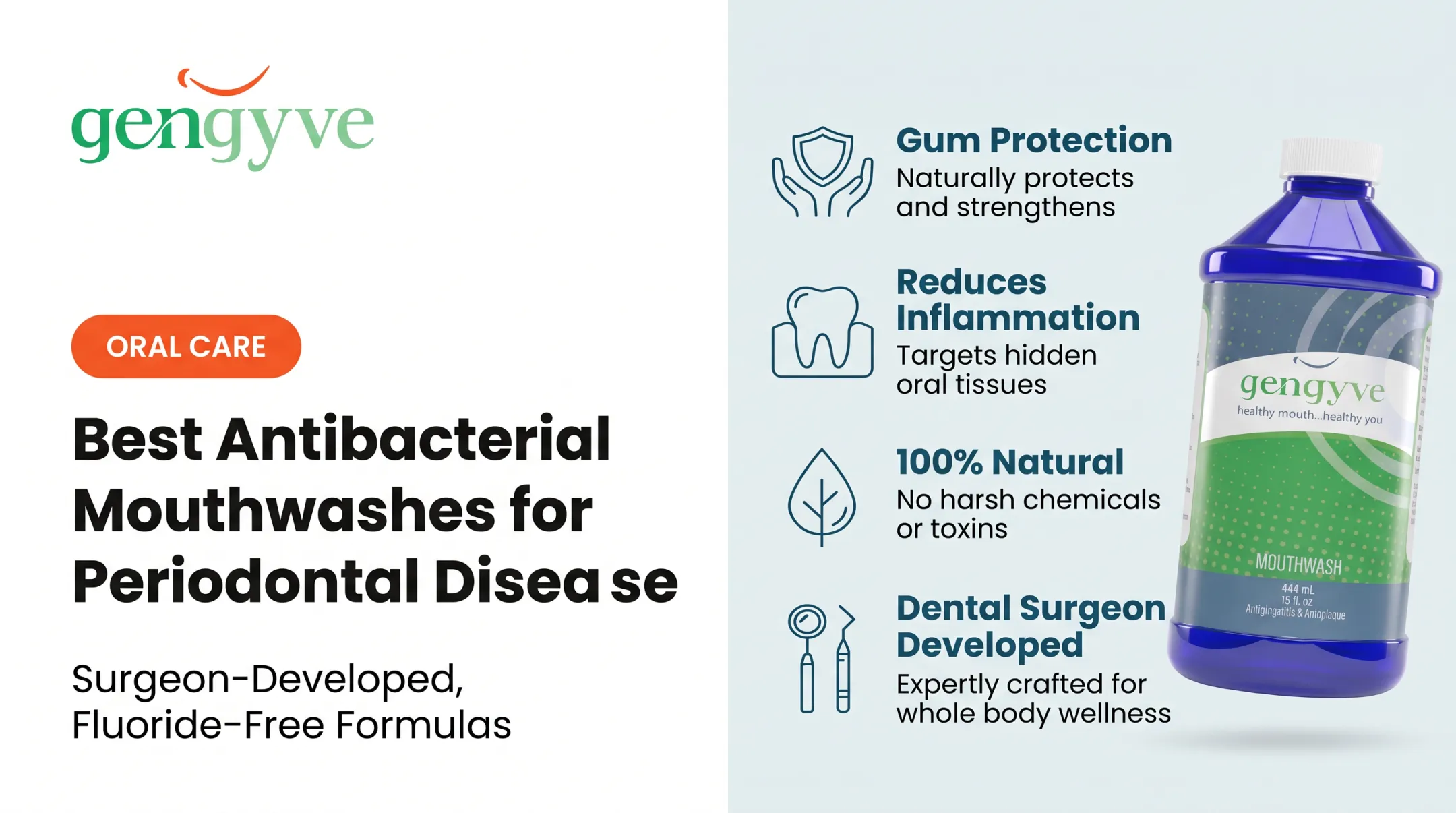
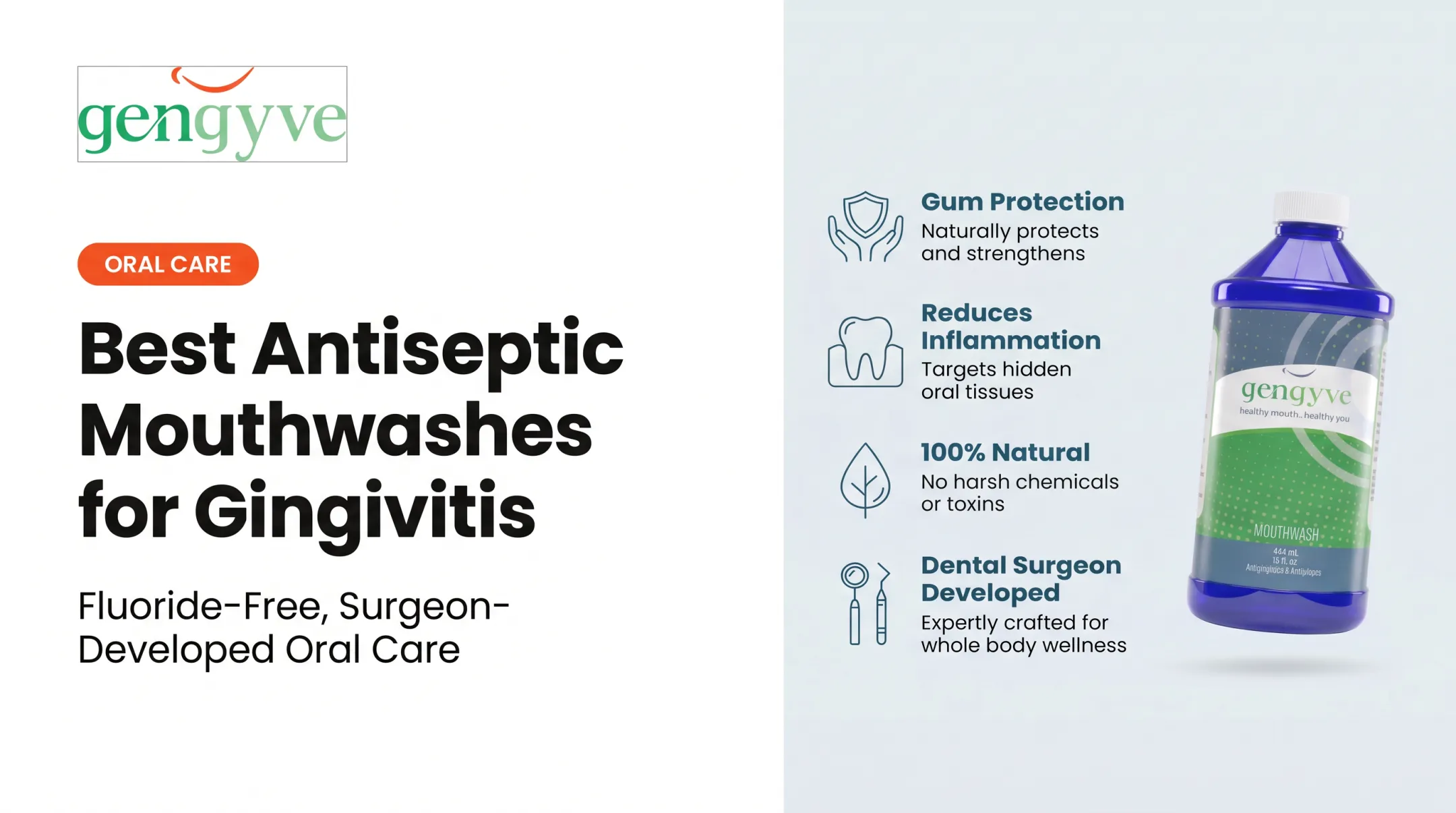
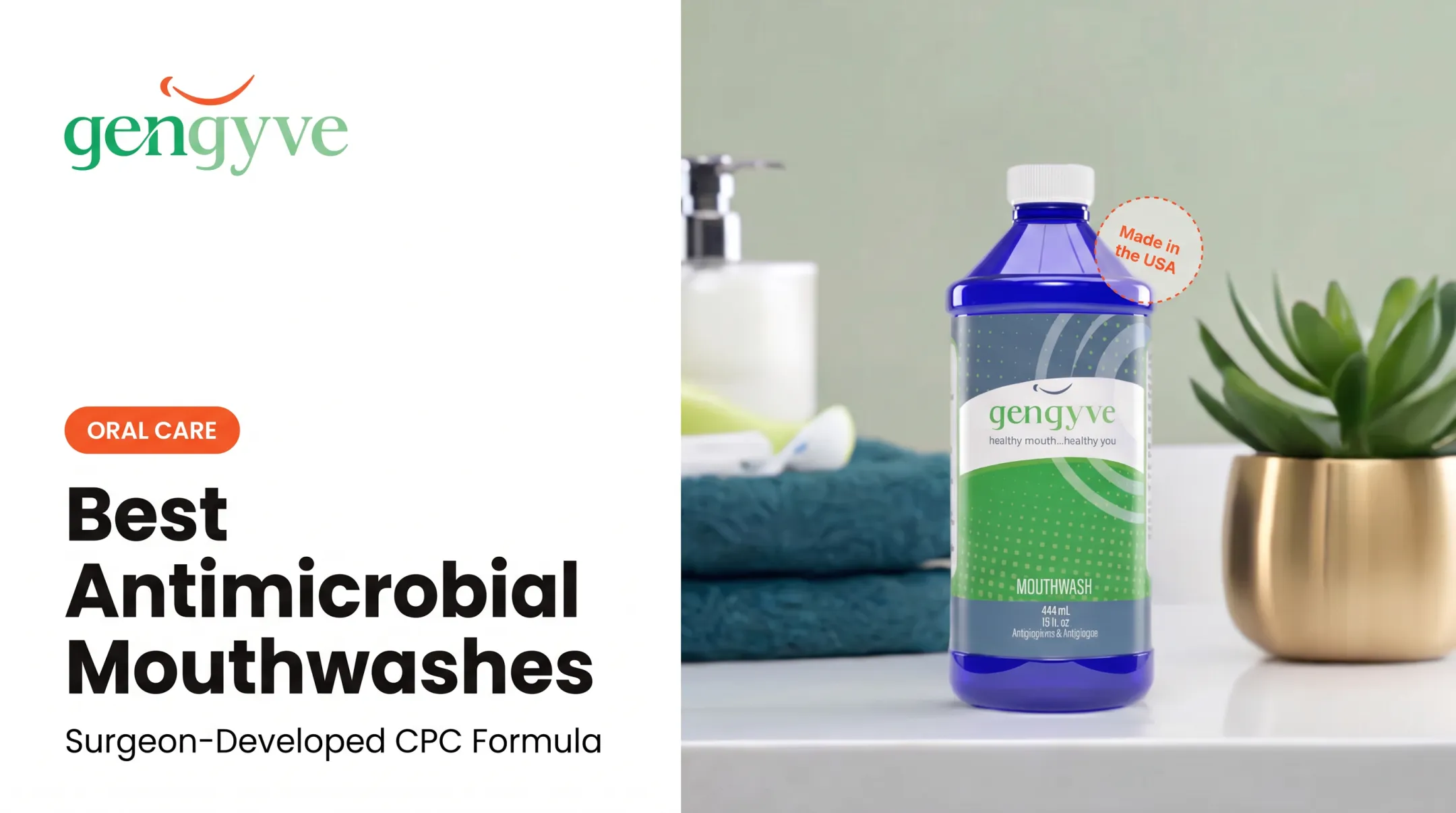
Gengyve USA's CPC and hyaluronic acid mouthwash is one example of this category. Developed by a practicing oral and maxillofacial surgeon, it's alcohol-free and chlorhexidine-free, combining CPC for antibacterial action with hyaluronic acid for gum comfort and hydration.
It's positioned for everyday use rather than short-term, clinician-limited treatment. The bottle is labeled for antigingivitis and antiplaque support, with directions to swish for 30 seconds after brushing, twice daily.
Use Cases of Antibacterial Mouthwash
Antibacterial rinse fits well for:
- Reducing plaque-related bacteria as part of a daily routine
- Supporting fresher breath between brushings
- Supplementing hygiene in spots a toothbrush tends to miss
If you dislike the sting of alcohol-based rinses, a gentler alcohol-free formula is worth trying. Read the label directions and check with your dentist if you have questions about fit for your mouth.
Antiseptic vs. Antibacterial Mouthwash: What Is Better?
Neither one wins outright. The better question is: what's your actual goal, and has a dentist already weighed in?
Use this framework:
- Routine plaque and bacteria support with no diagnosed condition → an OTC antibacterial rinse labeled for that purpose is usually appropriate
- Diagnosed gum disease, recent oral surgery, or significant inflammation → talk to your dentist about an antiseptic or prescription rinse
- Cavity risk → that's a job for fluoride rinse, not a choice between antibacterial and antiseptic. These categories solve different problems and can be used alongside each other when appropriate

A few groups need extra caution:
- Children: many rinses aren't recommended under age 6, and some antibacterial products specify a minimum age of 12
- People with dry mouth: alcohol-free options tend to be more comfortable
- Those with dental restorations or implants: chlorhexidine can stain restorations, so discuss formula choice with your dentist
- Anyone noticing irritation or allergy symptoms: stop use and check in with a professional
Real-World Examples and Product-Selection Cues
In clinical research, a randomized trial compared CPC-hyaluronic acid rinse, chlorhexidine, and a placebo over 21 days in dental students. It found no statistically significant difference in gingivitis between the active rinses.
Placebo users still saw greater plaque buildup, which reinforces that active ingredients contribute something beyond mechanical rinsing alone.
On the daily-use side, an alcohol-free essential oil rinse used over six months showed gingivitis reductions of 26.7%, compared with 28.2% for the alcohol-containing version of the same formula. Researchers did not treat that gap as significant. Alcohol-free does not mean weaker.
The practical cue here is simple: choose based on the condition you're addressing, not the strongest-sounding word on the label. If symptoms persist, or you're recovering from a procedure, ask your dentist or hygienist whether a professional-strength option makes sense. For everyday maintenance, Gengyve's mouthwash page outlines how its CPC and hyaluronic acid formula fits into a daily routine or post-procedure recovery plan, without replacing individualized advice from your own dental provider.
Conclusion
Antibacterial mouthwash usually fits everyday plaque and bacteria control. Antiseptic options, especially chlorhexidine, fit clinician-directed use such as post-surgical care or active gum disease treatment. Neither is automatically right for every person or every product on the shelf.
Whatever rinse you pick:
- Check the active ingredient
- Follow the directions on the label
- Keep brushing and cleaning between teeth
If you're dealing with bleeding, swelling, pain, or anything that doesn't resolve on its own, see a dentist before reaching for a stronger rinse.
Frequently Asked Questions
Should I use anticavity or antiseptic mouthwash?
Anticavity fluoride rinses target enamel and cavity prevention, while antiseptic rinses target microorganisms linked to gum issues. Choose based on your specific risk (cavity-prone versus gum-focused) and ask your dentist if you're unsure which applies.
Which mouthwash do most dentists recommend?
There's no single universal recommendation. It depends on your oral-health goal, the active ingredient, your age, current symptoms, and treatment history.
Does anticavity mouthwash actually work?
Yes, for appropriate users. Cochrane's fluoride review found a 27% reduction in cavity increments with supervised fluoride rinse use, though it still doesn't replace brushing, flossing, or dental visits.
Will antiseptic mouthwash help a gum infection?
It may support treatment in some cases, but a suspected infection needs dental evaluation first. You may need professional cleaning, prescription treatment, or another targeted intervention.
Can antibacterial mouthwash replace brushing and flossing?
No. Rinsing doesn't mechanically remove plaque and debris the way brushing and interdental cleaning do. Mouthwash works best as an addition to those habits, not a substitute.
Is antiseptic mouthwash safe to use every day?
It depends on the ingredient. Some antiseptic formulas are meant for limited use , as little as a week or two, so always follow the product label or your dentist's specific instructions.