Introduction
Every morning, millions of Americans reach for a toothbrush without thinking twice about what it's made of. Yet many people struggle with whether a bamboo handle can match plastic on cleaning performance, hygiene, and cost, plus what happens after you toss the brush.
The U.S. Environmental Protection Agency reports that only 8.7% of plastics in municipal solid waste get recycled, and a standard toothbrush isn't part of that small percentage.
This article compares bamboo and plastic toothbrushes on the evidence, separating what research actually supports from what's still uncertain. No universal winner here, just practical guidance for your specific situation.
Key Takeaways
- Bamboo and plastic brushes clean comparably when bristles are soft and technique is solid
- Many bamboo brushes still include nylon bristles, adhesives, or plastic packaging
- Bristle softness, head size, and brushing habits matter more than handle material
- Bamboo reduces handle-related plastic if stored dry and disposed of correctly
- Plastic remains the practical pick for budget, accessibility, or specific dental needs


Bamboo vs Plastic Toothbrushes: Quick Comparison
Materials and Composition
Bamboo toothbrushes typically pair a bamboo handle with synthetic nylon bristles. Some brands add coatings or adhesives you won't see listed on the box. "Bamboo" describes the handle, not the whole product.
Plastic toothbrushes use petroleum-derived handles, almost always with nylon bristles too. The bristle material is often identical across both brush types.
Cleaning Performance
Handle material doesn't clean your teeth; bristles do. A small 2024 randomized trial comparing bamboo and plastic brushes found bleeding-site reductions of 21.04% for bamboo versus 22.7% for plastic after eight weeks.
Each group had just 10 participants, too small a sample to declare a winner. Still, the results suggest both can perform similarly when bristle design is comparable.

Hygiene and Moisture
- Bamboo: Porous material absorbs moisture, so it needs upright, ventilated drying to avoid bacterial buildup
- Plastic: Nonporous and less absorbent, but still requires rinsing and regular replacement
Research results conflict here. One trial found higher bacterial counts on plastic; a separate lab pilot found the opposite on bamboo stored in humid bathrooms.
Environmental Impact
A UK-based five-year lifecycle study found a bamboo manual brush used just 11 grams of plastic over its lifespan, a 97% reduction compared to a conventional plastic brush, according to a UCL lifecycle study. That's a material-weight finding, not proof of lower total environmental impact once transport and land use are factored in.
Cost and Durability
| Material | Example Product | Listed Price |
|---|---|---|
| Bamboo | Colgate Bamboo Charcoal | $4.99 |
| Bamboo | Brush with Bamboo (4-pack) | $20.00 |
| Plastic | Colgate Extra Clean (4-pack) | $2.96 |
| Plastic | Colgate Extra Clean (6-pack) | $4.99 |
Prices vary by pack size and retailer, so there's no single "average" premium for bamboo. Durability claims from manufacturers suggest comparable lifespans, but independent head-to-head data is limited.
Disposal
Bamboo handles may be compostable once bristles are removed, but acceptance depends on your local program. Plastic toothbrushes generally belong in the trash unless a specific take-back program, like certain manufacturer mail-in options, accepts them.
What Are Bamboo and Plastic Toothbrushes?
Bamboo Toothbrushes
A bamboo toothbrush swaps some or all of the plastic handle for bamboo. That's it. It doesn't automatically mean plastic-free, vegan, or compostable. Check the bristles, adhesives, and packaging separately.
Common bristle options include:
- Standard nylon (most common, not biodegradable)
- Plant-derived nylon variants marketed as bio-based
- Occasionally, animal-hair bristles (less common, not vegan)
Even "100% biobased" bristles aren't necessarily biodegradable. Manufacturers sometimes state this explicitly in their own product documentation, so don't assume plant-derived means compostable.
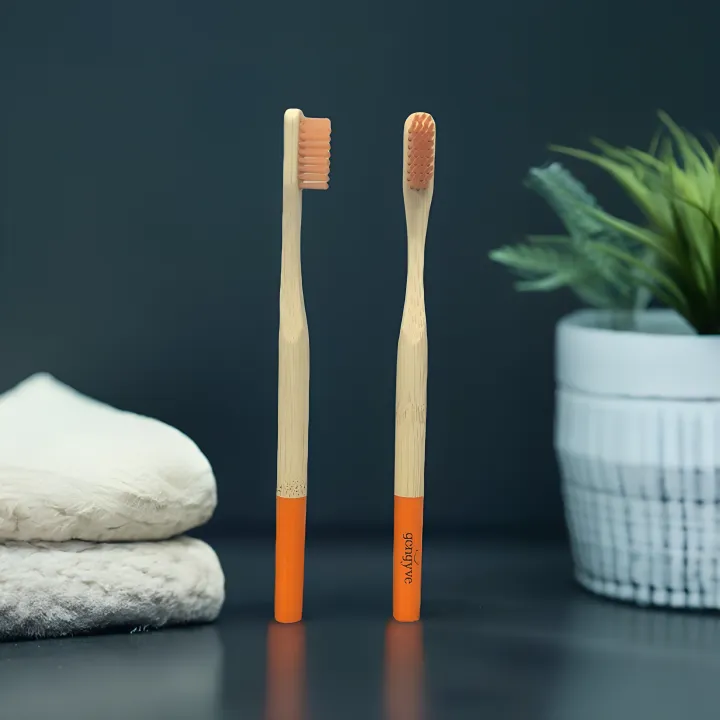
The Gengyve Bamboo Toothbrush illustrates the category well. It pairs a biodegradable bamboo handle with BPA-free, medium-soft bristles.
The brand instructs users to remove the bristles with pliers before composting the handle and recycling the bristles separately. That transparent disposal guidance is exactly what buyers should look for.

Use Cases of Bamboo Toothbrushes
Bamboo works well for:
- Households prioritizing reduced handle plastic
- Buyers who want plastic-free packaging options
- People comfortable with a slightly more involved disposal routine
- Travelers and eco-conscious families using two-piece, detachable-head designs
Plastic Toothbrushes
Plastic toothbrushes dominate U.S. store shelves for good reason. They're cheap, familiar, and available in nearly unlimited shapes and bristle configurations.
Practical advantages include:
- Low upfront cost, often under $3 per brush
- Wide variety of ergonomic grips and head sizes
- Specialized designs for braces, implants, or limited dexterity
- No moisture-sensitivity concerns
Limitations:
- Made from fossil-fuel-derived materials
- Mixed-material construction limits curbside recyclability
- Persists in landfills for a long time
Use Cases of Plastic Toothbrushes
Plastic may be the better choice when:
- Budget is the primary concern
- The user has limited hand dexterity and needs a specific grip
- Humid bathrooms make it hard to keep a bamboo handle dry
- A dentist has recommended a specific clinical design for gum disease, recession, orthodontic appliances, or post-surgical care
If you fall into that last category, follow your dentist's recommendation over any sustainability preference.
Bamboo vs Plastic Toothbrushes: What Is Better?
Here's the honest answer: the handle material isn't the deciding factor. What actually determines the better choice includes:
- Bristle softness and end-rounding
- Head size relative to your mouth
- How well you can control the handle
- Moisture exposure in your bathroom
- Access to appropriate disposal options
Oral-health performance depends far more on brushing technique and bristle design than on bamboo versus plastic. The American Dental Association notes that effective brushes need soft, end-rounded bristles and secure bristle retention, regardless of handle material, according to the ADA's guidance.
Choose bamboo if:
- Reducing handle-related plastic waste matters to you
- The brush has genuinely soft bristles
- You can store it dry and separate components at disposal
Choose plastic if:
- You need a specific ergonomic or clinical design
- You have accessibility requirements a standard handle doesn't meet
- Your bathroom stays humid and bamboo won't dry properly
- Lowest upfront cost is the priority
There's no single "healthiest" toothbrush. A soft-bristled, appropriately sized brush, used gently and replaced on schedule, works for most people. Anyone with specific gum or dental concerns should ask their dentist directly.
A toothbrush is only one piece of daily oral care. Rinsing matters too. Gengyve's mouthwash, developed by a practicing oral and maxillofacial surgeon, is an alcohol-free, chlorhexidine-free option for everyday use after brushing and flossing. It complements good brushing rather than replacing it.
Real-World Evidence and Practical Buying Guidance
What the Research Actually Shows
Evidence directly comparing bamboo and plastic brushes is thin. The 2024 trial mentioned earlier involved just 10 participants per group, far too small to prove one material superior.
Microplastic shedding is a newer research area. A 2025 simulation found toothbrush bristles released particles ranging from 8 to 1,995 micrometers over a week of simulated brushing, with the least expensive brand shedding up to 39 particles daily, per a 2025 microplastics study.

That lab result confirms particles are released. It does not confirm a human health risk, and it does not show bamboo brushes shed less than plastic ones.
What to Look for When Buying
Before purchasing, check:
- Bristle softness: soft, end-rounded bristles protect enamel and gums
- Secure bristle tufts: loose bristles are a sign of poor construction
- Material transparency: does the brand disclose bristle type, adhesives, and coatings?
- Packaging claims: "biodegradable" or "plastic-free" may apply to only one component
- Certifications: look for FSC-certified bamboo sourcing or documented compostability testing
Care, Replacement, and Disposal
A simple care routine works for either material:
- Rinse thoroughly after each use
- Shake off excess water; never seal a damp brush in a closed container
- Store upright in an open, ventilated holder
For disposal, remove bristles with needle-nose pliers before composting a bamboo handle. Check whether your city's composting program accepts the handle, since rules vary by municipality. For plastic brushes, look into manufacturer take-back programs before defaulting to the trash.
Replace any toothbrush every three to four months, or sooner if bristles fray or splay, following the same timing the ADA recommends regardless of handle material.
Conclusion
Bamboo generally wins for reducing plastic in the handle, assuming you can keep it dry and dispose of the bristles correctly. Plastic wins on affordability, accessibility, and design variety, including specific bristle configurations for orthodontic or periodontal needs.
Neither option is automatically "healthiest." Bristle quality, gentle technique, timely replacement, and proper storage matter more than any marketing label. Pick the brush you'll actually use consistently and dispose of responsibly. That's the real difference-maker.
Frequently Asked Questions
What is the healthiest type of toothbrush?
A soft-bristled brush with an appropriately sized head and comfortable handle suits most people. If you have specific dental conditions, follow your dentist's recommendation over general guidance.
Are there microplastics in bamboo toothbrushes?
Many bamboo toothbrushes use nylon or other synthetic bristles, so the handle may be plastic-free while the bristles aren't. Lab studies confirm particle shedding from bristles, but this hasn't been linked to proven human health effects.
Do bamboo toothbrushes clean as well as plastic toothbrushes?
Cleaning performance depends mainly on bristle design and brushing technique, not handle material. A small 2024 clinical trial found comparable plaque and bleeding reductions between bamboo and plastic brushes over eight weeks.
Can bamboo toothbrushes get moldy?
Prolonged moisture exposure can encourage microbial growth on bamboo handles. Rinse after each use, shake off excess water, and store upright in a ventilated holder to minimize this risk.
How do you dispose of a bamboo toothbrush?
Remove the nylon bristles with pliers before composting the bamboo handle, since most composting systems won't accept synthetic bristles. Check your local municipal or commercial composting rules first.
How often should you replace a bamboo toothbrush?
Replace it every three to four months, or sooner if bristles fray or splay, matching standard dental guidance. Bamboo handles don't extend how long the bristles themselves stay effective.